Bhujapidasana (Shoulder-Pressing Pose)
What is Bhujapidasana?
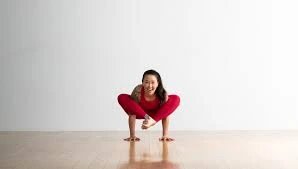
Bhujapidasana is a high-level balancing position where the raised legs press against the shoulders. “Shoulder pressing pose” is the term for it. It aids in strengthening the torso, shoulders, wrists, and hands. Maintaining balance in this pose helps the practitioner become more alert and concentrated in their daily struggles, which leads to productivity in life.
In addition to coaching cerebral and physical elements, Bhujapidasana develops emotional upliftment by establishing a sense of equilibrium throughout various stages of life. Because it affects the practitioners’ mental, emotional, and physical elements, regular practice of this asana develpos a healthy environment.
Muscle Work During Bhujapidasana:
- Biceps and Triceps Muscles
- Core Muscles
- Pelvic Muscles
- Hip Muscles
- Hamstring Muscle
- Quadriceps Muscle
- Feet and Ankle Muscles
How to Perform?
- Start with your legs hip-distance apart, your head neutral, your hands at your hips, and your shoulders steady.
- Now put your hands directly behind your heel and bend down to reach the floor. Stretch your arms such that your upper hand is in contact with your calves.
- Now, press the palms into the floor where the fingers point forward to stabilise your thigh so that the back of your knees fits into the upper arm.
- Once you have a firm grasp on your thighs on your arms, try lifting off the heel from the floor. Now, extend the back of your torso by learning a little bit ahead. It will help with better palm firmness on the ground.
- Now release the breath and use your core to squeeze your legs around your hands like a snake on a branch. Next, entangle each foot from the ankle to the next.
- Stay in this position as comfortably as possible and release the hands and legs, twisting pattern from one another. To return to tadasana, place your feet on the floor, gradually shift your weight between your hands and feet, and then unwind.
Benefits:
Enhances the tone of the abdominal organs:
Core muscles are actively used in Bhujapidasana since the entire body’s weight must be supported solely on the palms. This puts pressure on the abdominal area, which over time leads to fat loss and toning of the internal muscles that are connected to the organs. This asana aids in toning internal organs in this way.
Improves cognitive and physical reactions:
It can be difficult to provide the foundational support needed to maintain one’s body weight; the practitioner must start with basic and work their way up to moderate and intense physical demands. This asana requires a rigorous approach because of its difficult nature. Research clearly shows that engaging in moderate-to-intense physical activity improves cognitive function, working memory, and information processing speed.
Strengthens the Upper Body:
This asana exercise actively uses our upper body, strengthening our muscles by forcing them to endure stress for extended periods of time. Additionally, ongoing stress on bones improves their capacity to reabsorb calcium, strengthening and solidifying the structure. Consequently, it eventually strengthens the upper body.
Overcomes Anxiety and Stress:
Stress and anxiety can be effectively addressed with Bhujapidasana. Adrenaline and cortisol are two stress hormones that can be reduced by practicing this pose. But it also encourages the synthesis of endorphins, which are naturally occurring mood boosters and analgesics. This gives the person a bright outlook.
Enhances Blood Flow:
In order to maintain asana for an extended amount of time, Bhujapidasana requires active muscle involvement. As a result, muscles have to work harder to withstand the discomfort caused by lactic acid buildup. Therefore, an active supply of nutrients and oxygen is needed to deal with the condition, and this can only be achieved by enhancing blood circulation throughout the body.
Therapeutic Benefits:
Lessens lower back discomfort:
Usually, as a result of mechanical problems such as compression of nerve roots, tearing of muscles, and ligaments that injure the intervertebral disc. Bhujapidasana exercises help strengthen and tone the lower back muscles, making them resilient to mechanical ailments. As a result, it lessens lower back pain.
Strengthens Forearms and Wrists:
Our wrist is complicated since it has many different tissues, such as muscle attachments, several bones, and nerves dispersed across the affected area. This pose facilitates the exchange of nutrients and oxygen between the blood and the musculoskeletal system of the hands. In the presence of sufficient resources, this promotes bone strengthening and tissue growth. Strengthens your forearm and wrist as a result.
Enhances Digestion:
By increasing blood flow to the digestive organs, practicing Bhujapidasana enhances the effectiveness of peristalsis. As a result, food passes through the digestive system more quickly than when constipation and indigestion are present. enhances digestion in the end.
Beginner’s Advice:
- People who are starting bhujapidasana for the first time should be aware of their limitations before starting. This is because yoga poses are relatively new. because it requires stretching the thigh muscles, which could lead to muscle pain if neglected. Therefore, before attempting this position, one should practise flexibility poses.
- Holding the bodyweight around fully extended arms may be challenging for beginners. To reduce the angle behind the knee, one should concentrate on compressing the arms into the back pit shape. This will provide you with the grip you need to maintain the pose for a longer period of time.
- Strong core muscles are necessary when balancing the foot directly in front of you. Therefore, by practicing Bhujpidasana or entangling them to generate a lock-in, beginners without prior experience with such hard asana practice can strengthen their core muscles. Mutual support for the balancing will result from this.
Modifications:
- The block can assist practitioners who are unable to flatten their hand on the floor during the pose. Blocks could be positioned beneath both palms to provide the support needed to achieve balance in the pose.
- Because the Bhujapidasana is one of the difficult postures, it can be difficult to balance your body. Therefore, practitioners who lack the skills necessary to execute this asana flawlessly should practise Bakasana, Dandasana, and other preparatory postures to strengthen their shoulders and forearms.
- A block and bolster can be placed beneath the hip bone by practitioners who are having trouble with the final position of Bhujpidasana. You’ll have some leeway to hold a position for a little longer than normal.
Variations:
Eka Pada Bhujapidasana (One-legged Shoulder pressing pose):

Bhujapidasana involves lifting both feet off the ground, entwining them with hands, and squeezing them under the armpits. Eka Pada Bhujapidasana, on the other hand, keeps both feet raised while placing one on each shoulder.
Lift one leg off the floor and place it over your shoulder to enter the One-legged Shoulder Pressing Pose from Dandasana. To prevent the elevated leg from sliding down, squeeze it against your shoulder. Take a deep breath and raise your body off the ground while keeping your palms firmly planted on the ground.
One leg will stay in the dandasana stance in the final position, while the other leg will be on the shoulder, both in the air. Additionally, you can place a dandasana leg over another leg in an elevated position as you progress deeper.
Bakasana (Crane pose):

In Bakasana, the hips are raised upward and the knees are positioned under the armpit or behind the upper arm. In Bhujapidasana, the backs of the knees are suctioned, and both legs are wrapped around the hands.
Precautions:
- If a practitioner has a lower back condition, they should avoid from doing the Bhujapidasana directly forward. The likelihood of injury related to the practice may be reduced by rolling forward slowly and steadily.
- In order to maintain straight and stable hands, one should concentrate on firming the palms when adjusting the thighs in the area behind the elbow. Because shifting weight puts a lot of strain on the hands, it might be harmful to be lethargic at that time.
- When performing the last pose of Bhujapidasana, practitioners should not lower their body backward. It might lead to spinal or head trauma. To find the equilibrium in your torso, keep your body slightly forward and use your shoulder blades.
Contraindications:
- This pose is not recommended for pregnant women since the upper thigh may restrict the tummy. But as long as the cycle continues, women who are menstruation likewise avoid from practicing.
- Bhujpidasana should not be performed by practitioners who have had abdominal surgery since it may cause discomfort to the incision that is being healed or has not yet healed.
- Additionally, practitioners should avoid from practicing if they have wrist, shoulder, elbow, knee, or neck conditions. Ignoring it could have made the pre-existing condition worse.
- This asana should not be performed by patients who have excessive blood pressure or cervical spondylitis. Challenging levels could increase blood pressure, and balancing could damage your vertebrae.
Conclusion:
Bhujapidasana is a vigorous yoga pose that targets the hand, wrist, forearm, shoulder, thigh, and lower back muscles. This helps prevent physical injuries by toning up different muscles.
In addition to its physical advantages, it soothes the mind and demonstrates its efficacy as a stress reliever. Additionally, proper practice aids in Manipura Chakra stimulation, which enhances practitioners’ spiritual qualities.
FAQs
What are the benefits of the Bhujapidasana pose?
The abdominal muscles are activated while holding the shoulder pressing stance, which helps to tone them and improve core stability and strength. Bhujapidasana increases flexibility by opening and stretching the groin and hips. Overall mobility and ease of movement may be enhanced.
What are the preparatory poses for Bhujapidasana?
The shoulder girdle should be stabilised. Step on your hands, walk your feet around, and raise your hips a little. This is the fundamental stance that prepares you for Bhujapidasana. Before continuing, take five breaths.
Can Bhujapidasana improve core strength?
Improves Core Stability: Bhujapidasana demands a lot of core effort to balance. In addition to supporting the position, activating the abdominal muscles tones and strengthens the core, which is crucial for proper posture and spinal health.
What is the difference between Bhujapidasana and Titibasana?
Bhujapidasana is an arm-supported pose where the palms of the hands serve as the basis of support. Maintaining it calls for both strength and balance. Tittibhasana, also known as Firefly Pose, is a pose that calls for flexible hamstrings and upper body power.
Is Bhujapidasana good for wrist strength?
Bhujapidasana, also known as “arm-pressure” or “shoulder-pressing,” is a great position for deepening hip and back stretches and strengthening the wrists and shoulders.
References:
- Bhujapidasana (Shoulder-Pressing Pose): Meaning, Steps, Benefits – Fitsri Yoga. https://www.fitsri.com/poses/bhujapidasana
- Shoulder Pressing Pose Yoga Pose (Bhujapidasana). Tummee. https://www.tummee.com/yoga-poses/Bhujapidasana