Twisted Crunches
Introduction
The Twisted Crunch is a straightforward yet incredibly powerful abdominal workout that helps to tone and build the core by focusing on the rectus abdominis and oblique muscles. In contrast to the classic crunch, the twisted form involves rotating the torso, which strengthens the side abdominal muscles and enhances core stability.
This exercise improves posture, balance, and spinal stability in addition to helping to tone the waist. The twisted crunch is a practical option for anyone wishing to develop a stronger, more defined core at home or in the gym because it doesn’t require any special equipment and can be done on a mat.
Muscle involvement
Erector Spinae: The three back muscles that travel up your trunk are called the erector spinae. It helps you twist your head, bend sideways, and rise up straight after leaning over.
The rectus abdominis: It is an abdominal muscle that is used when you bend forward.
Obliques: You can bend or rotate your trunk with the aid of your internal and external obliques.
Transverse abdominis: This muscle stabilizes your pelvis and wraps across the front and side of your trunk.
Multifidus: Your spine is supported by the multifidus in your back.
Your core also consists of the following other muscles:
Maintaining the strength of the hamstrings, hip flexors, and hip adductors—muscles that attach to the pelvis—helps balance your body, support your spine, and improve your general level of fitness. These muscles are known as the pelvic floor, diaphragm, and glutes.
Contraindications
The following are situations in which the Twisted Crunch exercise should be avoided or performed only under supervision:
- A history of lumbar spine injuries or acute low back pain.
- Disc issues, including a slipped disc, disc bulging, or disc herniation.
- Cervical spine problems or neck pain, as the action may put more strain on the body. Spinal, abdominal, or pelvic post-operative issues (unless approved by a doctor/physiotherapist).
- Pregnancy puts tension on the abdomen, particularly in the later stages.
- Recent abdominal surgery, such as a C-section or hernia repair.
- Heart problems or uncontrolled hypertension, since straining during crunches might increase intra-abdominal pressure.
- Inadequate core strength or novices without supervision, since incorrect form can lead to harm.
Twisted Crunches
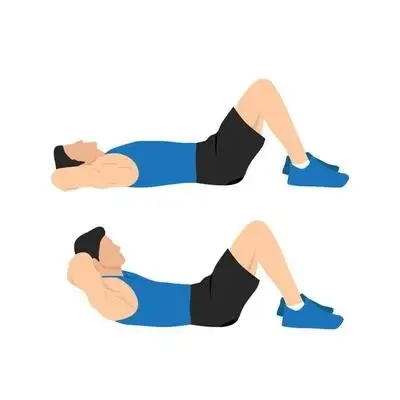
- Position: Supine lying position.
- To begin, place your feet flat on the floor and bend your knees while lying on your back.
- With your elbows pointed out to the sides, place your hands behind your head.
- Pull your belly button in the direction of your spine to activate your core muscles.
- Twist your torso to the right and slowly raise your head, shoulders, and upper back off the floor.
- After a few seconds of holding, return to the beginning position.
- Do it again, turning your torso to the left this time.
- For as many repetitions as you like, keep switching sides.
Twisted Crunches, Modifications, or Alternatives
- Russian Twist: As you raise your feet off the ground while maintaining a bent knee, dig into your sit bones. Your upper extremity should be twisted in both directions, beginning in the right direction and ending in the left.
- Twist plank: Make sure your body is in a straight line from your shoulders to your ankles as you begin by lying on your forearms and toes in a plank posture. As you pivot on the balls of your feet and rotate your lower body to the right, maintain a strong core. Only proceed as far as it is comfortable and strain-free for you to lower your right hip toward the floor. Put your legs and hips back in the original plank position.
- Twist bicycle crunch: Place your hands on the back of your head, raise your knees to tabletop height, and raise your head and shoulders off the surface. Now extend the other leg long by twisting from the waist to bring the opposite knee and one armpit toward each other. Go back to the middle, then exchange sides. Instead of lifting from your head, try to lift from your abdominals and maintain a broad elbow position.
- Twisting leg raise: The Twisted Leg Rise is a powerful core workout that targets the oblique muscles by combining the advantages of a conventional leg rise with a small rotational action. The twist places additional emphasis on the sides of the core, which enhances strength, stability, and muscular definition, even when elevating the legs works the lower abdominals. This easy variant gives the workout additional energy and helps to improve overall core control and waist shape.
Benefits of Twisted Crunches
- Core & Abdominal Strength: Leg raises increase abdominal tone and stability by focusing on and strengthening the deep core muscles, such as the rectus abdominis and obliques.
- Better Posture: Leg lifts help to enhance your posture and spinal alignment by strengthening your core.
- Decreased Back discomfort: Stiffness and discomfort in the lower back can be lessened by strengthening the core and improving hip stability, which supports the spine.
- Improved Coordination and Balance: Leg lifts contribute to increased proprioception, or awareness of your body’s position, and overall stability, which in turn improves coordination and balance.
- Increased Mobility and Flexibility: The exercise helps to increase the hamstrings’ flexibility and the hip range of motion.
- Functional Strength: You can walk, run, and climb stairs more easily and with greater overall functional efficiency if you have a strong core and flexible hips.
- Toning of the Legs and Hips: Leg raises tone and strengthen the quadriceps, glutes, and outer thighs, which can help create a more defined lower body.
- Low Impact and Accessibility: This workout is simple to do at home and can be modified to match different fitness levels because it is low-impact and doesn’t require any special equipment.
- Decreased Risk of Injury: By improving joint support, strengthening the lower body and core muscles can help lower the chance of falls and other injuries.
Prevention while twisted crunch exercise
- Warm up first: To get your muscles and spine ready, always perform some simple stretching or mobility exercises first.
- Prevent neck strain: by keeping your chin slightly tucked in and controlling your movement with your core instead of pulling your head or neck with your hands.
- Controlled or limited motion: You should avoid abrupt or jerky twisting. Take your time performing the crunch and concentrate on tensing your abdominal muscles.
- Maintain a supported lower back: To avoid strain or injury, gently press your lower back into the mat.
- Avoid overtwisting; only rotate as far as your core can sustain. Back pain might result from overrotating.
- Avoid holding breath in between exercises: Breathe correctly by inhaling as you come back and exhaling as you crunch and twist. Holding your breath might put undue strain on your body.
- Avoid movement if injured. Unless a physiotherapist has given the go-ahead, avoid this exercise if you have a lower back, neck, or abdominal alignment (such as a hernia).
- Start slowly: Before increasing sets or intensity, start with fewer repetitions and develop your strength.
FAQs
What are the benefits of twisted crunch exercise?
The Twisted Crunch exercise combines the benefits of a classic crunch with rotational action to provide a number of advantages. It helps to develop a strong and toned core by mainly strengthening the rectus abdominis and oblique muscles. Frequent practice adds to improved posture and balance, strengthens the spine, and defines the waist. It also helps to increase core stability, which is crucial for everyday tasks and athletic performance, because it works various abdominal muscles simultaneously. Furthermore, this exercise can intensify abdominal exercises by stimulating more muscle fibres by twisting, which makes it useful for people who want to improve their core, get fitter, and lose weight.
What advantages do leg lifts offer?
The Benefits, Form, and Guide to Lying Leg Raise
Increased hip and hamstring flexibility, better posture, increased core strength, improved balance and coordination, less risk of back discomfort, and increased everyday functional efficiency are all advantages of leg lifts, a very effective bodyweight exercise. The exercise is a flexible and accessible workout for all fitness levels because it works the quadriceps, outer thighs, hip flexors, and lower abdominal muscles. It also doesn’t require any additional equipment.
Does twisting help reduce abdominal fat?
The Top Eight Side Belly Fat Workouts to Reduce Your…
No, twisting exercises by themselves don’t drastically reduce belly fat, but when paired with a nutritious diet and other fat-burning activities like cardio, they can help tone your waist and strengthen your oblique muscles. While exercises like torso twists and Russian twists can help you tone your stomach and strengthen your core, a calorie deficit from diet and regular activity is necessary to lose weight overall.
Is twisting a good exercise?
In addition to using rotational forces in the horizontal plane to activate the core muscles, twisting exercises can enhance movement system integration and coordination. For many fitness lovers, twists might be a terrific alternative, but they are not for everyone.
Are abdominal fats burned by planks?
You couldn’t possibly drop this much weight in a month by…
Although they don’t immediately burn belly fat, planks can help your waistline appear flatter and more defined by strengthening and toning your core. Planks should be used in conjunction with a nutritious, well-balanced diet and frequent cardiovascular activity to reduce belly fat since they enhance total caloric expenditure and muscular growth, which raises metabolism.
When should we avoid the twist crunch exercise?
In some situations, the twist crunch exercise should be avoided to avoid getting hurt or making pre-existing issues worse. This twisting motion may place too much strain on the spine; thus, anyone with sciatica, slipped discs, severe back pain, or any other spinal problems should avoid doing it. Because it can strain the core and surrounding structures, people with hernias, severe osteoporosis, or abdominal surgery should also avoid it. Because the rotation and abdominal pressure may be dangerous, pregnant women should avoid performing twist crunches.
References
- Lift Manual. (2023, April 24). Twisting Crunch – Guide, Benefits, and form. https://liftmanual.com/twisting-crunch/
- Cronkleton, E. (2023b, April 10). Tone Your Core and Shoulders with a Russian Twist. Healthline. https://www.healthline.com/health/russian-twist#instructions
- Plank Twist – Trainwell. (n.d.). Trainwell. https://www.trainwell.net/exercises/plank-twist
- Nunez, K. (2024, April 24). The best core exercises for all fitness levels. Healthline. https://www.healthline.com/health/best-core-exercises#takeaway


