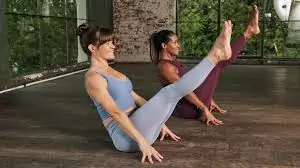

Marichyasana (Sage Marichi’s Pose)
Marichyasana (Sage Marichi’s Pose) is a seated yoga pose that improves spinal flexibility, stretches the shoulders and hamstrings, and enhances digestion. Ideal for boosting posture and relieving back tension.
What is Marichyasana?
Marichyasana (Sage Marichi’s Pose) is a seated yoga pose that improves spinal flexibility, stretches the shoulders and hamstrings, and enhances digestion. Ideal for boosting posture and relieving back tension.
Sitting on the floor, one leg is extended forward while the other is bent at the knee. On the floor, next to the inner edge of the stretched thigh, is the foot of the bent leg. The elevated knee is locked beneath the matching armpit, and both hands are clasped behind the back. A forward bend with the chin resting on the extended knee comes next.
It’s a difficult posture because of the forward bending and spinal twist, and stretch. Despite the pose’s seeming simplicity, it is actually an intermediate one due to the level of flexibility needed.
It mostly works the muscles in the back and abdomen. Additionally, it is a vigorous stretch that strengthens the hips, arms, legs, and chest.
Muscle Work During Marichyasana:
- Neck Muscles
- Arms and Shoulders Muscles
- Upper and Lower Back Muscles
- Biceps and Triceps Muscles
- Core Muscle
- Gluteus Muscle
- Hamstring Muscle
- Hip Muscles
- Quadriceps Muscle
How to Perform?
- Sit in dandasana to start.
- To position the left foot next to the inside edge of the right thigh, bend the left knee.
- The left heel should be placed nearer the perineum.
- Make sure the left armpit meets the left shin by drawing the left shoulder forward.
- Encircle the left thigh and shin with the left arm. Now, from the left forearm at your waist, bend the elbow to reach the back.
- To wrap the right arm around the back and clasp the left wrist, raise your right hand.
- As you twist your spine, turn to your left while maintaining eye contact with your right big toe.
- Return to the center after holding this position for a few deep breaths.
- Exhale, then bend forward such that your chin rests on your right knee, followed by your lips, nose, and forehead.
- Continue breathing while maintaining your shoulders parallel to the floor.
- For 30 seconds, hold this last position.
- Take a breath, raise your head off your right knee, let go of your hands, and extend your left leg.
- After calming down in dandasana, switch to the opposite side and repeat.
Benefits:
Enhances hip and leg strength:
The calves, hamstrings, knees, and ankles are stretched during Marichyasana. The psoas muscles are stimulated by the buttocks in addition to the legs. It fortifies the leg muscles and hip flexors.
Increases the flexibility of the spine:
When bending forward, the entire spine is severely stretched and twisted laterally. It increases the back muscles’ blood flow and widens the vertebrae. As a result, Marichyasana increases the flexibility and strength of the spine.
Opens the shoulders and chest:
This pose is done to extend the shoulders and expand the chest. This enhances breathing ability and expands the lung’s volume. This improves the respiratory system’s efficiency.
Increases the flow of blood:
The heart is also stimulated by the chest opening. It controls the blood flow to every part of the body. As a result, the stance helps to strengthen the cardiovascular system.
Controls metabolism:
The chin rests on the knee in the final stance, which stretches the neck. It increases thyroid hormone release and stimulates the thyroid gland. Eventually, this aids in preserving the metabolism as a whole.
Aids in digestion:
The forward bend used in Marichyasana compresses the muscles in the abdomen. It squeezes the stomach, intestine, liver, and pancreas and stimulates the internal organs. This aids in improved digestion by controlling the release of hormones and digestive juice.
Therapeutic Applications:
- Marichyasana treats indigestion, constipation, and gas.
- It has a reputation for alleviating lower back pain.
- The position is beneficial in healing diabetes because of the twist, which massages and squeezes the pancreas.
- This position strengthens the womb and aids the expectant mother in safely carrying the fetus.
- It eases the discomfort and pain of menstruation.
- It provides a vigorous stretch for the muscles in the thighs and buttocks. Consequently, it both heals and alleviates sciatica pain.
- The pose’s forward bend facilitates spinal extension all the way to the crown. It provides the brain with new oxygen, which eases stress, exhaustion, and mental strain.
Preparatory Pose:
- Deer Pose (Mrigiasana)
- Side Twist Pose (Vakrasana)
- Seated Torso Circles (Kundalini Circles)
- Half Lord Of the Fish Pose (Ardha Matsyendrasana)
- Head to Knee Pose (Janu Sirsasana)
Beginner’s Advice:
- Clasping the wrist behind the back is difficult for beginners. They have to attempt to grasp the fingers or palms of the other hand.
- You might not be able to bind your hands behind your back. Therefore, begin the asana by bending forward and gripping the big toe of the extended leg with the opposite hand.
Modifications:
Folded blanket: To perform the twist and forward fold for Marichyasana, place a folded blanket beneath your hip. Increased hip level contributes to greater hamstring and back flexibility. Additionally, it eases the rotation from the buttocks to accomplish the twist and softens the groin.
Yoga strap: Hold a yoga strap or belt in your left hand after bending your left leg out of dandasana. From the inside of the left leg, wrap the left arm around the shin and back. Holding the other end of the strap around the back, draw the right hand to the back.
Variations:
Marichyasana A
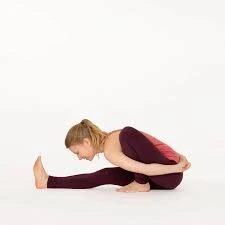
- Place your left foot on the root of your right leg by bending your left knee while sitting in dandasana.
- To put the right foot on the ground, flex the right knee.
- To put the right armpit over the right knee, pull the right shoulder forward.
- To reach the back with the right hand, wrap the right forearm around the right shin and thigh, and then bend the elbow.
- Clasp the right wrist with the left hand and swing the left arm around the back.
Hold the posture while taking deep breaths. - Lean forward, exhale, and place your head on your bent left knee.
- To place the chin on the left knee, extend the neck. With the inhalation rising and the exhale falling, repeat three to four times.
- Breathe in, lift your head, let go of your arms and legs, and then unwind. Continue on the opposite side.
Marichyasana B
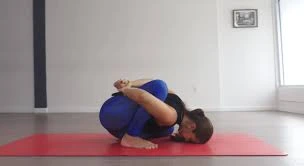
- Bend the left knee from dandasana such that the left foot is next to the right thigh.
- Maintain pressure on the left heel on the perineum.
- To bring the chest past the left thigh, exhale while rotating the spine at a 90° angle to the left.
- Place the right shoulder over the left knee and the right arm over the left leg.
- Continue to twist the spine to the left to extend the right arm forward.
- Take two breaths and remain there.
- Curl your right arm around your left knee as you exhale.
- Reach the rear of the waist with your right hand while flexing your right elbow.
- After exhaling, grasp the right wrist with the left hand by drawing the left arm behind the back.
- Rotate the neck to stare towards the toes of the extended leg or behind the right shoulder.
Marichyasana C
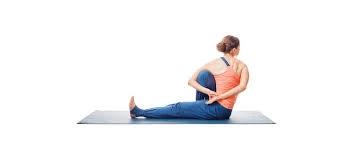
- Take a seat in dandasana.
- To position the right foot near the root of the left thigh, bend the right knee.
- Press the left heel into the perineum by bending the left knee.
- Exhale to move the spine to the left by around 90 degrees.
- Stretch the right arm forward, further twisting the spine, and place the right shoulder over the left knee.
- Take a breath, then release it while wrapping your right arm around your left knee.
- To position the right hand towards the rear of the waist, bend the right elbow.
- Breathe while maintaining the left knee locked in the right armpit.
- After taking a long breath out, clasp your right hand behind your left arm.
- Extend the spine upward and stretch the chest. For 30 seconds, remain there and continue breathing.
Precautions:
- Maintain the integrity of the back when bending forward.
- Don’t allow your stomach to drop; instead, keep your torso stretched forward.
- During the posture, avoid lifting or bending the relaxed leg.
Contraindications:
- If you have any wrist, hip, or knee injuries, do not perform this pose.
- This stance should be avoided after the second month of pregnancy.
- If you have a migraine, stay out of this stance.
- This pose should not be performed by anyone with serious spinal problems.
- The stance is not recommended for anyone with asthma or any other respiratory condition.
- When a woman is menstruating, she should avoid this posture.
- If you have dysentery or diarrhea, avoid trying Marichyasana.
Conclusion:
There are numerous health advantages of regularly practicing Marichyasana and its modifications. The position tones and shapes the human body in a lovely way while also revitalizing it anatomically.
FAQs
What are the benefits of Marichyasana?
The spine benefits from this pressure since it strengthens the sacrum and improves lower back alignment. Better Digestion: By grasping and pushing the lower belly, the pose stimulates and activates internal organs, which helps maintain a healthy digestive system.
How long should you hold Marichyasana?
Hold for five deep, prolonged breaths. With each exhale, stretch through the front body and breathe down the back of the spine or in any other area that requires space. Take a breath, raise your torso, and relax to release the pose.
Is Marichyasana good for back pain?
It takes flexibility to do the yoga pose known as Marichyasana. Avoid this stance if you have lower back problems or are injured.
What are the precautions for Marichyasana?
It takes flexibility to do the yoga pose known as Marichyasana. Avoid this stance if you have lower back problems or are injured. Additionally, Mrichyasana calls for shoulder motions; avoid doing the posture if you have a shoulder problem.
What muscles does Marichyasana target?
This pose works the muscles of the lower back, middle back, lats, neck, and upper traps in addition to the hamstrings, shoulders, and spine. Marichi relaxes the nervous system, extends the shoulders, spine, and hamstrings, and stimulates the pancreatic and adrenal glands.
References:
- Marichyasana (Sage Marichi’s Pose): How To Do, Variations (A, B, C), Benefits – Fitsri Yoga. https://www.fitsri.com/poses/marichyasana
- Sage Marichi’s Pose Yoga Pose (Marichyasana Pose). Tummee. https://www.tummee.com/yoga-poses/Marichyasana Pose