Paryankasana (Couch Pose)
What is Paryankasana?
Paryankasana (Couch Pose) is a gentle back-opening yoga posture that stretches the chest, abdomen, and thigh muscles while promoting relaxation. It helps improve posture, opens the front body, and supports deeper breathing.
To be stable in Paryankasana, one must have good flexibility in the quadriceps, ankle, knee, and hip joints. But don’t worry if you’re not adaptable; the props and adjustments listed below will make it simple for you.
Meaning:
The Sanskrit words Paryanka, which means “a couch, bed, or sofa,” and asana, which means “pose,” are the sources of the term Paryankasana. The name “Couch Pose” comes from how similar the body’s form is in this position.
Couch pose is a supine pose in the intermediate series of Ashtanga yoga. After the forward bend postures, it is mostly utilised to alleviate tension in the upper body muscles.
Muscle Work During Paryankasana:
- Neck Muscles
- Chest Muscles
- Upper Back Muscles
- Core Muscles
- Lower Back Muscles
- Hip and Knee Muscles
- Quadriceps Muscle
- Feet and Ankle Muscles
How to Perform?
Start with Virasana:
Start by kneeling on the mat with your thighs perpendicular to the mat and your knees together. Sit with your knees hip-width apart and your hips between your feet.
Use the adjustment listed below if you find it difficult to bring your sit bones to the mat.
Recline on the back:
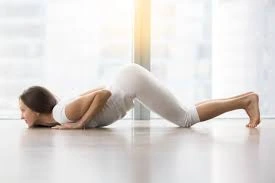
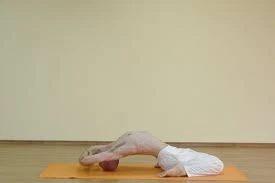
Make sure the arch resembles the Matsyasana or Fish Pose as you slowly arch back to lie down. Any props can be used beneath the thoracic spine. As you recline, walk your hands back. In order to support your body while arching back, raise your arms overhead with your hands clasped around your elbow, which is pressing into the mat.
Hold the stance while checking your trunk:
Lastly, make sure your head is gently resting on the mat. Additionally, ensure that the trunk is upright and not resting on the mat. You can utilise the props listed in the sections on modifications if your head is floating. Breathe deeply and mindfully while holding the stance for 30 to 60 seconds.
To release the posture, uncross your arms:
Uncross your arms and return your elbow to the mat to release the position. With your hands pushing the floor, slowly raise your chin and the crown of your head towards your chest.
Benefits:
Increases the leg’s flexibility:
This pose definitely requires some ankle and knee flexibility. However, maintaining this position and practicing it frequently promotes deeper flexion of the feet and knees. It gradually increases the quadriceps’ flexibility and produces a deep stretch in the upper thigh region.
Medicine for disorders of the spine and lungs:
Because the lungs and chest are fully stretched, increasing the flow of oxygen, it is beneficial for asthma, chronic fatigue, and other conditions. It gradually aids in the practice of Pranayama by increasing the capacity of the lungs. In addition, it helps people who have kyphosis.
The parathyroid and thyroid glands become active:
It expands and stretches the neck, which eventually aids in the activation of the parathyroid and thyroid glands. In addition, Paryankasana allows oxygen to freely enter the throat and vocal cords. Consequently, by stimulating the vocal cords, throat infections are avoided, and voice quality is enhanced.
Relieves constipation and aids in digestion:
Paryankasana improves digestion and metabolism by stretching the upper and lower abdominal muscles. Additionally, it increases blood flow to the belly, which stimulates the ovaries, kidneys, bladder, and prostate glands. Additionally, it treats flatulence, constipation, and acidity.
Keeps blood pressure stable:
Paryankasana is a great treatment for low blood pressure since it helps regulate blood pressure. When practiced, this pose releases obstructions in the heart and lungs. It also works wonders for people whose blood pressure fluctuates. Experts recommend this position to keep blood pressure in a healthy range.
Reduce PMS or menstrual discomfort:
It is advised to perform Paryankasana 15 days before your moon cycle to alleviate premenstrual syndrome or menstrual pain. It helps to avoid bloating and cramps throughout your moon cycle by relaxing the lumbar and abdominal muscles before your period.
Reduces both mental and physical stress:
As the oxygen-rich blood reaches the higher body organs like the brain, neck, and lungs, this stance is said to reduce both physical and emotional stress. Consequently, all tense muscles and nerves are released. Lastly, it soothes the nervous system and calms the brain.
Preparatory Pose:
- Supta Baddha Konasana (Reclining Bound Angle Pose)
- Paschimottanasana (Seated Forward Bend Pose)
- Matsyasana (Fish Pose)
Props and Modifications:
- Use a cushion or a bolster if you find it difficult to bring your sit bones to the mat.
- To support your thoracic spine, you can lie a block or bolster behind you. When you recline, make sure the prop is under your scapulae, pressing into your back, or slightly lower but not in the centre of your back.
- A block or bolster beneath your head or lower back can be used to provide comfort for your back.
- Hold your thighs together and fasten a yoga belt around your knees for additional hip support. This adjustment gives you the same advantages of the asana while also making the pose more comfortable for you.
Precautions and Contraindications:
- Even though this is a Hero Pose version, avoid doing paryankasana just after eating.
- If you have recently sustained an ankle or knee injury, avoid doing this pose.
- This position should be avoided if you have a sliding disc problem, a tight lower back, or a stiff neck.
- regarded as detrimental to a person with severe sciatica, high blood pressure, or heart problems.
- It should not be done while pregnant because it would be challenging to lean back with the fetus.
- Avoid it if you’re having a heavy period because it might increase blood flow.
- If you have a severe migraine or headache, stay out of this stance.
FAQs
Is paryankasana good for back pain?
For those with lower back pain and arthritis, it can be an excellent asana. Another name for it is “Sarapa Asan.”
What is the difference between Paryankasana and Supta Virasana?
Ashtanga Vinyasa Yoga’s Paryankasana B is a pose that resembles Supta Virasana in appearance, but it involves a backbend. Your back is not on the ground, but the back of your head is. In English, this variation is also known as Couch Pose.
How long should you hold paryankasana?
If your legs are crossed, adjust the manner they are crossed as well as the way you hold your arms. Only a small section of the block is required to support your head. Additionally, place your forearms on the block. Hold for a minute.
How to breathe during paryankasana?
Inhale: As you inhale, place your elbows on the floor behind you. Exhale: Exhale and balance the body on the elbows, throwing the chest out and the lower back in. Breathe in and out while remaining on your elbows for a little while.
What are the contraindications for Paryankasana?
If you have recently sustained an ankle or knee injury, avoid doing this pose. This position should be avoided if you have a sliding disc problem, a tight lower back, or a stiff neck. regarded as detrimental to a person with severe sciatica, high blood pressure, or heart problems.
Can paryankasana improve posture?
Paryankasana can help you improve your posture and lessen pain and suffering by strengthening and stretching the muscles in your legs, hips, and lower back.
What are the contraindications of paryankasana?
Anyone who has an injury near their ankles or knees should avoid doing this pose because it causes a great deal of stretching.
If a person has a highly rigid neck and lower back, it is not considered good.
References:
- Paryankasana (Couch Pose): How to Do, Benefits and Precautions – Fitsri Yoga. https://www.fitsri.com/poses/paryankasana
- Couch Pose Yoga Pose (Paryankasana). Tummee. https://www.tummee.com/yoga-poses/Paryankasana