

Plank Exercise: Benefits, Variations, and How to Do It
Among the most effective yet most versatile bodyweight exercises for core strengthening is the plank exercise. Powerful yet simple, it works several muscle groups together and can be used anywhere hence, it is loved by fitness enthusiasts, physiotherapists, and athletes alike.
In this article, we’ll discuss:
- What the plank exercise is
- Benefits of planks
- How to Do A Basic Plank
- Common errors to avoid
- Plank variations
- Tips for beginners
What Is a Plank Exercise?
The plank is an isometric core workout that involves holding a push-up position for a specific time. The plank engages mainly the abdominal muscles, but it does work the glutes, back, legs, and shoulder muscles as well. You’re trying to keep the body in one straight line, from the top of the head to the bottoms of the heels.
Muscles Worked in a Plank
- Core muscles (transverse abdominis, obliques, rectus
- Deltoids
- Upper back (trapezius and rhomboids)
- Lower back (erector spinae)
- Gluts and hamstrings
Benefits of Plank Exercise
- Strengthening the Core
- Enhances posture
- Improves athletic performance
- Lessens likelihood of injuring one’s back
- Enhances Balance and Stability
- Improves coordination and general body control
- Reduces Lower Back Pain
- Develops endurance in the spinal muscles
- Improves Posture
- Straightens the spine, neck, and shoulders
- Increases Metabolism
- Activates many muscles, which boosts calorie expenditure
- Enhances Cognitive Concentration
- Needs focus and body awareness
How to Perform a Forearm Plank?
Step-by-step Guidelines
- Start on your knees and forearms on the soft mat.
- Place forearms on the ground and elbows beneath the shoulders.
- Raise yourself up onto your toes and straighten your legs.
- Activate your core, keep your lower back flat, and keep it straight through from the top to the heels.
- Keep your neck in neutral and look slightly forward and down.
- Hold this position for as long as you can maintain proper form, or for 20 to 60 seconds.
Breathe steadily and slowly. Do not take shallow breaths.
Common Mistakes to Avoid
- Sagging hips cause strain to the back.
- Hips too high: Decreases core activation.
- Neck strain: Can occur by looking up or leaning the head forward.
- Holding one’s breath: Causes unnecessary tension.
- Not stacked over the elbows: Causes instability and stressful strain on the joints.
Plank Variations for All Levels
Beginner variations
- Knee plank – The same as forearm plank, except that knees are on the ground.
- Incline plank – Hands on one elevated surface such as a bench.
Intermediate variations
- High plank – Done on hands rather than forearms.
- Side plank – More directly targets the obliques.
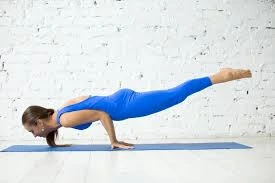
- Plank with leg lift – Lift one leg for more challenge.
Advanced variations
- Plank to Push-Up (Up-Down Pl
- Plank With Shoulder Taps
- Hold
- Stability Ball Plank
- Plank Jacks
Tips for Starters
- Begin at 15-30 seconds and build gradually.
- Focus on quality over duration.
- Try shooting yourself or practicing in front of a mirror.
- Two to four days a week, incorporate planking into your regular exercise routine.
Who Shouldn’t, or Should Modify, the Plank Exercise?
- Planks are typically safe for the majority of individuals. Nevertheless, if you have:
- Recent abdominal surgery
- Back, shoulder, or wrist pain
- Diastasis recti (talk to your physiotherapist)
- You might then have to alter the plank or skip it altogether.
Plank Exercise World Record
Josef Šálek of the Czech Republic holds the world record for the longest abdominal plank position, which is 9 hours, 38 minutes, and 47 seconds. On May 20, 2023, at Pilsen, Czech Republic, he set this record. Daniel Scali of Australia held the earlier record, that was 9 hours, 30 minutes, and 1 second.
Conclusion
The plank is an easy yet highly effective exercise to develop core strength, stability, and endurance. Both beginner and elite athlete alike can benefit from numerous variations to meet their fitness needs. With consistency and proper form, planks can greatly improve posture, defend the spine, and build functional strength.
FAQs
How long should I hold a plank?
As your strength increases, progressively increase from 20 to 30 seconds to 1 to 2 minutes.
Is it okay to do planks every day?
Yes, if you keep appropriate form and your body can handle it. If you’re tired or sore, take some days off.
Can planks help reduce belly fat?
Abdominal muscles are strengthened by planks, however spot reduction is not achievable. Combine with a nutritious diet and general physical activity.
Is it better to perform planks prior to or following exercise?
While either is OK, many people would rather perform them at the conclusion of an exercise to prevent early weariness.
What are the benefits of planks?
Among the many advantages of planks are its ability to strengthen the core, improve posture, increase flexibility and balance, and lessen back pain. By lowering stress and generating endorphins, they also support mental health. A diverse spectrum of people can use planks since they can be adjusted to accommodate varying fitness levels.
Is 1 minute plank a day enough?
You have 30 to 60 seconds to spend in the plank posture. You have plenty time to work on your abdominal muscles. If you want your planks to be more difficult, you might attempt different variations and increase the number of repetitions.
Do planks reduce belly fat?
Planks do not immediately burn belly fat; instead, they mainly strengthen the core muscles. Planks are not a stand-alone method for reducing belly fat, even though they can improve core strength and subtly provide the appearance of being flatter.
References
- Rajput, P. (2025, March 20). How to do a plank: Techniques, benefits, variations – Samarpan. Samarpan Physiotherapy Clinic. https://samarpanphysioclinic.com/plank-exercise/
- Bariya, D. (2024, September 21). How to do plank exercise? Benefits, type, and variations. Physical Therapy Treatment and Exercise. https://physical-therapy.us/plank-exercise/


One Comment