
Posture Correction Exercises for Lower Back Pain Relief
Introduction
Over time, you might be able to improve your posture by combining yoga, stretches, and strengthening exercises. You can improve your strength, flexibility, and balance by maintaining proper posture.
In addition to improving body-related emotions like self-esteem and body image satisfaction, these may lower the chance of muscle and spinal injuries that could result in musculoskeletal illnesses.
A variety of exercises that concentrate on extending, stretching, and strengthening the thoracic and spine may help you achieve better posture, according to some studies.
What is “posture” exactly?
There are two forms of posture, which describe how we hold our bodies in space.
When a person is not moving, such as when they are sleeping or sitting, their body is positioned and held in a static posture. The way a person holds and arranges their body when they are moving, such as when they are jogging or walking, is known as dynamic posture.
It most frequently refers to the way we maintain an upright or weight-bearing posture. When we maintain proper upright posture, we are making the best use of our muscles and supporting our bodies biomechanically, which allows all of our related systems to function as a unit.
What is good posture?
The alignment of the spine is what divides proper posture from poor posture. A person who maintains proper posture is keeping their spine in its “normal” setup. The cervical spine, also known as the neck, thoracic spine, often known as the mid back, and lumbar spine, also known as the low back, are the three main curves of the spine. The thoracic spine is curved in the shape of a “C.” The neck and low back, on the other hand, have a downward “C”-shaped curve. Therefore, having a regular amount of curvature in the spine is considered excellent posture, whereas having too much or too little curvature is considered bad posture.
How can I tell if I have good posture?
Alright, so we know that maintaining proper posture is essential to maintaining a healthy body, but can you tell if you have it?
Listening to one’s body is the easiest thing a person can do. A poor posture may be the cause of your back aches and pains or your inability to stay in certain positions for extended periods of time. Feeling that your weight is distributed unevenly between the left and right sides of your body is another indication of poor posture. Always keep in mind that your shoulders should be back, your weight should be evenly distributed, and your spine should have all three curves, whether you are sitting or standing.
Seeing a physical therapist for an evaluation could be beneficial if you deal with any of these symptoms. should be conscious of their physical sensations and then try to adjust their posture in space. For children to make the necessary corrections on their own, we take the time to teach them what proper and poor posture looks and feels like.
How to correct poor posture
There are things you may do at home to improve your posture if, like me, you are experiencing its negative effects. To start, try these two strategies for better posture:
Pay attention to your body. Be mindful so that you don’t forget to drive, stand, sit, lift, and sleep with proper posture.
Work out. The secret is to extend your body and strengthen your core. Child’s pose, cobra pose, pigeon pose, thoracic rotation, and planks are five posture-improving exercises.
Posture Correction Exercises
Child’s Pose

- Child’s Pose lengthens and extends your hamstrings, glutes, and spine. Additionally, it could reduce stiffness in your neck and lower back.
- How to do this exercise
- Bend your knees and then sit.
- Place your forehead on a cushion, a block, or the ground.
- You can lay your arms along your body or keep them outstretched.
- Inhale deeply.
- Continue to breathe deeply while you unwind in this pose for up to five minutes.
Forward fold
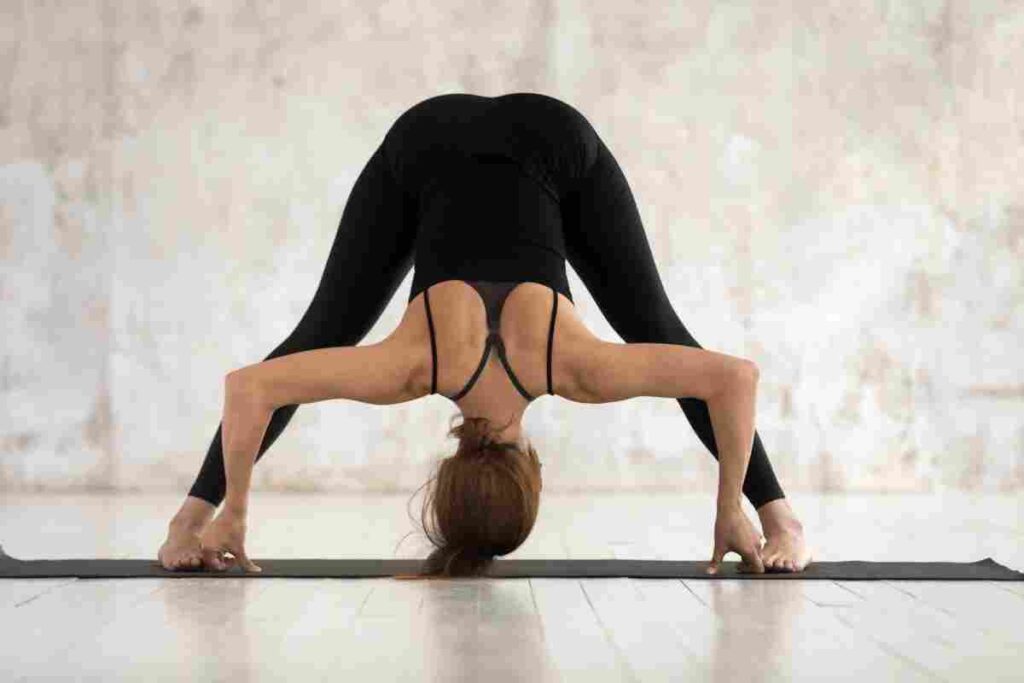
- Your hamstrings, glutes, and spine may all feel less tense after doing this standing stretch. Your legs and hips are also stretched by it.
- How to do this exercise
- Place your feet hip-width apart or your big toes together while standing.
- Fold forward at your hips after bringing your hands to them.
- Put your hands on a block or let them fall to the ground. Go as far as you can without worrying if your hands stay off the ground.
- Allow your spine to stretch, relax your hips, and softly bend your knees.
- Allow your neck and head to unwind.
- Hold this position for a maximum of one minute.
Cat-Cow

- In addition to increasing blood circulation and spinal mobility, Cat-Cow Pose may assist in releasing stress in your neck, shoulders, and chest.
- How to do this exercise
- With your knees beneath your hips and your wrists beneath your shoulders, drop to your hands and knees. Using your hands and knees, equally distribute your weight.
- Breathe in as you raise your chest and tailbone, allowing your spine to arch and your abdomen to descend toward the floor. (Cow)
- Draw your chin toward your chest and exhale as you circle your spine toward the ceiling. (Cat)
- For at least a minute, keep moving your breath between Cat and Cow.
Standing Cat-Cow
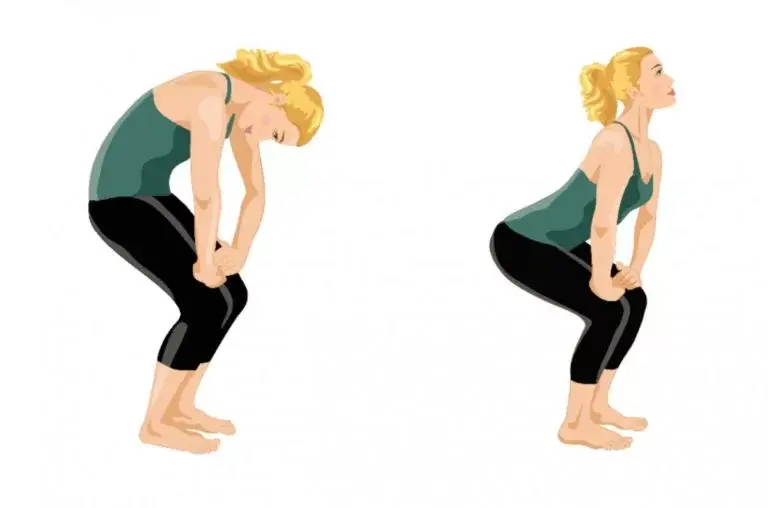
- This standing position, which is a variant on the classic Cat-Cow, may help release tension in your glutes, hips, and back.
- How to do this exercise
- Place your feet hip-width apart and bend your knees slightly.
- Put your hands on your thighs or extend them in front of you.
- Arch your back, extend your neck, and pull your chin closer to your chest.
- Next, raise your chest, gaze up, and shift your spine in the other direction.
- For five breaths at a time, maintain each position.
- For a few minutes, keep doing this.
Chest opener

- Standing Hand-Clasp: Stand feet shoulder-width apart, clasp hands behind the back, straighten elbows, and gently lift arms up until you feel a stretch across the chest and shoulders.
- Repeat five times.
High plank

- Maintaining a neutral alignment of your head, neck, and spine, draw your shoulders back and down.
- High planks may improve your back and core strength and balance, both of which are critical for proper posture.
- How to do this exercise
- Get on all fours, elevate your hips, lift your heels, and straighten your legs.
- Straighten your back and contract the muscles in your arms, legs, and abdomen.
- Look down at the floor, soften your throat, and extend the back of your neck.
- Keep your shoulders back and your chest open. If necessary, lower your elbows to perform a standard plank.
- Repeat five times, holding this posture for a maximum of one minute at a time.
Side plank

- This exercise, which is a twist on the conventional plank, strengthens your glutes and side muscles. You can support your back and enhance your posture by strengthening and aligning these muscles.
- How to do this exercise
- Start with a high plank. Bring your right hand a little closer to the middle of the mat.
- As you turn your body to the side, shift your weight onto your right hand, stack your feet, and raise your hips. Another option is to put your elbow beneath your shoulder and your right forearm on the ground.
- Put your left hand on your hip or reach up to the ceiling. You can drop your lower knee to the ground for additional support.
- As you maintain the stance, contract your glutes, side body, and abdominals.
- From the top of your head to your heels, align your body in a straight line.
- Look up at your hand or directly ahead of you.
- Hold this posture for not more than thirty seconds.
- Continue on the other side. Perform two to three sets in total.
Downward-Facing Dog

- A forward bend that can be used as a resting position to balance the body is called Downward-Facing Dog. In addition to strengthening and straightening your back muscles, it can assist ease back pain.
- How to do this exercise
- Start on your hands and knees, placing your hands just in front of your shoulders. Lift your heels and tuck your toes under your feet while pressing onto your hands.
- To raise your sitting bones toward the ceiling, raise your hips and knees.
- Lengthen your spine and slightly bend your knees.
- Allow your head and neck to rest between your arms while keeping your ears in alignment with your upper arms.
- Maintain a modest elevation of your heels while applying strong pressure to your hands.
- Hold this position for a maximum of one minute.
Pigeon Pose

- Your spine, hamstrings, and glutes can all become more flexible with this hip-opening pose.
- How to do this exercise
- With your hands slightly in front of your shoulders and your knees below your hips, descend onto all fours.
- Place your right shin outside on the ground.
- Place your thigh on the floor, slide your left leg back, and straighten your knee. Maintain a square hip position.
- Ensure that your left leg stretches straight back, not sideways.
- With your arms out in front of you, slowly lower your torso until it rests on your inner right thigh.
- Maintain this posture for a maximum of one minute.
- Walk your hands back toward your hips and raise your torso to gradually release the position.
- On the other side, repeat.
Thoracic spine rotation
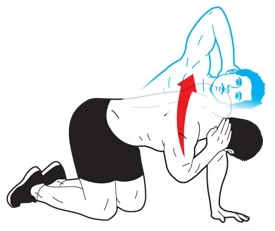
- In addition to improving stability and mobility, gently expanding the chest and twisting the spine may assist in releasing tightness.
- How to do this exercise
- Put yourself on all fours, lower your hips back to your heels, and rest on your shins.
- With your elbow out to the side, place your right hand behind your head.
- Bring your left hand to the middle and place it on your forearm, or keep it beneath your shoulder.
- Stretch the front of your torso and raise your right elbow toward the ceiling while exhaling.
- In this position, take a long breath and release it.
- Return to the starting position by releasing yourself.
- After five to ten repetitions of this motion, switch sides.
Glute bridge

- Glute bridges relieve lower back discomfort while strengthening and activating your glutes. Your hips and pelvis may operate and align better as a result, improving your posture.
- How to do this exercise
- Bend your knees and place your feet hip-distance apart while lying on your back.
- Maintain a foot’s distance between your feet and your hips.
- With your hands facing down, place your arms beside your body.
- Breathe out as you straighten your spine and raise your hips toward the heavens.
- Repeat three times, holding this posture for a maximum of one minute at a time.
Isometric pulls

- By strengthening your back, arm, and shoulder muscles, isometric pulls help you maintain proper posture.
- How to do this exercise
- You can do with a band also.
- Start either sitting in a chair or standing.
- With each hand clenched into a fist, stretch your arms in front of you until they are parallel to the ground.
- Squeeze your shoulder blades together and pull your elbows back toward your shoulders as you exhale.
- Hold this position for ten seconds while taking deep breaths.
- Slowly return to the starting posture after taking a breath.
- For three sets, repeat this exercise for one minute.
Other tips to practice proper posture
It takes practice to correct bad posture. You sit and stand the way you do because it has grown comfortable. Even though it’s bad for your muscles, that’s where they are used to being.
Therefore, it’s essential to become more conscious of your posture and make consistent corrections throughout the day.
As you work, you can think about setting a timer to go off every ten minutes or so as a reminder to check in with your body. You can be reminded of where you should be by taking a moment to reposition yourself and maintain proper posture.
Additionally, keep in mind to use proper ergonomics when seated at your desk. Your feet are therefore on the ground. You are looking at your display. Additionally, keep your mouse and keyboard at a comfortable height that keeps your shoulders down.
About posture correcting devices
You may have seen posture-training devices in your neighborhood pharmacy or online. Some urge them to keep back by being worn around your shoulders like a harness. Others are little electronic gadgets that pulse or buzz to alert you when you slouch.
Maintaining a strong and pain-free neck, back, and shoulders requires proper posture. Consult a healthcare professional, such as a primary care physician or a physical therapist, if you’re concerned that bad posture is causing your discomfort and exercises aren’t relieving it. They can assist in determining your areas of strength and weakness, as well as how to straighten your posture when standing and sitting.
Benefits of Posture Correction Exercises
Exercises for correcting posture are crucial for several reasons. The following intriguing details emphasize their importance:
Reduces Pain and Discomfort
Shoulder, back, and neck pain and discomfort can result from bad posture. You can lessen these symptoms by performing posture correction exercises.
Improves Breathing
Because proper posture allows your lungs to fully expand, it facilitates improved breathing. This can enhance the body’s circulation and oxygenation.
Boosts Self-Belief
You can portray confidence and self-assurance by maintaining good posture. You could feel more confident and self-assured in social settings if you practice proper posture.
Prevents Damage
Injuries can result from poor posture, particularly if you lead a sedentary lifestyle or perform repeated tasks. By strengthening the muscles that support proper posture, posture correction exercises can help prevent injuries.
Increases Productivity and Energy
Maintaining proper posture can boost vitality and lessen weariness. Increased focus and productivity throughout the day may result from this.
Enhances Digestion
Your digestive organs may be compressed by bad posture, which can cause discomfort and possibly digestive issues. You can improve digestion and lessen these symptoms by improving your posture.
Reduces Aging
Because bad posture puts stress and strain on the body, it can accelerate the aging process. You can keep a youthful appearance and slow down the aging process by performing posture correction exercises.
All things considered, maintaining good health and well-being requires posture correction exercises. They can lessen pain and discomfort, enhance your physical and mental well-being, and boost your self-esteem and productivity in day-to-day activities. to learn more about consistently keeping proper posture.
FAQs
Is it possible to correct years of bad posture?
Your posture can be improved by any kind of exercise, although some exercises are more beneficial than others. They include classes that emphasize body awareness, such as yoga and tai chi. Exercises that strengthen your core—the muscles surrounding your back, belly, and pelvis—are also a smart option.
What exercise will fix my posture?
High planks may improve your back and core strength and balance, both of which are critical for proper posture. To perform this exercise, get on all fours, straighten your legs, elevate your hips, and lift your heels. Straighten your back and contract the muscles in your arms, legs, and abdomen.
How to correct posture in 7 days?
5-10 minute daily routines to improve posture in 7 days. Emphasis on strengthening the back/core and stretching the chest. Things like wall angels, chin tucks, and doorway stretches. Keep a “tall” spine at all times, engage your core, and set reminders to avoid slumping in your chair at work, which can make a drastic difference in seven days.
7 Day Posture Improvement Schedule
Daily Mobility & Stretching (Unbinding Tight Areas):
Doorway Stretch: Stand in a doorway and rest your arms on the frame at a 90-degree angle. Step through the doorway to stretch the chest. Please wait 30 seconds.
Thoracic Rotation: Hands and knees, put one hand behind your head and rotate your elbow up to the ceiling to open the upper back.
Cat-Cow Stretch: On all fours, move your back up and down, round it, then arch it, to improve the flexibility of your spine.
Daily strengthening exercises (fixing weaknesses):
Wall Angel: Start by standing against a wall, with your head, upper back, and buttocks touching the wall.
Chin Tucks: Sit up straight and pull your chin straight back, like you’re trying to create a double chin, to reverse “tech neck.”
Glute Bridges: Lying on your back with your knees bent, lift your hips, using your glutes to support your lower spine.
Superman Pose: Lie on your stomach, lift your arms, chest, and legs off the floor to strengthen the muscles of your back.
Daily Rituals for Faster Results:
The “Wall Test”: Stand with your head, shoulder blades,s and buttocks against a wall to feel proper alignment.
Desk Arrangement: Position your monitor at eye level with your feet flat on the ground.
Movement Breaks: Set a timer to remind you to stand up and stretch every 30-50 minutes so your muscles don’t lock into a hunched position.
Regular 7 Day Schedule
Day 1-3: focus on opening chest and neck (stretches)
Days 4–5: Add core activation (plank) and upper back strengthening.
Days 6–7: Add daily stretching to strengthening routines.
How do I stop slouching?
Don’t slouch. Strengthen your core and back muscles, set up an ergonomic workspace, and be aware of your posture on a regular basis. Important fixes include shoulders back and relaxed, head and ears over shoulders, and stretch breaks every 30-60 minutes.
Top Tips to Improve Your Posture:
Ergonomic Desk Arrangement: Sitting with feet on the floor, knees at hip height, back supported. To avoid bending your neck, keep your computer screen at eye level.
Strengthen Core & Back: To support the spine, do planks, bridge,s and abdominal crunches.
Corrective Exercises:
Wall Si: ts Stand with your back, head,ead and heels flat against a wall to reset posture.
YTWL Lie on your stomach and raise your arms into Y, T, W, and L shapes to strengthen the back.
Doorway Stretch – Stretch your chest muscles by placing your arms on a door frame and leaning forward.
Mindfulness: Be mindful of your body often. Make sure your shoulders aren’t rolled forward, and your head isn’t poking out.
Specific Suggestions:
Don’t cross your legs when you sit.
Place a lumbar cushion under your lower back.
Imagine a string pulling on the top of your head.
Use a posture app or alarm to remind you to sit up straight.
What is the main cause of poor posture?
A person may have bad posture for several causes, such as poor biomechanics or repeated actions. weak muscles. genetic disorders.
Does sleeping position affect posture?
A person’s spine may become misaligned as they sleep if their hips are twisted or if their head and neck are not adequately supported. Over time, a person’s quality of life can be greatly impacted by neck and back pain that results from poor sleep posture.
How to stop all slouching?
Holding your head straight up and facing forward, squeeze this imaginary string by pushing your shoulder blades back and together. Repeat five times, holding the shoulder blade pinch for ten seconds, then letting go for ten seconds. For optimal effects, apply this pinch many times during the day.
What are the 5 types of posture?
There are five main types of posture: Neutral (ideal), Kyphosis (hunchback), Lordosis (swayback), Flat Back, and Forward Head posture. These types, distinguished mainly by the shape of the spine in the sagittal plane, affect the musculoskeletal system, often due to habits, muscle weakness, or congenital factors.
Typical Posture: 5 Types
Neutral/Ideal Posture:e The spine has a slight “S” shape with natural curves. The ears, shoulders, ribs, and hips are stacked vertically, so there is minimal muscular strain.
Kyphosis (Rounded Shoulders/Hunchback): The upper back (thoracic spine) is curved forward, causing rounded shoulders and a forward head position.
Lordosis ( Swayback): The lower spine ( lumbar ) curves inward too much. This causes the pelvis to tilt forward and the abdomen to stick out.
Flat Back Posture: The lower spine no longer has its natural inward curve and looks straight, often resulting in the upper back leaning forward to compensate.
Forward Head Posture: The head is pushed forward, moving the ears in front of the shoulders and causing tension in the neck muscles.
Key Concepts in Posture
Static Posture: Your posture when you are not moving (e.g., sitting, standing).
Dynamic Posture: Posture while in motion (i.e., walking, bending).
Symptoms of poor posture include back pain, neck stiffness, jaw tension, and headaches.
Can slouching be reversed?
Yes, poor posture can usually be corrected by consistent daily mobility, stretching, and strengthening exercises to correct rounded shoulders and forward head posture. Typical remedies include strengthening the upper back muscles (rhomboids, traps) and stretching out the chest muscles.
How to Fix a Slouch (Main Ways):
Exercises: Thoracic extensions (with foam roller), chest/pec stretches, strengthening exercises such as band pull-aparts or rows.
Targeted techniques
Chest stretch, Doorway stretch.
Wall Angels: To build back muscles and align shoulders.
Chin Tucks: Corrects forward head posture.
Daily Habits: Set reminders on your phone to check your posture, position your computer monitor at eye level, and stand and move every hour.
Mindfulness: Keep an eye on your posture throughout the day, making sure your ears are above your shoulders.
What is the most unhealthy sitting position?
The slouched or rounded back posture, which is defined by a hunched spine and forward-leaning shoulders, is without a doubt the most harmful sitting position.
What is the best sleeping position for posture?
Sleeping on your back or side is best for your posture. Use pillows to keep your spine in a neutral position from head to hips. You want a medium-firm mattress in general to avoid sagging and to maintain the natural curves of the spine. Sleeping on the stomach strains the neck and lower back.
Best Posture Positions
Back Sleeping (Best) Sleep on your back with a small pillow under your knees to relieve stress on your lower back and to allow it to maintain its natural curve. Pick a pillow that supports the curve of the neck without pushing the neck upward.
Side Sleeping (Good): Place a firm pillow between your knees to keep your hips aligned and alleviate pressure on your lower back. Keep the head pillow with the neck straight, not angled.
Semi-Foetal: For optimal spinal alignment, sleep on your side with your knees slightly bent toward your chest.
References
- Adbay. (2025, April 7). Posture Correction Exercises for Improved Balance – LoTT Physical Therapy. Lott Physical Therapy. https://lottpt.com/posture-correction-exercises-for-improved-balance/
- Clinic, C. (2024, April 5). 8 Posture exercises to sit and stand straighter. Cleveland Clinic. https://health.clevelandclinic.org/posture-exercises
- Cronkleton, E. (2026, April 1). 12 exercises to improve your posture. Healthline. https://www.healthline.com/health/posture-exercises
- Hospitals, M., & Hospitals, M. (2025, April 7). 8 best posture correction exercises you should try today. Manipal Hospitals. https://www.manipalhospitals.com/blog/8-best-posture-correction-exercises-you-should-try-today/
- Increase mobility and relieve muscle pain with these PT moves. (2025, November 20). [Video]. TODAY.com. https://www.today.com/health/diet-fitness/posture-exercises-rcna240895
- Jones, M., University of California, Santa Barbara, & Student Health Physical Therapy. (2020). YOUR HOME PROGRAM. https://studenthealth.sa.ucsb.edu/sites/default/files/2021-03/posture.pdf
- Kim, D., Cho, M., Park, Y., & Yang, Y. (2015). Effect of an exercise program for posture correction on musculoskeletal pain. Journal of Physical Therapy Science, 27(6), 1791–1794. https://doi.org/10.1589/jpts.27.1791
- National Library of Medicine. (n.d.). Guide to good posture. https://medlineplus.gov/guidetogoodposture.html