
Why Do My Knees Crack During Exercise?
Introduction
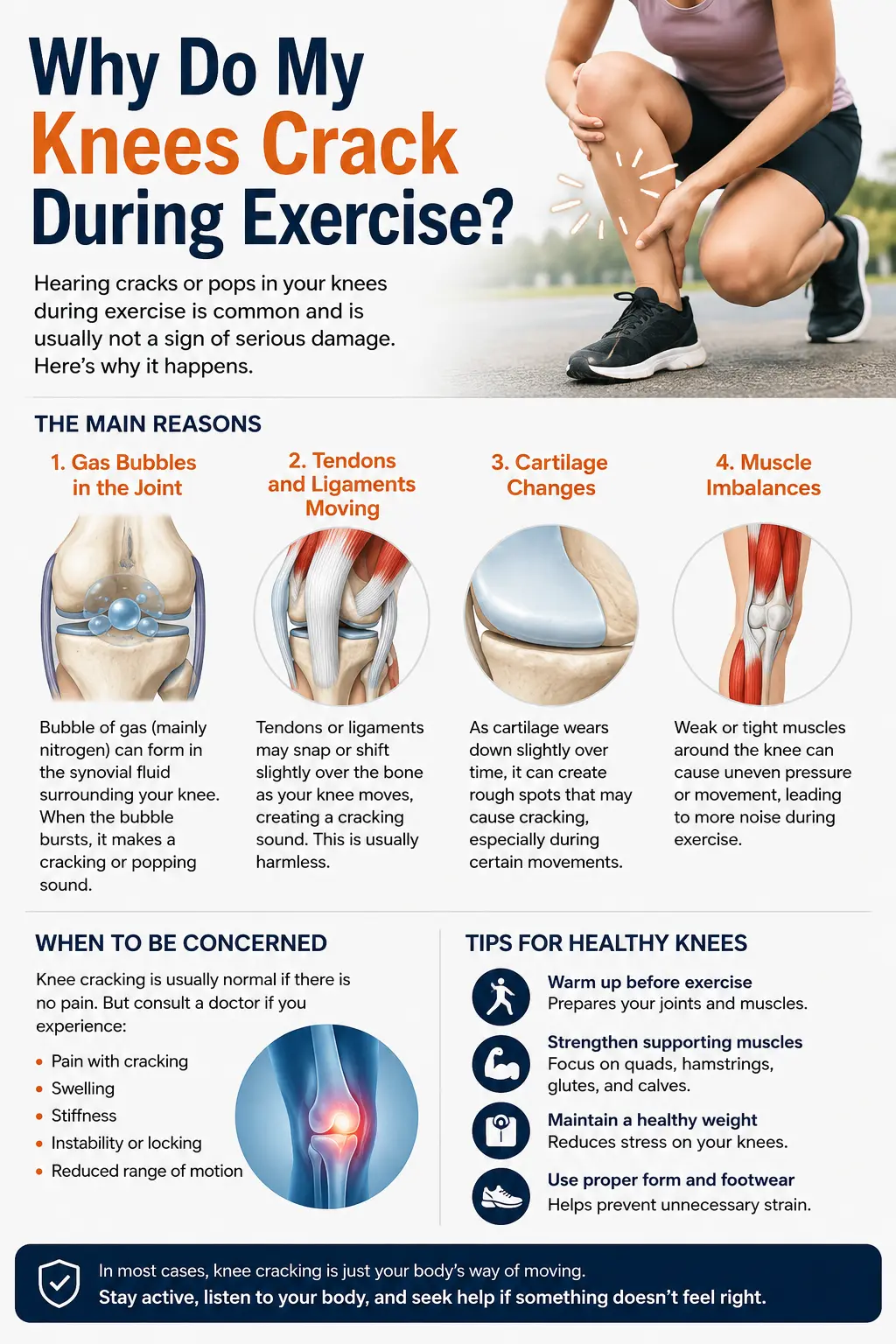
Hearing your knees crack, pop, or click during exercise can be surprising, but in most cases, it is completely normal. These sounds, medically known as crepitus, often occur when gas bubbles in the joint fluid burst, tendons or ligaments move over the bones, or the surfaces of the knee joint shift during movement. If the cracking happens without pain, swelling, or instability, it is usually not a cause for concern and doesn’t indicate joint damage.
The knee is one of the largest and most complex joints in the body, supporting your weight during activities such as walking, running, squatting, climbing stairs, and jumping. Because it is constantly under stress, it’s common for the joint to produce occasional clicking or cracking sounds. Factors like muscle tightness, reduced flexibility, improper exercise technique, or weak muscles around the hips and knees can make these noises more noticeable.
However, knee cracking accompanied by pain, swelling, stiffness, locking, or a feeling that the knee is giving way may signal an underlying problem such as cartilage damage, a meniscus injury, ligament strain, or arthritis. In these situations, a medical evaluation by a healthcare professional or physiotherapist is recommended.
Maintaining healthy knees involves more than simply avoiding pain. Regular strengthening exercises for the quadriceps, hamstrings, glutes, and calves, along with flexibility training and proper warm-ups, help improve joint stability and reduce unnecessary stress on the knee. Wearing supportive footwear and maintaining a healthy body weight also play an important role in preventing injuries.
In this guide, you’ll learn the most common reasons your knees crack during exercise, how to tell the difference between harmless joint sounds and warning signs, and practical tips to keep your knees healthy, strong, and ready for an active lifestyle.
What Is Knee Cracking?
When the knee joint moves, popping, clicking, or snapping sounds are referred to as knee cracking. Walking, bending, and straightening can all produce this sound.
This problem is closely associated with the rising incidence of knee osteoarthritis in India. According to studies, about 150 million people worldwide suffer from knee-related issues.
Most of the time, knee cracking is a normal part of joint movement and shouldn’t be seen as an issue. The complex skeletal anatomy of a knee joint is made up of bone, cartilage, ligaments, tendons, and fluid. These structures can occasionally produce sounds through small adjustments.
Why Do Knees Crack Without Pain?
When there is no pain or swelling, knee cracking is typically associated with natural joint mobility rather than an injury. Below is a list of some common causes.
Gas Bubbles Releasing (Cavitation)
Fluid that lowers friction is present in every joint.
Small gas bubbles may form or burst when you move your knee due to changes in joint pressure. Cavitation is the term for this phenomenon, which can produce a popping or cracking sound.
Knee cracking of this kind:
- Is not painful.
- Occasionally
- Doesn’t harm the joint
- If the sound becomes painful or uncomfortable, or if it occurs frequently.
Tendons or Ligaments Snapping
Tendons and ligaments support mobility and aid in knee stabilization. These soft tissues may occasionally slip over bone surfaces and snap back into position when you bend or straighten your knee. Similar noises can occasionally be produced by ligament ailments like ACL tears. An ACL tear occurs in roughly 69 out of every 100,000 persons, according to one study. This may result in:
- A snapping or clicking sound
- No discomfort
- Absence of swelling
This is typically noticed when standing, walking, or sitting for extended periods of time. Frequent exercise and light stretching usually help with this.
Minor Joint Surface Changes
Due to normal wear and tear, the cartilage that cushions the knee joint becomes slightly uneven with age. When the joint surfaces glide, these slight alterations might create sound.
If there is
- No discomfort
- No stiffness-related immobility.
- Absence of swelling
Muscle Tightness or Weakness
Lack of strength around the knee or tightness in the thigh or calf muscles can affect how smoothly the joint moves. Everyday motions may become noisier as a result.
Increasing muscle strength and flexibility may lessen knee cracking.
When Is Knee Cracking Normal?
Knee popping is typically considered normal when:
- There’s no pain.
- No edema is present.
- It is comfortable to move.
- The sound is sporadic.
- It doesn’t get in the way of regular activities.
Healthy adults frequently experience knee cracking, particularly following extended periods of rest or increased physical activity.
How can I lubricate my knees naturally?
You cannot inject a substance directly into your knees naturally,y but you can stimulate your body to produce more synovial fluid (its natural lubricant) and reduce friction. The best ways to do this are through regular movement, hydration, a nutrient-dense diet, and weight management.
1. Daily Movement & Stretching
The best way to lubricate your knees is through physical activity. Movement helps to make more synovial fluid and spread it around the joint. This lowers friction and stiffness. Low-impact activities: Add some non-pounding exercises such as swimming, cycling, walking, or yoga.
Dynamic Warm-up: Before exercising, perform a 5-minute dynamic warm-up, such as marching in place or gentle squats, to warm up the joints.
Strength Training: Building the muscles around your knees (especially the quadriceps and hamstrings) acts as an external shock absorber, reducing the mechanical stress on your knee joints.
2. Drink it up
Synovial fluid is largely water. Therefore, chronic dehydration decreases your fluid volume, which directly impacts the performance and cushioning of your joints.
Try to drink at least 8 to 10 glasses (about 2 liters) of water each day to keep joints healthy and help flush inflammatory toxins.
3. Follow an Anti-inflammatory Diet
What you eat is the building block for healthy cartilage and joint fluid.
Omega-3 Fatty Acids: These fats may help lower inflammation and improve the quality of your joint fluid. Add foods: salmon, mackerel, chia seeds, walnuts.
High-Antioxidant Foods:s Berries, leafy greens, and spices such as turmeric (curcumin) and ginger have powerful anti-inflammatory properties to help ease joint stiffness.
4. Control Your Body Weight
For every extra pound you carry, the mechanical pressure on your knee joints is around 4 to 5 pounds. Dropping excess weight reduces wear and tear, reduces joint-damaging inflammation, and creates a better environment for healthy lubrication.
5. Joint Support Supplements
If your diet is lacking, natural supplements can provide the building blocks needed for your cartilage and fluid.
Some of the popular choices are Glucosamine, Chondroitin, and Collagen.
Before you start a new supplement routine, talk to your doctor or a physical therapist to make sure it’s right for you and your health needs. Check with local orthopedic clinics or use local directories to find your own physical therapy or mobility routines.
At what age do knees start cracking?
Knee cracking ( crepitus ) can happen at any age and is surprisingly common even in teens and young adults. It’s normal for everyone, but if you’re in your 40s or 50s, your joints may begin to get louder, more frequent, or crunchier as cartilage naturally thins out and daily wear and tear occur.
Why Do Your Knees Pop?
Gas Bubbles (All Ages): Synovial fluid lubricates joints. Small gas bubbles die naturally by collapsing or popping under shifting movements.
Tendon Snapping (Teens to 30s): Tendons and ligaments occasionally shift or snap over the joint as they stretch and activate during movement.
Cartilage Wear (40s+): Years of wear and tear and early cartilage deterioration can leave joint surfaces a little rougher than they should be, leading to grinding or crunching sounds (like a hinge that needs oil).
When to Visit a Doctor
Cracking or popping is completely harmless and usually requires no treatment if it is painless. However, if you experience any of the following symptoms with your cracking, you should see an orthopedic specialist:
- Pain, stiffness, or difficulty walking.
- You feel your knee is loose, or it may give way.
- The noises began immediately after trauma or injury.
What are the signs of weak knees?
Weak knees can cause a feeling of instability and a lack of support. They can show themselves in many ways depending on the root cause, such as mechanical issues or muscle imbalances.
Principal Symptoms
- Instability: The sensation that your knee is going to buckle, give way,y or shift when standing or walking.
- Mechanical Problems: Clicking, popping, ng or grinding when bending or straightening the joint. The knee may also lock in place.
- Mobility Difficulties: Difficulty rising from a chair (e .g., rising from a car or a chair) or climbing stairs.
- Discomfort: A dull, steady ache in the joint. Sharp pain is less common unless there is an acute injury.
- Fatigue: The muscles around the knee tire easily with light physical activity or prolonged standing.
- Inflammation: Slight stiffness, swelling, or localized burning sensation.
Typical Root Causes
- Muscle Imbalance: Weakness or imbalance in the muscles that support the knee, particularly the quadriceps, hamstrings, and calves.
- Ligament or Meniscus Injury: Tears or strains (like ACL tears or meniscus tears) that compromise the joint’s structural integrity.
- Arthritis: Osteoarthritis or rheumatoid arthritis can cause the cartilage to wear away and make the joints weak.
- Nerve Pr:oblems A pinched nerve or herniated disc in the spine may cause muscle weakness in the leg.
When to See a Doctor
- If you experience any of the following, you should see a health care professional such as a doctor or orthopedic specialist:
- Complete inability to bear weight on the knee.
- Severe or increasing pain.
- Visible deformity or malalignment of the leg.
- A fever, with redness and warmth around the joint.
- Numbness, tingling, or bluish color in the calf or foot
FAQs
Is it healthy for knees to crack?
Usually, this kind of knee crepitus is painless and innocuous. Your tendons and ligaments may briefly move as you move and then snap back, making a popping sound. This is typically not a cause for concern and is particularly common during activities such as squatting or climbing stairs.
Is joint cracking during exercise bad?
Joint cracking during activity is typically natural and not a cause for concern. You can continue to move confidently if there is no pain, edema, or instability. However, pay attention to your body and get help if necessary if something feels strange, particularly pain, severe discomfort, or weak joints.
Which deficiency causes knee cracking?
Vitamin D. The absorption of calcium, which is necessary for healthy bones, is greatly influenced by vitamin D. A lack of this vitamin might result in weakened bones and joints, which can cause knee stiffness and cracking movements.
What are 5 symptoms of overtraining?
Overtraining is when you are doing too much volume or intensity in your workouts for your body to recover. This imbalance can leave you feeling drained, often sick, and more prone to injury.
Five common symptoms are:
Decreased Performance: A noticeable and persistent drop in strength, speed, or endurance. You might find exercises that were once a breeze feel like a grueling challenge.
Constant Fatigue: A heavy, unexplained tiredness that doesn’t lift, even after a full night’s sleep.
Sleep Problems: Trouble falling asleep, staying asleep, or restless sleep at night. Your nervous system is overstimulated,d and it is hard to relax.
Mood Swings and Irritability: ty Emotional changes such as increased agitation, depression, anxiety, or a complete loss of motivation for the workouts you once loved.
A weakened immune system causes frequent illness. You might observe that you are recovering from common injuries more slowly or that you are contracting more minor diseases, such as colds.
References
- Abdulla & Abdulla. (2025, October 30). Knee crepitus | SCOI. Southern California Orthopedic Institute | in Alliance with UCLA Health, Regents of the University of California. https://scoi.com/blog/knee-crepitus/
- Admin, M. H. (2026, February 6). Why do my knees crack when I walk, but no pain? Dr. Mehta’s Hospitals. https://mehtahospital.com/orthopedics/why-do-my-knees-crack-when-i-walk-but-no-pain/
- Calf Stretch. (n.d.). [Video]. Hingehealth. https://www.hingehealth.com/gb/en/resources/articles/why-do-my-knees-crack/
- Hill, L. O. (2024, January 9). What is your knee telling you? WebMD. https://www.webmd.com/pain-management/knee-pain/features/knee-cracks-pops
- Is it bad if your knees crack as you bend & squat? (n.d.). https://www.houstonmethodist.org/blog/articles/2024/aug/is-it-bad-if-your-knees-crack-when-you-squat-or-bend/
- Why do my knees make a cracking sound?. (n.d.). https://sahyadrihospital.com/blog/why-do-my-knees-make-cracking-sounds-causes-and-concerns/


