Reverse Fly Exercise
Introduction:
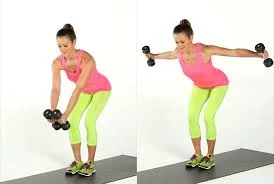
The reverse fly, also known as the bent-over lateral rise, is a resistance exercise that targets the main upper back muscles and the rear shoulders. Correct execution of the reverse fly can result in enhanced strength, stability, posture, and many other undiscovered advantages. The wonderful thing about this exercise is that all you need is a pair of dumbbells; an extra-defined physique is just a bonus.
You may effortlessly execute and master the reverse fly method at home or in the gym with your reliable dumbbells. You can enjoy the many advantages of this easy and efficient exercise in almost no time at all by incorporating the reverse fly or any of its variations, such as the seated reverse fly and reverse fly lunge, into your upper body strength-training regimen.
How to Perform a Reverse Fly?
A fantastic workout for beginners is the reverse fly. Neither complex motions nor extensive additional equipment are required. You can perform this workout at home if you have resistance bands or dumbbells available.
To do the reverse fly with dumbbells:
- Start in a standing position.
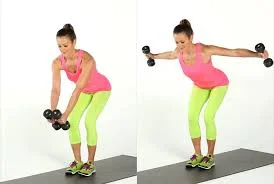
- Begin by bending your knees and holding one dumbbell in each hand.
- Make a 45-degree bend forward. Allow your arms to dangle down around your calves.
- Make sure to bend your elbows slightly. You don’t want to lock them in place or leave them hanging.
- Raise the weights gradually until your elbows and shoulders are level. Your shoulders and upper back should start to feel better after doing this exercise. Make sure your neck isn’t being strained.
- After that, you will begin to return the weights to their initial position. As you descend, your shoulders and upper back will be more tense.
- When performing the motions, be sure your back is neither hunched nor arched.
- You can benefit from this workout with just one to three sets of 12 to 15 repetitions. It would be beneficial to begin with a lower weight and increase it as your muscles get stronger.
Benefits of the Reverse Fly:
The reverse fly works the major upper back muscles (trapezius and rhomboids) and posterior deltoids (back shoulders). Strengthening these muscles encourages an upright stance, corrects bad posture, and enhances balance.
The head-forward posture that results from spending a lot of time slouching over a computer, using a mobile, or driving might cause your chest muscles to tighten and your back and shoulder muscles to lengthen. This results in decreased range of motion and pain.
According to research, you can lessen discomfort and handicap in these areas by incorporating the reverse fly into your strength training regimen. For instance, three quick weekly exercise sessions produced favourable outcomes for a sizable sample of office workers taking part in one study.
You can increase your functional fitness by doing the reverse fly. Maintaining a better posture while sitting and walking can improve one’s confidence and support a healthier spine.
Other Variations of The Reverse Fly:
Depending on your level of fitness, there are several ways to execute the reverse fly.
Seated Reverse Fly
If standing is too difficult, perform the reverse fly while seated on a bench. By doing this, you’ll be able to complete the exercise with greater stability and get rid of the soreness that comes with standing. While seated, the neutral spine and hinge forward hip position are still used.
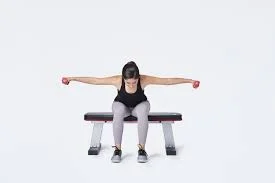
- Begin by taking a seat on the edge of a chair or a flat bench.
- Place your feet flat on the ground, a little wider than hip-width apart.
- Hold a dumbbell in each hand. Hinge forward from the hips, allowing your arms to droop towards the floor while maintaining a straight back (neutral spine) that is neither rounded nor arched.
- Elbows are slightly bent, and arms droop down.
- Leading with your elbows, elevate the dumbbells to the sides until your arms are about parallel to the floor.
- Hold for 3-4 seconds.
- After that, return to the beginning position.
- Do 10–12 repetitions.
Upright Reverse Fly With Resistance Band

You can perform the reverse fly while standing or sitting up straight with a resistance band. For anyone with low back issues who finds it unpleasant to bend over, this is a great substitute. To accomplish this, encircle a stationary item with the middle of the band, then draw the ends in your direction.
- Start by sitting or standing.
- Put your feet shoulder-width apart.
- Grasp the bands’ ends with both palms.
- Keeping your back flat and your core active, bend your knees slightly and tilt forward at the hips so that they are nearly parallel to the floor.
- Next, raise your hands to the side and pull them out.
- Hold for four to five seconds.
- After that, go back to your original location.
- Do ten to fifteen repetitions.
Prone Reverse Fly

Lying prone (face down) on a bench or over a stability ball, perform the exercise to relieve any low back pain that may arise from standing or sitting. This will limit harm throughout the exercise and allow you to concentrate on muscle action.
- Begin in the prone lying position.
- Lie flat on a bench with your face down.
- Grasp the light dumbbell in both hands.
- Maintain a neutral neck.
- Next, raise your arms until they are roughly parallel to the bench.
- Hold for four to five seconds.
- After that, go back to your original location.
- Do ten to fifteen repetitions.
Pulley reverse fly

Two pulley cables are an additional choice for reverse flyes. The pulleys should be adjusted to shoulder height or a little lower. Ensure that each pulley is on the opposite side of your body when you stand. Next, use your right hand to grasp the cable on your left side and your left hand to grasp the cable on your right side.
You will begin by crossing both of your arms in front of you. Maintain a straight back and firmly plant your feet on the ground. Slowly return to your starting position after pulling your arms apart until they are straight out by your sides.
Common Mistakes:
You may do this activity securely and successfully by avoiding these typical mistakes.
Rounding the Back
When performing the reverse fly, try not to curve your back as this can put strain on your lumbar spine. By being mindful of your body position, you may quickly correct this error. To perform the exercise successfully, maintain a straight back, a firm core (imagine your navel sucked to your spine), and a tucked chin.
Swinging the Weight
Muscle strengthening is a gradual process rather than a race to the finish. When performing the reverse fly, always move slowly and deliberately. Swinging the weight raises the arms to the side using momentum rather than muscle.
Lifting Too Heavy
The inability to accomplish a full range of motion during the reverse fly shows that you are attempting to lift too much weight. Additionally, you can feel tension in your neck, back, and shoulders. You can execute the exercise efficiently and with proper form by lowering the weight.
Safety and Precautions
Weight training requires careful consideration of body position, shape, and function. You run a higher risk of injury if you perform any resistance exercise incorrectly, including the reverse fly.
If you have shoulder or back problems, you should consult your physician or trainer before performing this exercise.
If you have pain in either of these regions while executing the reverse fly, stop right away and try alternate exercises that have been recommended by your trainer or doctor to target these areas.
Repeat the reverse fly eight to twelve times if you have no trouble with this specific motion or this resistance training method. If you’re new to working out, it is strongly advised that you begin with one set and gradually increase to three.
FAQs
Does reverse fly work on the chest?
The reverse fly exercise works the backsides of the shoulders (posterior or rear deltoids) and the muscles of the upper and mid-back (trapezius and rhomboids).
How effective is the reverse fly machine?
An excellent exercise for strengthening and isolating the muscles in the upper back and rear shoulder is the machine reverse fly. A machine is perfect for concentrating on form and muscle engagement since it enables controlled, steady movement.
Is reverse flying better than face pulling?
Choose face pulls if your primary objectives are improved posture and stronger shoulders. They improve shoulder stability and engage a variety of muscles. Reverse fly is your greatest option if you’re primarily concerned with shaping your shoulders and gaining muscle.
Why are Reverse fly so challenging?
You’re attempting to lift too much weight if you can’t complete the reverse fly in its entirety. Additionally, you can feel tension in your neck, back, and shoulders. You can execute the exercise efficiently and with proper form by lowering the weight.
How frequently should I perform reverse flies?
Twice a week.
The bent-over reverse fly, performed twice a week for three sets of ten to twelve repetitions each, helps men over forty develop and preserve strong rotator cuffs. Whether you’re playing sports or packing that full carry-on in the overhead bin, that strength keeps your shoulders pain-free.
Referances
- Leal, D. (2024, June 4). How to do a reverse fly: proper form, variations, and common mistakes. Verywell Fit. https://www.verywellfit.com/how-to-perform-the-reverse-fly-4684392
- Taylor, M. (2022b, July 11). How to do the reverse fly. WebMD. https://www.webmd.com/fitness-exercise/how-to-reverse-fly
- Elle. (2024, August 4). Perfect Form: How To Do Reverse Fly (& Variations). Keep It simpElle. https://www.keepitsimpelle.com/how-to-do-reverse-fly/