Bench Press
Introduction:
The bench press is a classic strength-training exercise that primarily targets the chest muscles, while also engaging the shoulders and triceps. It is widely used to build upper-body strength, increase muscle mass, and improve overall pushing power.
Bench presses come in a variety of forms that target somewhat different muscles depending on your objectives. For instance, a narrower grip bench press will focus more on the forearms and triceps.
Increasing upper body strength, enhancing muscular endurance, and even prepping your upper body for exercises like pushups are additional advantages of including bench presses into your weight-training routine. Additionally, they can be a useful strengthening workout for sports like football, hockey, and sprinting.
What is Bench Press?
A complex exercise that works the upper body muscles is the bench press.
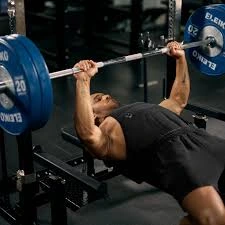
It includes using a barbell or a set of dumbbells to press the weight upward while lying on a bench. In a bench press, you raise the weight while extending your arms after lowering it to chest level. This exercise is regarded as a single repeat, or rep.
Bench presses come in a variety of forms, each of which targets a distinct set of muscles. These could include putting your hands closer together on the barbell, lying flat, or lying at an incline or decline.
Muscle Work During Bench Press Exercise:
- Pectoralis Major Muscle
- Anterior deltoid Muscle
- Triceps Brachii Muscle
- Biceps Brachii Muscle
- Serratus anterior Muscle
How to Perform?
- To prevent rounded shoulders, draw your shoulder blades downward.
- Using an overhand grip, place your thumbs outside of your closed fist to hold the barbell. Your upper arms are at a 45-degree angle to your body, and your arms are somewhat wider than shoulder-width apart.
- Locking your elbows, take the barbell off the rack. (Avoid moving the bar from the rack straight to the chest position in an arc.)
- As you carefully lower the bar at the nipple line, just over your chest, take a breath.
- Breathe out as you stretch your arms and press the bar above your chest. Pay attention to the ceiling instead of the bar.
- The bar should be lowered to just above your chest. This is where the subsequent bench press will begin.
Benefits:
The pectoralis major, anterior deltoids, and triceps brachii are all used in the compound exercise known as the bench press. It increases these muscles’ strength and promotes their hypertrophy.
Bodybuilders strive for muscle growth, but everyone can gain from muscle mass, which decreases with age. The bench press is a useful workout that makes it easier to carry out everyday tasks that require pushing or carrying.
For athletes who predominantly use pulling muscles, bench presses help restore muscular balance. Swimmers, rock climbers, and wrestlers fall under this category. In powerlifting, the deadlift, squat, and barbell bench press are competitive lifts.
Variations:
Partial Bench Press:
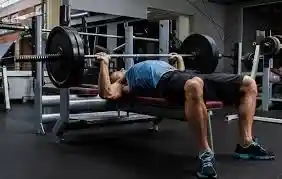
Avoid lowering the weight to the point where the top of the arms is below parallel if you are worried about the stability of your shoulder joint. This adjustment lessens shoulder strain, even though you might not benefit from the complete range of motion.
Varied Bench Press Grips:
After you’ve mastered the bench press, switch up your grip to target slightly different muscles. While a narrower grasp will enhance the use of the triceps, a wider grip will increase the use of the pectorals.
Incline Bench Press:

An incline bench is used in another form of the bench press. The anterior deltoids of the shoulder are highlighted when lifting from an incline.
A barbell or dumbbells can be used for an incline press. With the weight slightly above your chest, sit on the incline bench. Lower the weight gradually to the beginning position after pressing it towards the ceiling.
Decline Bench Press:
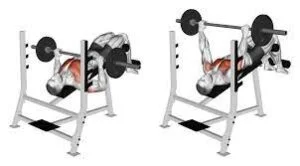
This exercise can also be performed on a decline bench, which more effectively highlights the pectoralis major. The basic steps for a decline bench press are the same as those for a regular bench press, except they are performed from a declined position.
Safety and Precautions:
- If you have a shoulder issue, stay away from this workout. Replace the weights and stop the exercise right away if you have any shoulder pain while performing the bench press.
- Bench presses without weight on the bar can help beginners warm up, feel the bar, and develop correct form. You can also improve your grip by wearing a pair of weightlifting gloves.
- Use a power rack when pressing large weights. The bars on either side of this rack are positioned at chest height. The bars on a power rack keep the barbell from crushing your chest if your lift fails.
- Start with an unweighted barbell and perform three sets of ten repetitions. Once you are able to do this exercise safely and correctly, add weight. Every week, add 2.5 pounds on each side of the bar.
Common Mistakes:
Shifting Bar Over the Neck or Mouth:
When racking or unracking, make sure the bar’s course is not too low—over the mouth and neck area. With your arms outstretched rather than low across your face and neck, move the weight to and from the rack.
Inappropriate Grip Width:
Typically, your grasp on the bar should be sufficiently wide to place your forearms in a perpendicular plane and your elbow joints at a minimum right angle. You run the danger of hurting your pectoral muscles if you have an excessively wide grip and extended elbows.
Incorrect Position of the Thumb:
The thumb position is another grip-based error. The thumbs should be positioned beneath the bar and across the tops of the fingers in an overhand grip. Avoid locking your thumbs under your fingers or behind the bar.
Suddenly Locking Elbows:
You can “lock out” your elbows when performing a bench press, despite some weightlifting safety advice to the contrary.5 The secret to making this action safe is to avoid locking your elbows abruptly or forcefully.
Head Pressing Into a Bench:
For stability, keep your feet firmly on the floor and your head flat on the bench. To help with the lift, tighten up your neck muscles rather than pushing your head into the bench.
FAQs
Which bench press exercise is best?
The flat bench is ideal for targeting the entire chest. According to this study, it more successfully engages the middle and lower pecs. It’s an excellent option for learners as well. An incline bench can be useful if you want to concentrate on your upper chest.
How much should you bench press?
Your fitness level, size and shape, lifting experience, and objectives all influence how much weight you should bench press.
These charts might give you a decent sense of your lifting capacity. After that, you can modify the weight to suit your fitness objectives.
For instance, you might want to use less weight and do more repetitions if your goal is physical endurance. However, doing fewer repetitions with higher weights can be a better choice if your goal is to gain strength.
What are the facts about the bench press?
The pectoralis major, anterior deltoids, and triceps brachii are the main muscles used in the compound exercise known as the bench press. Stabilisation involves additional muscles in the legs, back, and core. Although a set of dumbbells can also be utilised, a barbell is often used to support the weight.
What are the risks of bench press?
Weights that are dropped or crushed on the chest have been known to cause asphyxia and to shatter ribs. Small tears in MSK tissue are caused by exercises like the bench press, which need to be fixed and remodelled to increase strength. When the body is not given enough time to recover from the damage, overuse injuries occur.
What is a typical error made when performing a bench press?
Your elbows are flared out. Approximately 80% of benchers make this error, so pay attention since you most likely do too! When doing a barbell bench press, try to keep your elbows as close to your torso as possible.
References:
- Rogers, P. (2024c, August 20). How to bench press: proper form, variations, and common mistakes. Verywell Fit. https://www.verywellfit.com/how-to-do-the-bench-press-exercise-3498278
- Chertoff, J. (2023, May 24). What muscles do bench presses work? Healthline. https://www.healthline.com/health/exercise-fitness/bench-press-muscles-worked