Deadlifts
Introduction:
Deadlifts are a powerful compound exercise that strengthens the lower back, glutes, hamstrings, and core. They help improve overall strength, posture, and functional movement by training the body to lift objects safely from the ground.
Strong legs and butts can be developed with the deadlift. In a deadlift, the majority of your body’s main muscle groups work in tandem with your leg and hip muscles to lift weight from the floor to thigh level. Although dumbbells can be used, a bar and plates or a stationary barbell are typically used for the deadlift. In general fitness training, you shouldn’t overlook this powerlifter’s specialty. To increase muscular and functional fitness, incorporate deadlifts into your strength-training routines.
Since the beginning of human history, the capacity to lift an object off the ground has been a fundamental movement. You stoop to pick up something that has fallen. Grocery bags, boxes, and your kids are all examples of items that you will eventually have to stoop down and pick up.
The basic elements of the deadlift, along with many other everyday actions, are a hinge at the hip and a squat, which are necessary only to sit in a chair. Gaining proficiency in these motions will improve your own and others’ quality of life.
Muscle Work During Deadlifts:
- Quadriceps Muscle
- Glutes Muscle
- Adductor Magnus Muscle
- Hamstrings Muscle
- Spinal Erectors Muscles
- Latissimus Dorsi Muscle
- Trapezius Muscle
- Rhomboids Muscle
- Obliques and Abdominal Muscles
How to Perform Deadlifts?
Choose two dumbbells or a lightweight barbell.
- Use an overhand or mixed grip to hold the bar slightly outside the line of your knees.
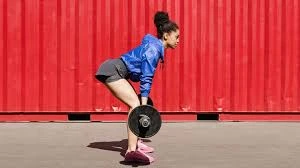
- Place your toes under the bar and your feet shoulder-width apart, or slightly more. Your feet may point straight ahead or at a small slant. On the surface, heels should remain flat. The bar will move near and might even brush your shins when you raise and lower it. Maintain a neutral spine position.
- Work the muscles in your abdomen.
- While keeping your back flat, relaxing your knees, and maintaining good form, gradually reduce the weight as much as possible.
- Push upward with your legs from your knees to raise the bar. When you exhaust yourself, exhale. Take care not to elevate the hips first, which would cause the back to round out and the trunk to slide forward. Avoid attempting to raise the bar with your arms. As the legs push up, the arms remain taut and extended while holding onto the bar. Imagine the hips, the balancing point, going upward in tandem with the shoulders and legs.
- When you reach your greatest height, the bar should rest around your thighs and barely touch your shins. Without bending back, pull the shoulders back as far as you can.
- Make sure your back is straight as you lower the bar in reverse towards the floor.
- Keep going until you’ve completed the required number of repetitions.
Benefits:
Increases Muscle Mass:
Deadlifts are well known for increasing muscular mass, which is advantageous for bodybuilders and those who wish to stop or reverse aging-related muscle loss. One Deadlift can help you develop stability, core strength, and general strength.
Increases Metabolism:
The number of calories you burn while at rest is determined by your metabolism. Your metabolism is accelerated by lean muscle. You can assist speed up your metabolism by gaining more lean muscle. Deadlifts are an excellent option for increasing the proportion of lean muscle in your body since they target some of the largest muscle groups.
Enhances Functional Fitness:
The deadlift is a functional workout since it’s one of the finest ways to replicate the lifting you perform all day. You will be able to lift and carry objects in daily life with less risk if you can deadlift with proper form.
Variations:
Dumbbell Deadlifts:
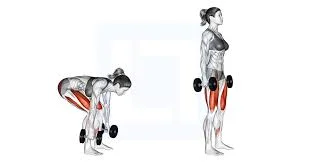
Try a kettlebell or vertical dumbbell deadlift with a smaller weight if you don’t have access to a barbell, or if the weight of the bar is too difficult. Like with a barbell, grasp the object with both hands and lift it by hinging at the hips. As an alternative, a range of full-body workouts, such as deadlifts, can be performed with exercise sandbags.
Romanian Deadlifts:
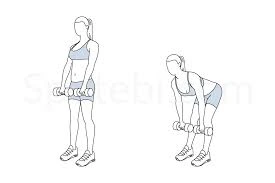
Romanian deadlifts begin the lift from a standing position rather than a squat, which is the primary distinction between them and standard deadlifts. The posterior chain muscles, which include the muscles that run along the back of your body, like the hamstrings, calves, and glutes, are worked by this variant. Additionally, you can perform the Romanian deadlift with offset feet, which may more precisely resemble real-life scenarios involving the lifting and transportation of large goods.
Elevated Deadlifts:
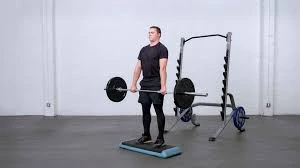
The bar begins at a greater height utilising a rack, but the user is free to adopt any posture they like. The bar’s height can be changed to suit the individual’s preferences. This enables the individual to concentrate on improving weak areas, lifting larger weights, or imitating a comparable activity.
Stiff-Leg Deadlifts:
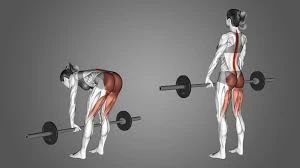
This type of deadlift involves standing the entire time, keeping your knees nearly locked and your legs rigid. As you bend forward and stand back up, keep the bar close to your body and maintain a neutral spine. Compared to regular or Romanian deadlifts, the stiff leg deadlift engages the hamstrings and gluteus maximus more.
Suitcase Deadlifts:
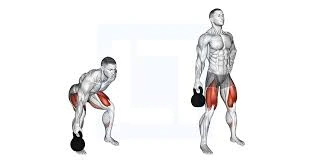
This variation calls for utilising just one hand to lift a weight on one side of the body at a time. Consider the motion involved in taking up luggage. Because you use those muscles to keep your body from slanting to the side with the weight, it is a great way to strengthen your core.4 Instead of maintaining straight legs, this exercise calls for bending as though to squat, like in a typical deadlift.
Sumo Deadlifts:

With their arms inside their thighs, they adopt a broader stance. Using the hips rather than the back, the trunk maintains a more erect posture. Sumo deadlifts are an excellent way to switch up the exercises and target different muscle groups.
Other Variations:
Bars:
Variety can be added by switching up the type of bar used. Stiff bars, hex bars, or bars with a greater diameter change the stresses and demands.
Stiff bar: Most bench presses and squatting lifts employ this type of barbell, which is the most popular version. By raising the mechanical tension at the hip and low back during the corresponding concentric and eccentric phases of the lift, the stiff bar promotes the activation of the hamstring and erector spinae muscle groups.
Hex bar: A hex bar is a specifically made barbell that minimises the horizontal distance between the lifter and the weight being lifted by having the lifter stand inside a hexagon-shaped barbell. The quadriceps muscle group is activated more when the hexagonal bar raises the mechanical moment at the knee and decreases the moment from the hips and lumbar spinae. targeting the Vastus Lateralis more precisely.
Fat bar: By increasing the bar’s diameter or by adding fat bar attachments, the forearm and hand muscles must exert more force to complete the lift. When performing a 1RM of a traditional deadlift, the fat grip attachments increased the muscle activity of the forearm and shoulder musculature, as determined by electromyography.
Resistance:
Throughout the deadlift’s range of motion, resistance can be increased or decreased by using resistance bands and chains. The capacity to modify the deadlift motion for various populations can be enhanced by using different kinds of resistance. Resistance bands, kettlebells, and dumbbells are utilised to help populations with certain disabilities mimic the motion of a deadlift.
Grips:
Double Overhand Grip: Put both hands around the bar, palms facing your body.
Opposing Grip: One hand is wrapped around you with the palm facing you, while the other hand is wrapped in the opposite direction with the palm facing away from you, much like in a double overhand grip.
For lifters, this grip is typically thought to be more comfortable. However, because you are putting more strain on the biceps while the arm is supinated, there is a higher chance of a distal biceps rupture.
Speed:
It is possible to alter the lift’s speed. A lifter’s capacity to produce more power through that movement is improved by increasing the velocity. Training with a decelerated lift can lengthen the time the muscles are under tension, increasing force output and strength.
Safety & Precautions:
An advanced weightlifting exercise is the deadlift.
- If you have any injuries or conditions affecting your legs, knees, ankles, hips, back, shoulders, or wrists, consult a healthcare professional to determine whether it is suitable for you.
- Make sure you get the right instructions for the right technique.
- Start with light weights and quit if you experience any discomfort.
- It’s recommended to use smaller weights when pregnant, and you might want to adopt the broader sumo stance. For additional support, women should think about donning a high-neck sports bra.
Common Mistakes:
Although deadlifts have several advantages, it’s crucial to perform them correctly. It’s not worth taking chances because a deadlift injury could prevent you from exercising while you heal. To maximise the benefits of this exercise and reduce your risk of strain or injury, stay away from these mistakes.
Rounding Your Shoulders or Back: Avoid rounding your spine or shoulders and maintain a straight back. The hip is where you should be hinging. Butt out and keep your hips down. To maintain a straight back, contract your core.
Using Your Back or Arms to Lift:
Although the arms, shoulders, and back play a crucial stabilising function, the secret for novices is to lift with the legs and hips. Throughout the deadlift, maintain a straight arm position. Bending your arms can strain your biceps.
Excessive Weight Use:
Start with modest weights and work your way up to a decent form. You can be checked for proper form by a personal trainer or gym member. If needed, practise in front of a mirror. As your level of fitness rises, you can add weight, but it’s best to do so gradually to avoid overtaxing your muscles. Wearing appropriate footwear, such as these top CrossFit sneakers, is crucial for any weightlifting workout.
Partial Lifts:
You can perform repetitions with a light weight by lowering the bar to your shin or even the floor, then straightening it again without letting go of the bar. This isn’t really a repetition of a deadlift. Practicing a full lift, lowering to the floor, and starting over from a standing position is preferable.
The bar is too far from the body:
People occasionally place the weight too far away from their bodies when performing deadlifts. For optimal lift efficiency and safety, the bar should move in proximity to the body. When lifting and lowering, it’s acceptable to skim the front of your legs.
FAQs
What is the deadlift exercise for?
Your hips, glutes, lower body, core, and back will all become active. In particular, a deadlift works the following muscle groups: In all deadlift variations, your glutes—the gluteus maximus, gluteus minimus, and gluteus medius—help stretch and stabilise your hips.
Is deadlift better than squats?
The deadlift should be your top choice if you want to improve your back, hamstrings, and glutes. While the squat also engages these muscle groups, the deadlift emphasizes the posterior chain more than the squat does.
Is deadlift good for belly fat?
If you are in a calorie deficit, deadlifts can help burn belly fat. Several muscle groups are used in this workout, which can aid in fat loss and calorie burning.
What is the disadvantage of deadlifts?
Lifting too much weight: deadlifting puts a lot of strain on the lower back and hips. An imbalance in the distribution of load between these regions may result from poor technique caused by extra weight, which frequently increases load at the lumbar spine and raises the risk of injury.
What is the most common injury from deadlifts?
Although deadlifts are an excellent exercise for maintaining fitness and strength, they can also be dangerous if you don’t know how to perform them. One-sided lower back pain is one of the most frequent deadlift injuries. Lifting too much weight, using poor form, or just being overly tired can all contribute to this.
What is the hardest part of a deadlift?
One of the deadlift’s lovely simplicity is that, if you lack the strength to raise the weight on the bar, it remains on the floor, mocking you as you walk away in despair. For most lifters, the most difficult part is getting the weight to break off the floor.
If you deadlift every day, what would happen to your body?
Your body can be greatly improved with this compound strength training workout. According to the findings of numerous studies, deadlifts will help you develop muscle mass in your legs, glutes, and upper back. Cut down on body fat.
References:
- Rogers, P. (2024, June 4). Deadlifts: proper form, variations, and common mistakes. Verywell Fit. https://www.verywellfit.com/how-to-do-the-deadlift-3498608
- How to Deadlift | Deadlift Variations & Workouts. (n.d.). PureGym. https://www.puregym.com/exercises/legs/hamstring-exercises/deadlifts/