
10 Best Gluteus Maximus Exercises
The gluteus maximus is the largest muscle in the buttocks, essential for hip extension, posture, and power in movements like running and lifting. Strengthening this muscle improves athletic performance, supports the lower back, and enhances overall stability.
The gluteus maximus is crucial for movements including standing, walking, and running.
The Advantages of Gluteus Maximus Exercises:
It believes that stronger glutes can benefit almost anyone because these muscles are so important for healthy, daily functioning. The American Sports and Fitness Association cites numerous explanations for this:
- You might experience less hip and knee pain. The lower-body joints can become more flexible and less strained with stronger glutes.
- You could experience less back discomfort. Gluteus maximus workouts help to build strength and ease lower back stress.
- You’re less prone to injuring yourself during activities.
- Your glutes will provide more power, which will enhance your athletic performance by enabling you to run faster, jump higher, and cycle farther.
- Your balance may improve as you develop a firmer platform for physical activity, making you less prone to fall.
- Your posture may improve when your lower body gains strength and any back, hip, or knee pain subsides.
- As you age, you’ll be able to move more easily throughout the day. Having strong glutes makes it easier to get out of bed, rise from a chair, and climb stairs.
10 Best Gluteus Maximus Exercises:
Gluteus stretch

- The workout begins in the supine posture.
- After lifting the knee joint, the patient lies down on his back and crosses the right ankle joint to the left knee joint.
- Next, gently grasp the left thigh.
- Pull the hip joint towards the chest.
- For 30 seconds, maintain this stretching position.
- The stretching should then be repeated with the other leg.
- In a single session, perform this stretching three times.
- Then do three sessions per day.
Seated figure-four stretch

- This is often referred to as the Seated Pigeon Pose.
- Start with a sitting position.
- The patient sits up in a rigid chair.
- Position your right ankle closest to the knee joint on the left thigh.
- Then, place the hands on the shins.
- Then, maintain a straight spine and bend forward a little to extend the stretch.
- Repeat three times in a single session after holding the stretching position for 30 seconds.
- Then return to the stretching position you started from.
- After that, repeat with the opposite leg.
- You can also practice this stretching while standing or sitting on the floor.
Glute bridge

- Start in supine position.
- Flatten your feet onto the floor as well as flex your knees.
- Slowly elevate your hips while engaging your abdominal muscles.
- Hold for 10-15 seconds.
- After that, drop your hips and repeat.
Side Leg Raises

- Start with side lying.
- The head should be supported by one hand resting on the elbow.
- Flex the foot of the upper leg and elevate it while activating the core. Keep the upper leg straight. Lower it carefully.
- Repeat 10 to 12 times.
- Lie on the opposite side and repeat.
Glute activation lunge

- Start with a standing position.
- Attach your feet and hold your arms by your sides.
- Turn back using the left leg and crossing the left leg underneath the right. Engage your core.
- Maintain your weight on your right foot.
- Repeat by alternating sides.
Lunge jumps
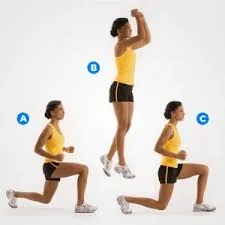
- Straighten your posture and advance with your right leg.
- Making a lunge involves bending your knees and lowering your upper body.
- Jump up, changing the position of your legs such that the left is now in front. Land and move into a lunge with your knees safely bent.
- Jump again and then repeat.
Step Up

- Stand in front of the step stool.
- Raise your right heel to elevate your body after your right foot is on the step.
- Take a left footstep onto the step.
- Start by lowering your right foot, then your left.
- Repeat, this time beginning with your left foot.
- Keep switching sides for the required number of reps.
Cable Machine Kickback
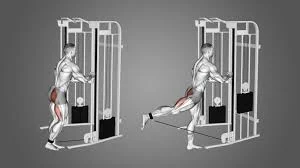
- A cable machine should be placed on an ankle strap and adjusted to its lowest setting.
- Pull the band tighter across the ankle on the left while standing.
- Balance on your right foot while kicking your left foot around two feet behind you.
- Return to your starting position with control using your left foot.
- Continue until you reach your target amount of repetitions.
- Repeat on the opposite side.
Bent-knee hip extensions

- Start by bending your knees and getting down on all fours.
- Lift the left leg slowly while maintaining a 90-degree bend in the knee by contracting the left glute muscles while maintaining a straight back and a stable core.
- Proceed to the start and repeat the procedure on the other side.
Knee to Chest
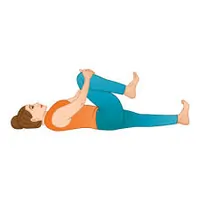
- The starting position is supine.
- Lie on your back.
- Begin with the left or right knee.
- Gently raise the bowed knee to your chest with your hands.
- Hold for ten seconds.
- The knee-to-chest practice should be repeated with the other knee.
- Repeat this exercise 10 times every session, three times per day.
Why is strengthening important?
Strength training is beneficial for general health.
Strength training includes:
- Muscle strength: Strengthening workouts improve muscle performance. A person can gain the strength necessary to carry out everyday tasks like lifting, standing, and walking with the help of glute exercises.
- Reduced discomfort: Exercises that build muscle can help with chronic discomfort from conditions like arthritis.
- Improved metabolism: Increasing muscular mass over time may boost metabolism.
- Muscle strengthening improves coordination and reduces the risk of falling.
What Precautions should I take when exercising?
- Start slowly. These are preliminary exercises. Consult your doctor to see if more advanced exercises require the services of a physical therapist. As you gain strength, you may be able to perform additional sets of each exercise or add weights.
- Stop if you are in pain. It is typical to feel some discomfort at first, although you may not experience pain. Over time, regular exercise will help ease the pain.
- Warm up before performing glute workouts. Spend five to ten minutes warming up your muscles by riding a stationary bike or walking.
Follow the exercise program advised by your healthcare provider. The best exercises for your circumstances will be suggested by him or her. Additionally, he or she will provide you with advice on how often and how many repetitions to perform the workouts.
Summary
When walking, climbing, standing, or lifting, the gluteus maximus can be strengthened to improve the body’s stability.
You may perform this exercise at home without any special equipment. This makes them simple to include in a current fitness regimen.
Muscle-strengthening activities can help people feel stronger, reduce chronic pain, boost metabolism, and minimise the chance of falling.
FAQs
Which workout is ideal for your gluteus maximus?
Split Squat.
Step Up.
Lunge.
Cable Machine Kickback.
Romanian Deadlift.
Good Morning.
Glute Bridge.
How does the gluteus maximus function physiologically?
It is the largest and strongest muscle. Positioned at the rear of the hip joint, it is the largest and most superficial gluteal muscle.
Which three functions does the gluteus maximus serve?
The main functions of the gluteus maximus muscle are to externally rotate and extend the thigh at the hip. Furthermore, the higher section might cause thigh abduction, whereas the inferior part produces thigh adduction.
How may gluteal maximus discomfort be relieved?
One useful technique for reducing stress and gluteal muscle soreness is stretching. The pigeon posture and the piriformis stretch are two exercises that effectively stretch the muscles located deep within the buttocks.
How can the gluteus maximus muscle be relaxed?
To start, take a seat and spread your legs out in front of you. Reach for your shins or toes while bending forward from the hips. Instead of tensing your glutes, concentrate on releasing them. Wait 30 seconds.
Does riding a bike help your glutes?
The glutes can be toned with both ellipticals and cycles, despite their differing methods of action. Increasing glute involvement on ellipticals can be achieved by utilising slope characteristics and adjusting resistance. For a more intense glute workout, try riding a stationary bike off the saddle for specific glute conditioning.
Referances
- Klein, S. (1970, January 1). 7 Moves to Train Your Gluteus Maximus, aka the Largest Muscle In Your Body. https://www.onepeloton.com/blog/gluteus-maximus-exercises
- Farnsworth, C. (2022, April 26). What hip abduction exercises may help strengthen muscles? https://www.medicalnewstoday.com/articles/hip-abduction-exercises
- Vastralphysiotherapyclinic. (2024, March 3). Gluteus maximus muscle. Mobility Physiotherapy Clinic. https://mobilephysiotherapyclinic.net/gluteus-maximus-muscle/


