Core Stability Exercises to Improve Everyday Balance
Introduction
Exercises that work the different core muscles include planks, crunches, and bridges. A person’s mobility, stability of the spine and trunk, and ability to support daily activities can all be enhanced by exercising these muscles.
Many daily tasks require the use of your core, such as pulling a grocery cart or putting on shoes. Additionally, it impacts your stability, posture, and balance.
Regardless of what many people think, your core is more than simply your abdominal muscles. It also includes the muscles surrounding your pelvis and in your back.
Muscles for Core Stability Exercises
Erector spinae
Three back muscles that extend up your trunk are called the erector spinae. It facilitates sideways bending, head rotation, and standing up straight after bending over.
Rectus abdominis
The rectus abdominis is an abdominal muscle that is used when you bend forward. It is sometimes referred to as the “six-pack” muscle.
Obliques
Your trunk can be bent or rotated with the support of your external and internal obliques.
Transverse abdominis
Your pelvis is stabilized by the transverse abdominis, which covers the front and side of your trunk.
Multifidus
Your spine is supported by the multifidus in your back.
Your core also consists of the following muscles:
- Pelvic floor
- Diaphragm
- Glutes
- Muscles that attach to the pelvis (hamstrings, hip flexors, and hip adductors)
Maintaining the strength of these muscles improves your general fitness, supports your spine, and stabilizes your body.
Core Stability Exercises to Improve Everyday Balance
Bridge

This pose develops your thighs and butt while strengthening your core by using your glutes to raise your hips.
Begin by lying on your back. Put your hands palms down at your sides.
Tighten your glutes and core.
Lift your hips till your knees and shoulders line up.
Hold for ten to thirty seconds.
Do this three to five times.
Crunch
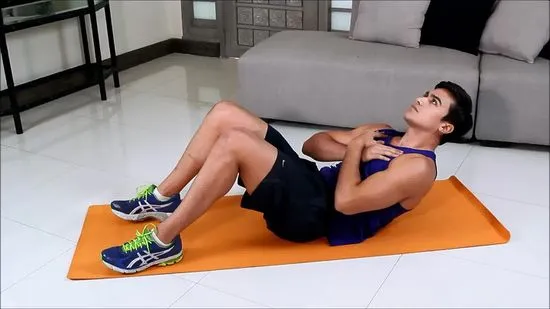
A traditional exercise for strengthening the core is the crunch. Your abdominal muscles are worked as you raise your upper body.
Do crunches carefully if you at times have low back pain; start with a few repetitions and advance slowly.
Before doing this traditional crunch, consult a qualified trainer or medical expert if you have chronic low back problems. For you, it might not be the ideal choice.
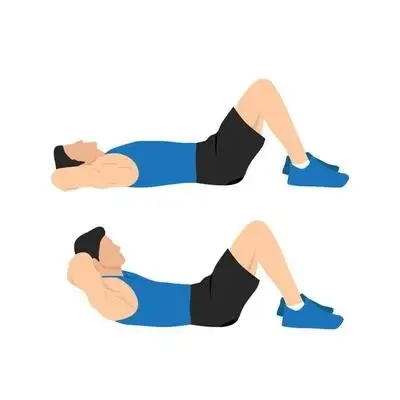
Begin by lying on your back. Align your spine and head. Your arms should be crossed over your chest.
Relax your shoulders and neck. Take a moment. Return to the beginning position by slowly lowering your upper back.
Supine toe tap

This is a simple Pilates exercise. It works your legs, hips, and core muscles.
Additionally, toe taps put very little strain on your spine. Toe taps could be a great substitute for crunches if you have back problems.
Begin by lying on your back. With your knees bent to a 90-degree angle, raise your legs. Put your hands palms down at your sides.
Make your core tighter. With your back flat and your left leg still, lower your right foot and lightly tap the floor.
To get back to where you started, raise your right leg.
Do the same with your left leg.
Bird Dog
The bird dog is a great way to build your core because it works your back and abdominal muscles. Additionally, it tests your stability, balance, and coordination.
With your hands below your shoulders and your knees below your hips, begin on all fours.
Make your core tighter. Raise your right leg to hip level and straighten it. Lift and extend your left arm simultaneously, palm down, to shoulder level. While extending your arm and leg, maintain a neutral spine and prevent your back from arching.
Take a moment.
Continue with your right arm and left leg.
Bicycle crunch

This version of a standard crunch works your hips, rectus abdominus, and obliques.
Your left knee should be bent and drawn toward your chest as you begin with your back on the ground. Maintain a straight right leg that is slightly raised off the ground. Take care not to pull on your neck as you place your hands behind your neck or on the bottom of your head.
Raise your right shoulder off the ground and extend your right elbow in the direction of your left knee while keeping your right leg straight and your left knee bent.
Raise your left shoulder off the ground and move your left elbow in the direction of your right knee as it gets closer.
Start with three sets of twelve alternating repetitions.
Plank
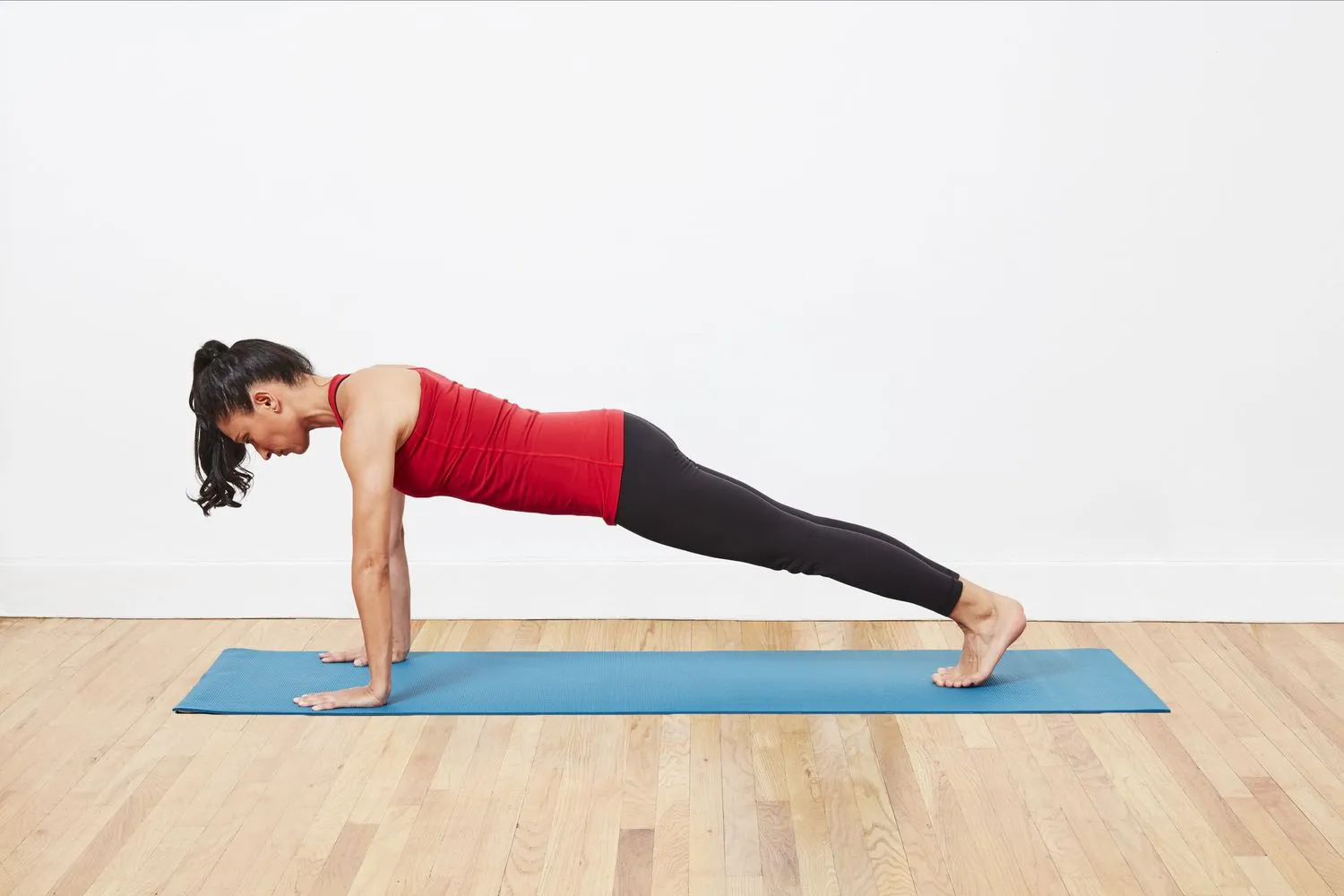
A full-body workout that works your core is the plank. Additionally, it makes your arms, shoulders, back, glutes, and legs stronger.
Place your hands beneath your shoulders and your knees under your hips to begin on all fours.
With your feet hip-width apart, straighten your legs behind you. Make your core tighter.
Hold for ten to thirty seconds.
Do this three to five times.
Keeping your knees on the floor and your weight over your hands will make this exercise simpler. From your legs to your shoulders, maintain a straight line.
Warrior crunch

You can do this in supine as well as standing.
Your lower body, including your thighs, glutes, and quadriceps, as well as your core, is worked by this form of the crunch.
With your toes pointing outward, stand with your feet slightly wider than shoulder width. Open your chest and place your hands behind your head.
Tighten your glutes and core. Your thighs should be parallel to the floor as you bend your knees.
As you move your right elbow toward your right leg, bend your torso to the side. On the left side, repeat.
Bird dog with elbow to knee
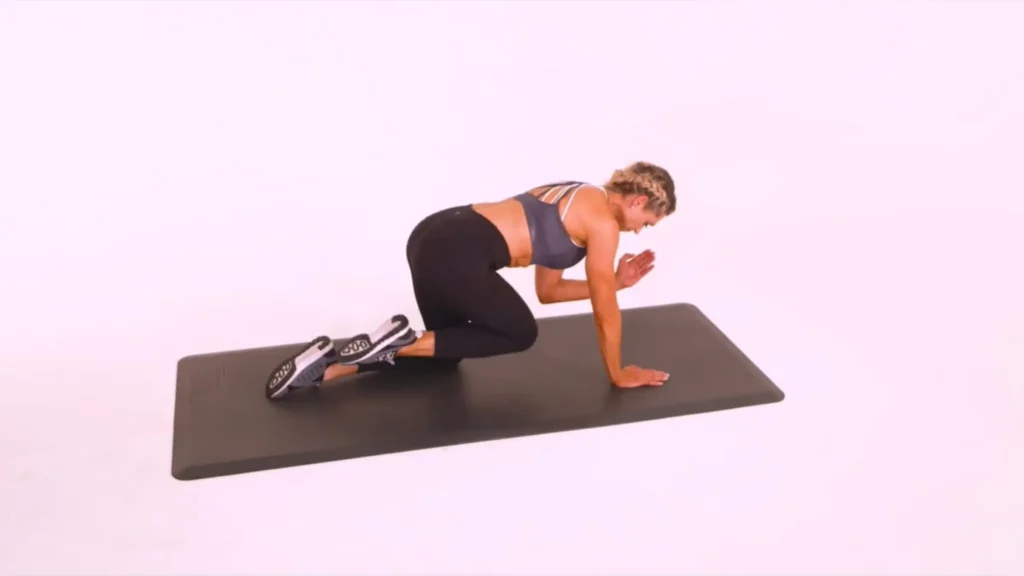
This version of the classic bird dog uses fluid motion to strengthen your core and work your back and abs.
With your hands below your shoulders and your knees below your hips, begin on all fours.
Make your core tighter. Raise your right leg to hip level and straighten it. Lift and extend your left arm simultaneously, palm down, to shoulder level.
Bring your left elbow and right knee closer to one another. Go back to where you were.
On the opposite side, repeat.
Mountain climber

This intermediate workout is great for strengthening your core and improving your balance because it incorporates knee motions with a plank.
With your hands below your shoulders, begin in a plank position. Make your core tighter.
Keeping your hips down and your back straight, raise your right knee toward your chest.
At the same time, raise your left knee toward your chest and return your right leg to the beginning position.
Keep switching legs.
Side plank with rotation
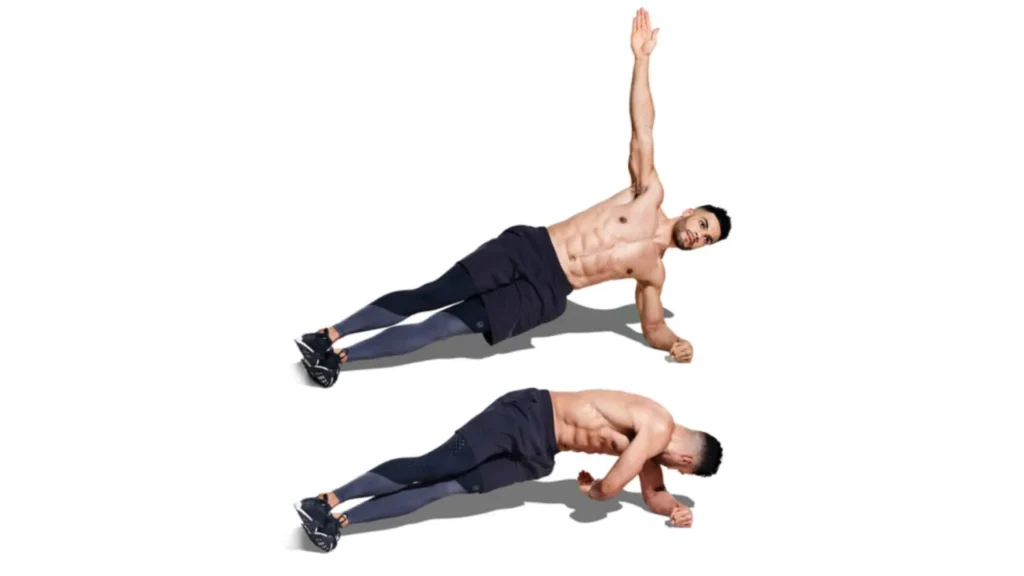
This is a more difficult variation of the basic plank. You may strengthen your arms, shoulders, and obliques by combining arm exercises with a side plank.
Place your right forearm under your shoulder while lying on your right side. Put your left foot on top of your right as you extend your legs. Make your core tighter.
Raise your hips so that your body is in a straight line. Lift your left arm straight up.
Bring your left arm below your body while rotating your torso toward the floor.
To get back to the beginning posture, rotate your torso once more and straighten your left arm.
On the opposite side, repeat.
Turkish get-up
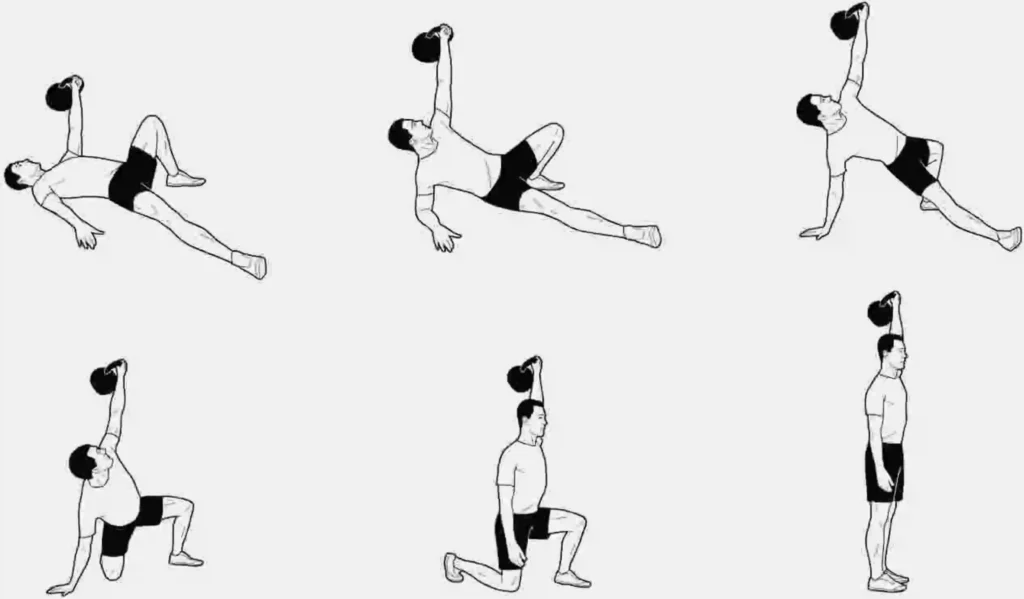
This full-body exercise is an excellent method to improve mobility in your hips, lumbar spine, and thoracic spine in addition to increasing spinal stabilization. It’s also excellent for strengthening your shoulders and the ab muscles that surround your spine.
To make sure your shoulders are stable enough to support weight overhead, try this exercise once or twice without a weight. Then, start with something light, like five pounds. As you gain strength, use a bigger weight.
With your arms at your sides at a 45-degree angle and your legs straight out, lie on your back.
Put your right foot on the ground a few inches from your butt while bending your right leg.
To assist sin stabilizingyour shoulders, raise your right arm straight up toward the ceiling while clenching your right hand into a fist and pointing your knuckles upward.
The weight will finally be in your fist, so keep your attention there. Throughout the entire exercise, you should maintain your fist just over your shoulder.
Then, with your torso looking out in front of you rather than up toward the sky, push through your right heel and your left elbow to support yourself on your left elbow.
Next, bring your body into a seated position by pressing your left hand into the floor, letting your abs perform the majority of the effort.
Next, slide your left leg below you, ensuring that your left ankle and knee line up with your left hand.
Take your left hand off the floor and kneel with your right foot and left knee on the ground.
Press your right foot into the ground and extend your left leg forward, as if performing a lunge, while maintaining your right arm raised. You have to be standing now!
Repeat the motions in reverse until your back touches the floor once more.
Start with three to five repetitions.
FAQs
Can core exercises help with gastroparesis?
For those with gastroparesis, stretching and flexibility exercises can assist increase mobility and relieve tense muscles. Pilates, yoga, and light stretching are some examples of these workouts. Additionally, they can ease stomach pain and help with posture.
What core exercises should a person with scoliosis avoid?
Because they abnormally arch and strain the back, some common core-strengthening exercises, such as sit-ups, pull-ups, and push-ups, should be avoided by people with scoliosis.
Which exercises should be avoided with high BP?
Exercises to avoid
For instance, any short-duration, very intense exercise, like weightlifting or sprinting.
What drink before bed lowers blood pressure?
Regular intake of hibiscus tea, a herbal drink without caffeine, may help decrease blood pressure. There is no one ideal time to drink it; instead, it depends on your preferences and needs. Because a drink is by nature calming and caffeine-free, think about using it in the evenings.
What position increases gastric emptying?
Because delayed stomach emptying can result in reflux symptoms, patients with gastrointestinal reflux symptoms may experience fewer nocturnal symptoms if they sleep in the proper recumbent position. Conclusion: When a subject rests on their right side as opposed to sitting, their stomach empties water more quickly.
What exercises improve digestion in the core?
Exercises like sit-ups, leg lifts, abdominal twists, and crunches can assist improve digestion and strengthen your core. Four to five times a week, try to incorporate these activities into the way you exercise.
What are the most important muscles for core stability?
The transverse abdominis, which is located deep in the belly and wraps around the spine, supports the pelvis and spine, acting as the primary stabilizer muscle of the core. Additionally, it assists and protects the interior organs of your core.
What are common core exercise mistakes?
Error 1: Performing a plank incorrectly or for an extended period of time is the most frequent.
Error 2: By performing numerous crunches, situps, and front planks, you only strengthen your “anterior” core, or the muscles in the front of your body.
Error 3: You constantly “suck in” your stomach or hold your breath.
Which side of the body is weaker with scoliosis?
In most cases of adolescent idiopathic scoliosis (right thoracic curve), the left side is weaker, and the right side is tighter and more active. The spine bends to the right, which makes the muscles on the left (concave) side stretch and not work as much, which makes them weak. On the other hand, the right (convex) side has to work harder to stay balanced.
Important Information About Scoliosis Weakness:
Concave vs. Convex: The muscles on the concave side (the “inside” or dent of the curve) are usually shorter and weaker, while the muscles on the convex side (the “outside” or rounded part) are stronger but tighter.
In a typical case of dextroscoliosis, the spine curves to the right, and the left side is weaker.
Levoscoliosis is an unusual case where the spine bends to the left, and the right side is weaker.
How to Treat: To make the spine more balanced, treatment usually focuses on strengthening the weaker muscles on the concave side and stretching the tighter muscles on the convex side.
How do I test if my core is weak?
Test of Trunk Curl-Up
To level the shoulder blades, raise your upper torso off the ground and curl your upper trunk like you’re executing a crunch. The pelvis should tilt posteriorly, the lower back should flatten, and the upper trunk should round. Your core is weak if you can’t perform these exercises.
How to know if the core is strong?
A strong core makes it easier to move around every day, like twisting or lifting, by improving posture, reducing low-back pain, and improving balance. Being able to hold a plank for more than 60 seconds without your hips sagging and keeping your spine straight while carrying heavy things are two important signs.
Signs that your core is strong:
Better posture: standing or sitting up straight without even trying.
Less Back Pain: The core supports the spine well, which lowers the pressure on the vertebrae.
Better balance and stability: Less wobbling when you move on one leg or change directions.
Functional strength means being able to do things like carrying groceries, bending over, or lifting things easily.
Steady Movement: Moving in a smooth, controlled way without shaking or overdoing it.
Tests you can do on your own to see how strong your core is:
Plank Hold: Holding a plank that is straight and doesn’t sag for more than 60 seconds.
Heel Taps: Lying on your back and lowering your heels to the floor without bending your lower back.
Balance on One Leg: Stand on one leg with your eyes closed for more than 10 seconds.
What are the signs of a weak core?
If your core is weak, your spine won’t be stable, which can lead to chronic low back pain, bad posture (slouching), hip and knee pain, and less balance. The core is the body’s powerhouse for stability and movement. When it is weak, other muscles have to work harder to make up for it, which makes you tired, makes you move less efficiently, and increases your risk of injury.
Main Effects of a Weak Core:
Lower back pain: The spine doesn’t get enough support from the abdominal muscles, which puts more stress on the discs and vertebrae.
Bad posture: Weakness can make you slouch, round your shoulders, or tilt your pelvis forward.
Overall Weakness and Tiredness: Daily tasks become tiring because the body can’t transfer power well.
Problems with balance and stability: It’s harder to stay stable, which often means you have to rely on other people or furniture for support.
Muscles that are overworked or hurt: When the back or limbs are overworked, the risk of injury goes up.
Visible “Pooch” or Rib Flare: Low abdominal tone can cause a “tummy bulge” (which doesn’t have to be fat) or a rib cage that sticks out.
Signs that your core is weak:
You can’t stay in a plank position for 50 seconds.
Your lower back hurts after standing for a long time.
You have trouble sitting or standing up straight.
You realize that you are holding your breath while you work out.
References
- 7 core stability exercises. (2023, October 27). https://www.acefitness.org/resources/everyone/blog/6313/7-core-stability-exercises/?srsltid=AfmBOoomeAztlHgjPIxEb2p8833YXpCFYdB3o2LWuy3C-tIw3XS6Xq70
- Core stability exercises – physiotherapy – treatments – physio.co.uk. (n.d.). https://www.physio.co.uk/treatments/physiotherapy/core-stability-exercises.php
- Dias, A. (2024, April 24). 10 lower AB exercises to add to your fitness routine. Healthline. https://www.healthline.com/health/exercise-fitness/lower-ab-workouts
- Ms. R. R. (n.d.). Risk vs. reward: core exercises [Video]. https://blog.nasm.org/progressive-core-training
- Ninjas, N. (n.d.). Core stability exercises in sitting. The Note Ninjas. https://thenoteninjas.com/blog/f/core-stability-exercises-in-sitting
- Nunez, K. (2024, April 24). The best core exercises for all fitness levels. Healthline. https://www.healthline.com/health/best-core-exercises
- Trust. (2015, September 18). Core stability exercises (a pilates-type approach). MS Trust. https://mstrust.org.uk/health-professionals/resources/clinical-learning/core-stability-exercises-a-pilates-type-approach