Best Exercise For Morning Stiffness
Introduction
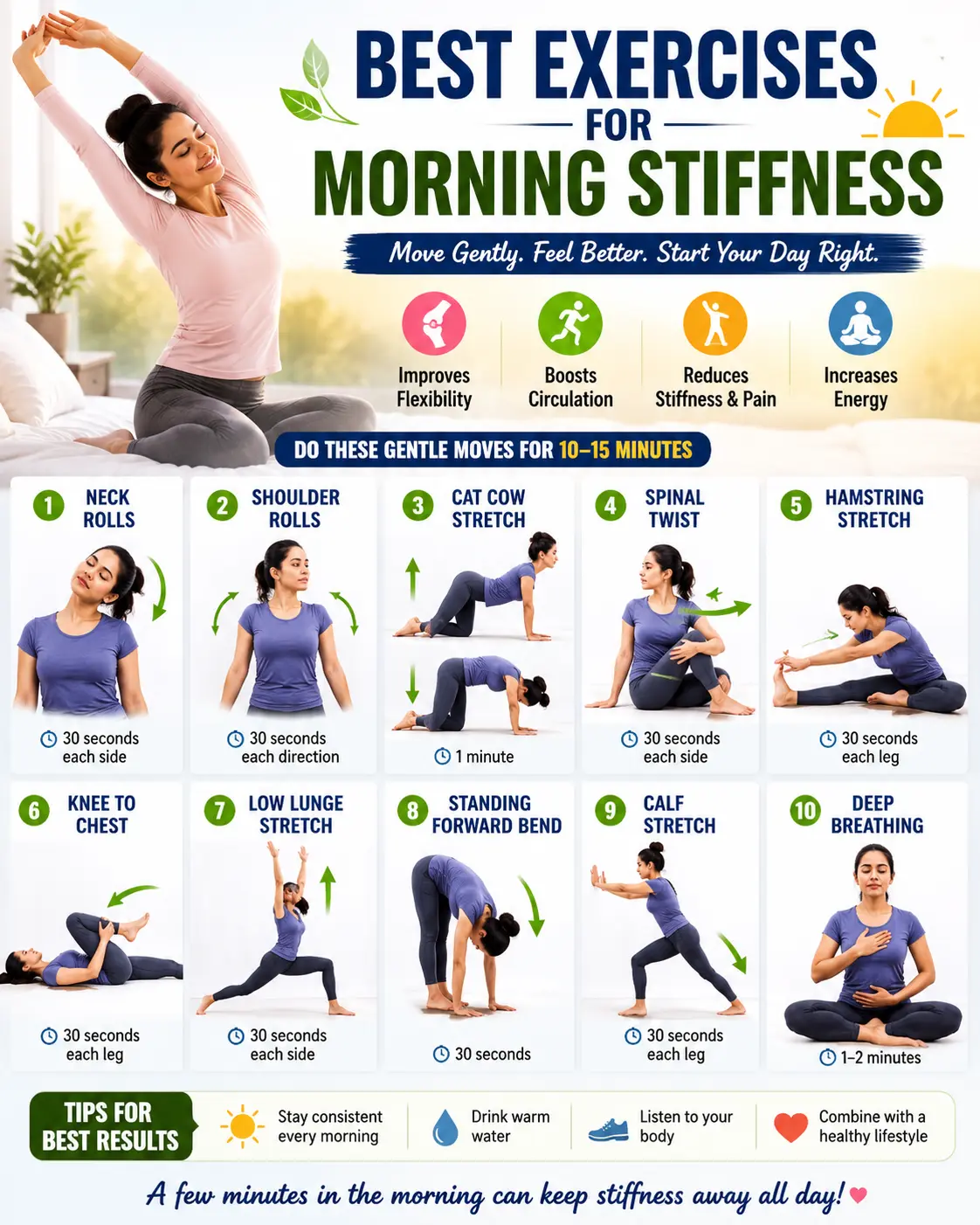
Morning stiffness is a common problem that can affect people of all ages, especially older adults, individuals with arthritis, and those who spend long periods sitting or sleeping in one position. It often causes tight muscles, stiff joints, reduced flexibility, and discomfort when getting out of bed. Fortunately, performing a few gentle exercises in the morning can help loosen the body, improve circulation, and prepare your muscles and joints for daily activities.
Simple stretching and mobility exercises increase blood flow to the muscles, enhance joint lubrication, and improve range of motion. Movements such as neck stretches, shoulder rolls, cat-cow stretches, spinal twists, and hamstring stretches can effectively reduce stiffness and promote better mobility. These exercises are low-impact, easy to perform at home, and suitable for most fitness levels.
Regular morning exercise not only helps relieve stiffness but also improves posture, balance, flexibility, and overall physical function. Spending just 10–15 minutes each morning on gentle movement can make a significant difference in how your body feels throughout the day. Whether your stiffness is caused by aging, arthritis, inactivity, or muscle tension, incorporating these exercises into your daily routine can help you move more comfortably, reduce discomfort, and start your day feeling refreshed, energized, and ready for activity.
Morning Stiffness
Have you ever wondered why you wake up with tight joints? You may be experiencing this for a variety of reasons, some of which are simply a natural part of life and others of which should worry you.
A breakdown in the cartilage covering the ends of the bones or a lack of lubrication in the joint spaces might be the cause of this morning pain or stiffness in persons with arthritis.
For some, however, it could persist and start to impact the remainder of the day.
Thankfully, there are a few strategies you can use to avoid or lessen morning stiffness.
Get some rest. Make sure you receive lots of restful sleep. Your body and mind refresh and revitalize in this way. It occurs when your body’s healing agents restore damaged parts. Make sure you give this procedure enough time.
Your mattress. Think about the state of your mattress. A bad sleeping posture and nighttime tension on certain muscles might result from it being overly stiff, too soft, or unsupportive.
Take a hot shower. Take a hot shower to start your day. The shower’s warmth helps ease tense muscles and make your morning more comfortable.
Take action. Incorporate movement throughout the day. Stretch, stroll, and/or engage in physical activity throughout the day.
Eat healthily. Recognize the impact of your diet on your joints.
With any luck, the following suggestions can lessen or possibly eliminate your morning stiffness and soreness in your joints. However, you might wish to consult a specialist for additional assessment if you encounter any of the following:
Joint stiffness in your back that makes it difficult to breathe deeply; morning muscle/joint discomfort that lasts longer than an hour.
Best Exercise For Morning Stiffness
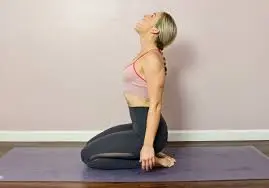
Child’s Pose

Your hips, pelvis, thighs, and spine—all of which can be a little tight in the morning—can be gently stretched out with this restorative position. If you’ve slept somewhat “wrong” or twisted up, it can feel fantastic. It can be useful for getting the day off to a good start because it also relaxes the brain and reduces tension and exhaustion.
If you don’t have a yoga mat, you should use a sturdy floor mat or carpet to cushion your knees so you won’t trip over the wood.
This lengthens your hamstrings, spinal extensors, piriformis, gluteus maximus, and other rotators.
This restorative position can gently stretch out your hips, pelvis, thighs, and spine—all of which can be a little tight in the morning.
Equipment needed: All of these poses are fantastic on a yoga mat. To prevent tripping over the wood, use a carpet or solid floor mat to cushion your knees if you don’t have a yoga mat.
Cat-Cow (Marjaryasana and Bitilasana)

When combined, these two stances can improve spinal fluid circulation. This will stretch your torso and back, lubricate your spine, and gently massage your abdominal organs. All of them will help you get out of bed and spend the rest of the day.
Muscles worked: This releases tension in your back, arm, and abdominal muscles as well as your spine.
From Child’s Pose, push yourself up onto all fours with your feet flat, your shoulders directly over your wrists, and your hips directly over your knees.
Drop your belly as you breathe in, allowing your back to arch while maintaining a back-and-down roll of your shoulders (this is cow). Take a glance up at the ceiling.
Press your hands into the floor and round your upper back (this is Cat) as you release the breath.
For five breaths, keep moving while arching during inhalations and rounding during exhalations.
Downward-Facing Dog (Adho Mukha Svanasana)

Because it’s a gentle inversion, this position is ideal for the morning. It energizes the body, relaxes the brain, and restores your neurological system.
Additionally, it may reduce weariness and treat sciatica. If you have back problems that prevent you from sleeping and leave you feeling worn out and sore, this posture is ideal for you. Think about doing it twice as long as recommended below, or go back to it every three breaths in between other postures in this sequence.
Worked muscles: This posture stretches your hamstrings, spine, and calves while actively working your arms, shoulders, wrists, and core. Here, a large portion of your body is either stretching or functioning.
Push into your hands while on all fours. As you lift your hips and straighten your legs, straighten your arms.
Note: Since a longer stance is typically more comfortable and advantageous, you could choose to space your hands and feet slightly apart. Your heels don’t need to contact the ground here, and most individuals won’t. It’s ok to “work toward the ground” rather than on your tiptoes.
Press into your hands and roll your shoulders back and down as you exhale, shifting your shoulders away from your ears and your shoulder blades down your back.
Your spine should be neutral here.
In a swayback, you don’t want your shoulders slumped, your tummy falling too much toward the floor, or your upper spine straining too much.
Here, gradually open the backs of each leg by taking at least five deep breaths while bending one knee and then the other. Take at least two deep breaths to settle into the position without shifting your legs.
One-Legged Dog (Eka Pada Adho Mukha Svanasana)
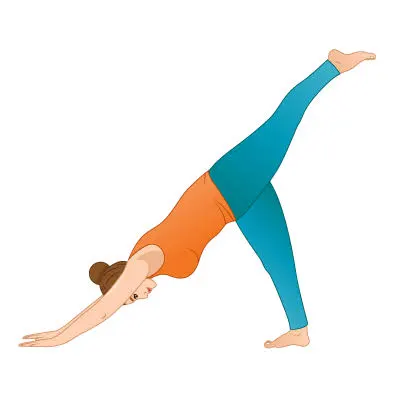
This position calms the mind and boosts confidence while opening your hips and side body. Adding it to a morning routine is not a terrible idea.
Worked muscles: This position strengthens your arms while stretching your side body, hamstrings, and hip flexors.
Make sure you are pressing evenly and completely into both hands while performing Downward Dog. Then, take a deep breath while elevating your right leg.
Exhale and allow your right leg to bend, with your heel sliding toward your butt, until your leg is as high as you can comfortably get it while maintaining your hips level with the floor. Then, pivot to open the right side of your body.
As you square your hips back toward the mat, straighten your right leg; as you exhale, gently return it to the floor. Change sides.
Warrior I (Virabhadrasana I)

This standing position is referred to as a “power pose.” It can boost self-confidence, hip flexibility, concentration, and overall body energy.
Your shoulders, back, arms, legs, and ankles are all strengthened with Warrior I. It improves circulation and opens your lungs, chest, and hips.
If necessary, place your right foot behind your right hand or between your hands. If you are unable to reach your foot as near to your hand as you would want, just put it down, grip your ankle with one hand, and assist it in moving forward. Alternatively, you may get up and move it forward.
As soon as your right foot is placed, take a deep breath and stand up. As of right now, the toes of both feet should be pointing up toward the top of your mat.
Inch your foot forward now if it didn’t go as far forward as you wanted for this stance. Pivot your heel all the way to the ground so that your rear foot is level on the ground and at a roughly 45-degree angle after your posture feels solid. If you were to draw a line between your heels, they should line up.
Your front leg is bent, knee over ankle, and your rear leg is straight. Deepen the stretch as you lower your hips a little farther, take a breath, and raise your arms shoulder-width over your head with your palms parallel to each other. Inhale deeply three times.
You can switch legs by returning to Downward-Facing Dog when you’re ready. Alternatively, you might raise your left heel till your feet are parallel once again, step forward with your left foot, inhale deeply, and then step your right foot back to become your rear foot as you exhale.
Mountain Pose (Tadasana)

This position usually appears easy, but if you perform it correctly, it may have a significant impact on your posture, confidence, and whole yoga practice.
Mountain Pose engages a variety of muscles in your arms, legs, chest, and core. Here, even your foot arches should be active.
To enhance your balance, you can place your feet a few inches apart, your heels slightly apart, or your big toes barely touching.
In order to keep your arms moving when they rest at your sides, relax them. To maintain them engaged, roll your shoulder blades down onto your back, extend your neck, and keep your hands facing front.
To check if you are actually standing equally on both sides, move your weight slightly back and forth in your feet while you inhale and exhale.
Here, take five deep breaths.
To check if you are actually standing equally on both sides, move your weight slightly back and forth in your feet while you inhale and exhale.
Here, take five deep breaths.
Standing Forward Bend (Uttanasana)

This pose stimulates the kidneys, liver, and digestion while calming the brain and relieving stress, exhaustion, and anxiety. Additionally, it’s like hugging yourself, which is never a bad thing.
Uttanasana stimulates your quadriceps, piriformis, hamstrings, glutes, and spinal muscles.
Breathe deeply while raising your hands up and out of the mountain position until they meet over your head.
Keeping your torso long and raised, fold at your hip joints rather than your waist as you release that breath.
Your legs will stay straight, so you will lay your hands wherever is most comfortable for you: on your shins, ankles, feet, or even the floor. Additionally, you can place your palms on the backs of your ankles or calves. (Note: Hold opposite elbows if none of those alternatives seem comfortable for your body.)
Keep your hips over your heels and your feet firmly planted. Keep in mind to extend your spine and core while you take five deep, even breaths. As you exhale, release yourself into your bend. Your head and neck should be completely relaxed.
After five complete breaths, release your arms from their position as you exhale, then raise yourself back up while lifting from your hip joints and core as you inhale.
To finish the exercise, return to mountain stance for five breaths.
What vitamin deficiency causes stiff muscles?
Deficiencies in Vitamin D, Magnesium (a vital mineral that is often associated with muscle function), and B vitamins (such as B12) are the three most common causes of muscle stiffness, cramping, and spasms.
These specific nutrient shortfalls cause muscle tension for different reasons:
Vitamin D: Important for absorbing calcium, which controls muscle contraction. Low levels often cause muscle weakness, chronic pain,n and generalized stiffness in the legs and back.
Magnesium: Directly needed for muscle relaxation. Magnesium deficiency can stop muscles from relaxing and cause them to become tight, cramp, and twitchy.
Vitamin B Complex: B vitamins, including B₆ and B₁₂, are important for nerve health and energy production. Deficiencies can cause nerve damage (neuropathy) and impair muscle signaling, which can mimic stiffness and joint pain.
How to remove the stiffness of muscles?
Targeted heat or cold therapy, gentle stretching, and active blood flow combine to offer quick relief for muscle stiffness. Alternate hot and cold packs for rapid relief. Gently stretch the affected area. Topical applications can increase local circulation.
Immediate Relief Techniques
Cold Therapy (Cold Packs) – Apply to the affected area for 15-20 minutes to numb pain and reduce inflammation. For general tension, apply heat with a heating pad or warm bath (especially with Epsom salts) for 15-20 minutes to relax muscle fibers and increase blood flow.
Gentle Stretching – Stretch the stiff area gently without bouncing. Hold each stretch for 20-30 seconds to encourage the muscle fibers to lengthen.
Over-the-Counter Pain Relievers: Use topical analgesic creams or gels that produce a cooling or warming sensation to distract from pain temporarily
Self-Massage: Use your hands, a tennis ball, or a foam roller to gently massage out knots and improve tissue mobility.
Prevention & Long-Term Recovery
Stay Hydrated: Dehydration can impact your muscle tissue and cause cramps and stiffness to occur more frequently. Drink a lot of water during the day.
Keep Moving. Sitting or staying in place for long periods often locks up muscles. Get up and take a five to ten-minute walk every hour.
Active Recovery: Stand up and take a short walk. A short walk, yoga session, swim, etc. will keep your muscles warm and help you recover more quickly than if you just sat there.
FAQs
How do I stop muscle stiffness in the morning?
Bend your knees and hips, perform wrist circles, ankle pumps, and ankle pumps. Take a hot shower. Take a hot shower to start your day. The shower’s warmth helps ease tense muscles and make your morning more comfortable.
What is the 5 5 5 30 morning routine?
The equipment-free calisthenics circuit is known as the 5-5-5-30 morning practice. It takes less than two minutes and consists of four easy bodyweight exercises that may be performed right away after waking up:
Five Push-Ups
Five Squats
Five lunges for each leg
30-second plank
What is the best vitamin for stiffness?
That depends on the cause. For joint stiffness, Omega-3 fatty acids and Collagen Type II reduce inflammation. Muscle stiffness. Magnesium and Vitamin D help muscle relaxation and bone strength.
Omega-3s (Fish/Algae Oil): Prevents inflammatory proteins from forming, reducing joint tenderness and improving mobility.
Vitamin D: Important for bone health and pain in the musculoskeletal system. Low levels are often associated with joint and muscle stiffness.
Magnesium: Helps muscles relax, preventing cramps and tightness.
Glucosamine & Chondroitin: These are natural components of cartilage and are often used to slow the breakdown of cartilage and reduce knee joint stiffness.
Type II Collagen: Helps to preserve the structural integrity of cartilage, and some studies have shown its effectiveness in reducing stiffness in the knee joint.
What causes extreme morning stiffness?
Overnight inactivity, inflammation, bad sleeping positions, and colder temperatures that produce stiffness are common causes of morning joint pain. These are some typical causes of waking up with more pain, along with some useful advice to reduce suffering. You’re not alone if you’ve ever woken up with achy, tight joints.
Can Vitamin B12 deficiency lead to muscle stiffness?
Yes, a deficiency of vitamin B12 can lead to muscle stiffness. “B12 is vital for nerve health and function, and a deficiency can lead to nerves misfiring or becoming damaged, leading to feelings of stiffness, cramping, and weakness in your limbs.
Why B12 Causes Muscle Tightness
Nerve Damage (Neuropathy): Motor nerves have a hard time sending the right messages to muscles or joints, which can cause them to cramp, spasm, or feel rigid.
Muscle Weakness: Muscles that are strained or overcompensating can result in deep stiffness and aching sensations.
Inflammation: Some studies suggest low levels of B12 might cause higher levels of homocysteine, which can promote inflammation in joints and connective tissues.
Typical Related Symptoms
Rarely does muscle stiffness happen on its own. Additionally, you may encounter:
sensations of tingling, numbness, or “pins and needles” (usually in the hands or feet)
Fatigue and general muscular weakness
Issues with coordination and balance
Mood swings, memory problems, or brain fog
References
- Alternating pelvic tilt. (n.d.). [Video]. Hingehealth. https://www.hingehealth.com/resources/articles/morning-stretches/
- Buffalo Rehab Group. (2025, December 23). Morning joint stiffness? Try these moves to get going. https://buffalorehab.com/blog/morning-joint-stiffness-try-these-moves-to-get-going/
- Exercise tips for overcoming morning stiffness | Banner Health. (n.d.). https://www.bannerhealth.com/healthcareblog/teach-me/how-to-beat-morning-body-stiffness-and-start-your-day-right
- Helmer, J. (2025, July 10). Causes of morning stiffness. WebMD. https://www.webmd.com/arthritis/joints-morning-stiffness
- Stelter, G. (2020, August 26). 7 morning stretches to start your day. Healthline. https://www.healthline.com/health/fitness-exercise/morning-stretches
- Young, N. (2026, June 14). 5 exercises you should do in the morning, according to experts. HuffPost. https://www.huffpost.com/entry/5-exercises-you-should-do-in-the-morning-according-to-experts-goog_l_69fb8445e4b0cb033e4e3c2e