Shoulder Rolls Exercise
Introduction
Shoulder rolls are a quick, easy mobility exercise that helps with posture and relieves tension in the upper back, shoulders, and neck.
The exercise, which can be done standing or sitting, consists of slowly turning the shoulders in a circle, first up toward the ears, then back, down, and forward.
Purpose
The shoulder roll warms up the muscles in your shoulders and midback, which are essential for proper posture.
Shoulder rolls exercise
Important Things to Know About Shoulder Rolls
Follow these steps
- Sit or stand with your arms relaxed and your back straight.
- Squeeze the shoulder blades together as you roll your shoulders back and down after taking a breath that raises your shoulders toward your ears.
- Do five to ten slow, controlled rolls in one direction, followed by five to ten repetitions in the opposite direction.

Tips
- Keep your movements slow and controlled, not jerking.
- Focus on expanding your chest and moving through your entire comfortable range.
- Breathe regularly throughout, relaxing your neck and shoulders.
Muscles worked
- Upper back (trapezius, rhomboids)
- Shoulders (deltoids)
- Chest muscles (gently mobilised)
- Neck muscles
Benefits
- Reduces strain and stiffness in the shoulder and neck.
- Improves posture by opening up the chest and pulling the shoulders backward.
- Improves circulation and mobility in the shoulder joint.
- Excellent warm-up/cool-down activity.
FAQs
What are shoulder rolls good for?
Shoulder rolls are an excellent workout for releasing accumulated stress and tension in the shoulders and boosting circulation in those joints. This exercise warms and extends the muscles, tendons, and joints, thereby decreasing shoulder discomfort and stiffness.
What muscles do shoulder rolls work out?
The shoulder roll exercise primarily works the shoulder muscles, such as the rotator cuff, deltoids, and trapezius. Can shoulder rolls assist relieve shoulder pain? Shoulder rolls can help release tension in the shoulder muscles and promote circulation, thereby lowering shoulder pain.
What are the top 3 shoulder exercises?
Focus on overhead pressing for total mass, lateral raises for width (side delts), and rear delt flies for the often-overlooked back area when developing well-rounded shoulders. The best exercises to target all three heads of the deltoid for a well-rounded, three-dimensional appearance are the overhead press, dumbbell lateral raise, and rear delt fly.
Here’s an explanation of how and why:
Military Press, Barbell, or Dumbbell Overhead Press
Why? Because it works the front (anterior) and middle (lateral) deltoids, this compound movement is great for increasing shoulder size and strength overall.
How: Use dumbbells or a barbell, press overhead until your arms are fully extended, and then lower the weight back down.
Lateral Raise with Dumbbells
Why? Because it’s the best exercise for strengthening the side (lateral) deltoids, which are important for shoulder width and that “capped” appearance. It frequently involves a slight bend or keeping the pinkies higher.
How: Lead with your elbows, stop at shoulder height, control the negative, and raise dumbbells to the sides while keeping your elbows slightly bent.
Reverse Cable Fly/Pec Deck or Rear Delt Fly
Why: Focuses on the frequently overlooked posterior deltoids, which are crucial for shoulder thickness, posture, and health.
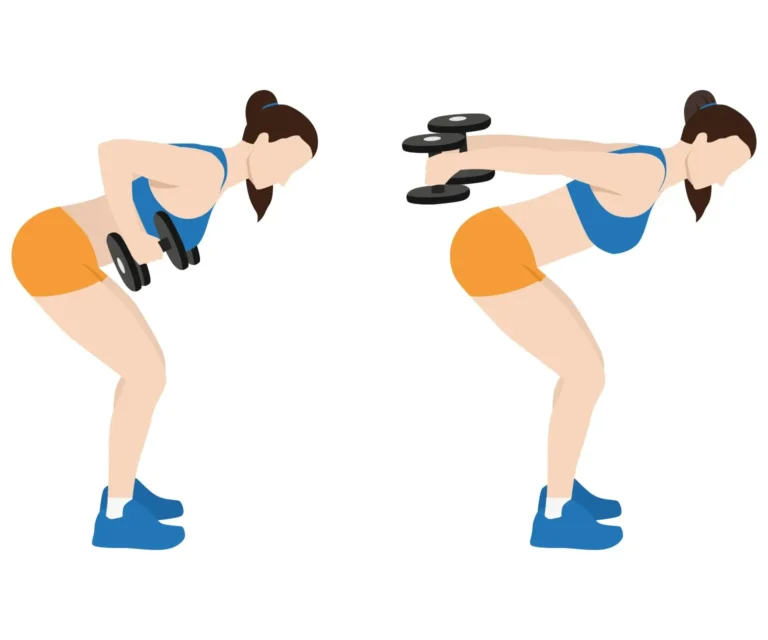
How: Use a reverse pec deck machine or a bent-over position with dumbbells, concentrating on bringing the weights back by squeezing your shoulder blades together.
Why do shoulder rolls feel so good?
We roll our shoulders and stretch our backs because it is relaxing, refreshing, and possibly even revitalizing. But why is that? Researchers discovered that in healthy persons, the stretch causes a fast reduction in blood pressure. And the body’s reaction to the movement may explain why we feel more relaxed after stretching.
Why do we feel after shoulder rolls?
Rolling your shoulders and neck can be very relaxing. Now, a new study reveals it could help with more than that! A sports cardiologist told Everyday Health about the potential link between shoulder stretching and decreased blood pressure.
Which exercise is best for fixing posture?
Common exercises include arching over a foam roller, hip flexor stretching, the cat cow, the door frame stretch, forearm stretching, neck stretching, and shoulder blade squeezing. These exercises are intended to relax shortened and tight muscles while strengthening postural muscles.
What is scientifically the best shoulder exercise?
External dumbbell rotations (lying on the ground) (12-20 repetitions).
Dumbbell seated overhead presses (4 sets, 8-10 reps).
Dumbbell lateral raises (4 sets of 10–12 repetitions).
Internal Rotation Machine: reverse flies (4 sets of 10-15 repetitions).
What are the big 5 gym exercises?
The “Big 5” exercises are basic compound movements that target the legs, back, chest, shoulders, and core for optimal muscle growth and functional fitness. They usually include the Squat, Deadlift, Bench Press, Pull-Up (or Row), and Overhead Press. Although certain variations or additions, such as rows or dips, may be included depending on the program, these lifts provide a solid basis for strength training and effectively target major muscle groups.
The traditional Big 5 squat strengthens the core, hamstrings, glutes, and quadriceps.
Deadlift: Increases total power by working the core and the entire posterior chain, which includes the hamstrings, glutes, and back.
Bench Press: Mainly works the triceps, shoulders, and chest.
Pull-Up/Lat Pulldown: Builds biceps and back muscles (traps, lats).
The overhead press, also known as the shoulder press, strengthens the upper chest and shoulders (deltoids).
Principal Advantages
Comprehensive Strength: In a single exercise, several major muscle groups are worked.
Foundational: Essential for increasing total muscle mass and strength.
Enhances movement patterns in the real world through functional fitness.
Changes and Additions
For variation or particular objectives, some programs switch up or add exercises like leg presses, dips, and bent-over rows.
Can I workout shoulders every day?
If you want to gain muscle, train your shoulders two to three times a week, alternating between upper- and lower-body days. If you want to preserve mobility, shoulder health, and range of motion, work out your shoulders once or twice a week.
Do shoulder rolls build muscle?
The primary goal of the shoulder shrug exercise is to isolate the trapezius muscle while increasing size and strength for better aesthetics and performance. Shoulder shrugs not only target the upper trapezius muscle, but they alsohelpo improve the shoulders and neck.
What are the benefits of doing shoulder rolls?
During the movement, the researchers continuously monitored participants’ heart rate and blood pressure to see how their bodies responded. A simple shoulder roll may do more than merely relax tight muscles. It appears to signal your body to slow down, relax, and recover equilibrium. The result was nearly immediate.
What kills muscle gains the most?
Inadequate nutrition (not enough calories or protein), poor recovery (lack of sleep, overtraining), and inconsistent, ineffective training—which often worsens due to excessive stress and alcohol—are the main factors impeding muscle gains. For muscle protein synthesis to take place efficiently, you need an excess of calories, enough protein, progressive overload during your workouts, and good sleep.
Killers for Training and Recovery
Overtraining is when muscles don’t get enough sleep (24–48 hours per muscle group) to grow and repair.
Training irregularities include skipping sessions or failing to adhere to progressive overload, which increases the demands on muscles gradually.
Too Much Cardio: Building muscle can be hampered by excessive endurance training without proper hydration.
Inadequate Sleep: Sleep deprivation inhibits muscle growth and repair, which impedes progress.
Killers of Nutrition
Eating fewer calories than you expend (unless you’re purposefully reducing fat) is known as a calorie deficit.
Inadequate Protein: Inadequate protein (1.6–2.2g per kg of body weight) for muscle repair.
Sugar & Processed Foods: Sugar, unhealthy fats, and empty calories encourage fat accumulation rather than muscle growth.
Alcohol: interferes with protein synthesis, causes dehydration, and contains empty calories.
A diet deficient in vital vitamins and minerals required for healing and proper operation is known as poor nutrient density.
How to Make It Better
Consume Enough Food: Keep a small excess of calories while consuming enough carbohydrates and protein.
Make sleep a priority. For recuperation, aim for 7-9 hours each night.
Lift Wisely: Use difficult but doable weights and concentrate on progressive overload.
Recuperate by managing stress and taking days off.
Drink lots of water to stay hydrated.
What is the 2 2 2 rule in gym?
In the gym, the “2-2-2 Rule” generally refers to a minimal strength training approach: two full-body workouts per week, with two intense sets per exercise, emphasizing key movement patterns for increased efficiency and improved recovery, particularly for people over 40 or busy adults. Another version emphasizes progression: train twice a week for two months, then gradually increase to three times a week for two months, and finally to four times a week. A third, less popular variation is a dietary guideline: two servings of fruit, two servings of vegetables, and two liters of water.
The 2-2-2 Strength Training Workout Method:
Two Workouts: Do full-body exercises twice a week, such as on Mondays and Thursdays.
Two Sets: Perform two difficult working sets, nearly to failure, for every exercise (e.g., 2 Reps in Reserve or 2RIR).
For each of the four movement patterns (upper push, upper pull, lower push, and lower pull), concentrate on two exercises.
Why It Works: It is excellent for longevity and strength building without burnout because it is time-efficient, prioritizes quality over quantity, and permits excellent recovery.
The 2-2-2 Ladder Consistency/Progression Method:
Phase 1: For two months, exercise twice a week.
Phase 2: For two months, up to three workouts per week.
Phase 3: For two months, increase to four workouts per week, and then reevaluate.
References
- How to do the shoulder rolls exercise safely — More Life Health – Seniors Health & Fitness. (n.d.). More Life Health – Seniors Health & Fitness. https://morelifehealth.com/shoulder-rolls
- Sworkit Health. (2020, March 1). Shoulder Roll – Sworkit Health | On-Demand Fitness, Mindfulness, Recovery, and Nutrition. Sworkit Health | On-Demand Fitness, Mindfulness, Recovery, and Nutrition. https://sworkit.com/exercise/shoulder-roll
- How to do Shoulder Roll. (n.d.). https://www.getwellen.com/exercises/shoulder-roll