Morning Exercise Routine For Beginners At Home
Introduction
Morning Exercise Routine For Beginners At Home is a simple and effective way to wake up your body, boost metabolism, and start the day with positive energy.
Yoga positions and strength training exercises that use your body weight as resistance can be done at home without the need for any equipment.
Bodyweight exercises are a great approach to increase muscle mass and strength, enhance aerobic fitness, and control body fat when done at home.
PT Tip: Start the Day With Water
Fill an insulated bottle with water before bed and set it on your nightstand so you may drink it when you wake up. Dehydration can occur overnight; it’s a smart way to replenish your body’s fluids.
Exercise in the morning may be made easier if you have a glass of water first thing in the morning. According to research, increasing your water intake can improve your mood, energy levels, and sharpness.
Morning Exercise Routine For Beginners At Home
Jumping Jacks / Burpees
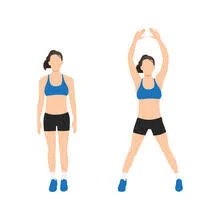
- Going all the way back, we begin with Burpees or Jumping Jacks. Yes, the same ones your physical education teacher used to torment you at school. They are amazing at turning on the entire body, which is why sadistic physical education teachers used them. They facilitate increased blood flow and oxygen delivery to the lungs.
- Raise your arms over your head and jump your feet out wide at the same time. Return to the starting position with a jump. Repeat for a certain period of time or for a specific number of repetitions.
- What: Burpees and Jumping Jacks
- Why: Promotes blood flow, which keeps muscles strong and ready for tasks like laying bricks or pressing soil.
- Reps: Start with two sets of ten, then add a set after you’ve done the first task.
Push-ups

- Push-ups are thought to be the most economical workout. You can perform it at home, at the construction site, in the park, before or after work, or with a variety of extras to make it more difficult.
- The method or form used throughout is essential to activate the correct muscle groups, unlike the frequently held belief that the quantity is the most essential factor.
- The triceps, pectoral muscles (chest), and shoulders are all extremely vital and can be strengthened with the correct technique.
- With your hands shoulder-width apart and your body in a straight line, start in the plank position. goes toward the floor by bending the elbows.
- Getting started? If necessary, you can complete the exercise on your knees.
- What: Push-ups
- Why: Easy exercises for the arms, shoulders, and chest
- Reps: To begin, one set of ten. Add another set once you’ve mastered it with proper form. Do you want to make it more difficult? Place your feet on a platform or elevated step.
Squats
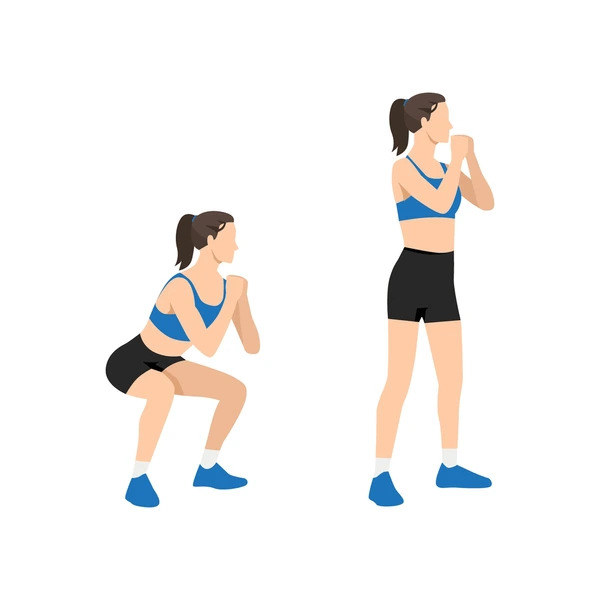
- For good reason, squats are regarded as a classic workout. We frequently bend down for daily tasks, but we frequently miss out on the full depth or movement that provides us with a thorough exercise and, ultimately, a strong set of legs.
- The beauty of squats is that they don’t require any equipment and can be performed anywhere, at any time. Your glutes, core, and quadriceps will begin to change as a result of performing a few bodyweight squats each day.
- Place your feet shoulder-width apart as you stand. With your weight in your heels and your knees in line with your toes, lower your body as though you were reclining in a chair. Return to the beginning position. Holding kettlebells or dumbbells at your sides will increase the intensity.
- What: Squats
- Why: Strengthen your quadriceps, core, and glutes.
- Reps: Start with a single set of ten repetitions. When you’re ready, start using weights to up the difficulty. Continue adding sets and repetitions.
Plank

- Did you know that 9 hours and 38 minutes is the world record for a plank?
- The good news is that you won’t have to do it for quite that long, and you probably won’t even come close! Although you may just clock 10 seconds at first, the average plank time is closer to 50 seconds.
- Planks target the muscles of the upper body, core, and lower body while being incredibly easy to use and requiring no equipment. How? Once more, a perfect plank with tension throughout the entire body is demonstrated by the technique and form.
- With your elbows under your shoulders and your forearms on the floor, begin with a push-up position. Maintain a straight line from your head to your heels while using your core. Hold the pose for a certain amount of time, progressively extending it as your strength increases.
- What: A plank
- Why: Workout for the entire body!
- Reps: Do a 10-second plank. If you’re up for it, try 30 seconds at first, followed by a minute.
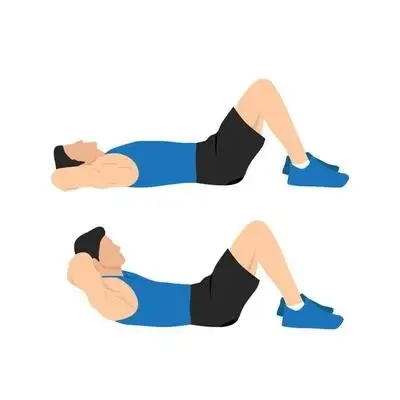
Bicycle crunches

Bicycle Crunches steps:
- Crunches could be the best method to start any morning workout and get your heart rate up because they’re just a short step from lying in bed!
- However, be sure to get out of bed and locate a solid base to do exercises on. From there, you’ll be working on several core muscles that assist in maintaining good posture and protect your spine when you sit for extended periods of time.
- What: Crunches on a bicycle
- Why: Develop a strong core to protect your back and spine and help stabilize your upper body.
- Reps: One set of ten reps, five on each side, is a good place to start. Too simple? After a short break, add another set.
Walking or jogging

- To put it simply, a walk or run is pretty damn special. You can use that time to focus on yourself and turn off the outside world for a little while.
- Depending on the pace, it increases blood flow and stimulates your heart. It stimulates creativity in the mind and is truly connected to the moment in our history of evolution when primates began to stand up on two feet after going from all fours!
- Warm up by walking for a short while before picking up the pace to a comfortable jog. As your fitness increases, progressively extend the time or distance.
- Recall that motivation typically arises after you start. Put on your trainers, turn up the music, and head out the door.
- What: Jogging or walking
- Why: Excellent for cardiovascular and blood flow
- Reps: There are no rules here; five or fifty minutes will do!
Benefits of Morning Exercise
1. Fewer distractions
Exercising in the morning usually reduces the risk of distractions. You haven’t started work on your to-do list for the day when you first get up. Additionally, you’re less likely to receive emails, texts, and phone calls.
You’re more likely to complete your workout if there are fewer distractions.
2. Beat the heat
Working out in the morning will feel more comfortable throughout the summer. It is advised notto exerciseg outside during this period.
It’s ideal to work out early in the morning if you favor outdoor activities, especially on really hot days.
3. Healthier food choices
A healthy day could begin with an early workout.
There were three 30-minute cardio workouts per week.
There was no request for students to alter their dietary habits. However, individuals who continued the program made better dietary choices, such as consuming less fried food and red meat.
The results demonstrate how exercise can encourage healthier eating, even though the study did not test for the optimal time of day to exercise. You could be inspired to make better decisions throughout the day if you exercise early.
4. Increased alertness
Your body’s hormonal changes might be better accommodated by a morning workout.
Often referred to as the stress hormone, it only becomes problems when there is an excess or deficiency of it.
It peaks at approximately eight in the morning. Your body may be more ready to exercise now if your circadian rhythm is in a healthy state.
5. More overall energy
Frequent exercise is a great way to increase energy and decrease weariness. This enhances your general stamina, endurance, and cardiovascular system.
You can feel more energized all day if you work out early.
6. Better focus
Regardless of whether you engage in it, physical activity also enhances focus and concentration. However, a morning workout could be the solution if you struggle to concentrate during the day.
Physical exercise in the morning enhances decision-making, visual learning, and attentiveness.
Participants in the study spent eight hours a day sitting for extended periods of time, both with and without a 30-minute treadmill walk in the morning. They also did three-minute walks every half an hour on some days.
Exercise in the morning was linked to improved cognitive performance throughout the day, particularly when combined with frequent breaks.
7. Better mood
Stress can be naturally reduced by engaging in physical activity. Your brain produces more endorphins—the “feel-good” chemicals responsible for a runner’s high—when you exercise. It also serves as a diversion from worried thoughts.
Additionally, you’ll feel like you’ve accomplished something, which will boost your mood for the day.
8. Support weight loss
Exercise in the morning might be the greatest way to lose weight.
Ten young guys participated in the study and worked out in separate sessions in the morning, afternoon, and evening. The researchers discovered that exercising in the morning before breakfast had the greatest 24-hour fat burn.
Exercise in the morning may be beneficial if you’re trying to lose weight.
9. Appetite control
Exercise generally helps control hunger by lowering the hunger hormone ghrelin. Additionally, it raises satiety hormones such as glucagon-like peptide-1 and peptide YY.
But exercising first thing in the morning can help you manage your hunger even more.
In the study, 35 women spent 45 minutes in the morning walking on a treadmill. The women’s brain waves were then recorded while they looked at pictures of food and flowers (the control).
The procedure was repeated without morning exercise a week later. When the ladies did not exercise in the morning, the researchers discovered that their brains reacted more strongly to pictures of food.
It means that exercising in the morning may enhance your brain’s sensitivity to hunger cues.
10. Increased overall activity
The benefits of working out early in the morning don’t end there. Exercise in the morning is linked to more movement during the day.
The subjects demonstrated an increase in physical activity over the following 24 hours after a 45-minute walk in the morning.
Exercise in the morning can help if you’re attempting to lead a more active lifestyle.
11. Blood glucose control
An essential component of controlling type 1 diabetes (T1DM) is physical activity. However, exercising can be difficult for those who have type 1 diabetes. Low blood glucose, or hypoglycemia, is a risk associated with exercise.
A group of thirty-five adults with type 1 diabetes worked out on a treadmill in the morning and the afternoon.
The risk of hypoglycemia episodes following exercise was lower during morning exercises than during afternoon sessions.
The researchers believe that cortisol might be involved. Lower levels, which happen later in the day, may facilitate the development of hypoglycemia.
12. Blood pressure management
One in three people in the US suffers from hypertension, or elevated blood pressure. One of the most natural strategies to reduce hypertension wis tostay physically active.
Twenty prehypertensive people worked out on a treadmill at 7 a.m., 1 p.m., and 7 p.m. throughout the course of three different sessions. Additionally, a medical device was worn by the subjects to track their blood pressure response.
The blood pressure changes that were most beneficial occurred on the days when the researchers worked out at 7 a.m.
13. Improved sleep
You might be able to get a decent night’s sleep by working out early.
The individuals had fewer overnight awakenings and a longer time in deep sleep following the morning workout. They fell asleep faster as well.
There are other sleep-related benefits to exercising outside in the morning. Melatonin levels at night may be raised by early morning light exposure.
FAQs
What is the best exercise to start your morning?
Walking or running is a great way to begin the day. It’s easy to accomplish, requires little equipment, and can be done anywhere. Running or walking in the morning might improve your mood because endorphins are released. Cardiovascular activity is essential for heart health.
How to start basic exercise at home?
Wall push-up.
Push-up elevation.
Knee push-up
Push up.
Bodyweight assisted squat.
Bodyweight squat.
Good morning, bodyweight.
Lunges supported.
What exercises should a beginner do at home?
Exercise equipment is not a concern. Try doing strength training exercises or yoga poses that require you to use your body weight as resistance. You can incorporate a variety of squats, pushups, and planks into your at-home workout schedule.
What is the 5 5 5 30 rule?
Consistency, not motivation, is the key to the 55 530 rule. For thirty days, spend five minutes each day, five days a week, performing five basic movements. It is effective because it reduces resistance, eliminates friction, and creates a habit that you can continue even on your bad days.
What is the 4 8 12 rule?
In fitness, the “4 8 12 rule” usually refers to the four sets of 8–12 repetitions (reps) for muscle growth (hypertrophy). You should use a weight that is difficult enough that you can hardly finish the final few reps with proper form, and you should aim for muscle fatigue in that range. As an alternative, it can explain a basic mathematical sequence in which numbers increase by four, or it can explain a progressive exercise program for varying fitness levels (4, 8, or 12 hours per week).
In Fitness (Most Popular)
Four Sets: The number of primary working sets for an exercise (following warm-ups).
The target repetition range for each set is 8–12, which is perfect for increasing muscle size (hypertrophy).
How it operates: Use a weight that is challenging by the eighth rep, but you can still perform all of the reps with proper form. As fatigue sets in, you may want to reduce the number of reps per set (e.g., 12, 11, 10, 9).
As a Plan for Exercise (e.g., Running)
Four hours a week is a minimum for overall well-being.
Eight hours per week: More dedicated training that lasts longer or is more intense.
Twelve hours a week: intense, demanding training for competitive or high-level performance.
What is the 6 6 6 rule exercise?
The 6-6-6 rule is a straightforward, regular walking regimen for fitness that promotes cardiovascular health, consistency, and mental well-being. It usually consists of a 6-minute warm-up, a 60-minute brisk walk, and a 6-minute cool-down, done at 6 AM or 6 PM, six days a week. By dividing the exercise into doable, memorable chunks, this methodical approach aids in increasing endurance, burning calories, and creating a long-lasting habit.
The 6-6-6 Rule’s Operation
6-Minute Warm-Up: To prepare your muscles and lower your risk of injury, start slowly and gradually raise your heart rate.
60-Minute Brisk Walk: Get major cardiovascular benefits, burn calories, and increase endurance by walking at a steady, brisk pace for an hour.
6-Minute Cool-down: Reduce your breathing and heart rate gradually to a comfortable level, which will aid in muscle recovery and avoid stiffness.
Key Principles & Variations
Time: Any regular time works, but many versions recommend performing this routine at 6 AM for energy or 6 PM to relax.
Frequency: Although you can begin with fewer days, aim for six days per week to develop consistency.
Simplicity: The main goal is consistency, making it easy to remember and stick to, unlike complex routines.
What is the 30/30/30 morning routine?
It’s a straightforward yet appealing concept that pushes you to get 30 minutes of low-intensity activity after consuming 30 grams of protein within 30 minutes of waking up.
What are the daily 7 exercises?
Focus on basic exercises like squats, lunges, push-ups, planks, glute bridges, Bird-Dogs/Supermans, and walking/jumping jacks for a well-rounded daily routine. These exercises target key muscle groups and enhance mobility and cardiovascular health, guaranteeing a full-body workout in a short amount of time. These exercises increase energy, strength, and balance for improved general fitness, and consistency is essential.
For daily practice, try these seven efficient exercises:
Squats: Strengthen the lower body by simulating sitting and working the legs, glutes, and core.
Push-ups: Develop strength in the upper body by targeting the chest, shoulders, triceps, and core.
Plank: Great for shoulder, back, and abdominal strengthening and core stability.
Lunges: By taking a step forward and bending both knees, you can strengthen your legs and glutes and improve your balance.
Glute Bridges: Activates the hamstrings and glutes, which are essential for good posture and hip health.
Bird-Dog/Superman: By alternating arm and leg extensions, it improves back strength and core stability.
Walking/Jumping Jacks: Incorporates cardio; jumping jacks rapidly increase your heart rate, while brisk walking is excellent for heart health.
What is the first exercise for beginners?
Spending time on a dynamic warm-up before working out is essential, particularly if you’re new to the gym. Start with a hard 5-minute walk to gradually awaken your muscles. Leg swings that promote flexibility and blood flow should be performed after.
What kills muscle gains the most?
Inadequate nutrition (too few calories/protein), poor sleep and recovery, and inconsistent or improper training are the biggest killers of muscle gains. Stress, too much cardio, and highly processed foods exacerbate the problem by increasing breakdown and impeding muscle protein synthesis. A calorie surplus, sufficient protein, progressive overload during training, and enough rest for repair are all necessary for muscle growth.
Leading Causes of Muscle Gains:
Lack of Calories and Protein: Since muscles require fuel and building blocks, a calorie deficit or inadequate protein intake (1.6–2.2g per kg of body weight) are the main causes of plateaued gains.
Lack of Sleep & Recovery: Long-term sleep deprivation impedes the synthesis of muscle proteins and can result in muscle loss. Sleep is essential for muscle growth and repair.
Overtraining and Excessive Cardio: Excessive cardio or overtraining, which involves doing too much intense exercise without adequate rest, can impede muscle growth.
Poor Nutrition Quality: Foods heavy in processed foods, unhealthy trans fats (found in fried foods and pastries), and added sugars offer no nutritional value and can encourage the growth of fat rather than muscle.
No Progressive Overload: Your muscles don’t need to get stronger if you don’t progressively increase the challenge (weight, repetitions, intensity) in your workouts.
Excessive Stress: Prolonged, high levels of stress raise cortisol, which can hinder muscle growth and repair.
Is a 20-minute workout enough for beginners?
Yes, exercising for 20 minutes is preferable to doing nothing at all. Every physical activity or exercise session makes you healthier, fitter, and probably happier!
References
- Davis, N. (2026, January 3). 30 moves to make the most of your At-Home workout. Healthline. https://www.healthline.com/health/fitness-exercise/at-home-workouts
- Nunez, K. (2019, July 10). 13 Benefits of working out in the morning. Healthline. https://www.healthline.com/health/exercise-fitness/working-out-in-the-morning
- Open Book Rotation. (n.d.). [Video]. Hingehealth. https://www.hingehealth.com/gb/en/resources/articles/benefits-of-working-out-in-the-morning/