
Best Exercises for Foot Drop
Introduction:
A disorder that makes it difficult to lift the front portion of the foot and toes is called “foot drop.” Walking becomes challenging since the person is more likely to fall if the foot lags or the toes become trapped on the ground. Fortunately, there are strategies to restore foot strength and range of motion, and foot drop exercises are among the finest.
The goal of foot drop exercises is to strengthen the muscles in the lower limbs so that the foot can be raised again. Exercise is a useful strategy for overcoming foot drop following a stroke or brain injury because it stimulates and rewires the brain.
What is Foot Drop?
Foot drop, also known as drop foot, occurs when the muscles that raise your foot become weak or paralysed, and you are unable to raise the front portion of your foot. It might be a short-term or long-term (chronic) symptom of several potential underlying diseases.
People with foot drop frequently drag their toes when walking because of weakness or paralysis. In order to prevent dragging their toes, they might also need to raise their knee higher than normal. You run a higher chance of tripping and falling if you walk in this manner.
One foot (unilateral) or both feet (bilateral) may be affected by foot drop.
Causes:
Nerve Damage: The nerve that connects to the muscles that raise the foot is called the peroneal nerve. The most frequent cause of foot drop is damage to the peroneal nerve. The nerve is easily damaged since it is at the surface and extends from the rear of the knee to the front of the shin. Sports injuries, hip or knee replacement surgery, leg casts, childbirth, and even crossing your legs can all cause damage to the peroneal nerve.
Muscle Disorders: Foot drop can also result from a disorder that gradually deteriorates or weakens the muscles. These conditions could include polio, muscular dystrophy, and amyotrophic lateral sclerosis (Lou Gehrig’s disease).
Brain or Spine Disorders: Foot drop can also result from neurological disorders. Charcot-Marie-Tooth disease, cerebral palsy, stroke, and multiple sclerosis (MS) are among the conditions.
Treatment:
Braces or splints: You can keep your foot in a normal position by wearing a brace on your ankle and foot or a shoe-fitting splint.
Physical therapy: Exercises can help you maintain your ankle and knee range of motion and develop your leg muscles. Foot drop-related gait problems may benefit from these workouts. In particular, stretching exercises are essential for avoiding calf and heel tightness.
Nerve stimulation: Foot drop can occasionally be improved by stimulating the nerve that elevates the foot.
Surgery: Nerve surgery may be beneficial, depending on the cause and whether your foot drop is relatively new. Your doctor may recommend surgery to move a functional tendon to a different area of the foot to improve function if foot drop has been present for a long time.
Exercises:
Ankle Dorsiflexion:

- Your affected foot should be extended in front of you while you sit or stand.
- Feel the strain at the front of your ankle as you slowly raise your toes toward your shin.
- After holding for five to ten seconds, carefully return your foot to the ground.
Ankle Adduction and Abduction:

- With your affected foot outstretched, either sit or stand.
- Slowly move your foot in the inward (adduction) and outward (abduction) direction against resistance.
- If necessary, provide light resistance with your hand.
- In each direction, repeat ten to fifteen times.
- The foot and ankle’s tiny stabilising muscles get stronger as a result.
Assisted Toe Raise:

- Take a seated or standing position near a chair or table for support.
- To help with the action, place your palm beneath the balls of your toes and raise your foot.
- Elevate yourself slowly onto your toes and then descend again.
- Ten to fifteen times, repeat.
- This aids in strengthening the weak dorsiflexor muscles.
Toe Raise “Negatives”:

- Place your feet shoulder-width apart as you stand.
- Rise to your toes, then descend gradually over a period of five seconds.
- Concentrate on managing the downward action.
- Repeat eight or ten times.
- Strength is increased by the gradual eccentric contraction.
Heel Raises:
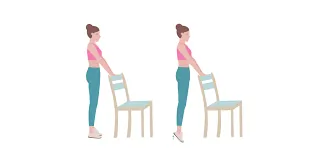
- Hold onto a chair or wall for balance while standing with your feet shoulder-width apart.
- Get up on your toes by lifting your heels off the ground.
- After two to three seconds of holding, gradually descend again.
- Repeat ten to fifteen times.
- The calf muscles, which aid in ankle and foot stability, are strengthened as a result.
Single Leg Stance:

- To help with your balance, stand close to a chair or wall.
- Raise one leg off the ground while maintaining balance on the affected leg.
- After 30 seconds of holding, switch legs.
- Close your eyes or stand on a soft surface for an additional challenge.
- Proprioception and ankle/foot stabilisation are improved by this.
Marble Pickup:

- With both feet flat on the ground, take a seat in a chair.
- Put a bowl and twenty marbles on the ground in front of you.
- Pick up each marble and put it in the basin using the toes of your affected foot. Continue until you have collected every marble.
Ball Lift:
- With both feet flat on the ground, take a seat in a chair.
- Put a tiny, spherical object—roughly the size of a tennis ball—on the ground in front of you.
- Lift the thing slowly by extending your legs while holding it between your feet. Lower gradually after holding for five seconds. Ten times over, repeat.
Towel Stretch:

- With both legs out in front of you, take a seat on the floor.
- Holding onto the ends with your hands, wrap a towel or exercise band around the affected foot.
- Bring the band or cloth closer to your body. Hold for thirty seconds. After that, take a 30-second break. Do this three times.
FAQs
Which muscle is weak in foot drop?
Foot drop is a neuromuscular disorder marked by dorsiflexor muscle weakness or paralysis, which makes it difficult to raise the forefoot during stride and results in a high-steppage gait.
What vitamins help with drop foot?
Foot drop is quite upsetting, and it’s critical to attend to the psychological requirements of the patient. Pain needs to be controlled. Vitamin B1, B6, or B12 tablets can help manage vitamin deficits and improve glucose control in diabetic individuals.
What to avoid with foot drop?
Because foot drop can make you more likely to trip and fall, think about implementing these safety measures throughout your home:
Keep debris off of every floor.
Don’t use throw rugs.
Electrical cords should be moved away from pathways.
Ensure that stairwells and rooms have adequate lighting.
Can you build calf muscle with a drop foot?
Raising Your Heels
Get up on your toes by lifting your heels off the ground. After two to three seconds of holding, gradually descend again. Repeat ten to fifteen times. The calf muscles, which aid in ankle and foot stability, are strengthened as a result.
How do you repair a foot drop nerve?
To relieve pressure on the nerve, nerve decompression surgery is an option. Any tumours or bones that might be pushing against the peroneal nerve can be removed surgically. To keep the foot in place, fusion surgery can be performed to join the ankle or foot bones together.
Can I run with foot drop?
Running can be challenging, and there is a greater chance of tripping and falling if the front portion of the foot cannot be raised. However, with the right foot drop brace, many people can continue to jog and lead active lives in a safe manner.
References:
- 10 Foot Drop Exercises to Get Back on Your Feet with Confidence – 2025 – CSCS/www.flintrehab.com/foot-drop-exercises/?srsltid=AfmBOoqLCaoC1W9po4Cg6c9Z6BpsRRnWmUFTPOMCQPUt3w98KrjnxRJV
- Foot drop – 2026 – Professional/my.clevelandclinic.org/health/symptoms/17814-foot-drop
- 6-foot drop exercises to help you get back on your feet – 2024/www.saebo.com/blogs/clinical-article/get-back-feet-exercises-foot-drop?srsltid=AfmBOooCEDWHE4oV68APAnDhzuD8NTJK99W66-ef3Ibag2Ojq7vBeYs1Top At-Home Exercises to Manage Mild to Moderate Foot Drop Symptoms
- Top At-Home Exercises to Manage Mild to Moderate Foot Drop Symptoms/www.advancedreconstruction.com/blog/at-home-foot-drop-exercises