Resistance Exercise
What is resistance exercise?
Any physical activity that involves your muscles working against an opposing force—such as weights, resistance bands, or even your own body weight—to increase muscle strength, endurance, and general fitness is referred to as resistance exercise or resistance training.
This type of exercise increases metabolism, bone density, muscular mass, and self-esteem while lowering anxiety and promoting mental wellness. Free weights, weight machines, bodyweight exercises like squats and push-ups, and resistance bands are examples of common training methods.
Types of Resistance
The resistance can come from various sources:
- Free weights: Barbells, dumbbells.
- Weight machines: Machines designed to provide resistance for specific muscle groups.
- Bodyweight: Using your own body against gravity, such as in push-ups, pull-ups, and squats.
- Medicine balls or sandbags: weighted balls or bags.
- Resistance bands: Elastic bands that provide tension when stretched.
- Suspension equipment: a training device that performs several exercises using the user’s body weight and gravity.
- Other objects: Anything else that creates resistance, like water bottles or medicine balls.
Benefits of Resistance Exercise
- Increased muscle strength and mass: Helps build and maintain muscle, which is crucial as you age.
- Improved bone density: Helps prevent osteoporosis and reduces the risk of falls and fractures.
- Boosted metabolism: More muscle burns more calories, helping to manage weight.
- Enhanced mental health: Can reduce anxiety and improve self-esteem.
- Greater strength in the joints and ligaments lowers the chance of injury.
- Improved posture.
How to Get Started with Resistance Exercise
- Frequency: To reap the most benefits, try to do two or three resistance training sessions a week.
- Intensity: Choose weights or resistance levels that allow you to lift for 8-10 repetitions easily.
- Progression: As you gain strength, progressively increase the resistance or weight.
Examples of resistance exercise
1. Wall push-up:

- Stand at arm’s length from the wall. Hold your hands flat at chest level against the wall, fingers pointing up.
- Bend your arms gently and straighten your back, keeping your elbows in place.
- Slowly return to the start.
Attempt 3 sets of 5 to 10 repetitions.
2. Biceps curls:

- Hold two small weights (full water bottles would work) and place your feet hip-width apart.
- When the weight in your hand reaches your shoulder, softly bend your arms while keeping them at your sides.
- Slowly lower again.
This can also be carried out while sitting.
3. Sit-to-stand:

- When seated on the edge of the chair, your feet should be hip-width apart.
- Stand up slowly using your legs, not arms. Keep looking forward and do not look down.
- Stand up straight if you can, then slowly sit down, guiding yourself with your hands or arms.
Aim for 5 repetitions. The slower the repetitions, the better.
4. Mini squats:
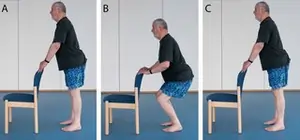
- Maintain a hip-width distance between your feet and place your hands on the chair’s back for support.
- As much as it feels comfortable, bend your knees while keeping your face forward. Aim to get them over your big toe. Keep your back straight at all times.
- Squeeze (clench) your buttocks as you slowly rise.
Repeat 5 times.
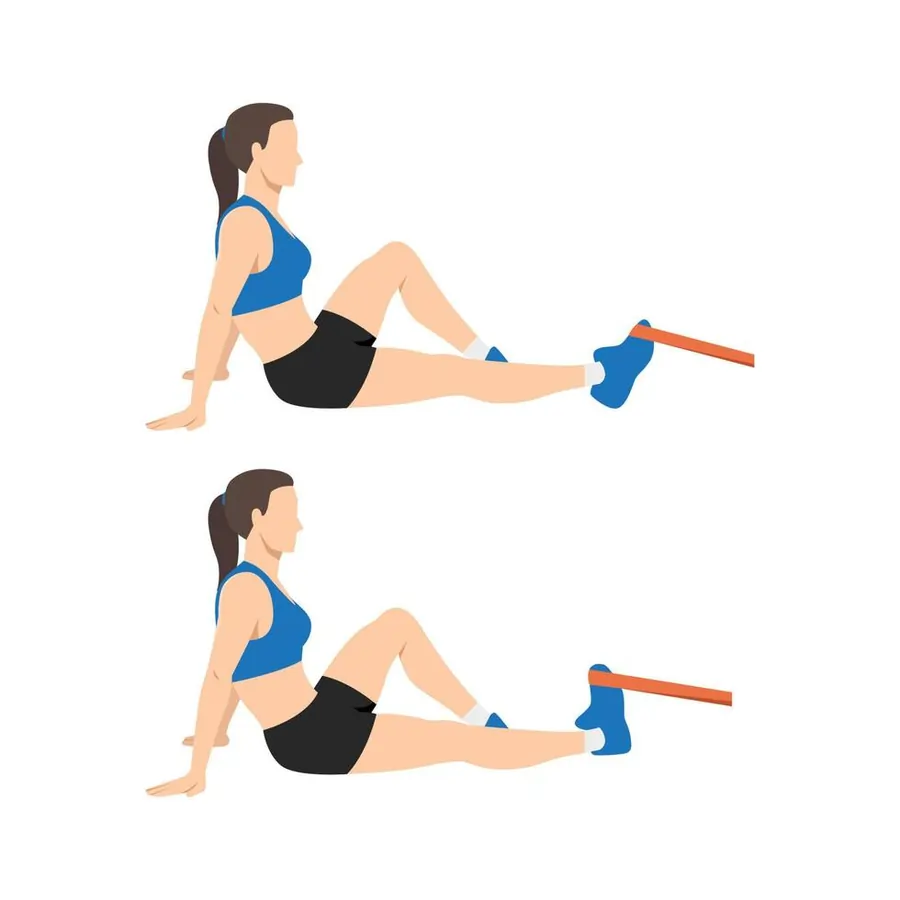
5. Rear leg lift:

- Place the opposite leg on the other end of the resistance loop band after standing up and wrapping it around the calf or shin.
- To highlight your buttocks and hamstrings, try bending your leg back without bending forward.
- Besides, it strengthens the glutes and is the best lower-body exercise.
6. Pull-Apart Exercise:

- Get to your feet and grasp the resistance loop band’s end in each hand.
- Raise both hands to your chest, then spread your arms as wide as you can while attempting to pull the resistance band apart.
- Proceed two or three times a day, then slowly make your way back to the centre.
FAQs
What is Resistance exercise?
Any physical activity that involves your muscles working against an opposing force—such as weights, resistance bands, or even your own body weight—to increase muscle strength, endurance, and general fitness is referred to as resistance exercise or resistance training.
This type of exercise increases metabolism, bone density, muscular mass, and self-esteem while lowering anxiety and promoting mental wellness. Free weights, weight machines, bodyweight exercises like squats and push-ups, and resistance bands are examples of common training methods.
What are the types of resistance?
Free weights: Barbells, dumbbells.
Weight machines: Machines designed to provide resistance for specific muscle groups.
Bodyweight: Using your own body against gravity, such as in push-ups, pull-ups, and squats.
Medicine balls or sandbags: weighted balls or bags.
Resistance bands: Elastic bands that provide tension when stretched.
Suspension equipment: a training device that performs several exercises using the user’s body weight and gravity.
Other objects: Anything else that creates resistance, like water bottles or medicine balls.
What are the benefits of resistance exercise?
Increased muscle strength and mass: Helps build and maintain muscle, which is crucial as you age.
Improved bone density: Helps prevent osteoporosis and reduces the risk of falls and fractures.
Boosted metabolism: More muscle burns more calories, helping to manage weight.
Enhanced mental health: Can reduce anxiety and improve self-esteem.
Greater strength in the joints and ligaments lowers the chance of injury.
Improved posture.
How to get started with resistance exercise?
Frequency: To reap the most benefits, try to do two or three resistance training sessions a week.
Intensity: Choose weights or resistance levels that allow you to lift for 8-10 repetitions easily.
Progression: As you gain strength, progressively increase the resistance or weight.
What are the examples of resistance exercise?
Here are the examples:
1. Wall push-up
2. Biceps curls
3. Sit to stand
4. Mini squat
5. Rear leg lift
6. Pull apart exercise
References:
- Healkit. (2021, February 1). 5 resistance loop exercises to take your fitness to the next level. HealKit | Health and Fitness Store. https://healkit.in/5-resistance-loop-exercises-to-take-your-fitness-to-a-new-level/?srsltid=AfmBOopvr2ZtAyV1MLzZw
- Website, N. (2024, March 5). Strength exercises. Nhs.uk. https://www.nhs.uk/live-well/exercise/strength-exercises/
- Wikipedia contributors. (2025, September 2). Strength training. Wikipedia. https://en.wikipedia.org/wiki/Strength_training#:~:text=Strength%20training%2C%20also%20known%20as,part%20of%20their%20training%20regimen.
- Cronkleton, E. (2019, September 5). How to get a Full-Body Strength Training workout at home. Healthline. https://www.healthline.com/health/exercise-fitness/strength-training-at-home