
Exercises for the Transverse Abdominis Muscle
Introduction:
The Transverse Abdominis is the deepest layer of the abdominal muscles and plays a vital role in stabilizing the spine and supporting the core.
The deepest layer of abdominal muscle is called the transversus abdominis (transverse abdominis). It extends from the lower ribs to the pelvis and lies beneath the rectus abdominis and internal and external obliques, also known as the “six pack” muscles.
The transversus abdominis sits transversely, or horizontally, around the abdomen, as its name implies. Because its fibers run side to side rather than vertically or horizontally, it is frequently referred to as the body’s natural “corset” muscle.
Since the transversus abdominis is the primary stabiliser of the core, it aids in maintaining appropriate spine support when it is robust and functioning appropriately. Additionally, it has been demonstrated to help with posture, enhance pelvic floor function, and lessen back discomfort.
In order to support internal organs and facilitate expulsive forces like forced expiration, late delivery, urine, and defecation, the transversus abdominis also helps maintain abdominal wall tension and raises intra-abdominal pressure.
Signs of weak Transverse Abdominis Muscle:
A weak transverse abdominis can manifest in a variety of ways, such as:
- Inadequate posture and core control
- soreness in the lower back when performing barre movements like the plank or foldover
- Abdominal doming that is visible when doing curl work
- Having trouble staying balanced when performing exercises like seat and thigh work
- Lower abdominal poop that never goes away
- Overuse of the hip and back flexors during routine tasks like lifting and walking can result in strain and injury.
How to Engage the Transverse Abdominis Muscle?
Compared to your other abdominal muscles, the transversus abdominis is more difficult to contract and notice because it is a deep muscle. Therefore, engaging it correctly might require some practice.
Try performing the abdominal drawing-in manoeuvre (ADIM), often known as “stomach vacuuming” or “stomach hollowing,” to familiarise yourself with your transversus abdominis:
- Start by lying on the floor with your feet flat and your knees bent.
- Put two fingers on top of your hip bones. Then shift them one inch (2.54 cm) down and one inch (2.54 cm) inward.
- Inhale deeply, then slowly release the breath from your mouth. Pull in your lower abs and contract your pelvic floor muscles as you release the breath. Your transversus abdominis should be constricting beneath your fingers.
- Holding your belly in, keep breathing normally. Hold this for at least ten seconds.
Benefits:
One of the main core stabilising muscles, the transversus abdominis, is used in a variety of bodily motions. Exercises and daily tasks are safer and easier when one has a strong core.
By stabilising, supporting, and shielding the spine, strengthening the transversus abdominis may help lessen and avoid lower back pain. It can give the lumbar spine dynamic stabilisation, or stability while moving.
Strengthening your transversus abdominis may also make your waist appear smaller, according to some. This muscle produces a “cinching” effect by encircling the abdomen like a corset.
Exercise:
Boat Pose:
Boat Pose steps:
- Sit up straight on the floor to begin. Bend your knees, place your feet on the floor, and maintain your hands at your sides.
- Tilt back a little and extend your legs in front of you while keeping your core tight and your legs together. Lift your arms straight out in front of you at the same time. Your physique should resemble a boat or a V.
- Maintaining correct form and keeping your core active, hold this stance for 15 to 60 seconds.
Dead Bug:

- With your shins parallel to the floor and your knees bent at a 90-degree angle, lie on your back with your arms raised toward the ceiling.
- Maintaining an engaged core, extend your left leg with your toes pointed out while lowering your right arm behind your head and keeping it parallel to the floor. Maintain a distance of about 6 inches (15 cm) between your arms and legs and the ground.
- Reposition your arm and leg to the beginning, then switch sides.
- For 15 to 60 seconds, repeat this.
Toe Taps:

A common Pilates exercise that works your core is the toe tap.
- With your shins parallel to the floor, your knees bent at a 90-degree angle, and your arms to the side, lie on your back.
- Breathe out and tap the group with your left toes while keeping your knee bent. Make sure your back doesn’t arch as your foot descends and that your core is active.
- Take a breath and put your left leg back where it was.
- Do the same with your right leg.
- For 15 to 60 seconds, keep switching sides.
Bird Dog Pose:
Bird Dog Pose works your deep core by having you raise your opposing arm and leg while keeping your balance.
- Start on all fours with your knees in line with your hips and your shoulders in line with your hands. Make sure your neck is in a neutral position, and your back is flat.
- Leaving your other arm and leg on the ground for support, extend your left arm forward and your right leg back.
- Hold for two to three seconds, keeping your core active the whole time. Next, switch sides.
- On each side, repeat this eight to twelve times.
Plank:

A fantastic exercise for developing a well-rounded core is the plank. The goal of this exercise is to draw your abdominal muscles inward.
- With your hands facing down and your elbows and forearms by your sides, begin in the pushup position.
- Raise your torso off the ground by pushing your hands into the ground. You should have the appearance of being in the upward position of a push-up. Make sure your feet are hip-width apart, your legs are straight, and your hands and shoulders are in alignment.
- As long as you can, hold this position while keeping your core active and using correct form.
Curl Up:
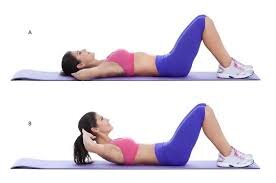
- With your feet flat on the ground and your legs bent, take a seat on the floor.
- Pull your abs down toward your spine while starting on your elbows and holding onto your glutes.
- To activate your biceps, bend your elbows to the side while holding onto the backs of your thighs.
- To activate your TVA muscle, purposefully exhale at various tempos.
- Spend no more than two minutes doing this workout.
Flatback curl (with heel taps):
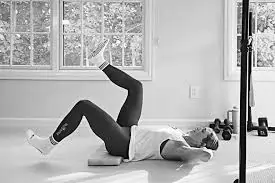
- Put a little mat under your glutes while lying down.
- Keep your legs hip-width apart while extending them over your hips. Flex your feet and bend your knees to a 90-degree angle.
- To secure your lower back and produce a pelvic tilt, pull your abs in.
- To get leverage, put your arms in a low “V” formation by your hips and press down on the ground.
- Slowly bring each leg back over your hip after lowering it a few inches forward. Instead of straightening your knee, tilt your thigh forward.
- To sustain abdominal engagement, keep your hips slightly raised and take deep breaths all the way through.
- Do ten to twenty repetitions in up to three sets.
Common Mistakes:
It’s not always easy to use the transverse abdominis muscle. When performing core exercises, you may be making one of these common blunders if you notice obvious abdominal doming or if your core looks like a bread loaf:
- Overusing the rectus abdominis and other superficial abdominal muscles, or sucking in your stomach
- Tucking your pelvis too much
- Lifting or flaring your ribcage or clenching other parts of your body, such as your jaw, thighs, or glutes
- Holding your breath
- When moving, losing interest, or activation
- Failing to activate the pelvic floor
Conclusion:
The transversus abdominis, sometimes referred to as the “corset” muscle, encircles your abdomen and is essential for maintaining and safeguarding your spine.
In addition to helping prevent injuries and lessen lower back pain, having a strong transversus abdominis may also make your waist appear smaller.
When performing transversus abdominis movements, keep in mind to draw in your lower abdomen and focus on your breathing. Engaging this muscle will get easier with time.
FAQs
Does walking strengthen the transverse abdominis?
Your transverse abdominis is used when you contract your core while walking. It acts as a core stabiliser by passing horizontally across the abdomen. Recruiting these muscles is crucial for proper posture and a toned body! Consider your transverse muscles to be your natural Spanx.
Does the transverse abdominis need to be trained?
They support the back, improve posture, and facilitate deep breathing when carrying large objects. When performing abdominal workouts, the transverse abdominis muscle is frequently neglected and ineffectively trained. On the other hand, strengthening the transverse abdominis will aid in the development of your entire abdominal and core muscles.
Does the transverse abdominis make the waist smaller?
Although the rectus abdominis aids with belly containment, there are a few lesser-known muscles that help reduce the waist: The transversus abdominis functions similarly to a corset. To a lesser extent, toned but not overly muscular internal and external obliques also contribute to the waist’s refinement.
How to fix a weak transverse abdominis?
Pelvic tilts are a straightforward but powerful exercise to activate the TA.
Planks: Although difficult, planks are a great way to strengthen your entire core.
Dead Bug Exercise: This is an excellent way to work your deep core muscles without putting undue strain on your back.
What are the symptoms of a strained transverse abdominis?
The primary sign of an abdominal strain is pain, which ranges in intensity based on the grade. Additionally, there may be noticeable local irritation, and it may hurt to touch. More severe strains may result in tissue bleeding that leaves bruises.
References:
- 5 Exercises to engage the transversus abdominis, and why it’s important – 2026 – Cpt/www.healthline.com/health/fitness-exercise/transverse-abdominal-exercises#how-to-engage-it
- Transverse abdominis workout to target your deepest core muscles | The bar method – 2026 – Bossany/barmethod.com/blog/transverse-abdominis-workout-to-target-your-deepest-core-muscles/


