Abdominal Exercise Beyond The Basic Crunch
Introduction
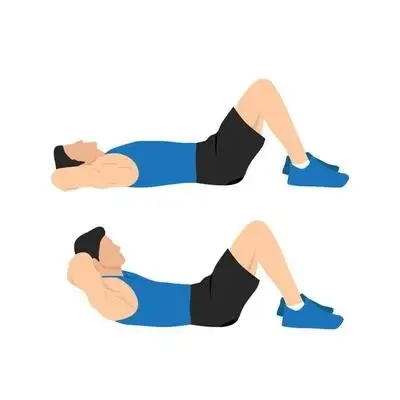
A traditional core workout is the crunch. It focuses on strengthening your abdominal muscles, which are a component of your core.
Your abs are not the only part of your core. It also includes the muscles in your hips, pelvis, lower back, and oblique muscles on the sides of your trunk. These muscles work together to stabilise your body.
Although the crunch is a common core exercise, not everyone can safely perform it. It only works your abs, not the other muscles in your core, and it can put a lot of strain on your neck and back.
Abdominal Exercise Beyond The Basic Crunch
Ab contractions
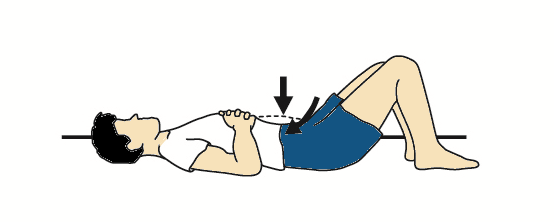
- With your feet flat on the ground and your knees bent, lie on your back.
- Tighten your core by pressing your back into the floor and making a little movement to bring your abdomen into your spine.
- For thirty seconds, contract your abdominal muscles in this manner, and then release them.
- Take a short break and repeat one to three times.
- Advice: Breathe deeply and slowly while performing the workout. Start with 10 to 15 seconds and gradually increase your duration if 30 seconds is too long.
Leg drops

- With your arms at your sides and your legs straight up, lie on your back.
- Raise your legs back up just before they contact the floor after lowering them slowly toward the ground.
- Keep your lower back firmly planted on the ground.
- Perform 10–16 repetitions in 1–3 sets.
- Advice: If your lower back begins to rise off the ground, halt there and return your legs to their initial position. For additional support, try forming a triangle with your hands and placing them below your sitting bones. These bones are located where the lower back and glutes connect.
- Try single-leg drops (lower one leg, lift it back up, then switch legs) or leg half-drops (lower your legs to a 45-degree angle, then raise them again) as variations.
Hip lift
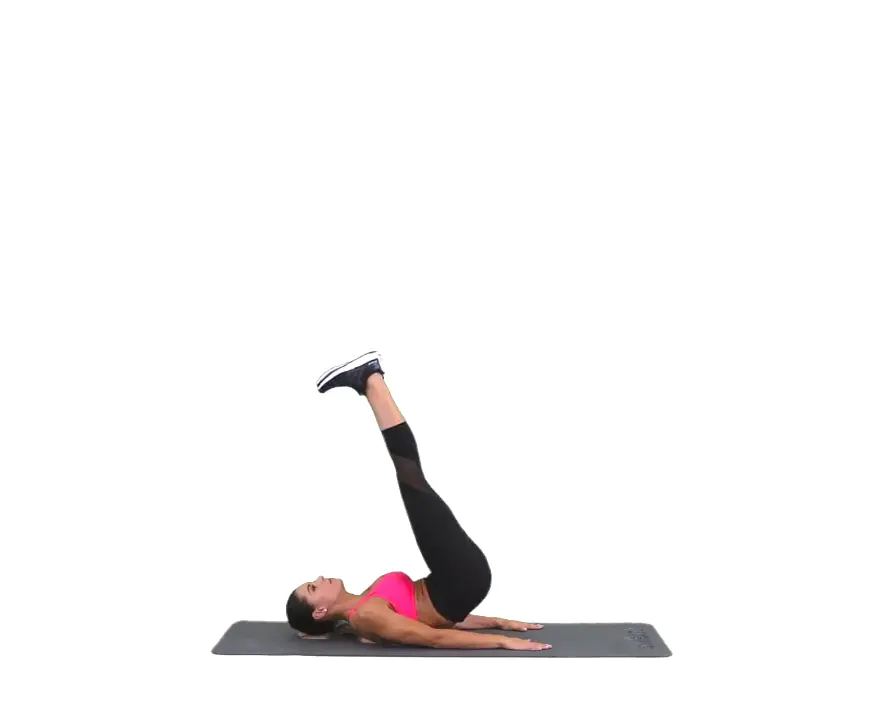
- With your arms outstretched beside your body, lie on your back.
- Raise your legs so they are vertical.
- To lift your hips off the ground, press your feet toward the ceiling.
- Repeat after lowering your hips back to the floor.
- Perform 10–15 repetitions in 1–3 sets.
- Advice: It’s important to use your lower ab muscles for this exercise, not your momentum. Exhale after each lift, and maintain control over your hips as you descend to the floor.
Boat pose
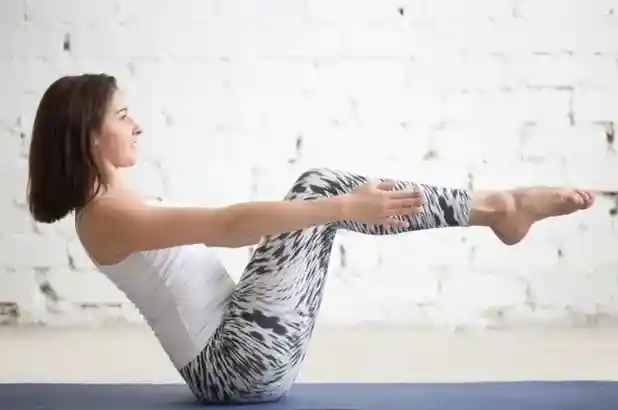
- Bend your knees and place your feet flat on the ground as you sit.
- Make a “V” shape by rolling back onto your sitting bones and extending your legs to a 45-degree angle.
- With your hands facing up, extend your arms parallel to the ground.
- Hold.
- Take a break and repeat one or two times.
- Draw your lower abdomen into your spine as a tip. Raise your chest. You can experiment with keeping your knees bent, only lifting your feet to knee height, or supporting yourself with your hands on the floor behind you.
Mountain climbers

- Put your hands below your shoulders and assume a high plank stance.
- Bring your right knee forward toward your chest while bending it.
- Return your right knee to the initial position while extending your left leg.
- For a maximum of one minute, keep up this motion.
- Take a break and repeat one or two times.
- Advice: It’s not a race! Perform these motions slowly and properly. Holding your core will keep your shoulders and hips level.
Rocking plank
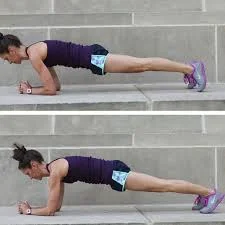
- Put your elbows below your shoulders and perform a low (forearm) plank.
- Rock on your toes while you move your body forward and backward.
- For one minute, keep doing this motion.
- Take a break and repeat one or two times.
- Advice: Maintain a straight neck, spine, and hips. Concentrate on using your lower abs.
Scissor kicks
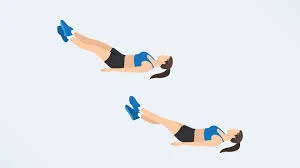
- With your legs raised straight up to the ceiling and your arms by your sides, make a 90-degree angle with your torso while lying on your back.
- Keeping your left leg elevated, slowly lower your right leg.
- Lower your left leg gradually as you raise your right leg back up.
- Keep raising and lowering your legs in alternation.
- Perform 10–16 repetitions in 1–3 sets.
- Advice: Aim for a 45-degree angle when lowering your leg if your lower back starts to extend.
The hundred
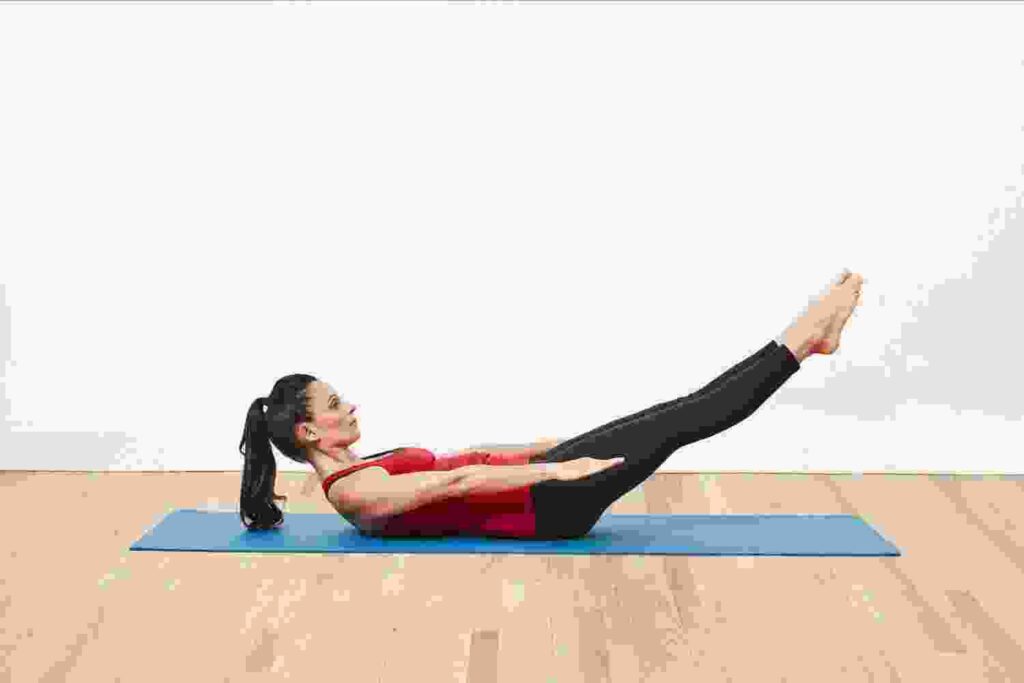
- Place your knees close to your chest while lying on your back.
- Curl your shoulders, neck, and head.
- Move your arms in rhythm with your body.
- Straighten your legs to a 45-degree angle.
- Inhale five times and exhale five times as you raise and lower your arms.
- Perform ten sets of ten breathing repetitions, or 100 pumps.
- For variation, pull your knees closer to your chest and bend them to 90 degrees.
Bicycle crunches

- To support the base of your skull, lie on your back with your fingers interlocked.
- Make a 90-degree bend in your knees.
- Twist your right shoulder and elbow in the direction of your left knee while extending your right leg straight out.
- Stretch your left leg, twist your left shoulder and elbow toward your right knee, and return your right leg to a 90-degree angle.
- Proceed with this motion, switching sides.
- Perform one to three sets of twelve to eighteen repetitions in total.
Flutter kicks

- while lying in your supine position.
- Raise your legs until your feet are roughly six inches above the ground.
- Lift your left leg a few inches and slowly lower your right leg a few inches at the same time.
- Lift your right leg a few inches and lower your left leg a few inches as you slowly change direction.
- For a maximum of one minute, keep up this motion.
- Take a break and repeat one or two times.
- Advice: Maintain your lower back in contact with the ground. Put your hands under the sitting bones for support to help with this.
Reverse Crunch

- With a concentration on the rectus abdominis, the reverse crunch is a useful ab workout. You’ll feel this in the lower section of your abs since you’re lifting your hips off the ground.
- Put your hands on the ground or behind your head while lying on the ground.
- With your feet together or crossed, bring your knees in toward your chest until they are 90 degrees bent.
- Curl your hips off the ground and raise your legs toward the ceiling by contracting your abs.
- For one to three sets of twelve to sixteen repetitions, lower and repeat.
- Instead of swinging your legs to generate momentum, try lifting your hips with your abs.
Plank on Elbows and Toes

- The plank exercise is a fantastic technique to strengthen your back, abdominal, and stabilizer muscles. Additionally, this exercise is excellent for developing the strength needed for pushups, which call for a significant amount of core strength.
- On a mat, lie face down with your palms flat on the floor and your forearms resting on it.
- Lift yourself onto your toes and rest on your elbows while you push off the ground.
- Maintain a flat back that runs straight from your head to your heels.
- To keep your rear end from sagging in the middle or extending out in the air, tilt your pelvis and tighten your abdominal muscles.
- Repeat for three to five repetitions after holding for 20 to 60 seconds.
FAQs
What is abdominal exercise called?
Planks, crunches, leg raises, and mountain climbers are all good exercises for the belly that will help you tone and strengthen your core. These work the upper and lower abs as well as the obliques to make you more stable and improve your posture. For the best results, do both bodyweight exercises and high-intensity cardio.
Exercises for the Core Belly
Plank: Keeps the body in a straight line to work the whole core.
Crunch: Works the muscles in the upper abdomen.
Lying Leg Raise: Works the muscles in your lower abdomen.
Russian Twist: Rotational movement works the obliques.
Mountain Climbers: A high-intensity workout that works your abs and heart.
Captain’s Chair Leg Raise: This is a great exercise for the lower abs and is often done while hanging or supporting the body.
Bicycle Crunch: Works well for both the rectus abdominis and the obliques.
Words that are often used
Ab Crunches/Weighted Crunches
Reverse Crunches
heel taps
Dog Bird
Ab Wheel Rollout
Advice for Success
Do these exercises three to four times a week to stay consistent.
Form: To avoid back pain, make sure to keep your core engaged and your posture correct.
Diet and Cardio: To lose belly fat, do these exercises along with a healthy diet and cardio to burn calories.
Can abs be hypertrophied?
Since the abs are much like any other muscle group, they will grow larger. When you put them under a lot of mechanical strain, they will grow larger. A muscle’s main adaptation to heavy training is that it grows larger and stronger. Additionally, the abs have the potential to thicken your waist.
What core exercises should a person with scoliosis avoid?
Crunches and Repetitive Flexion: Crunches are a popular workout in which the upper back is rounded, applying compressive pressures on the spine. This may increase pressure on your spine if you have scoliosis, which may cause pain and discomfort.
What is the rarest type of abs?
Breakdown of Rarity 6-Pack: The most prevalent, with over 60% of individuals carrying the necessary DNA. 8-Pack: Approximately 20% of individuals have an 8-pack inheritance. 4-Pack: About 15% of people reach their maximum abdominal size. 2-Pack: Only 2% of people are able to achieve a 2-pack.
What is killer core?
Killer Core is a 30-minute class that tests your core strength and stability using a variety of equipment, including foam rollers, free weights, and your own body weight.
What organ is most affected by scoliosis?
Children with idiopathic scoliosis and their pulmonary function
Scoliosis is a restrictive lung illness that causes a multifactorial reduction in lung volumes, displaces the intrathoracic organs, limits rib movement, and alters the respiratory muscles’ mechanics.
What is the 3-3-3 rule for exercise?
The 3-3-3 rule is a simple and popular way to work out that is meant to be consistent and effective. It usually involves doing three workouts a week, focusing on three key movements each time, and doing three sets of each exercise. It gives you a balanced, easy-to-follow plan for building strength and endurance that usually lets you do cardio three days a week and rest three days a week.
Important Parts of the 3-3-3 Gym Method:
Three times a week of exercise: Instead of having long, hard training sessions every day, focus on consistent, long-term training.
Three exercises for each session: Choose three basic movements, like the squat, press, and row, that work the biggest muscle groups for the best results.
Three sets of each exercise: Do three sets of each exercise, with a break of three minutes or less in between.
Example 3-3-3 Full Body Session:
Three sets of squats
Three sets of push-ups
Three sets of dumbbell rows
3-3-3 Variations:
3-3-3 Walking: Walk for 30 minutes four times a week, switching between 3 minutes of high-intensity walking and 3 minutes of low-intensity walking.
The 3-3-3 Weight Loss Rule says to eat three healthy meals a day, wait three hours between meals (no snacks), and do three types of exercise (strength, cardio, and NEAT).
What is the hardest core exercise?
The hardest core exercises work the rectus abdominis, obliques, and deep stabilizer muscles by requiring extreme stability, compression, and strength. The Dragon Flag, Standing Ab Wheel Rollouts, and Seated Leg Lifts are all examples of elite-level movements. To avoid injury and get the most out of your abs, you often need to have good body control when doing these exercises.
The Best Advanced Core Exercises
Bruce Lee made the Dragon Flag famous. It involves lying on a bench and lifting your body into a straight line with only your shoulders supporting it. Then you slowly lower it.
Standing Ab Wheel Rollouts: This is a very hard move that starts with you standing up and bent over, then rolling out all the way before coming back without letting your hips droop.
Ring Rollouts: Using gymnastic rings to do rollouts makes the exercise less stable, which makes your abs work harder.
Hollow Body Windshield Wipers: Lie on your back with your legs straight up and rotating them from side to side.
Toes-to-Bar at a 90° Angle: Hanging from a bar and bringing your feet up to touch it at a strict 90° angle.
L-Sit Pull-Up: Doing a pull-up while your legs are straight and parallel to the ground in an L-shape.
Weighted Plank: Putting a weight on your back while doing a plank makes it harder for your abdominal wall.
Renegade Row: You do a push-up while holding dumbbells and pull one up at a time. This takes a lot of strength to keep your body from rotating.
Stir-the-Pot on a Stability Ball: Put your elbows on a stability ball and move them in a circle while holding a plank.
What is the number one abdominal exercise?
Bicycle Crunches
1. Bicycle crunches, a rotating ab exercise that uses spinal rotation to work your obliques and the difficult-to-reach transverse abdominis deep
What are 5 signs your core is weak?
Inability to coordinate breathing. decreased athletic ability. stability and balance issues. A greater use of different muscular groups.
What is a core bomb?
Introducing the Core Bomb, a cutting-edge exercise gadget unlike anything you’ve ever seen. Whether you’re performing push-ups, planks, or ab rollouts, its special design provides instability to every exercise, making your stabilizer muscles work harder and accelerating your strength development.
Is 36 26 36 an hourglass?
For instance, the perfect ratio for an hourglass figure would be 36-26-36.
What is the rarest female body shape?
The hourglass shape is the least common natural female body shape, with only 8% to 10% of women having it naturally. A balanced bust and hip measurement and a very defined, narrow waist are what make it unique. The rectangle is the most common shape, affecting almost 46% of women.
The hourglass shape is the rarest. It has bust and hip measurements that are about the same, and the waist is at least smaller.
Common Shapes: Rectangles are the most common shape (about 46%), followed by pear/triangle shapes (about 20%), and apple/inverted triangle shapes (about 14%).
Why it’s Rare: The shape of a person’s body is mostly determined by their genes, which also affect where they store fat. Hourglass figures are less common in the general population.
How to get a curvy waist?
To get a curvier, more defined waist, you need to lose body fat by eating less food, strengthen your core muscles, and build your glutes and shoulders to make an hourglass shape. Planks, side crunches, squats, lunges, and overhead presses are all good exercises to do regularly, along with cardio three to four times a week.
Important Tips for a Curvy Waist
Exercises that are specific: To pull in the sides, do exercises like side planks, bicycle crunches, and Russian twists that work on tightening the core and waist.
Build Upper and Lower Body: Do lateral raises and shoulder presses to make your shoulders wider, and squats, deadlifts, and hip thrusts to make your hips and glutes bigger. This will make your waist look smaller by comparison.
Cardio for Fat Loss: To lose fat all over your body, do cardio exercises like HIIT, running, or swimming 3 to 4 times a week. You can’t spot-reduce fat.
Dietary Changes: To lose fat while keeping muscle, eat fewer calories than you burn and more protein. Eat less processed sugar and more healthy fats.
Posture: Changing your posture can make your waist look more defined right away.
Don’t Do Too Much Oblique Work: Heavy-weighted side-bending exercises can make the waist muscles thicker, which makes the hourglass effect disappear.
A 10-Minute Daily Routine That Works
Warm-up: Move your body slowly to get it ready.
Plank Variations: Do a standard plank for 45 seconds, then do side planks for 30 seconds on each side.
Bicycle Crunches: Do 3 sets of 15 to 20 reps to work your oblique muscles.
References
- Dias, A. (2024, April 24). 10 lower AB exercises to add to your fitness routine. Healthline. https://www.healthline.com/health/exercise-fitness/lower-ab-workouts#leg-drops
- Daisy, & Daisy. (2021, June 3). Crunches | Illustrated Exercise Guide. SPOTEBI. https://spotebi.com/exercise-guide/crunches/
- How to do crunches | What are crunches? | The gym group. (n.d.). https://www.thegymgroup.com/exercises/abs-and-core-exercises/how-to-do-crunches/
- Nunez, K. (2019, September 26). How to do crunches and other exercises for toned abs. Healthline. https://www.healthline.com/health/exercise-fitness/how-to-do-crunches#supine-toe-tap