
10 Best Piriformis Exercises
Introduction
Exercises that strengthen the piriformis are an excellent method of increasing the strength of the gluteal area, particularly the external Rotators. If a patient performs these exercises regularly, they may also experience several health benefits, enhance their Performance and physique, and lower their risk of injury.
The glutes contain the little, flat, band-like piriformis muscle. This arises from the inside of the sacrum and inserts at the superior border of the trochanter on the femur. This is also the reason why piriformis-related problems might be characterised as hip or buttock discomfort.
The knee joints will be under more pressure if the piriformis muscles are weak, as the outer side will be tense and the inner side will be weak. The joint will become unstable as a result.
Health Advantages of Piriformis Exercise:
- It helps to reduce sciatic nerve discomfort
- It helps the patient run more efficiently and reduces the risk of injury.
- A healthy piriformis can also alleviate ankle and knee discomfort.
- Reduces the discomfort associated with piriformis syndrome.
- Allows for more flexibility in the knees and hips.
If you suffer from piriformis syndrome, should you still exercise?
Of course. Rest isn’t the solution, despite your belief that you should sit down or stop moving.
Exercising and stretching are the most popular treatments for piriformis syndrome. It can help to improve symptoms.
Before beginning a new fitness regimen, especially if you have discomfort or haven’t been exercising frequently, see your healthcare physician.
10 Best Piriformis Syndrome Exercises & Stretches:
Supine Piriformis Stretch
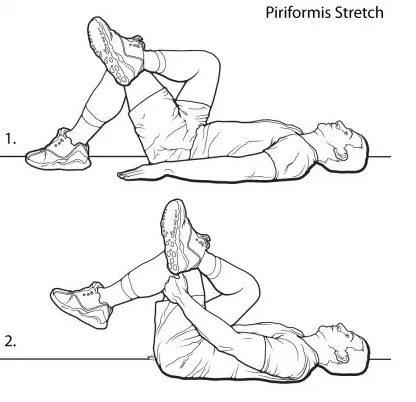
- Take a supine posture to begin.
- Put both hands on your knee, then gradually pull them slowly towards the opposite shoulder.
- Your buttocks should feel somewhat stretched.
- Do three repetitions of 30-second holds once a day.
Modified Hip External Rotator “Pigeon” Stretch
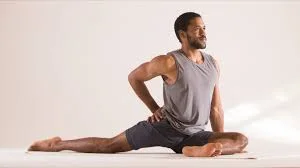
- Start with a sitting ( kneeling) position.
- Sitting on the edge of a bed or couch, cross one leg under your chest.
- It should feel like the glutes and hip external rotators are extended.
- Execute: 1-2 times per day, 3 sets of 30-second holds
Side-Lying Lumbar Rotation Stretch
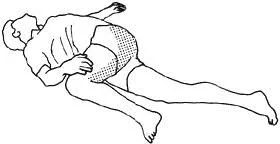
- Begin by lying down on one side.
- The upper leg’s foot should be hooked behind the opposing knee.
- Keep the knee pressed on the floor.
- Allow your extended arm to be gradually pulled to the other side by gravity to achieve a low back stretch.
- Perform three repetitions of holds lasting 30 to 60 seconds, 1-2 times daily.
Bridging

- Start with supine lying.
- Both knees are in a bent position.
- Then raise yourself through your hips.
- At the apex of that move, squeeze your buttocks.
- Return your hips to the floor slowly.
- For each set, repeat ten times.
- Once or twice a day, complete three sets.
Side-Lying Hip Abduction

- Begin by lying on your side.
- Your upper buttocks should be squeezed when you lift your top leg straight up.
- For each set, repeat ten times on each side.
- Once or twice a day, complete three sets.

- Place yourself on your side with your knees bent in a “L” configuration and your ankles stacked.
- Lift the top knee as though you were opening it while keeping your heels together.
- Slowly bring your knee back to where it was before.
- For each set, repeat ten times on each side.
- Once or twice a day, complete three sets.
Prone Hip Extension

- Lay on your stomach with a pillow under your hips.
- Squeeze the buttock muscles on that side and raise that leg towards the ceiling until the thigh separates from the surface, keeping the toes pointed downward. Hold on.
- Return to the starting position gradually.
- When lifting, make an effort to separate the buttock muscles.
- Do three sets of ten repetitions once a day.
Bird-Dog Exercise

- Start with a quadruped position.
- With the back straight and the toes pointed away from the body, extend the right leg outward.
- At the same time, extend your left arm in front of your body.
- Hold the stretch for five seconds at first, then progressively extend it to thirty seconds.
- Try to finish three stretches on each side in a single set.
Squat

- Position your feet so that the toes point slightly outward and they are a little broader than shoulder-width apart.
- Maintain your back straight and body upright.
- Push your hip back like you are sitting on a chair.
- Lower yourself until your hip crease is below your patella (kneecap) or your thighs are parallel to the floor.
- After that, the heels go back to the starting position.
Single Leg Deadlift

- Stand on one leg, bracing your core.
- The standing leg’s hip should initiate the action (butt moving back).
- The free limb, or rear leg, will elevate more as the patient moves forward.
- To balance the rear leg, allow the body to go forward a little.
- Once the patient has reached the depth at which he feels comfortable, bring him back up into the starting position using his knee and glutes.
- Aim for three sets of almost ten repetitions each day.
How Can a Piriformis Be Strengthened Effectively Without Creating Pain?
This is necessary to perform these exercises painlessly. If the patient feels that their muscles are beginning to spasm, do not force them to endure the discomfort.
For this reason, I divided the workouts into three distinct routines.
Make sure the patient always begins by stimulating the gluteus medius and maximus first to ensure that the discomfort is not activated (and we do that in all the workouts mentioned).
The main hip stabilisers are the gluteus maximus and medius, and when they are not used, the piriformis overworks, causing compensation.
When did the patient stop doing this exercise?
- If the patient was instructed to rest by the medical professional.
- If you have a recently injured leg bone.
- The patient should stop these exercises immediately and see a physical therapist if they experience any pain or discomfort.
FAQs
How quickly can piriformis syndrome be resolved?
Physical therapy, exercise, and stretching are the cornerstones of treatment for piriformis syndrome, even if prescription pharmaceuticals such as muscle relaxants, pain relievers, and anti-inflammatory drugs may be suggested.
Is the piriformis ever going to recover?
It occurs through sciatic nerve compression. Your butt, hip, or upper leg may experience discomfort, tingling, or numbness as a result of the ailment. With rest and basic therapies, the majority of episodes resolve in a few days or weeks.
How long does it take for the piriformis muscle to recover?
To aid with your recovery, your healthcare professional may suggest physical therapy and other forms of stretching and strengthening activities. While small injuries might recover in a few weeks, major injuries can take up to six weeks to heal.
If the patient has piriformis syndrome, what should he avoid?
Try to stay away from painful positions if sitting or other activities are the source of your discomfort. A regimen of stretches and exercises might be recommended by a physician or physiotherapist to help lessen sciatic nerve compression.
What causes piriformis muscle inflammation?
Excessive exercise or extended periods of idleness can cause the muscle to become inflamed or damaged. One of the main causes of piriformis syndrome is overuse caused by excessive activity. Jogging and other leg-related repetitive exercises.
Referances
- Prajapati, N. (2022a, December 8). Piriformis muscle strengthening exercises – Benefits, How to do? Samarpan Physiotherapy Clinic. https://samarpanphysioclinic.com/piriformis-muscle-strengthening-exercises/
- Ocs, N. U. P. D. (2023, April 4). Strengthening exercises for piriformis syndrome. Spine-health. https://www.spine-health.com/wellness/exercise/strengthening-exercises-piriformis-syndrome
- Clinic, C. (2025a, April 22). 7 Best stretches and exercises for Piriformis Syndrome. Cleveland Clinic. https://health.clevelandclinic.org/piriformis-syndrome-stretches-exercises
- Ocs, T. P. D. (2024, March 11). 7 Best exercises and stretches for Piriformis Syndrome. PT Time With Tim. https://pttimewithtim.com/piriformis-syndrome-exercises/