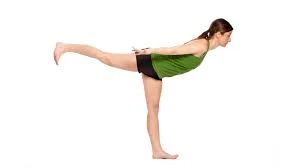

Side Crane Pose (Parsva Bakasana)
What is Side Crane Pose?
Side Crane Pose (Parsva Bakasana) is an advanced arm-balance yoga pose that combines strength, balance, and deep spinal twisting. In this pose, the body is lifted and supported on the arms while the knees rest on one arm, engaging the core, shoulders, and wrists.
Parsva Bakasana helps improve body control, concentration, and overall stability while enhancing spinal mobility and digestive stimulation.
Squat with your thighs parallel to the floor to execute the side crow stance. To place the right elbow on the left leg’s outer thigh, twist the upper torso to the left. Place the hands shoulder-distance apart on the ground. Until the upper arms are parallel to the floor, bend the elbows.
As the feet lift off the ground, place the right thigh over the left thigh by stacking the left thigh on top of the right upper arm. On the other side, these actions are then repeated.
Muscle Work During Side Crane Pose:
- Abdomen and core(abs) Muscles
- Upper and lower back Muscles
- Arms Muscles
- Shoulders Muscles
How to Perform?
- First, take a straight, tall stance. Now, place your feet as far apart as is comfortable for you—roughly one leg’s length apart.
- Now put your palms on the ground and lean forward from the waist. Spread your fingers apart and place your hands shoulder-width apart.
- Here, inhale deeply while maintaining a straight gaze.
- Bend your arms slightly away from your elbows. Lift the heels of both legs simultaneously and reach your toes.
- Bend your right leg from the knees and shift your lower thigh or knee to your right tricep. Next, position its lower thighs over the left triceps. The right leg needs to be in line with the floor.
- In this position, your right knee will be just ahead of your left tricep, and its lower thigh will be in contact with the tricep. Given that the right shin ought to be near the left knee.
- Now extend your elbows further, bend forward, and raise your right leg off the ground. Next, position your left leg over your right while keeping your arms balanced.
- Depending on how comfortable it is for you, you can keep your legs bent or extended. However, be sure they are parallel to the ground.
- Now, try your best to straighten your arms. Parsva Kakasana, also known as Side Crow Pose, can be achieved by further bending the arms.
- Maintain the posture while breathing normally for ten to thirty seconds.
- When you’re finished, slowly return both legs to the starting position. Here, take a couple of deep breaths.
- Return to the starting position (at step 2) after completing the procedure with both sides.
- Now, simultaneously raise your hands off the ground and slowly bend your knees.
- Next, either straighten your legs and relax or arrive at Vajrasana.
Benefits:
- Because this pose applies a lot of strain to the arms, it strengthens the entire arm and increases its flexibility and strength. Additionally, it extends the wrists and elbows, increasing their strength and flexibility.
- The abdominal organs and core are massaged by this pose. The pancreas, kidneys, liver, intestines, and other abdominal organs are toned by it. As a result, it aids in the body’s digestion and cleansing processes.
- Parsva Bakasana increases blood flow to the spine and stretches the back. It maintains the health of the spine and enhances the alignment of the vertebral column.
- The Manipura/Solar Plexus Chakra is said to be stimulated by this stance, which increases self-assurance and self-control. Additionally, this pose promotes feelings of happiness and serenity.
- Side Crane Pose increases flexibility and general body strength. It teaches us to make our bodies more balanced. It gets us ready for more challenging poses.
Beginner’s Advice:
- For additional support, you can start by placing another hand’s elbow beneath the side of the hip. Put the elbow of your right hand beneath the side of your left hip, for instance, if you are doing Side Crane Pose from your left side.
- For additional support and grip, you might place a yoga block beneath your palms.
- To prevent injuries if you fall forward, place a pile of cushions or other soft objects in front of you.
- To keep your balance and do this pose correctly, need assistance from a partner or instructor.
Preparatory Poses:
- Chaturanga Dandasana ( Four-Limbed Staff Pose)
- Adho-Mukha Shvanasana (Downward-Facing Dog Pose)
- Pasasana (Noose Pose)
Precautions and Contraindications:
- Don’t push yourself too far. Depending on your level of strength and ability, perform this asana.
- When performing this asana, avoid wearing slippery clothing, such as silk. It may make it difficult to place your legs on your triceps.
- Distribute the weight equally across the palm, fingers, and wrist. Don’t just centre it on your wrist.
- If you have a severe or profound injury to your arms, shoulders, core, or back, avoid doing this pose. Because this pose primarily targets certain bodily regions, doing it while you have such injuries may be detrimental to your health. Additionally, stay away from this pose if you have spondylitis or carpal tunnel syndrome.
- This pose should not be done when pregnant because it puts a lot of strain on the core, which is bad for the fetus. Therefore, avoid doing this pose while pregnant. Additionally, stay away from this pose when you’re menstruating.
Conclusion:
The biggest obstacle to performing the Side Crane Pose is our fear of falling. Therefore, the mind comes first when doing this asana, followed by the body.
The biggest barriers to achieving anything are the ones we construct in our imaginations. This also holds. Initially, you must train your thinking.
You will find this asana easy if you practise it with a well-prepared mind.
FAQs
Why is Side Crane Pose so hard?
Finding your centre of gravity is much more difficult in Side Crow since you raise both knees to one side. This position is challenging to learn but incredibly rewarding once mastered, since it involves a twist and a complete arm balance.
What are the benefits of Side Crane Pose?
Stretches, Strengthens, Lengthens: Regular Side Crow practice helps strengthen and stretch the wrists, hands, arms, shoulders, back, and core (obliques), preparing the body for more difficult arm balances like Astavakrasana (Eight Angle Pose) and Koundinyasana II (One Legged Twisted Arm Balance).
Who should avoid the side crow pose?
Avoid or adjust to prevent strain if you have wrist pain or injury.
Shoulder instability: Before attempting, strengthen your shoulders.
Use supported variants or avoid the twist if you have a low back or abdominal injury.
Pregnancy: Not suitable because of twisting and pressure.
What are the common mistakes in Side Crane Pose?
Collapsing Into the Wrists: Engage the core and press into the fingertips.
Skipping the Twist: Don’t jump right into the arms; instead, set up the twist first.
Looking Straight Down: To improve balance, keep your eyes forward.
Elbows should remain embracing in the direction of the midline.
What is Parsva Bakasana Pose?
A deep twist in an advanced arm balance, also known as Side Crow or Side Crane Pose.
enhances balance and focus while strengthening the arms, wrists, shoulders, and core.
How to prepare for the Parsva Bakasana Pose?
Warm-up: Pay attention to spinal twists and hip flexion, such as in Malasana.
Develop your strength by doing the crow pose (Bakasana) and the Chaturanga Dandasana.
Get the Twist: With hands in prayer, practise twisting in a squat (Malasana), placing the elbow outside the opposing leg without rising.
Do you need strong wrists for the Side Crane Pose?
Side Crow (Parsva Bakasana) requires you to bear your entire body weight on your hands, so it’s a good idea to warm up your wrists with certain exercises. Position yourself at a table to begin. Put your hands together in the shape of a spider to get a solid base.
References:
- Yogapedia. (2023b, December 21). Side crow pose. Yogapedia. https://www.yogapedia.com/definition/6975/side-crow-pose
- Side Crane Pose (Parsva Bakasana): How to Do and Benefits – Fitsri Yoga. https://www.fitsri.com/poses/side-crane-pose
- Side Crow Pose Yoga Pose (Parsva Bakasana). Tummee. https://www.tummee.com/yoga-poses/Parsva Bakasana.