12 Best Rotator Cuff Exercise
Introduction:
Rotator cuff exercises are important for strengthening the shoulder muscles that stabilize the shoulder joint. These exercises help improve shoulder mobility, reduce pain, and prevent injuries, especially in individuals with shoulder weakness or those recovering from shoulder conditions.
The rotator cuff four muscles—
- Supraspinatus
- Infraspinatus
- Teres minor
- Subscapularis—
These muscles stabilize the shoulder joint and allow for a wide range of shoulder movements. These muscles play an important role in day-to-day activities like lifting, rotating, and stabilizing the arm during daily activities and sports.
Tendons from those muscles emerge in the scapula (shoulder blade) and link to the humerus (upper arm bone), forming the “cuff” that encircles the ball-and-socket shoulder joint.
Rotator cuff pain results from any injury, inflammation, or wear and tear on the muscular tendons that support the shoulder joint.
The RICE method and physiotherapy treatment help to lessen this pain.
The rotator cuff comprises four muscles:
- Supraspinatus muscle: This muscle assists in raising the arm, stabilising the upper arm, and holding the humerus bone in position.
- Infraspinatus Muscle. The primary muscle responsible for rotating and extending the shoulder joint is the one mentioned.
- The principal purpose of the teres minor, the smallest rotator cuff muscle, is to promote external arm rotation.
- Subscapularis muscle
Rotator Cuff Exercise:
Doorway stretch

- Start with a standing position.
- Stretch your arms out to the side while standing in an open doorway to warm up your muscles.
- Lean forward into the doorway until you feel a slight stretch, holding the edges of the doorway with each hand at or below shoulder height.
- Keep your spine straight as you bend forward and shift your weight to your toes. You should feel as though your shoulder is extended.
- Hold for 15- 20 seconds.
- Repeat 3 times.
Crossover arm stretch

- Start with a standing position.
- After that, extend one arm without locking it and raise it straight up to a position perpendicular to the floor.
- Raise the extended arm by grabbing its wrist joint with the other hand.
- As you softly move the arm across the front of the body, try to embrace the chest.
- After five seconds of holding this stretch, gradually release it.
- Stretch the opposite side as before.
Over-your-head stretch
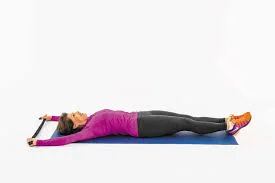
- The patient is flat on both the floor and the bed, with their arms at their sides.
- Using both hands, grasp the rod or cane close to the hip joint.
- Holding the arms straight, slowly raise the rod or cane in an arc-like motion.
- Keep going until the cane or rod goes over the face and crashes down over the head.
- Go back to where you were before.
- In a single session, perform this exercise three times.
Pendulum swing
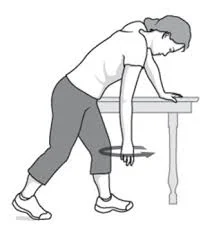
- Start with a standing position.
- Hold one hand steady on a table or chair as you stand.
- Lean at the waist and let the injured arm hang down.
- To move the arm, gently swing the weight of your body in a circular motion or back and forth.
- The arm can be moved in circles, sideways, forwards, and backwards.
- Repeat ten to fifteen times.
Wall climb

- Start with a standing position.
- Patients were instructed to position their affected hands at a low height above the ladder.
- After that, gradually begin climbing the finger ladder until you reach the top, and then gradually descend to the beginning position.
- Do it 10- 12 times.
Shoulder-blade squeeze
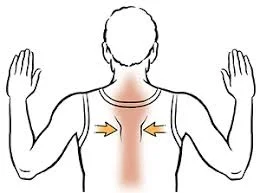
- Start with a standing or sitting position.
- Maintain proper posture by drawing your shoulder blades together.
- After about six seconds of holding, release.
- Do this eight to twelve times.
Side-lying external rotation
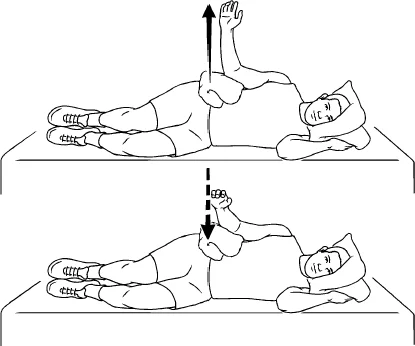
- Now, place yourself on the unaffected arm.
- Put the injured arm on your side and bend the elbow to a 90-degree angle.
- Cover your abdomen with your forearm.
- Holding a light dumbbell in the hand of the affected side and with your elbow resting on your side, slowly raise it towards the ceiling. If you experience any tension, stop rotating your arm.
- After a few seconds of holding the dumbbell high, lower your arm back to the starting position.
- Once a day, repeat three sets of ten. When a set of 10 becomes effortless, increase the number of reps to 15.
Bent-Over Horizontal Abduction
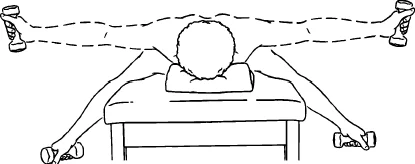
- The patient’s damaged arm is dangling over the side of the table and bed where they are lying on their stomach.
- Raise the arm slowly to eye level while maintaining a straight posture.
- After that, return to the starting position.
- Do it 10 times.
High-to-low rows

- Select the appropriate weight from the weight stack and connect a close-grip bar or V-bar to the seated row machine.
- Gripping the bar in a neutral position with your hands facing in.
- When lifting the weight off the stack, keep your legs slightly bent and your back straight. You should sit upright and have your shoulders back. This is where you start.
- Pull the handle into your tummy while maintaining your body stance.
- Squeeze, pause, pull your shoulder blades back, and then gradually return the weight to the beginning position.
- Do 10 – 15 reps.
Reverse fly
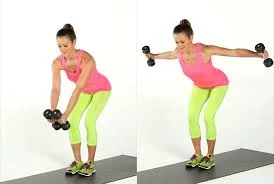
- Start with lean forward.
- Place your feet shoulder-width apart.
- As you stand, gently bend your knees.
- Bend gently at the waist and keep your back straight.
- Weights should be gradually increased until your shoulders and elbows are level.
- Return to the starting point and complete three sets of ten.
Wall push-up

- Start with a standing position.
- Face the wall.
- Your feet should be 12 to 24 inches apart.
- On the wall, place your hands shoulder-high, a little broader than your shoulders.
- Lean your elbows gradually while raising your chest against the wall.
- Return to the beginning posture by pushing through your hands and straightening your arms.
- Do this eight to twelve times.
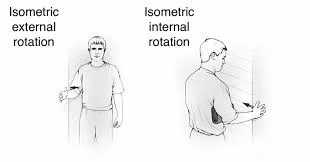
External Rotation:
Place your wrist back against a wall and exert power outward, as though you were attempting to turn your arm away from your body.
Internal Rotation:
Place your hand against a wall and push inward, as though you were attempting to turn your arm in the direction of your body.
How can rotator cuff muscle soreness be prevented?
- Always warm up before performing an exercise.
- You’re learning that lifting weights correctly requires keeping your back straight and engaging your legs.
- Performing shoulder strengthening and stretching activities to relieve the ache.
- Don’t smoke.
- Make an effort to always stand with good posture.
- Keep your weight within a healthy range.
Summary
The rotator cuff, primarily consists of four muscles, is responsible for the shoulder’s stiffness and flexibility during motion.
Stretches and exercises can help you increase your range of motion and build strength after a rotator cuff injury, such as a tear or strain. Additionally, these workouts can help to promote recovery and lower the likelihood of any future issues.
Nevertheless, you should consult your physician if, more than a few days after your accident, you continue to have pain, swelling, trouble elevating your arm, or trouble sleeping on your arm. These indicate a more serious injury.
FAQs
Could physical activity help repair a rotator cuff injury?
Rotator cuff problems are primarily treated with strength training. However, you can also require rotator cuff surgery in some situations if your damage is serious.
Rotator cuff weakness: what is it?
A collection of muscles and tendons called the rotator cuff stabilises the shoulder joint and permits arm and shoulder movement. Damage or irritation to one or more rotator cuff components can lead to problems. Pain, weakness, and a decreased range of motion may follow from this.
Is rotator cuff healing ever complete?
Rotator cuff tears can’t heal on their own. For your shoulder joint to be restored, rotator cuff repair is required.
What promotes rotator cuff healing?
Conservative treatment for a rotator cuff injury may involve nothing more than rest, ice, and physical therapy. You may require surgery if your damage is serious.
Which rotator cuff muscle is the strongest?
The largest and strongest muscle in the rotator cuff is the subscapularis. The muscles known as the rotator cuff are required to turn the shoulder and maintain the stability of the glenohumeral joint. The subscapularis muscle is situated on the anterior surface of the scapula.
Why do rotator cuff injuries occur?
A rotator cuff injury, such as a tear, may result from falling onto an outstretched hand. Repetitive actions may also cause it to grow over time. Additionally, rotator cuff tears may result from tissue degradation, which can occur as a result of ageing.
Referances
- Ladva, V. (2024, December 11). Rotator Cuff Muscle Pain: Cause, Treatment, Exercises. Samarpan Physiotherapy Clinic. https://samarpanphysioclinic.com/rotator-cuff-muscle-pain-treatment-exercises/
- Martel, J. (2018, September 17). What you need to know about rotator cuff tendinitis. Healthline. https://www.healthline.com/health/rotator-cuff-tendinitis
- Rotator Cuff: Exercises | Kaiser Permanente. (n.d.). Kaiser Permanente. https://healthy.kaiserpermanente.org/health-wellness/health-encyclopedia/he.rotator-cuff-exercises.ad1509
- Clinic, C. (2025d, May 25). Stretches and exercises for rotator cuff tears. Cleveland Clinic. https://health.clevelandclinic.org/rotator-cuff-tear-exercises-stretches