
Exercises for Hip Flexor Strain
Introduction
Hip flexor strain is a common injury that occurs when the muscles at the front of the hip become overstretched or torn due to sudden movements, overuse, or intense physical activity. It can cause pain, stiffness, and difficulty in lifting the leg or walking comfortably.
Performing gentle and targeted exercises can help reduce pain, improve flexibility, and gradually restore the strength of the hip muscles. Hip flexor strain exercises are designed to promote healing, enhance mobility, and prevent future injuries when done correctly and consistently.
Our hips aren’t simply responsible for the amazing dancing steps we occasionally perform.
Most of us spend a large portion of our days sitting, which can lead to tight hip flexors. Additionally, a sedentary lifestyle is linked to weakening in the hip muscles, including the glutes, hamstrings, and abductors, as well as the hip flexors themselves.
Hip flexor weakness and tightness can result in injury, lower back pain, and hip pain.
What are the hip flexors?
A collection of muscles called the hip flexors is in charge of raising the leg toward the body, or flexing the hip. The iliacus and psoas major, together referred to as the iliopsoas, are the main hip flexors.
Your spine’s lowest six vertebrae are where the psoas begins. The interior bowl of your pelvis is where the iliacus begins. The femur, or upper leg bone, is where they connect and insert.
When doing tasks like lifting, pushing, and pulling, the iliopsoas stabilises the trunk. The knees are also drawn toward the chest by the iliopsoas. Swinging your leg forward when sprinting and kicking motions in sports like soccer are two examples of this.
Here are fantastic hip flexor workouts and stretches to keep you strong and flexible and maximise your hip mobility so you don’t hurt when you’re busting a move or just strolling down the street.
Hip Flexor Strain Exercises
Kneeling Hip Flexor Stretch

The iliopsoas/hip flexors on the back leg and the glutes on the front leg will be stretched with this easy exercise. This can be done on a yoga mat or with a folded towel beneath your knee.
- Start on the floor in a half-kneeling position with your left foot flat on the floor in front of you and your right knee directly behind your right hip, forming an angle at the left knee.
- When performing this exercise, maintain a tall trunk. For balance, you can continue to place your hands on your left knee.
- Slide your knee back slowly until the front of your hip starts to expand a little.
- Squeeze your right glute as though you were pulling forward to bring your hips and trunk toward your left foot.
Straight Leg Raises

This workout strengthens the rectus femoris and iliopsoas. As the leg elevates, the muscles in the abdomen work together to stabilise the trunk.
Straight leg raise steps:
- With one knee bent, lie on your back. Maintaining a straight knee, extend the opposing leg.
- As you raise the leg till the thigh is parallel to the opposite bent knee, contract your abdominal muscles.
- Hold that and start again.
Bridges

This exercise can help extend the hip flexors while strengthening the gluteal muscles.
- Lay on your back with your arms at your sides, knees bent, and feet hip-distance apart. Your feet should ideally be positioned so that your fingertips may touch your heels.
- Raise your hips off the floor and toward the ceiling while tightening your glutes and pressing into your heels. This should be felt in your hamstrings and glutes rather than your lower back.
- Repeat multiple times after holding the position for a few seconds and then going back to the beginning position. Remember to breathe!
Knee to chest stretch
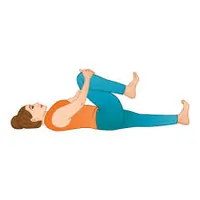
- Stretch your legs out on the floor while lying on your back. Bend one knee slowly in the direction of your chest.
- Pull your knee as near to your chest as you can without feeling uncomfortable while maintaining a flat back.
- Squeeze your glute and extend your straight leg as far as you can.
- Repeat with your other leg after you’ve returned to the beginning position.
- Try doing this stretch on a bench with your lower leg hanging off if you don’t feel any stretch.
Clamshells

To perform a clamshell workout:
- Lie down in a side-lying position.
- Bend your knees toward your chest and stack your hips and knees on top of one another.
- Without turning your lower back, raise your upper knee as high as you feel comfortable while keeping your feet together.
- Maintain this posture.
- Return to the beginning posture by relaxing your top knee.
Standing Hip Flexion

- If you need to balance, hold onto a chair or wall while standing erect.
- Keep your back straight and use your core.
- Raise one knee slowly toward your chest or as high as it feels comfortable.
- Slowly and carefully lower the leg.
- Alternate legs or repeat on the same side.
Exercises to Avoid for Hip Flexor Strains
Always consult a physiotherapist/Doctor before starting any new exercises.
Avoid Painful exercises.
It’s essential to avoid some workouts that can strain the hip flexor muscles in addition to performing the correct routines.
But keep in mind that this is a fairly broad list, and you will need to incorporate these exercises into your daily schedule based on how long it has been since your injury. Among these exercises are:
High-intensity workouts that happen suddenly.
- Squats
- Lunges
- Jumping
- Running
A Smart Approach: Time, Patience, and Expert Guidance
- Hip flexor strains can take weeks or even months to heal. It’s essential to exercise patience and allow your body to heal.
- You should prioritise getting enough sleep, maintaining a nutritious diet, and drinking lots of water in addition to exercising.
- Seeing a physical therapist is essential if you’re having trouble recovering from a hip flexor injury. You can create a customised recovery plan with the assistance of a physical therapist that incorporates the appropriate stretches and exercises.
Conclusion
Although hip flexor strain can be frustrating, recovery is achievable. You may heal from hip flexor strain and restore your active lifestyle with the proper exercises and stretches, care, and effort.
FAQs
What exercises for hip flexor strain?
Pull your healthy leg back toward your chest by grabbing it at the knee. Let your afflicted leg extend down toward the floor and relax it until you feel a stretch in the hip and upper thigh. Hold that for 20 to 30 seconds. Do this two or four times.
Is hip pain common during pregnancy?
Indeed, hip pain is quite common and normal during pregnancy. It usually begins in the second or third trimester and is caused by pregnancy hormones like relaxin, which loosen ligaments for childbirth, increased pressure from the growing uterus, and changes in weight distribution and posture. It may show up as dull or sharp pain in the lower back, pelvis, or hips, occasionally radiating as sciatica. Applying heat, sleeping with a pillow between the knees, using supportive belts, and doing mild exercise are all part of management.
Reasons for Hip Pain During Pregnancy
Hormonal Changes: The hormone relaxin loosens the pelvic bones for delivery and softens ligaments.
Uterine Pressure: Pain, numbness, or tingling (sciatica) may result from the expanding uterus pressing against the sciatic nerve.
Weight Gain & Posture: Changes in the centre of gravity and additional weight put stress on the hip joints and underlying muscles.
Joint Instability: Joints are more at risk of stress when ligaments are loosened because they decrease pelvic stability.
How to Locate Solace
Supportive Gear: To stabilise the hips, put on a girdle or belt during pregnancy.
Sleep Positions: To help align the pelvis, place a pillow between your knees while you sleep on your side.
Applying heat to sore spots is known as heat therapy.
Mild Exercise: Walking, swimming, or a modified form of yoga can be beneficial.
Physical therapy: Pelvic-stabilising muscle strengthening can provide a great deal of relief.
Posture: Sit and stand with proper alignment; avoid crossing your legs.
How to tell if a hip flexor is strained or torn?
Hip flexor strain symptoms include pain.
a sensation of rigidity or pushing in your hip.
difficulty moving or walking without a limp.
weakness in your hips or lower abdomen.
discolouration or marks.
swelling.
cramping in the muscles.
What emotion is held in the hip flexor?
Emotions associated with trauma, fear, worry, and anxiety are frequently stored in the hips. Yoga provides a potent tool for letting go of these pent-up emotions because of its emphasis on hip opening and mindfulness.
What activities worsen hip flexor pain?
Try to stay away from activities like running, jumping, and jogging when you have hip pain. This can be problematic if your hips are already at risk. Deep squats: Deep squats might worsen hip pain and strain the joint.
Will physio help a hip flexor strain?
When treating a hip flexor injury, physical therapy is important. Your physiotherapist can first identify a specific tissue or tissues that are injured and the degree of that damage. Your physiotherapist can use this information to create a customised treatment plan and talk about estimated recovery timelines.
Does hip pain mean the baby is coming?
Your pelvic pressure may rise as your body gets ready for labour. You might also experience hip or lower back pain in conjunction with this feeling. The baby may seem to be moving deeper into the pelvis, which is a good indication that labour might be on the way.
What hurts first in early pregnancy?
The first “hurts” of early pregnancy are usually tender, sore breasts and mild, period-like cramps (implantation cramps) in the lower abdomen or back. These are both brought on by hormonal changes and the uterus expanding, and they frequently occur before a missed period. Fatigue and bloating are other initial discomforts, but severe pain, heavy bleeding, or one-sided pain should be treated right away because they may be signs of complications.
Typical Initial Pains and Discomforts:
Lower Abdominal Cramps: As the fertilised egg implants in the uterus (implantation) and the uterus grows, mild cramping that resembles menstrual cramps occurs.
Breast Tenderness: Usually beginning in weeks 4-6, hormonal changes can cause breasts to become swollen, sensitive, and sore.
Backache: More common in later trimesters, mild aches can arise as ligaments relax and the body adapts to pregnancy.
When to Get Medical Help: If you have any symptoms, get help right away.
Severe Pain: An ectopic pregnancy may be the cause of severe cramping or sharp pain, particularly on one side.
Heavy Bleeding/Spotting: Bleeding that, particularly during cramps, soaks a pad or contains clots.
Cramping that doesn’t go away or lasts longer than 30 seconds is referred to as persistent pain.
How long does an overused hip flexor take to heal?
There are three classes for hip flexor strains: mild, which involves little tearing and heals in two to three weeks; moderate, which involves partial tearing and heals in four to six weeks; and severe, which involves complete tearing, which takes eight weeks or more to cure and may require surgery.
What movements hurt with hip flexor strain?
Everyday activities like walking or elevating your leg can become uncomfortable if you have hip flexor issues. Knowing these ailments and how to manage them will speed up your recovery, regardless of whether you’re an athlete or just active.
How quickly can a hip flexor strain be healed?
Get some rest. Put an end to anything that hurts.
Extending your hip gently can aid in the healing process.
For two to three days, ice this area for 20 minutes every three to four hours. Avoid putting ice on your skin directly. First, wrap the ice with a fresh cloth.
References
- Clamshell. (n.d.). [Video]. Hingehealth. https://www.hingehealth.com/gb/en/resources/articles/clamshell/
- How to do Standing Alternate Hip Flexion. (n.d.). https://www.getwellen.com/exercises/standing-alternate-hip-flexion
- Kelly, E. (2023, March 17). 8 of the Best Hip Flexor Stretches and Exercises. Healthline. https://www.healthline.com/health/fitness-exercise/hip-flexor-exercises#what-are-hip-flexors
- How to overcome a hip flexor strain and what exercises and stretches to avoid? (2023, August 1). https://www.melbournesportsphysiotherapy.com.au/blog/2023/how-to-overcome-a-hip-flexor-strain-what-to-avoid


