
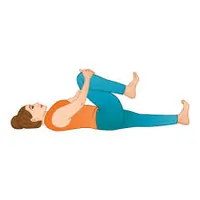
Top Exercises for Patellar Tendonitis
Introduction
Inflammation of the patellar tendon at the front of your knee is known as patellar tendinitis.
Your kneecap (patella) and the top of your shin bone (tibia) are joined by the patellar tendon. It moves your lower leg and knee by using your quadriceps muscle.
Overuse of the patellar tendon can result in patellar tendonitis. Because patellar tendinitis is common in athletes who jump a lot for their sports, medical professionals commonly refer to it as “jumper’s knee.” It is also known as patellar tendinopathy and patellar tendonitis. The same ailment is referred to by all of these names.
If your knee discomfort doesn’t go away after a few days of rest or at-home therapies, you should contact your doctor regardless of what they describe it as.
Symptoms and Causes
What are patellar tendinitis symptoms?
The following are the most typical signs of patellar tendinitis:
- The front of your knee hurts.
- Sensitivity to gentle pressure just below the kneecap.
- Stiffness, which could make it difficult to straighten or bend your knee.
What does patellar tendinitis pain feel like?
The majority of people with jumper’s knee describe a low, dull discomfort at the front of their knees, though everyone’s experience of pain varies. When you use or move your knee, especially when you straighten it, the discomfort usually grows worse. Squatting and climbing stairs are two examples of motions that are typically uncomfortable.
What causes patellar tendinitis?
Repetitive strain injuries include patellar tendinitis. It is caused by overusing your knee and repeatedly straining your patellar tendon. Although it is typically a sports injury, it can be caused by any repetitive physical exercise, occupation, or hobby.
Tiny tears in your tendon can result from repeated wear and tear, such as frequent sprinting or jumping. The tears don’t have time to heal if you continue to engage in severe physical activity with your knee. This additional strain eventually causes your tendon to become weak and painful.
Over time, the damage that results in patellar tendinitis gradually accumulates. There are two primary categories of activities that can harm your tendons:
An unexpected, high-intensity increase in physical activity: Your body might not be prepared for the sudden rise in activity level if you begin a new sport or quickly raise the intensity of your training.
Not getting enough sleep or engaging in an activity too frequently: Between periods of vigorous exercise, your body needs time to relax and recuperate. Your patellar tendon won’t have enough time to mend if you train or use your knees excessively. Instead of constantly training or working at your physical limit, try to restart tasks gradually.
What are the risk factors?
Patellar tendonitis can affect anyone. However, some individuals are more at risk, such as:
- Athletes whose sports require them to sprint, jump, or change direction.
- Athletes who participate in professional or elite competitions.
- Individuals who have physically demanding occupations or activities.
- Men.
- Individuals above 40.
- Patellar tendinitis is frequently caused by the following sports:
- basketball.
- volleyball.
- Track events include the high jump, long jump, and hurdles.
- gymnastics.
- football.
- Figure skating. Soccer.
What are the complications of patellar tendinitis?
Untreated patellar tendinitis can raise your chance of a patellar tendon tear (rupture), which is uncommon. When you continue to utilize your knee after experiencing pain or other symptoms, the little rips become even more stressed, increasing the risk of a rupture.
Diagnosis and Tests
How do providers diagnose patellar tendonitis?
A medical professional will use a physical examination to diagnose patellar tendonitis. Your knee will be examined and compared to your other, uninjured knee. Your doctor will inquire as to when you first became aware of your symptoms and what you were doing at the time.
Inform your healthcare practitioner about the activities you participate in, your occupation, and other physical pastimes you believe may have contributed to your tendinitis. Inform them of any positions or activities that improve or worsen the symptoms.
Your doctor may employ imaging tests to capture images of your knee and surrounding tissue, such as:
- Knee X-ray.
- Magnetic resonance imaging, or MRI.
- Ultrasonography.
Patellar Tendonitis Exercises
Isometric quad contractions (Quad sets)
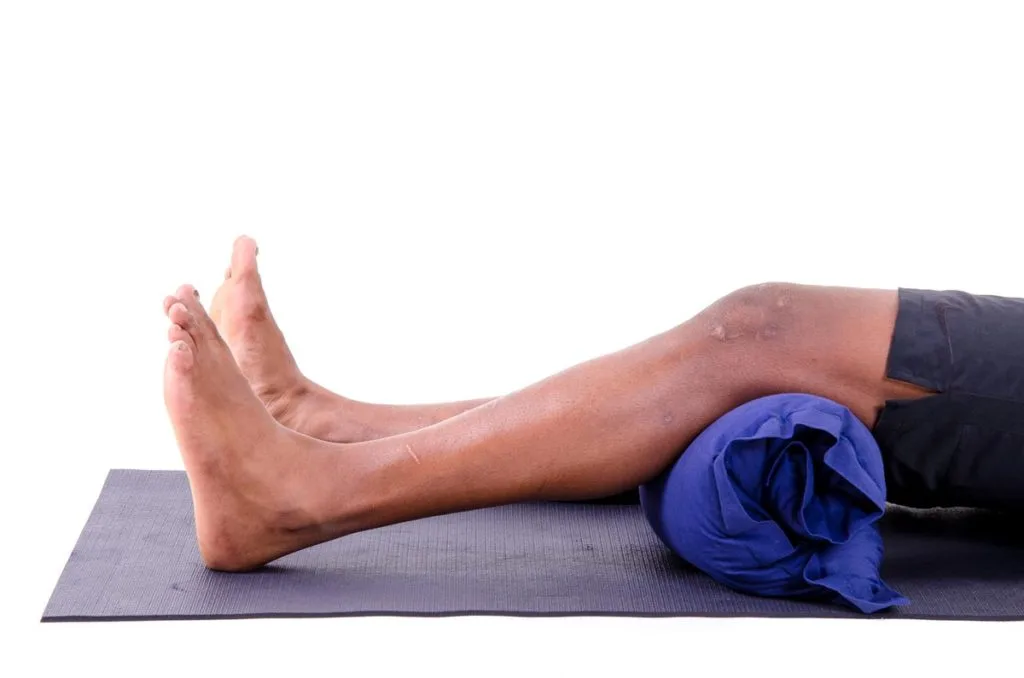
- Sit on a flat surface with legs straight.
- Set up: Put a small rolled-up towel under your ankle or knee to help you pay attention to the movement.
- Contraction: Squeeze the thigh muscle (quad) on the front of your thigh by pushing the back of your knee down toward the floor or bed. As you do this, pull your toes toward you to help keep the leg engaged.
- Hold: Hold the tight squeeze for 5-10 seconds.
- Relax. Release the tension and relax your leg for 5 to 10 seconds.
- Repetitions: Each set should have 10 to 15 repetitions.
Wall sits

- Place your upper back flat against the wall.
- Place your feet hip-width apart, extend your legs a few inches forward, and place them firmly on the ground.
- Keeping your back against the wall, slide down it by using your core.
- Lower yourself until your thighs are parallel to the floor and your knees are at a 90-degree angle. Your knees should line up with your hips and be straight up from your ankles. Your lower and upper backs should stay in touch with the wall.
- If you want to improve your balance, extend your arms forward.
- When you’re done, use your lower body and push through your heels to slide up the wall, just like you would in a squat.
Clamshells
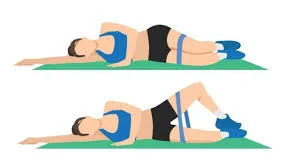
- Lie down on the side of the mat, roll it out, and place your legs on top of one another.
- Make a 45-degree bend with your knees.
- Put one hand on the mat to maintain your body frame while resting your head on the other.
- Your upper hip will likely fall throughout the clamshell exercise, so make sure your hipbones are stacked throughout.
- To support your spine and pelvis, strengthen your abdominal muscles.
- Raise your upper-side knee as high as you are able.
- When you raise your knee, you must be careful not to move your hips or pelvis.
- Avoid raising the lower leg across the upper leg.
- Return to the starting position of the exercise after pausing for a short while.
- Perform 20 repetitions of the clamshell hip exercise on the opposite side.
Step-ups

Step-up exercise steps:
This exercise is ideal for patellar tendinitis since it works the quadriceps muscles and enhances balance and coordination.
- Place your wounded leg on the step and place your other foot on the floor as you face a step or stair.
- Use your damaged leg to step up onto the step, then use your other leg to step down.
- Do this ten to fifteen times.
Heel slides
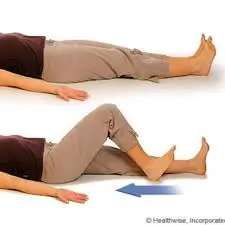
- With your legs straight in front of you, take a seat on the floor.
- With your foot flexed and your knee bent, slide your right heel along the floor in your direction.
- Bring it as close to you as is comfortable for you. Hold for five to ten seconds. Next, slide your heel back.
- Do this five times.
Management and Treatment
How is patellar tendinitis treated?
To assist your patellar tendon repair and control your symptoms, your doctor will recommend therapies. The following are the quickest treatments for patellar tendinitis:
Rest: You can lessen the strain on your tendon by avoiding the movements or activities that led to the tendinitis.
Icing: To lessen swelling, apply ice or a cold pack to your knee. A few times a day, you can ice your knee for fifteen minutes at a time. To prevent placing ice packs directly on your skin, wrap them in a small towel or washcloth.
Elevation: Try to keep your knee higher than your heart. You can use pillows or cushions to support your knee when you’re lying down.
Medication: Over-the-counter (OTC) NSAIDs relieve pain and reduce inflammation. While acetaminophen reduces pain, it does not control inflammation. Consult your doctor before using these drugs for longer than ten days in a row.
Putting on a brace: During your healing, a knee brace can help support your knee. The kind of brace you’ll need and how often to wear it will be determined by your provider.
Physical therapy (PT): PT will strengthen the muscles surrounding your knee and increase your flexibility. This can improve your knee’s ability to move and withstand the strain of jumping. Exercises and stretches tailored to your sport, hobbies, or occupation will be provided by a physical therapist.
Surgery for patellar tendinitis
Patellar tendonitis seldom requires surgery. Surgery is typically only recommended if your patellar tendon is torn. If you have significant symptoms that are unmanageable with other nonsurgical therapies, they may recommend surgery.
Will patellar tendinitis treat on its own?
Indeed, resting and allowing your body to heal are crucial aspects of managing patellar tendinitis, and your tendon may eventually heal. No, if you don’t alter your everyday routine, your patellar tendinitis won’t improve.
You must refrain from overstressing your tendon and stop participating in the sports or activities that led to the tendinitis. Depending on your symptoms and the degree of your tendinitis, your doctor will estimate how long that will take.
FAQs
Can you exercise with patellar tendonitis?
Strengthening exercises for the patellar tendon should be part of the best treatment plan for patellar tendonitis/tendinopathy, according to the research, as this is the only method to regain the strength you lost as a result of the injury. However, strength training alone might not be effective.
What is stage 4 patellar tendonitis?
Stage II: Pain does not affect or inhibit performance or activities, although it does occur both during and after exercise or activity. Stage III: Knee pain is frequent and begins to limit or adversely affect activities and performance. Stage IV: A genuine tear or rupture occurs in the patellar tendon.
Can patellar tendonitis fully heal?
Yes, you can completely recover from patellar tendinitis (jumper’s knee). Mild cases can clear in 2 to 3 weeks with proper rest. Chronic or moderate cases usually take 3 to 6 months of active rehabilitation. A full and lasting recovery can be achieved.
Factors for Successful Recovery
Progressive Loading: Rarely is rest and rest alone the answer. Tendons heal best with controlled, progressive stress, which remodels and strengthens the tissue.
Physical Therapy: A structured physical therapy program focusing on eccentric strengthening exercises (such as decline squats) is best for long-term recovery.
Activity Modification: You will need to temporarily modify or decrease explosive, high-impact activities such as running, jumping, and deep squatting to prevent re-injury.
Consistency: Sticking to the exercises you are prescribed is important. Once the pain is gone, it’s still important to keep up with your strength and mobility exercises to protect the tendon from future flare-ups.
What is the root cause of patellar tendonitis?
Patellar tendonitis (also called “jumper’s knee”) is an overuse injury that comes from repeatedly putting high-stress forces on the tendon that connects your kneecap to your shinbone.
If squats with patellar tendonitis?
Yes, you can squat with patellar tendonitis (jumper’s knee), but you have to change your movements so you don’t put high stress on the tendon. Tendons often get weaker with total rest, so it’s important to put load through them progressively. The goal is to slowly bring back the function of your tendon using certain techniques.
What should I avoid with tendonitis?
In the case of tendonitis, you must avoid repeating the exact movements or activities that caused the injury. If you put stress on an inflamed tendon, the swelling will increase, and your recovery will be slowed.
References
- American Association of Hip and Knee Surgeons. (n.d.). Exercises for patellar tendinopathy. https://hipkneeinfo.org/wp-content/uploads/2025/09/Patellar-Tendonitis-FINAL-1_7_21.pdf
- Mehta, P. (2025, September 10). 11 of the Best Patellar Tendonitis Exercises. Resilience Orthopedics. https://www.resilienceorthopedics.com/knee/patellar-tendonitis-exercises/
- OxSport – Department of Sport and Exercise Medicine. (n.d.). Patellar tendinopathy (pp. 2–7). https://www.ouh.nhs.uk/patient-guide/leaflets/files/49019Ptendinopathy.pdf
- Patellar tendinitis (Jumper’s knee). (2026, May 6). Cleveland Clinic. https://my.clevelandclinic.org/health/diseases/patellar-tendonitis-jumpers-knee
- The best stretches and exercises for patellar tendonitis. (n.d.). https://www.matthewharbmd.com/blog/the-best-stretches-and-exercises-for-patellar-tendonitis-29453.html


