Top Exercises for IT Band Syndrome
Introduction
Iliotibial Band (IT Band) Syndrome is a common overuse injury that causes pain on the outside of the knee or hip, especially in runners, cyclists, and physically active individuals.
Iliotibial band syndrome is more likely to occur in young people who exercise regularly. Athletes who are most likely to develop ITBS include:
- Basketball players.
- Cyclists.
- Hockey players.
- Runners.
- Skiers.
- Soccer players.
Performing targeted exercises can help reduce pain, improve flexibility, strengthen supporting muscles, and prevent future flare-ups.
The best exercises for IT Band Syndrome that can aid in healing while improving lower limb function will be discussed in this article.
The following are risk factors for having ITBS:
- Weak hip, gluteal, and abdominal muscles due to a previous injury or underlying iliotibial band tightness
- Unbalanced leg lengths due to knee arthritis
- Flat feet and bowlegs
Who gets IT band syndrome?
Anyone can be impacted by ITBS. It is particularly prevalent among hikers, cyclists, and runners. ITBS is more common in athletes who use their knees, such as weightlifters, basketball players, and soccer players.
IT band syndrome typically affects younger athletes or regular exercisers. It is frequently the result of training errors that are typically fixable.
Among the training errors are:
- Failing to adequately warm up or cool down, pushing yourself beyond your comfort zone, stressing your body, and not getting enough rest in between workouts
- Training on the incorrect surfaces while wearing inappropriate footwear
- Improper bicycle fitting, increasing training too rapidly, and using bad form
Symptoms and Causes
What causes iliotibial band syndrome?
- Cooling down too soon after working out.
- Insufficient sleep.
- Not getting enough stretching before working out.
- Overexerting yourself when working out.
- Running on a curved or inclined surface.
- Sprinting downward.
- Overheating before working out.
- Shoes that are worn out.
IT Band Syndrome Exercises
Exercises and stretches that ease tightness and increase strength and flexibility are typically effective in managing IT band problems. You might also concentrate on adjusting your shoulders, hips, and knees. The IT band and its associated muscle groups are the focus of these five stretches.
Standing IT band stretch
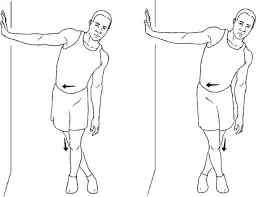
- Press firmly into both feet while standing with your right leg crossed in front of your left. Aim for a shoulder-width distance between your feet.
- Feel the strain in your outer hip and knee as you lean as far to the right as your body allows.
- You can reach your left arm overhead to deepen the stretch.
- For more stability or resistance, press your left hand against a wall.
- For thirty seconds, hold the stretch.
- Repeat this stretch three times on each side.
Wide-legged standing forward bend

- Jump or move forward from a standing position until your feet are broader than your shoulders.
- Bend your knees slightly and turn your toes in.
- Drop your hands to the floor and slowly hinge at the hips to fold forward.
- Feel the stretch around the outside of your lower body as you press against the outer borders of your feet and legs.
- Place your hands on the outside of your right leg as you move your upper body to the right and walk your hands to the right.
- For fifteen seconds, maintain this posture.
- Next, switch to the left side.
- Repeat two or three times on each side.
Low lunge variation
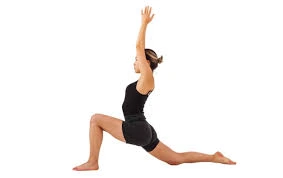
- With your left knee on the ground below your hips and your right foot in front of you, enter a low lunge.
- Stretch your left arm to the right after placing your right hand on your right thigh.
- Don’t let your hips expand forward; instead, keep them square.
- The outside left hip should feel stretched.
- Hold for thirty seconds.
- On the other side, repeat.
- Repeat two or three times on each side.
Glute stretch

- With your right leg outstretched on the ground, lie on your back.
- Bring your left knee up to your chest.
- The buttocks and outer hip will then feel stretched as you draw them across your body.
- Hold for thirty seconds.
- Next, work on the other side.
- Repeat two or three times on each side.
Hip hikes

- Maintain your shoulders and hips firmly forward.
- As you raise your left hip, maintain a straight right leg.
- Next, lower the left leg once more.
- Perform 12 to 15 repetitions of this gentle activity.
- Next, work on the other side.
- Perform two to three sets on each side.
- Instead of lifting your leg with your knee or foot, concentrate on pulling from your hip and waist.
Heel drops

- Extend the other foot in front of you while standing on a step.
- Squat down slowly as if you were going to take a step forward.
- Go back to where you were.
- Throughout the exercise, maintain a square pelvis.
Side plank pose

- Put yourself in the plank position.
- Then roll your right arm while pressing onto your left. You should have your right hip pointing toward the ceiling. Make your hips square.
- For support, place your left shin on the ground or stack your ankles.
- Either raise your arm toward the ceiling or place your right hand on your right hip.
- Next, raise your right leg as high as you are able to.
- For as long as you can, up to a minute, maintain this position.
- Next, work on the other side.
- Repeat two or three times on each side.
Side leg abduction

- Place your injured leg on top of you while lying on your side.
- Draw your toes toward you as though you are attempting to touch the front of your leg while straightening your upper leg. Press out through your heel while doing this.
- Stack your hips, contract your abdominals, and maintain a tiny bend in your lower leg for balance.
- Raise your upper leg slowly and back a little.
- Go back to where you were.
- Perform two to three sets of ten reps.
- On the other side, repeat.
Clamshell exercise

Clamshell Steps:
- With your injured leg on top and your knees bent, lie on your side.
- Bend your arm to create a pillow for your head to rest on, or extend your lower arm below your head.
- For support, place your upper hand on your upper hip.
- Throughout the workout, keep your hips looking downward and contract your abdominal muscles.
- Keeping your feet together, slowly raise your upper leg as high as you can.
- Go back to where you were.
- Perform two to three sets of ten reps.
- On the opposite side, repeat.
FAQs
Should I stretch a tight IT band?
It helps in maintaining knee stability during movement. The IT band cannot be stretched like a hamstring or quadriceps because it is not a muscle. Instead, the tensor fasciae latae (TFL), glutes, quadriceps, and hamstrings—the muscles that link to it—will become more mobile, which will provide relief.
Can shoes cause IT band issues?
An important factor in the rise of IT Band problems is footwear. Insufficiently supportive shoes, like flip-flops, high heels, or worn-out running shoes, can cause the foot and leg to become incorrect, which contributes to inflammation.
Should I avoid stairs with IT band syndrome?
Your pain may begin earlier and remain long after you have stopped exercising as the condition gets worse. Going up and down stairs is one activity that could make your pain worse.
Is walking good for a tight IT band?
Walking is good for a tight IT (iliotibial) band, but do it gently and in moderation. If walking is painful, stop. The proper management of a tight IT band is to treat the root causes of the issue (e.g., weak hips and glutes) and include walking with targeted rehabilitation.
How to walk.
Keep it flat: Don’t walk on hills, dips, or uneven surfaces like the shoulder of a road because it stresses the IT band too much.
Reduce the distance: 2. Walking long distances may irritate the area. Keep sessions short and manageable.
Pain as a guide: If you feel pain on the outside of your knee or hip, quit walking immediately.
Rehab & Strengthening
The IT band is a thick band of tissue and not a muscle, so it cannot be ‘stretched’ in the traditional sense. The best way to get rid of that tightness is to work on the muscles that stabilize your hips. Include these focused drills:
Clamshells: Lying on your side with knees bent, lift top knee (keep feet together).
Lateral Band Walks: Wrap a resistance band around your ankles and walk side to side in slow steps.
Foam rolling: Use the foam roller on the outer thigh to relieve tension,n but avoid rolling directly on the bone on the outer knee.
Is it good to massage your IT band?
Yes, but rarely should you massage the IT band directly. The iliotibial (IT) band is a dense, strong piece of connective tissue that is comparable in tensile strength to steel, so aggressive rolling or direct pressure on the IT band can increase inflammation.
Which exercises should you avoid with IT band syndrome?
IT Band Syndrome (ITBS) is mostly about stopping the irritation on the outside of the knee where the band compresses. Prevents repetitive knee bending >30°cross-bodydy leg movements, and direct rolling on the IT band. Instead, work on building stronger glutes and hips to help stabilize your pelvis.
What cardio is good for IT band syndrome?
The best cardio for IT Band (ITBS) Syndrome is low-impact activities that avoid repetitive bending and straightening of the knee, which can irritate the tendon as it crosses the joint.
Best no-impact cardio options that don’t hurt include:
Swimming: It is a full-body cardiovascular workout with no impact on your joints.
Deep-Water Running: Simulates the running stroke while fully suspended in water, eliminating all weight-bearing stress.
Rowing: Proper form strengthens the glutes and core without lateral knee friction.
What worsens it with band syndrome?
Iliotibial (IT) band syndrome is primarily aggravated by repetitive knee flexion and friction. Sudden training spikes, running on sloped or downhill surfaces, and weak glutes or hip muscles that allow the leg to rotate improperly will only aggravate the condition.
Common triggers that can worsen the condition are:
Training Errors: Running too much mileage too quickly, not warming up properly, or overtraining without enough rest.
Terrain Factors – Running long distances downhill, on a sloped track, or on the cambered (tilted) side of a road.
Improper Gear: Running shoes that have exceeded their 300-500-mile lifespan, or riding with an improperly adjusted seat or cleats facing the wrong way.
Muscle Imbalance: Weakness of the hip abductors (gluteus medius) and core muscles, or tight IT bands.
Direct Pressure: Applying resistance bands directly over the knee or using a foam roller to roll on the IT band’s irritating location.
References
- Cronkleton, E. (2018, August 18). IT band stretches, strength exercises, and more. Healthline. https://www.healthline.com/health/it-band
- Iliotibial band Syndrome. (2026, April 6). Cleveland Clinic. https://my.clevelandclinic.org/health/diseases/21967-iliotibial-band-syndrome
- OrthOpaedics. (2013). Strengthening exercises for Iliotibial band syndrome. https://www.dartmouth-hitchcock.org/sites/default/files/2020-12/it-band-exercises.pdf
- Association of Hip and Knee Surgeons, A. (n.d.). [Home Therapy Exercises for Iliotibial Band Syndrome (ITBS)]. https://hipkneeinfo.org/wp-content/uploads/2025/09/IT-Band-Handout-knee-Jan-2021d.pdf
- Dpt, B. B. P., & Dpt, B. B. P. (2026, April 23). 8 exercises to help IT band pain. Athletico. https://www.athletico.com/2021/05/14/8-exercises-to-help-it-band-pain/