13 Best Exercises to Improve Balance and Leg Strength at Home for Seniors
Introduction
For seniors to maintain their mobility, avoid falls, and remain independent in their everyday lives, they must maintain their leg strength and balance. Although muscular mass and coordination typically deteriorate with age, certain workouts can reverse these effects and greatly increase stability and self-assurance.
Without the need for specialized equipment, at-home exercises that target the thighs, hips, calves, and core in conjunction with balancing drills provide a secure and efficient means of enhancing physical function.
These exercises, which may be done standing or sitting, can be modified to accommodate varying levels of physical ability and fitness, which makes them perfect for senior citizens who want to maintain their resilience and level of activity.
Indications for Balance Exercise in seniors
- Preventing Falls: Seniors over 65 are far more likely to fall—nearly one in three individuals fall each year. Exercises for balance help lower this risk by enhancing muscular control and coordination.
- Weakness and Rehabilitation of Muscles: Postural control and lower limb strength are impacted by sarcopenia, a condition caused by age-related muscle loss. Focused balancing exercises aid in strengthening important stabilizing muscles.
- Impaired Gait and Postural Instability: Older persons frequently have bad posture, an unstable stride, or trouble walking. Walking mechanics and proprioception are enhanced by balance training.
- Decreased Joint Mobility: Balance can be impacted by conditions that restrict joint range of motion, such as arthritis or inactivity. Functional movement and mobility are restored by mild activities.
- Changes in Vision: Spatial awareness can be affected by glare sensitivity or diminished depth perception. Reliance on other sensory inputs is enhanced by balance routines.
- Side Effects of Medication: Certain drugs make you drowsy or dizzy. Exercises for balance can help lessen these consequences by enhancing neuromuscular control.
- Chronic Illnesses: Balance may be impacted by conditions including diabetes, heart problems, or thyroid disorders. Despite these obstacles, exercise supports the maintenance of functional independence.
- Chronic back pain: Balance exercise makes your core muscles stronger and prevents back pain.
- People with dementia.
- Cancer rehabilitation people.
Contraindications
- Acute deep vein thrombosis or pulmonary embolism
- Severe cognitive impairment
- Uncontrolled dizziness or vertigo
- Severe musculoskeletal instability
- severe cardiac condition
Exercises
Weight shift

- Position: Standing position
- Your feet should be hip-width apart.
- Put your right foot under more weight.
- Lift your left foot.
- Next, work on the other side.
- Involved muscles: Quadriceps and calf muscles.
- Hold duration is five to ten seconds.
- Repetition should be 10-15 times each session.
Tendom walk

- Position: Standing position.
- One rope should be kept in a straight line, and you should do 10 random walks along it.
- To practice balance, hold the foot after a ten-minute stroll.
- Three to five rounds are involved.
- Involved muscles: core muscles, quadriceps, hamstrings, calf, and gluteus.
- Modification: You must maintain a tendom stand with one foot in front and the other backward. Tendom stand with heel raise: maintain the tendom stand position while raising your heel.
Heel raise

- Position: Standing position.
- Apply more pressure to your fingers after adjusting the chair in front of you for support.
- Lift both heels off the ground gradually.
- When you lower, there should be a stretching sensation in the calf muscles, but your heel must not make contact with the floor.
- Hold duration is five to ten seconds.
- Repetition should be 10-15 times each session.
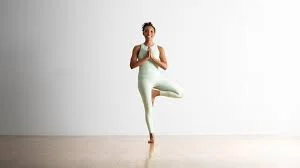
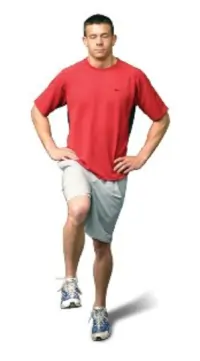
- Position: Standing position.
- To ensure that you can only stand on one foot, raise one leg while keeping your feet on the other knee.
- Maintain equilibrium between your ankle and knee. You alone are in charge of maintaining equilibrium.
- Put your hands anywhere that feels comfortable.
- Involved muscles: quadriceps, hamstrings, calf, gluteus, tibialis anterior
- Hold duration is five to ten seconds.
- Repetition should be 10-15 times each session.
Heel-to-toe standing and walking

- Position: Standing position.
- For everyone, it is a really easy activity. You should lift your heel and hold the position for a few seconds before beginning to walk steadily.
- Take another twenty steps.
- Hold duration is five to ten seconds.
- Repetition should be 10-15 times each session.
Wobble board exercise

- Position: Sitting or standing position.
- Wobble board exercise or backward and forward tilt.
- Adjust your wobble board with both feet. This exercise should be performed in both directions.
- Start by balancing your entire body on the wobble board, then lean to the side while keeping your posture. Then tilt the front and rear sides.
- Hold duration is five to ten seconds.
- Repetition should be 10-15 times each session.
Place marching

- Position: Standing position.
- Hold your walker with both hands.
- As much as you can, raise your thigh. Begin with any leg; you may choose.
- Lift your right knee after lowering it.
- Hold duration is five to ten seconds.
- Repetition should be 10-15 times each session.
step-up

- Position: Standing position.
- You should stand behind the stool and set it up as low as possible for this exercise. For support, you should perform these exercises on the parallel bar.
- Raise your right leg. Lift your left leg to join it.
- Taking slow, deliberate steps up and down is the key to improving balance. Take up to five steps with each leg.
- Hold duration is five to ten seconds.
- Repetition should be 10-15 times each session.
Standing back leg raise

- Position: Standing position.
- This exercise for older adults in strength training fortifies your lower back and backside.
- Position yourself at the back of a chair. Keep your knees straight and only move your hips.
- Hold duration is five to ten seconds.
- Repetition should be 10-15 times each session.
Standing side leg raise

- Position: Standing position.
- With your feet a little spaced out, position yourself behind the chair. Gently raise your right leg to the side. Maintain a straight back, ensure your toes are pointing forward, and look straight ahead.
- Hold duration is five to ten seconds.
- Repetition should be 10-15 times each session.
Standing with eyes closed
- Position: Standing position.
- Either stand on a ramp with your eyes shut and toes facing up, or position yourself so the balls of your feet are on the 3” hardcover book.
- Each exercise aims to keep a good posture on the ramp and maintain balance.
- While raising your arms forward to shoulder height. (90 degrees like in the picture)
- Close your eyes and stand tall with your feet positioned correctly, as indicated by the icon.
- Hold duration is five to ten seconds.
- Repetition should be 10-15 times each session.
Side walking

- Position: Standing position.
- Step Sideways: Maintaining your feet parallel, take a deliberate step to the right.
- Follow Through: Without crossing, move the left foot toward the right.
- Hold duration is five to ten seconds.
- Repetition should be 10-15 times each session.
- Beginner: two sets of ten steps in each way
- Intermediate: Include three sets and a resistance band
- Advanced: Add arm pulls or mini squats.
Backword walking

- Position: Standing position.
- Area: level, free of obstructions (park path, gym, or corridor)
- Footwear: Sturdy shoes with excellent traction
- Safety: If necessary, seek assistance from a wall or railing.
- Keep your eyes forward, but periodically look back for protection.
- Arms at rest or slightly extended for stability
- Hold duration is five to ten seconds.
- Repetition should be 10-15 times each session.
Sit to stand and stand to sit

- Position: Sitting position.
- Begin by sitting on a reliable chair of standard height, ensuring that it is stable and will not slide or roll. It should be possible for you to sit comfortably with your feet resting flat on the floor.
- Contract your gluteal muscles and gradually come to a stable standing position.
- If needed, put your hands on the arms or seat of the chair and use them to assist yourself in standing up or sitting down. The aim is to avoid using your hands completely.
- Hold duration is five to ten seconds.
- Repetition should be 10-15 times each session.
Biceps curl with one leg standing

- Position: Standing position.
- Your muscle strength is being challenged by this workout. Try curling your biceps with a dumbbell:
- Place your feet hip-width apart as you stand. Distribute your weight evenly over both legs.
- Bend your right leg back at the knee after raising it off the ground.
- Hold the stance for up to 30 seconds while performing biceps curls, or as long as you can maintain proper technique.
- Increase the weight you lift or the number of times you perform the exercise as your balance gets better.
- Balance while standing on a pillow or another sturdy but unstable surface, or on the leg that is opposite the weight, for an extra challenge.
Tai-chi for balance

- Tai chi, a type of gentle movement training, is another exercise that can help increase balance and reduce the risk of falls. You may become more stable and less prone to stumbling if you practice tai chi.
- Seek out group classes at the senior centers or fitness centers in your area. Or purchase or rent tai chi-related books or movies. However, remember that learning from a tutor who provides feedback makes it easier to ensure that you’re performing the motions correctly.
Additional Strategies to Encourage Improved Balance
- Keep moving; cycling, swimming, and walking all contribute to maintaining mobility.
- Regularly check your hearing and eyesight. Put on supportive shoes.
- Reduce trip risks and make sure the illumination is enough to keep the house safe.
Special Test for static and dynamic Balance
- Romberg Test: Evaluates vestibular function and proprioception
- The Functional Reach Test evaluates your ability to reach while maintaining static equilibrium.
- Berg The 14-item Balance Scale (BBS) assesses both static and dynamic balance.
- FSST, or the Four-Square Step Test, evaluates multidirectional balance and quick stepping.
- Sit to stand and stand to sit: Determine the strength of upper and lower extremities by standing several times.
- The balancing system is assessed using the Balancing Evaluation Systems Test (BESTest). The cerebellum is in charge of maintaining equilibrium.
How to Pick the Appropriate Exam
- Athletes: Star Excursion
- older adults: Berg Balance Scale, Functional Reach
- Neuro rehabilitation: FSST, BESTest, and Romberg
- Screening for fall risks: Sit-to-stand and single-leg stance
Advantages of Balance Exercises
Balance exercises are incredibly effective and crucial for long-term health, making them the unsung heroes of physical training. Here is a thorough explanation of their benefits, regardless of whether you’re dealing with sedentary tech users, elderly individuals, or injured athletes:
- Preventing Falls makes proprioception better and stabilizer muscles stronger.
- Reducing fall risk is crucial for post-operative patients and older persons.
- Improved Alignment and Posture improve spinal control and core engagement,
- lessening compensatory behaviors brought on by extended sitting or bad ergonomics
- Improved Mental Abilities: activates the parts of the brain related to spatial awareness and coordination.
- Dual-task balancing exercises can enhance mental acuity and response time.
- Stability of the Joints and Prevention of Injuries
- help to strengthen the muscles that surround the knees, hips, and ankles.
- Particularly helpful for sports and rehabilitation procedures
- Increased Mobility Effectiveness
- enhances coordination, agility, and gait
- Beneficial for dancers, athletes, and anybody with mobility objectives
- Awareness of the Body and Proprioception
- trains the body to detect the location of its limbs without the need for visual signals.
- essential for moving safely when doing regular duties like reaching overhead or navigating stairs
- Reverses Decline Associated with Age maintains neuronal, muscular, and vestibular coordination.
FAQs
Why is it important for elders to do balance exercises?
Why Do Balance Exercises Help Seniors?
Seniors can move more freely and confidently thanks to balance exercises that improve muscle strength and coordination. Increased mobility enables them to carry out everyday tasks without help, such as reaching for objects or climbing stairs.
What is the most effective way to treat issues with balance?
Techniques for Improving Balance in Physical Therapy
Depending on the underlying reason, the “best” treatment for balance issues is a comprehensive strategy that frequently consists of vestibular rehabilitation therapy, dietary and lifestyle modifications, medication, and, in extreme situations, surgery. A medical professional can identify the root of the issue and develop a customized treatment plan that may include exercises to regain balance, controlling disorders like high or low blood pressure, or using medication or surgery to cure ear problems.
What makes seniors have trouble balancing?
Dizziness and other balance issues can be brought on by a number of illnesses, including diabetes, heart disease, stroke, or issues with your thyroid, blood vessels, nerves, or vision.
What aids older people who struggle with balance?
Finding the root cause is the first step in treating older patients’ loss of balance. Other treatments may include vestibular rehabilitation therapy, balance exercises, medication evaluations, dietary and lifestyle changes, and treatment for vision or other health conditions. To increase stability and lower the risk of falls, a healthcare professional might develop a customized plan that may include physical therapy, medication adjustments, or other interventions.
How to use the wobble board equipment for balance training?
Lift your knees off the ground and place your hands flat on either side of the board. Continue performing a standard push-up while attempting to prevent the board from swaying. Maintaining a straight spine and using your core muscles will help you avoid straining your shoulders and back.
What are the best exercises for balance at home?
There are many exercises for balance at home.
Sit to stand.
Tendom stand.
Heel raise.
Heel walk.
Step-up
Weight shift.
Wobble board exercise.
Hurdle walk.
Walking with eyes closed.
Standing Behind leg raise.
Standing Side leg raise.
Place marching.
One leg stand with or without eyes closed.
Standing with eyes closed.
Heel-toe-walk.
Towel curl.
Squat and lunges.
How can I become more balanced and coordinated?
Exercises that increase body awareness and control, such as Tai Chi, yoga, and Pilates, can help you become more balanced and coordinated. To increase stability, include core exercises, stretching, and strength training. Single-leg stands, heel-to-toe walks, and challenging your balance using unstable surfaces are examples of at-home activities. Walking, dancing, or cycling are examples of regular physical activities that promote continuous gains in balance and coordination.
Which area of the brain controls coordination and balance?
Definition, Location, and Functions of the Cerebellum
The area of the brain mostly in charge of posture, balance, and voluntary movement coordination is called the cerebellum. Though it does not start movement, this brain region in the rear absorbs sensory data and controls muscle activity to create balanced, fluid, and well-coordinated motions.
How can coordination and balance be tested?
Numerous basic tests, such as the Single Leg Stand or Tandem Stance to examine stability, the Romberg test to verify proprioception (body position sensation), and the Berg Balance Scale for a thorough evaluation, are used to measure balance and coordination. More sophisticated techniques include neurological coordination tests like finger-to-nose tests and target ball throw to evaluate eye-hand coordination and computerized dynamic posturography to identify the causes of balance disorders.
What leads to poor balance and coordination?
In addition to certain medical illnesses like stroke, multiple sclerosis, or Parkinson’s disease, issues with the inner ear, brain, nerves, muscles, and vision can also lead to a lack of balance and coordination. Age-related changes, head trauma, medications, and excessive alcohol consumption can all have a role.
References
- Cronkleton, E. (2025, March 17). 11 Balance exercises for older adults. Healthline. https://www.healthline.com/health/exercise-fitness/balance-exercises-for-seniors#balance-tips
- Proctor, B. (2025, August 22). Balance in Seniors: Why it changes and how to improve it. Physio@Home. https://www.physioathome.uk/post/balance-in-seniors-why-it-changes-and-how-to-improve-it
- Website, N. (2024, February 15). Balance exercises. nhs.uk. https://www.nhs.uk/live-well/exercise/balance-exercises/
- Fall Prevention: balance and strength exercises for older adults. (2024, June 20). Johns Hopkins Medicine. https://www.hopkinsmedicine.org/health/wellness-and-prevention/fall-prevention-exercises
- 14 Chair exercises for seniors to improve strength and balance | Lifeline. (2025, June 27). Lifeline. https://www.lifeline.ca/en/resources/14-exercises-for-seniors-to-improve-strength-and-balance/
- University of Michigan Health System. (2016). Balance exercises [Physical Medicine and Rehabilitation]. https://www.med.umich.edu/1libr/PMR/BalanceExercises/ArmRaises-ToesUpEyesClosed.pdf
- Balance exercises: Step-by-step guide. (n.d.). Mayo Clinic. https://www.mayoclinic.org/healthy-lifestyle/fitness/in-depth/balance-exercises/art-20546836