17 Best Forearm Strengthening Exercises
Forearm strengthening exercises are essential for improving grip strength, enhancing wrist stability, and supporting overall arm function. These exercises benefit athletes, fitness enthusiasts, and individuals recovering from injury by promoting better performance and reducing the risk of strain or overuse injuries.
What is Forearm Muscle Pain?
Forearm muscle pain refers to discomfort or soreness in the muscles between the elbow and wrist. It can result from overuse, repetitive movements, strain, or underlying conditions like tendinitis or nerve compression. This pain can affect grip strength and daily activities if not properly managed.
- The Forearm has many muscles that control hand and arm movements.
- Forearm muscle damage results from hand or arm injuries.
- Due to the forearm muscle damage, the patient may experience soreness in the forearm, which broadly influences mobility and interferes with everyday functioning.
- When patients experience forearm discomfort, they may have trouble typing on a keyboard or gripping an object with one hand.
- In most circumstances, a person may manage forearm discomfort by rest and planned activities.
- Exercise and electrotherapy can help alleviate muscular discomfort.
The Forearm Muscles:
It divides into two compartments:
- Anterior Compartment
- Posterior compartment
The muscles in the forearm’s anterior compartment:
The forearm muscle’s anterior compartment is divided into three parts depending on the muscular layer.
Superficial muscles:
- Flexor carpi ulnaris
- Flexor carpi radialis
- Palmaris longus
- Pronator teres
Intermediate muscle :
Flexor digitorum superficialis.
Deep muscles :
- Flexor pollicis longus
- Pronator quadratus
- Flexor digitorum profundus
Flexion of the wrist joint, finger flexion, and forearm pronation are all controlled by the anterior compartment muscle group.
The median nerve innervates this anterior compartment muscle group, while the ulnar and radial arteries provide circulatory supply.
The muscles in the forearm’s posterior compartment:
Posterior Compartment of the Forearm:
- The forearm muscle’s posterior compartment is separated into two segments based on the muscle layer.
Superficial Muscles:
- Extensor carpi radialis brevis
- Extensor digitorum
- Extensor carpi ulnaris
- Extensor digiti minimi
- Brachioradialis
- Extensor Carpi Radialis Longus & Brevis
Deep Muscles:
- Supinator
- Abductor pollicis longus
- Extensor pollicis brevis
- Extensor pollicis longus
- Extensor indicis.
Forearm Workout Tips:
- Warm up before exercising.
- Consult a doctor or a qualified fitness instructor for guidance.
- Maintaining proper form when exercising.
- If possible, exercise different muscle groups in the same session.
- Try to perform the same exercise two or three times in sets of eight to fifteen repetitions.
17 Best Forearm Strengthening Exercises
Wrist extensor stretch

- Start with a sitting or standing position.
- After that, stretch your shoulder.
- Turn the hand to face downward.
- The outstretched hand should be drawn downward and towards the body with the opposite hand.
- Feel a strain when you bend your wrist joint.
- Hold this stretch posture for 20 seconds.
- Each side should get five repetitions of this exercise.
Forearm flexor stretch

- The patient is standing throughout this stretch.
- Then extend one hand palm up as if waving to a friend.
- The next step is to gradually bring the fingers of the other hand closer to the body.
- Hold for 15 to 20 seconds.
- Do the opposite side.
Supinator stretch

- This stretching is performed with the patient seated.
- In your hand, grasp one end of a light dumbbell.
- The arm should then be placed on a level surface, palm down.
- Hold this stretching stance for 15-30 seconds while keeping the weight minimal.
Praying forearm stretch
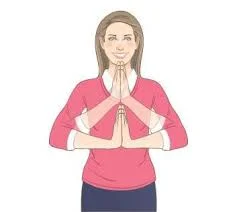
- Start with a sitting position.
- Your palms should be together, but your fingers should not be interlocked.
- Raise both elbow joints until the wrist joint starts to bend.
- Then continue to elevate the elbow joint until you feel a nice stretch on the undersides of your forearms.
- Hold the stretch for 15-30 seconds.
Elbow bend
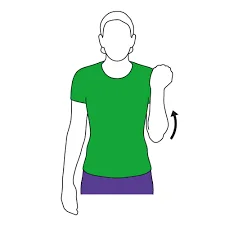
- Start with a standing position.
- After that, bend your elbow.
- The stretch is only as long as the patient can reach the shoulder.
- Hold this workout stance for 15-30 seconds.
- Then lower the hand.
- Repeat the exercise ten times.
Wrist extension
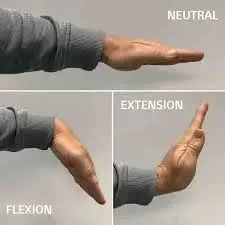
- The patient is standing for the Wrist Extension exercise.
- After that, extend the affected arm till the palm meets the floor.
- The wrist joint should be moved towards the body with the other hand.
- The wrist joint should be pulled back until the forearm muscle starts to feel strained.
- Hold this workout stance for 30 seconds.
Elbow extension
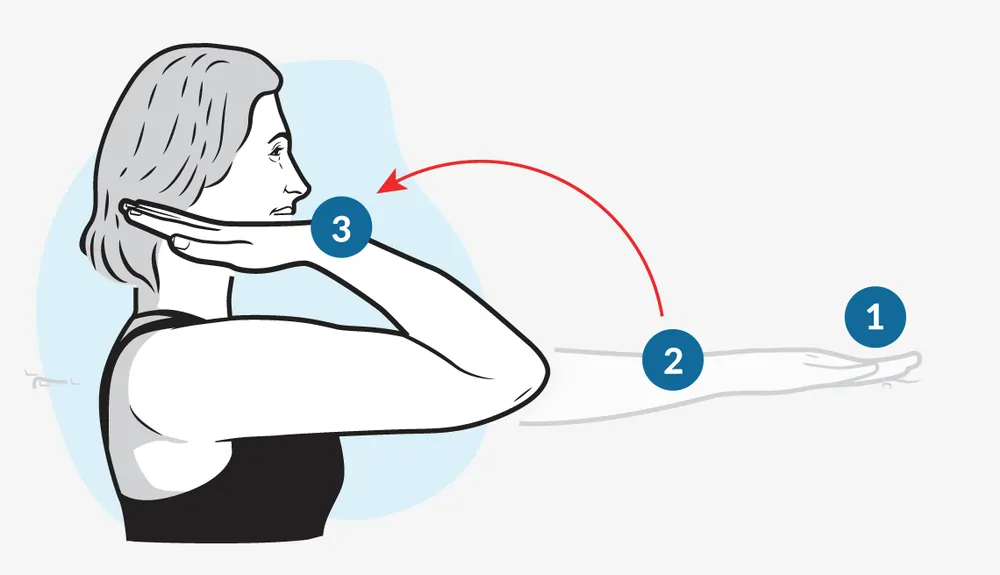
- The patient is seated for the elbow extension exercise.
- The elbow rests on a table.
- Hold this position for 15 seconds.
Wrist rotations
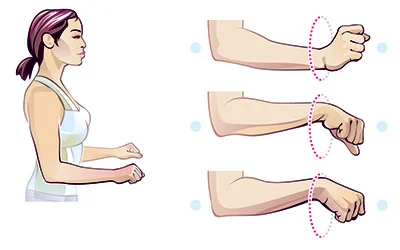
- The patient sits during the wrist rotations.
- The patient holds their hands shoulder-high and stretches their arms in front of them.
- After that, make a fist.
- Then, rotate the wrist in both directions. (clockwise-anticlockwise)
- Ten repetitions in each direction should be done in a single session.
Forearm squeeze

- For a squeeze, use a tennis ball.
- After that, squeeze the ball using your finger.
- Release the grasp after three to five seconds of holding this workout.
- Continue performing this exercise for ten to fifteen minutes at a time.
- You should do this exercise two or three times a day.
Crab walk

- The patient is moving into a reverse tabletop posture.
- Put your hands, fingertips towards your feet, under the shoulder joint.
- Align the ankle joint precisely below the knee joint.
- Then walk forward with your hands and feet for up to 1 minute at a time.
- Do it 3-4 times every day.
Isometric wall push

- The patient is standing in front of the wall, with their hands on the wall.
- Maintaining straight arms while avoiding locking your elbow joints.
- Then, push them hard into the wall for 30 seconds.
- After 30 seconds, release the pressure.
- This exercise should be repeated two to three times each day.
Sphinx push-ups
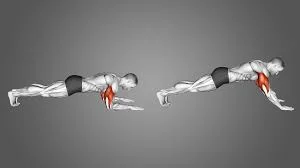
- Begin in a forearm plank posture, either on the toes or knees.
- Then, firmly press the hands down and elevate the forearms until they are straight.
- Return to the lower position by using the control.
- Consider taking it one or two inches at a time if you are unable to get it all the way.
- Reduce the pressure.
- This exercise should be repeated two to three times each day.
Pull-up bar hang
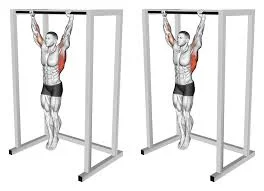
- On the pull-up bar, start by standing with your palms facing front and shoulder-distance apart.
- Keep your arms straight and your ankles crossed behind you while you hang for up to 30 seconds.
- Release.
- This exercise should be repeated two to three times each day.
- To make this workout more difficult, wrap two tiny towels around the bar and grasp instead.
Strengthening the forearm muscle pain:
Palms-up-wrist curl
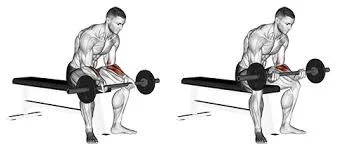
- Start with a sitting position.
- Then, with your palms facing up, place your wrists flat on anything.
- The patient is gripping dumbbells in both hands.
- Then elevate the hands as high as possible.
- However, the wrist joint should not lift off the surface, indicating that it is in the rest position.
- After that, return to the starting position.
Palms-down wrist curl
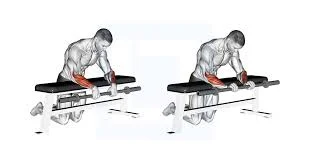
- Start with a sitting position.
- Then, with your palms facing down, place your wrists flat on anything.
- The patient is instructed to grip a dumbbell in each hand, raise it as high as possible while keeping their arms stable.
- The wrist joint, however, does not rise off the surface, suggesting that it is at rest.
- After a little delay, restore the hands to their initial position.
Wrist dumbbell curls

- The patient is sitting on a bench and a chair, holding a dumbbell in each hand.
- Palms are pointing upward and downward.
- Gradually drop the weights as far as the patient can.
- Then, grab the weights tightly and move just your hands.
- As much as possible, have the patient curl the weights upward.
- Then return to your original location.
- Repeat this exercise three times with 12 repetitions each until the muscles are fatigued.
Farmer’s walks
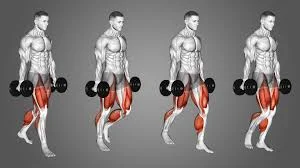
- The patient is standing tall, clutching a pair of heavy dumbbells and kettlebells at his sides.
- Then carefully walk from one end of the training area to the other, then back.
- The purpose of this workout is to do the Farmer’s Walk for 30 to 45 seconds per set.
- Then complete the rest.
- This exercise should be repeated two to three times each day.
How to Establish an Exercise Routine:
Building a fitness program might be difficult. However, some data shows that people may overcome this challenge by following a few guidelines.
People should progressively increase the intensity and frequency of their workouts. Finding pleasant workouts may also help people stick to a regular fitness schedule. Finally, taking the time to recuperate is critical, since it may influence how the following session goes.
According to a 2018 meta-analysis, people can recover from post-exercise muscular soreness using a broad range of treatments, including:
- Exercising at lower intensities
- Receiving a massage
- Using compression garments
- Water immersion may also be beneficial, especially if the water is cold. Ice packs can also help ease muscular discomfort.
Health Benefits:
Scientists have demonstrated that strength training may improve a person’s health. In addition to increased muscular strength and endurance, regular resistance exercise may help people maintain healthy bone density.
Physical exercise, especially strength training, can also help a person’s work performance in physically demanding employment.
Forearm workouts may also provide special advantages. According to a meta-analysis published in 2020, upper-body resistance exercise may increase forearm bone mass.
Risks and Cautions:
Despite the potential advantages, forearm exercise carries a risk of injury.
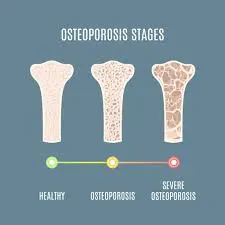
For example, there is evidence that rigorous weight-bearing workouts may not be appropriate for some persons. This includes those with severe osteoporosis and those who have just had a bone fracture.
Other factors that might increase an individual’s likelihood of injuring oneself when weight training include age and amount of exercise.
For these reasons, a person should pick an exercise routine that pushes them without placing undue strain on their body. Qualified personal trainers may assist a person in developing an exercise routine, potentially reducing the chance of injury.
Summary
There is a large variety of forearm strength exercises. Dumbbells and other gym equipment may be required for these workouts. People may enhance their forearm strength by discovering and sticking to the correct workouts, as well as working out carefully.
A person should consult a healthcare practitioner about exercising safely.
FAQs
What’s the greatest forearm workout?
Extensor and flexor muscles will be used in a successful forearm exercise. Wrist curls are one example of an exercise that directly targets the forearms. Pullups, farmer’s walks, and fingertip pushups are examples of extra muscle exercises used to enhance balance.
How hard is it to develop forearms?
Forearms are not always difficult to develop. However, because the forearms have more muscles than the upper arm, the results may take longer. Forearm exercises may be less popular than those that focus on the bigger, more muscular portions of the body, including the chest, legs, and core, which are the focus of many fitness programs.
Is it possible to utilise a hand gripper daily?
It can help you gain strength in forearm.However, if you use a hand gripper daily, your forearm muscles may not heal completely.
Are the forearm muscles in decent condition?
These muscles also contribute to the development of strength in other sections of your body. Because your grip requires forearm muscles, you engage them in a variety of gym workouts.
Referances
- Ladva, V. (2022, April 7). Forearm muscle pain: Cause, Symptoms, Treatment, Exercises Samarpan. Samarpan Physiotherapy Clinic. https://samarpanphysioclinic.com/forearm-muscle-pain/
- Cronkleton, E. (2024, October 18). 13 forearm exercises to do at the gym or home. Healthline. https://www.healthline.com/health/forearm-exercises#faq
- Rees, M. (2022, August 31). What are some of the best forearm exercises to try? https://www.medicalnewstoday.com/articles/forearm-exercises#summary