Lower Cross Syndrome Strenthening Exercises
Introduction
Lower Cross Syndrome is a common postural imbalance characterised by tight hip flexors and lower back muscles, along with weak abdominal and gluteal muscles. This imbalance can lead to an exaggerated lumbar curve, poor posture, and chronic low back pain.
Lower Crossed Syndrome is defined by a particular pattern in which antagonistic muscles exhibit decreased activity and apparent “weakness” (deep abdominal muscles, including transversus abdominis, and gluteal muscles, particularly gluteus maximus and medius), while certain muscle groups exhibit increased activity and perceived “tightness” (hip flexors, particularly iliopsoas and tensor fasciae latae; and lumbar extensors, including erector spinae and quadratus lumborum).
Increased tone in the hamstrings is also commonly seen in this pattern. It was expected that this “crossed pattern” of altered muscle activation would cause visible postural alterations, such as greater lumbar lordosis, anterior pelvic tilt, and compensatory adjustments in nearby regions.
Strengthening exercises play an important role in correcting these muscle imbalances by activating and building endurance in the weakened core and glute muscles. Incorporating targeted strengthening routines can help restore proper alignment, improve stability, and reduce discomfort associated with Lower Cross Syndrome.
Types of Lower Cross Syndrome
Based on the primary location of the imbalance, clinicians divided into two different forms of lower crossed syndrome: Type A, which mostly affects the hip, and Type B, which primarily affects the lower back. Because the basic muscular imbalance pattern of weak gluteals and abdominals, combined with tight hip flexors and erector spinae, is shared by both subtypes, its biomechanical manifestations and postural compensating techniques differ.
A deeper, shorter lumbar lordosis that is limited to the lumbar spine and does not extend into the thoracolumbar area is the main characteristic of type A lower crossed syndrome, which is characterised by short hip flexors. When standing, there is a small bending of the knee and hip due to the chronic shortening of the hip flexors. With compensatory hyperlordosis restricted to the lower lumbar segments and anterior pelvic tilt mostly caused by tight iliopsoas and rectus femoris, this subtype reflects a common hip flexor pattern.
A shallower, longer lordosis that extends into the thoracolumbar region with a more cranial shift of the thoracic kyphosis, anterior pelvic tilt, and knee hyperextension (genu recurvatum) are the main causes of type B lower crossed syndrome. This subtype reveals the effects of poor anterior core control, where a more globally stretched spinal posture results from an inability to sustain intra-abdominal pressure and prevent lumbar extension.
What Is Lower Cross Syndrome?
An imbalance in the strength of the muscles surrounding the pelvis is the feature of Lower Cross Syndrome (LCS). While some muscles are too weak, others are overly tight. Your posture and movement may be impacted by this specific pattern of lower-body muscular imbalances, which frequently causes pain or discomfort. Your everyday life may be hurt by Lower Cross Syndrome, or it may just be a little irritation.
What Causes Lower Cross Syndrome?
On a technical level, Lower Cross Syndrome is caused by the gradual weakening and underuse of some muscle groups and the overuse or shortening of others. These muscular imbalances are frequently caused by:
- Sedentary lifestyle
- Prolonged sitting
- Poor posture
- Long hours at a desk or computer
- Improper weightlifting
- Obesity
- Aging
- Pregnancy
Long stretches of sitting are often a common denominator. Our brains receive messages to adjust when we sit for extended periods of time. Both our lower back muscles and hip flexors become short and taut. Our glutes and abdominal muscles weaken together.
Which Muscles Are Overactive in Lower Crossed Syndrome?
Muscles become tight and shortened as a result of this overactivity. However, these muscles frequently consist of.
- Hip flexors
- Iliopsoas,
- Rectus femoris,
- Tensor fascia latae
- Hip adductor muscles
- Inner thigh
- Groin
- Thoracolumbar extensors
- Erector spinae,
- Multifidus,
- Quadratus lumborum,
- Latissimus dorsi
In order to compensate for other weaker muscles in the body, these muscles frequently become hyperactive. An anterior pelvic tilt and an excessive lumbar curve may result from these muscles’ stiffness.
What Muscles Are Weak in Lower Cross Syndrome?
Lower Cross Syndrome causes some muscles to be hyperactive, but it also contributes to the weakening, lengthening, and underactivity of other muscles. These weaker muscles include a few.
- Trunk muscles
- rectus abdominis,
- obliquus internus abdominis,
- obliquus externus abdominis,
- transversus abdominis
- Abdominal core muscles
- transverse abdominis
- internal oblique
- Gluteal muscles
- gluteus maximus,
- gluteus medius,
- gluteus minimus
Lower Cross Syndrome worsens abnormal posture patterns by weakening this group of muscles due to poor activation and underuse.
Lower Cross Syndrome Symptoms
Back discomfort is the primary sign of Lower Cross Syndrome. However, some people may experience additional symptoms of Lower Cross Syndrome, like:
- Hip and lower back pain or stiffness
- Tight back and hamstring muscles
- Fatigue and weakness, especially in the abdomen and gluteal areas
- Having trouble standing up straight or standing for long periods of time
- Alterations in gait, like a little waddling or shuffle-like walk. Alterations in posture can include an anterior pelvic tilt and an excessive lumbar curvature, which may seem like a curved buttocks or tummy.
The fact of these symptoms does not always support a diagnosis of Lower Cross Syndrome. Before beginning any Lower Cross Syndrome yoga practices, you (or your client) should always be assessed by a medical professional for a suitable assessment and treatment plan.
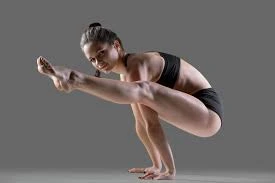
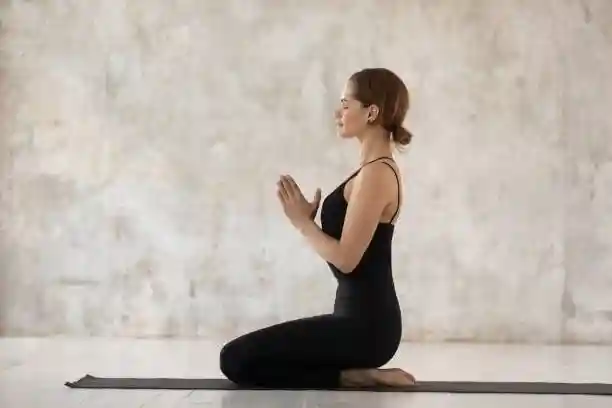
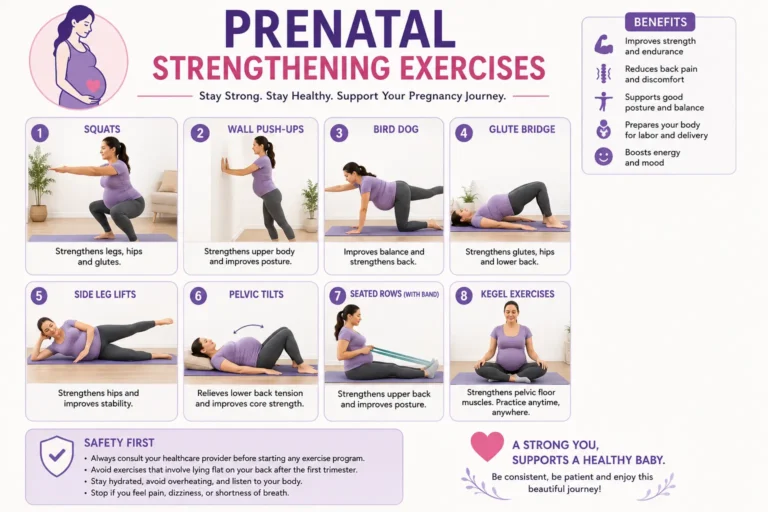
Lower Cross Syndrome Strenthening Exercises
Squats (Malasana)
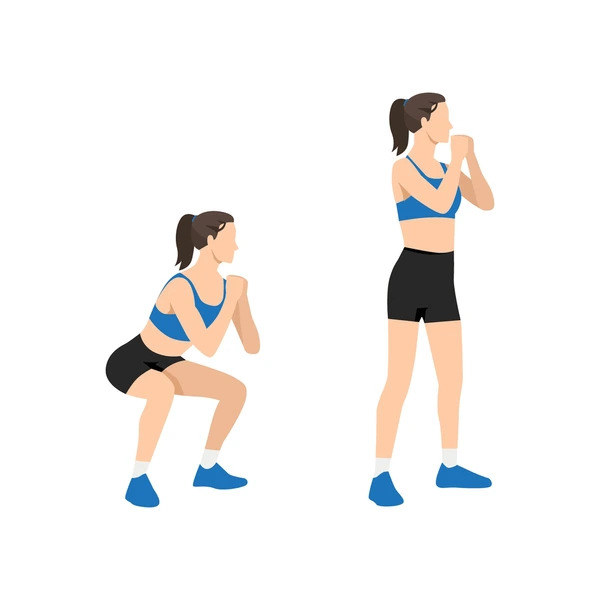
- Malasana, commonly called the Squat Pose, is an excellent yoga pose to begin with if you have Lower Cross Syndrome. When done correctly, this position can stretch the hip and groin flexors and strengthen the gluteal muscles.
- With your feet slightly wider than hip-width apart, take a tall stance. Toes should be turned outward.
- As you release your breath, squat as low as it feels comfortable. Your hips should be at or below knee level.
- You can either clasp your arms together in front of your heart or hold them straight out in front of you. Maintain a long spine and an elevated chest. Work the muscles in your core.
- Raise your body to a standing position while you take a breath.
- Do this six to ten times.
Plank Pose on Forearms

- This form of Plank Pose is a full-body workout that works several muscle groups simultaneously. In particular, it helps strengthen the internal obliques, external abs (rectus abdominis), and deep core muscles (transverse abdominis), all of which are frequently weak in individuals with Lower Cross Syndrome. Strength, endurance, and postural stability—all essential for controlling and treating LCS—can be enhanced by this stance.
- With your palms flat on the mat below you and your arms below your shoulders, lie on your stomach.
- Raise your body so that your shoulders are exactly above your elbows and you are resting on your forearms.
- Lift your navel toward your spine while maintaining a straight back and using your core muscles.
- Drop to rest on your stomach after holding for as long as you are fatigued.
Half Locust Pose with Bending Knees
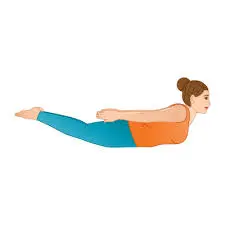
- Prone and back-bending, the Locust Pose is a great way to strengthen your back. It specifically targets the erector spinae and multifidus muscles, which are responsible for maintaining an upright posture. The hip flexors, which might be excessively tight in those with Lower Cross Syndrome, are also stretched by the pose. The Half Locust Pose works the muscles in your thighs, glutes, and lower back by lifting and bending one leg at a time.
- With your arms by your sides and your legs outstretched, lie flat on your stomach.
- Holding your right leg straight, raise it behind you as you take a breath.
- With your foot facing the ceiling, bend your right knee at a right angle as you release the breath.
- Extend your right leg to make it straight while you take another breath.
- Release your right leg and place it back on the mat as you exhale once more.
- Repeat three to six times on each side, switching between the left and right.
Child’s Pose

- Child’s position is a calming position that releases tension in the neck and lower back while providing a mild stretch to the hips, thighs, and ankles. Lower Cross Syndrome-related tension and stiffness can be effectively relieved with this pose.
- With your big toes pointing inward and in contact with one another, kneel on your mat.
- Keep your knees as close together as is comfortable, or as far apart as your hips.
- As you release the breath, place your arms out in front of you, palms down on the mat, and lower your torso between your thighs.
- Gently lower your hips toward your heels while bringing your forehead to the mat.
- Hold for six breaths.
Runner’s Lunge
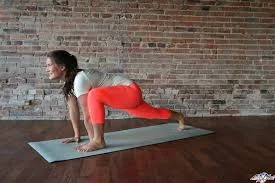
- You can stretch the hip flexors, especially the psoas, which are often stiff in people with Lower Cross Syndrome, by using Runner’s Lunge in your yoga for Lower Cross Syndrome sequence after resting in Child’s Pose. Additionally, the pose improves lower-body stability by strengthening the gluteus muscles.
- Get down on your hands and knees.
- Put one foot in front of the other. This foot should form a 90-degree angle below your knee.
- Extend your back leg behind you by sliding it.
- You can place your hand on the front leg’s thigh or keep your fingertips on the mat. Your quadriceps should feel stretched.
- Holding for six to ten breaths.
- Repeat on the opposite side.
Head-to-Knee Pose

- Another excellent yoga practice for Lower Cross Syndrome is the head-to-knee practice, which involves bending forward while seated.
- It helps isolate these muscles for a better stretch by concentrating on one side of the body at a time.
- With your legs out in front of you, take a seat on your mat.
- Place the sole of your foot against the inner thigh of the extended leg while bending one knee to the side.
- Lengthen your spine by raising your arms above your head as you inhale.
- Bend forward from your waist over the straight leg as you release the breath, using your hands to grasp your foot, ankle, or leg.
- Holding for six to ten breaths.
- Repeat on the opposite side.
Rolling Bridge Pose

- Bridge Pose is an effective Lower Cross Syndrome yoga pose because it stretches the chest and hip flexors and strengthens the back of the body. Compared to holding a motionless Bridge Pose, this rolling variation allows you to include more movement and corresponding breath.
- Bend your knees and place your feet flat on the mat, hip-distance apart, while lying flat on your back.
- Lay your arms flat, palms down, along your torso on the mat.
- Roll your spine off the floor by pressing your feet into the mat and lifting your hips as you inhale. Make sure your knees stay just above your ankles.
- If at all possible, keep your thighs parallel to the mat while using your leg muscles and glutes.
- With your knees bowed, return your hips to the mat as you release the breath.
- Do this six to ten times.
Savasana

- Corpse Pose, or Savasana, is a popular way to end a yoga session. It helps your body to relax and take in the advantages of the Lower Cross Syndrome yoga poses that preceded it. This can help people with LCS become more aware of their bodies and relieve tense muscles. Savasana is an intentional stance that promotes attention, relaxation, and a stronger mind-body connection, despite its seemingly simple and motionless look.
- With your arms at your sides and your legs comfortably outstretched, lie flat on your back.
- You might want to shut your eyes.
- Breathe deeply, then let your body fully relax into the yoga mat as you release the breath. As you release any tension you feel, pay attention to how each part of your body feels.
- For one to three minutes, maintain this stance.
Fixed the syndrome of Lower Cross Syndrome
Luckily, a combination of stretches and lifestyle modifications can help improve and, in many cases, resolve Lower Cross Syndrome:
Reduce how much you sit. While many of us must work at a desk, you can consider using a standing desk, taking more breaks, and getting more exercise after work.
Make your posture better. Develop the habit of standing, sitting, and exercising with optimal posture by learning how to align your body. (Go ahead and explore how yoga can assist with this.)
Become more ergonomic. Be mindful of your workstation or desk. Think about ergonomic equipment, such as supportive chairs and desks that can be adjusted.
Perform focused stretches and exercises. To fight Lower Cross Syndrome, extend tight, shortened muscles and strengthen weak ones. (Go ahead to the series of yoga positions I’ve described for Lower Cross Syndrome to see an example.)
Become active. Include low-impact workouts in your schedule, such as yoga. These exercises can help you lose weight and become less sedentary while also improving your body’s flexibility, stability, and balance.
Keep your weight in check. Excess weight can be lost with regular exercise, a nutritious diet, and good habits, which will ease the strain on the lumbar spine.
Remember that every person will recover differently. Remember that what works for one individual might not work for you (or your client) if you’re wondering how to treat Lower Cross Syndrome. The ability to customise yoga is one of its advantages for those with Lower Cross Syndrome.
Benefits of Yoga for Lower Cross Syndrome
- Take a modified complete approach. Beyond only yoga positions, or asanas, yoga also includes pranayama, or breathing exercises, meditation, and other practices. Additionally, it improves mental, emotional, and spiritual well-being in addition to physical health. Because of this, it tends to be more holistic than Western treatment and may be adjusted for each individual, particularly when working with a yoga therapist.
- Boost your weak muscles. Your core and glutes can be strengthened, and Lower Cross Syndrome can be prevented with a variety of yoga positions.
- Tight muscles should be stretched. Similar to this, there are a number of yoga positions for Lower Cross Syndrome that extend and stretch the tense muscles in your lower back and hips. Your flexibility may improve as a result, supporting proper posture. Breathing exercises, or pranayama, can also help alter your nervous system’s reaction, making it simpler to stretch tense muscles.
- Boost your posture. You can become more conscious of your body’s position, motion, and equilibrium by regularly engaging in yoga poses, pranayama, and meditation. A lot of yoga positions also teach you how to align your body properly. Together, you are able to identify and correct improper alignment, which helps you improve your posture.
- Yoga’s longer, slower positions can also stretch and modify your fascial structure, making it simpler to maintain proper posture.
- Encourage the modification of habits. Yoga can assist you in regulating and creating new patterns, both of which are beneficial for changing habits. This can assist people with LCS in committing to healthier dietary choices, maintaining improved posture, and keeping to an exercise routine.
- Boost your activities. Lower Cross Syndrome is readily caused by a sedentary lifestyle. Yoga not only helps you target the muscle groups impacted by LCS, but it also keeps you moving and active, which can help fight Lower Cross Syndrome in general.
- Reduce your weight. Lower Cross Syndrome can be exacerbated by obesity, which puts additional strain on the lumbar spine. There are several ways that yoga may help in weight loss, including encouraging behaviour modification, enhancing awareness, boosting mobility, and lowering stress.
- Decrease worry and tension. Muscle tightness, a major symptom of LCS, can be further relieved by the relaxing and stress-relieving effects of several yoga poses.
How Much Time Is Needed to Treat Lower Cross Syndrome?
Many variables affect how long it takes to treat as well as heal Lower Cross Syndrome, including.
- The amount of the illness
- How successfully you follow your treatment plan
- How regularly you practice proper posture
- Whether lifestyle modifications are necessary and followed to
- Your general well-being
- I’ve found that many people who practice yoga for Lower Cross Syndrome can see significant improvement in just eight weeks.
It’s essential to have patience as well as persistence. Poor behaviours that have developed over time are frequently the cause of Lower Cross Syndrome, and it takes time to break these patterns. Achieving a long-lasting improvement in posture and other helpful habits should be the aim rather than hurrying through the procedure.
How to Sleep with Lower Cross Syndrome
If you have Lower Cross Syndrome and find it difficult to fall asleep, you might want to think about lying flat on your back. As a result, your hip flexors may not shorten as much as you sleep. However, treating or overcoming LCS does not require this.
FAQs
What muscles are weak in lower cross syndrome?
Lower-body cross syndrome can be caused by prolonged sitting. While the gluteal and abdominal muscles develop long and weak, the low back muscles and hip flexors—the muscles at the front of your hips that you use to move your legs—become short and stiff.
What exercises help UCs?
Chin Tucks
This exercise will strengthen and activate your deep cervical muscles, which are located at the front of your neck. Place two fingers on the base of your chin. Gently tuck your chin in and pull your head back. Keep your fingers tucked in your chin at the same time.
How to sleep with lower cross syndrome?
If you experience lower back pain, try these tested sleeping positions.
Sleep on your side with a pillow between your slightly bent legs.
Sleep on your side in the baby position.
Sleep on your back with a pillow below your legs.
While sleeping on your stomach, place a pillow below your pelvis.
Can lower cross syndrome be cured?
Self-care techniques and certain exercises are essential for managing lower cross syndrome. Strengthening the gluteal and core muscles and extending the lower back and hip flexors are two ways to treat muscular imbalances. Exercises for strengthening the abdomen, glute bridges, and hip flexor stretches are helpful.
What does lower cross syndrome feel like?
An anterior pelvic tilt, hip flexor tightness, and gluteal muscular weakness are the main symptoms of lower cross syndrome, a frequent postural imbalance. Numerous problems, including hip, knee, and lower back pain, might be caused by this illness.
What is the best sleeping position for UCS?
According to studies, resting on your left side or with your head raised will improve your quality of sleep and lessen digestive issues. Sleeping on one’s left side has been linked to reduced stomach pain and heartburn, also known as gastroesophageal reflux disease (GERD), which can be prevalent in those with IBD or colitis.
What muscles are tight in lower cross syndrome?
An imbalance in hip, lower back, and pelvic muscle strength results in lower crossed syndrome. This usually occurs when the adductor muscles of the inner thigh, the hip flexors, the extensor muscles of the upper and lower back, and the calves are hyperactive and tense.
What’s the unhealthiest sleeping position?
Lying on your back is the worst posture if you have sleep apnea or snore because gravity makes your jaw, tongue, and soft palate more likely to fall back toward your throat, narrowing your airways and possibly making breathing more difficult.
How to check lower cross syndrome?
To test for Lower Cross Syndrome (LCS), you look for certain postural patterns, such as an anterior pelvic tilt, hyperlordosis (an arched lower back), tight hip flexors, and weak abdominals and glutes. Important tests include checking posture with your eyes, the Thomas test for hip mobility, overhead squats, and manual muscle testing for strength imbalances.
Important Parts of the Assessment
Postural Observation: Check for a significant rise in lumbar lordosis (the arch in the lower back), a forward tilt of the pelvis, and a forward head posture while standing.
Thomas Test (Hip Flexor Tightness): Lie on a table and pull one knee to your chest. If the other leg comes off the table, your hip flexors are tight.
Overhead Squat Test (Movement Assessment): A squat where the low back arches too much (hyperlordosis) or the body leans too far forward, which means the glutes are weak and the back extensors are tight.
Wall Sit/Wall Stand Test: Standing with your back against a wall, see if your lower back has too much arch (enough room for a fist) and if you can raise your arms over your head without arching your back even more.
Testing for Core Strength and Stability: Plank tests or single-leg bridges to see how strong and active the gluteal and deep abdominal muscles are.
Typical Results in LCS
Hip flexors (iliopsoas) and lower back extensors are tight muscles.
Weak muscles: the rectus abdominis and the gluteals.
Symptoms: Often linked to pain in the lower back and a forward tilt of the pelvis.
What muscles are weak in the forward head?
Shortening of the cervical extensor muscles, including the upper trapezius and scapulae, and the SCM muscle. Additionally, FHP causes weakening in the cervical flexor muscles and scapular retractors, particularly the middle trapezius.
How to decompress the spine while sleeping?
Keep your spine in a neutral position, use pillows for support, and select a medium-firm mattress to help you relax as you sleep. Sleeping on your side with a pillow between your knees or on your back with a pillow beneath your knees are important postures. The lower back is relieved of pressure as a result.
The Best Sleeping Positions to Reduce Stress
To relieve strain on your lower back and keep the natural curve of your spine when you sleep on your back (supine), place a small to medium-sized pillow below your knees.
To keep your hips and spine in alignment while sleeping on your side, place a pillow between your knees. This will prevent your spine from being pulled out of alignment by the upper leg.
Sleeping when lying down: The strain that gravity places on the spine can be reduced by lying somewhat upright or reclined, such as in a reclining chair.
Fetal Position: You can help your lower back’s vertebrae open up by lying on your side with your knees slightly bent.
Sleep Surface and Support Advice
Mattress Firmness: To maintain the spine’s natural curve and prevent sagging, which can lead to misalignment, a medium-firm mattress is ideal.
Support Gaps: Ensure that a quality pillow is supporting your neck. Use a little pillow if there is room between your waist and the mattress.
Avoid sleeping on your stomach since this might cause severe back strain. If necessary, place a small pillow below your hips to raise your lower back.
Your spine can prepare for sleep with easy stretches like the Child’s Pose or taking your legs to your chest while resting on your back.
References
- Airrosti. (2025, September 17). 3 Lower cross syndrome exercises. AIRROSTI. https://www.airrosti.com/blog/3-exercises-for-lower-cross-syndrome/
- Exercises for Lower Cross Syndrome | Moyer Total Wellness. (2025, January 24). Moyer Total Wellness. https://moyerwellness.com/exercises-for-lower-cross-syndrome/
- Miller, K. (n.d.). Lower crossed syndrome: starting from the centre. https://blog.nasm.org/lower-crossed-syndrome
- Ocs, A. J. D. P. D. (2021, August 30). Move with Purpose to Combat Upper and Lower Cross Syndromes. Hospital for Special Surgery. https://www.hss.edu/health-library/move-better/avoid-cross-syndrome
- Passalacqua, B. (2024, June 14). Lower Cross Syndrome yoga: Exercises, causes, and treatment. Breathing Deeply. https://breathingdeeply.com/yoga-therapy-for-sitting-on-our-butts-all-day/
- Shakib, M. (2023, March 22). Lower cross syndrome and pelvic floor dysfunction. Core Pelvic Floor Therapy. https://corepelvicfloortherapy.com/lower-cross-syndrome-pelvic-floor/