
Vagus Nerve Stimulation Exercises
Vagus Nerve Stimulation Exercises are simple techniques designed to activate the vagus nerve — a key part of the parasympathetic nervous system that helps the body relax, recover, and restore balance.
The vagus nerve, which links the brain to vital organs like the heart, lungs, and digestive system, is crucial for controlling stress, heart rate, digestion, and emotional health.
What Is the Vagus Nerve?
The longest nerve in your body, the vagus nerve, controls your rest and digest reactions. It extends from your brain to your stomach.
More specifically, the vagus nerve, a neurological channel, regulates the parasympathetic nervous system, which regulates your breathing, digestion, and resting heart rate. When your parasympathetic nervous system is functioning properly, you feel secure rather than anxious or tight.
The main channel of communication for the parasympathetic nervous system is the vagus nerve.
The body’s internal communication route is the vagus nerve, which links your brain to your heart, lungs, and stomach.
This huge pathway that connects the brain to the gut and regulates a number of physiological functions, including digestion, breathing patterns, mood regulation, and heart rate variability, is known as the vagus nerve.
The vagus nerve is also crucial for mental health. It controls your parasympathetic nervous system.
Vagus Nerve Function
The vagus nerve is one of the twelve cranial nerves that connect our body and brain. It extends from the brain stem to the gut and is a crucial part of the parasympathetic nervous system.
Unlike the sympathetic nervous system, which regulates the fight or flight response, the parasympathetic nervous system controls respiration, digestion, and resting heart rate. It can be used to unlock the relaxation response. Recent studies have demonstrated that the vagus nerve also regulates inflammation, which plays a significant role in the emergence of nearly every chronic illness, including cognitive problems.
The Food and Drug Administration has approved devices that stimulate the vagus nerve with electrical impulses to treat a number of conditions, including epilepsy, migraines, depression, and cluster headaches. However, research suggests that vagus nerve stimulation may enhance brain function even in healthy people.
It turns out that many of the practices we consider to be calming, such as massage, meditation, deep breathing, and even understanding respect, really change the brain by stimulating vagus nerve activity.
How Vagus Nerve Dysfunction
Everyone has felt things like heart rate increases, tight muscles, and difficulty breathing on a regular basis during a job interview or first date. It is difficult to show our best selves because these physical problems hinder our ability to think clearly.
These anxiety reactions are quite acceptable when they happen under stressful circumstances and pass quickly. However, if you have them frequently or if they continue long after a stressful event has ended, your vagus nerve may not be functioning at its peak. This is referred to as low vagal tone, which essentially indicates that your nervous system has trouble relaxing following a stressful event.
Your vagal tone, which is not fixed, can be improved by stimulating your vagus nerve.
When we engage the vagus nerve, which reduces heart rate, pauses breathing, and allows our more creative brain processes to flow, we are essentially asking the body to relax.
How Do I Know If I Have Low Vagal Tone?
When a person’s nervous system struggles with restoring balance after stress, it is indicated by low vagal tone.
You may recognize some of these common signs of increased vagal tone.
- Being always nervous or searching for future issues
- Feeling nervous even when there isn’t an obvious issue.
- Digestive issues such as bloating.
- Quickly shifting from calm to very nervous
- Frequently feeling overcome by emotions
- Having problems concentrating in the present moment
- The tendency of the mind to expect the worst
- Feeling detached from your body or emotionally numb
- Having problems falling or staying asleep
- You might continue to feel wired or tense even after a stressful incident has ended.
- Chronic fatigue that doesn’t seem to go away
Vagus Nerve Exercises
The techniques described below are ranked from the most promising but new techniques to those with the strongest research support, based on the degree of scientific proof. By activating your vagus nerve, any action can increase your body’s ability to return to a state of calm.
You should expect that these techniques are more complicated than just flipping a switch. Think of them more like building muscle at the gym; they get stronger and more effective with regular practice.
Activating the vagus nerve is not about quick fixes; rather, it is about indicating safety, calm regulation, and a connection to our bodies and brains.
1. Deep Diaphragmatic Breathing

Diaphragmatic breathing, or those lengthy, peaceful abdominal breaths, is one of the most gentle things we can do for ourselves. With every breath, your vagus nerve is notified that you are secure. Even ten minutes of diaphragmatic breathing has been shown to lower anxiety, improve inhalation and exhalation balance, and lower heart rate.
How to do it: Lying on your back, place one hand on your abdomen and the other on your chest. Breathe in slowly through your nose, raising the hand on your belly while keeping the hand on your chest largely still. Take a deep breath out of your mouth and let the hand on your abdomen return to its starting position. You don’t have to count when you inhale or exhale, but it’s necessary to prolong your exhalation. That sets off your vagus nerve and calming response.
Ideal for: Managing daily stress and reducing anxiety immediately
Safety: Everyone is generally safe; if you feel lightheaded, stop.
2. Cold-Water Face Immersion

The diving reaction can be caused by immersing your face in cold water, which reduces pulse rate and activates the vagus nerve. In 2022, researchers found that participants who applied cold water to their faces for five to thirty-five seconds after a stressor were able to return to a peaceful state faster than those who did not.
How to do it: Using an ice roller, pouring cold water on your face, applying a cool towel to your face for 30 seconds, or submerging your face in cold water are other techniques. Dunking your entire head is not as effective as simply sprinkling cold water on your face or covering it with a cool towel for 30 seconds.
Ideal for: Relieving panic attacks
Safety: Avoid prolonged cold exposure and high temperatures; people with cardiac issues should not go outside.
3. Humming and Singing
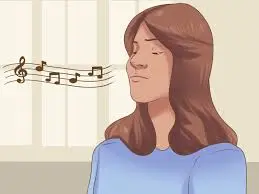
Another method of stimulating the vagus nerve is deep humming, which likewise has a calming effect. You can return to that safe, regulated condition by humming, chanting, or singing since these activities directly activate the vagus nerve, which is connected to the voice chords and ear.
The practice of humming daily is supported by research. According to one study, humming daily helps control the parasympathetic nervous system, which is your body’s rest and digest mode. This allows us to react to stress more wisely rather than impulsively.
How to do it: Put a plug in your ears or cover them gently and hum for five to ten slow, steady rounds. Humming from your chest, not just your throat, at a low pitch that makes your body vibrate, is the best way to activate the vagus nerve.
Ideal for: Managing stress daily
Safety: No limitations
4. OM Chanting

Since both humming and chanting OM produce deep, low vibrations that are felt throughout the body, they function similarly. Five minutes of OM chanting is beneficial, and it might be most effective following a mild activity, such as yoga.
How to do it: Take a deep breath through your nose first. Chant “ohmmmmm” as quietly as you can during the exhale. Pay attention to how your body and chest are vibrating. With short breaks in between, repeat three to five times.
Ideal for: Regulating the neurological system daily, frequently combined with yoga or movement
Safety: No limitations
5. 4-7-8 Breathing
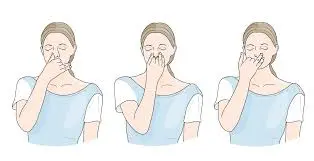
You may quickly activate the vagus nerve and help your nervous system become more controlled by using the 4-7-8 breath. Similar to diaphragmatic breathing, the slow exhale helps control your parasympathetic nervous system, which is your body’s soothing reaction, and activates the vagus nerve. It’s particularly helpful when your mind is racing because of the disciplined counting.
How to do it: Take a slow, four-second breath via your nose, keep it there for seven seconds, and then slowly release it through your mouth for eight seconds. The relaxing effect is triggered by a prolonged exhale.
Ideal for: Developing vagal tone every day, particularly while switching from work to rest mode
Safety: If you experience lightheadedness or vertigo, stop.
6. Orienting to Safety
You’re doing more than merely observing when you take the time to truly look about your area. Your nervous system is receiving safety cues from you.
By activating your parasympathetic nervous system, this method aids in vagus nerve activation. Our nervous system may become trapped in threat-detection mode during panic or anxiety attacks. Your body can return to realising that you are in a safe situation by orienting to safety.
How to do it: Take a look around the room and focus your gaze on various items that provide a sense of security and comfort, like a bookshelf brimming with books, a beloved coffee mug, or pictures. Additionally, you can concentrate on your senses of taste, smell, hearing, and touch, such as the chirping of birds outside your window or the feel of your clothes. Using your senses to ground yourself in the here and now is the aim.
Ideal for: Immediate reduction of anxiety
Safety: No limitations
7. Side Eye Movement

Give stress the side eye, literally, the next time it hits. The cranial nerves that regulate eye movement are among the various nerves in your body that are connected to the vagus nerve. This easy eye movement might assist your parasympathetic nervous system and vagus nerve in stressful conditions.
Side eye movement helps the body enter a more relaxed state by sending a signal to the vagus nerve, which contacts our visual system on its journey down the body.
How to do it: Take five seconds to look to the right, and then five seconds to look to the left. You can utilise this strategy as often as you like when you’re feeling stressed or anxious.
Ideal for: Instant alleviation when a stressor arises
Safety: Those who are blind or have serious eye conditions shouldn’t use this.
8. Gentle Massage
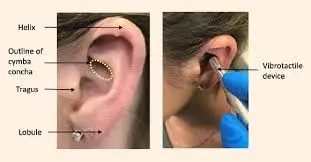
There is science underlying the sensation of deep relaxation that you may have experienced during a massage. Similar full-body relaxation effects are provided by vagus nerve massage, which targets the parasympathetic nervous system, according to a 2020 study including 60 individuals. This method is effective because your ear is a readily accessible location for stimulation due to the branches of the vagus nerve that attach to it.
How to do it: Locate the cymba concha, a hollow in the upper portion of your ear, and gently massage it forward or backwards for approximately one minute. Make circular motions and apply gentle pressure. One or both ears can be used for this.
Ideal for: Promoting daily relaxation and long-term resilience
Safety: Avoid if you have an ear infection or any other ear-relatedillnesss.
9. Moderate Exercise

You know how wonderful it feels to work out hard? It turns out that your vagus nerve also enjoys it. The parasympathetic nervous system, which is your body’s soothing and restorative mode, is activated by physical exercise because it stimulates the vagus nerve. This is one of the reasons why athletes often have lower resting heart rates; regular exercise tends to strengthen their vagus nerve activity.
How to do it: The best course of action for the time being is whatever routine you enjoy because research on exercise and vagus nerve stimulation is still in its early stages. Each week, engage in two strength training sessions in addition to 150 minutes of moderate cardio (such as walking or bicycling) or 75 minutes of strenuous cardio (such as swimming or running).
Ideal for: General mental health and long-term anxiety resilience
Safety: Before beginning a new fitness regimen, speak with your doctor. Start slowly. Select exercises that are suitable for your current level of fitness.
10. Safe Place Guided Meditation
Most people have heard the recommendation to meditate more, but when you’re already feeling nervous, trying to declutter your thoughts can be too much to handle. Beginners may find the more structured method of safe place guided meditation easier.
It has been demonstrated that meditation centred on an internal safe place activates the vagus nerve, which lowers the body’s levels of inflammation markers and the stress hormone cortisol.
How to do it: Find a peaceful area where you won’t be bothered, then lie on your back or sit comfortably. Put on a safe place guided meditation app or one of the free internet ones, such as this 10-minute one. These usually lead you to visualise a calm, safe space while paying attention to your breathing.
Ideal for: Developing daily resilience and getting ready for tough situations
Safety: Just the obvious: Avoid meditating while using machinery or driving a vehicle.
11. Yoga (Twists & Forward Folds)

The vagus nerve can be profoundly accessed through yoga, particularly through mild, breath-led movement. It requests that we remain mindful, slow down, and pay attention to our bodies.
Yoga’s effects on the neurological system are supported by research, especially yin yoga, which is a slower type in which you hold each pose for three to five minutes. Your parasympathetic nervous system is activated by this gradual, gentle technique; twists and forward folds work particularly well for stimulating the vagus nerve.
How to do it: Concentrate on postures that require forward folding or mild spinal twisting, holding each pose for a few minutes while taking deep breaths. This practice works well for vagus nerve activation because it combines prolonged positions with attentive breathing.
Ideal for: Stress reduction and daily or weekly nervous system control
Safety: Before beginning any new fitness regimen, including yoga, speak with your doctor; pay attention to your body and avoid forcing any positions.
12. Controlled Laughter

Your parasympathetic nervous system is stimulated by the rhythmic breathing and diaphragmatic movement that laughter naturally produces.
The vagus nerve is activated by the muscles and breathing patterns we use when we laugh. The same soothing impact can be accessed by your body even when you laugh on purpose. It’s lovely for everyday resiliency and for escaping a downward stress cycle when you’re feeling stuck.
How to do it: be truly funny and allow yourself to laugh out loud. These could be vintage episodes of your favourite sitcom, humorous animal films, or comedy clips. You want those deep belly laughs that activate your diaphragm; it’s important to choose something that makes you laugh rather than just grin.
Ideal for: Daily mood boosting and instant anxiety alleviation
Safety: No limitations
How to Use These Techniques Effectively?
It’s not necessary to become proficient in all of these methods to establish a long-lasting vagus nerve stimulation practice. Begin by selecting two or three that you find meaningful and that you can include effortlessly into your everyday schedule. Establish a five to ten-minute daily routine that combines methods that provide long-term nervous system resilience and instant stress reduction.
Developing a toolkit of strategies for when acute stress occurs is also beneficial. If you journal, write a handful of your favourite strategies in your journal or bookmark this page on your phone so you can access them when you need them most. Rather than perfection, consistency is the key. Your body’s reaction to stress can be significantly altered by even a short daily vagus nerve stimulation session.
FAQs
What are the symptoms of a weak vagus nerve?
emotional instability, heartburn, inflammation, bloating, diarrhea, tinnitus, headache, anxiety, depression, dizziness in the brain, difficulties swallowing, changes in vision, and an inability to cope effectively with stress.
Are there risks with vagus nerve exercises?
Vagus nerve stimulation frequently carries the following risks: infection. discomfort and swelling where the incisions were made. harm to the surrounding structures or your vagus nerve.
What is ear stimulation for the vagus nerve?
Transcutaneous stimulation of the vagus nerve (t-VNS)
This non-invasive method makes use of a stimulation device that is affixed to various ear regions. This approach has been authorized in Europe to treat depression, chronic pain, and epilepsy.
Can bad posture affect the vagus nerve?
The vagus nerve’s routes may be constricted or inflamed by poor posture, such as slouching, forward head posture, or rounded shoulders. This disturbance may impair its capacity to control vital processes, resulting in symptoms including anxiety, chronic fatigue, and digestive problems.
References:
- Myers, A. (2025, December 1). 12 science-backed vagus nerve exercises for anxiety relief. Thriveworks. https://thriveworks.com/help-with/anxiety/vagus-nerve-exercises/
- Paturel, A. (2025, October 23). Bolster your brain by stimulating the vagus nerve. Cedars-Sinai Medical Center. https://www.cedars-sinai.org/stories-and-insights/healthy-living/stimulating-the-vagus-nerve
- Laderer, A. (2026, February 4). 5 vagus nerve exercises to help you chill out. Charlie Health. https://www.charliehealth.com/post/vagus-nerve-exercises
- Clinic, C. (2025, December 23). How to reset your vagus nerve naturally. Cleveland Clinic. https://health.clevelandclinic.org/vagus-nerve-reset