Jefferson Curl
Introduction:
The Jefferson Curl is a controlled flexibility and strength exercise that targets your hamstrings, lower back, and entire posterior chain. Performed slowly with light weight, it helps improve spinal mobility, lengthen tight muscles, and build resilience through a full range of motion—making it a great addition to mobility or rehab-focused workouts.
This helps to improve nervous system function and avoid upper, middle, and lower back discomfort and injuries. Because your erector spinae lengthen, stretch, and contract with Jefferson curls instead of remaining isometrically the same length throughout, they are exercised in a wider range of motion. The Jefferson Curl is a straightforward exercise that provides long-term relief from pain and mobility problems.
Muscle Work During Jefferson Curl:
- Gluteus Muscle
- Hamstring Muscles
- Lower Back Muscles
Step-by-Step Guidance:
Step 1: Preparation and Setup
Identifying the Proper Space:
You’ll need enough space to stretch out completely and walk about comfortably without running into anything or being distracted.
Tools:
A low box, barbell, dumbbells, kettlebells, or simply your body weight can be used to perform the Jefferson Curl. It is advised that beginners begin with a very light dumbbell or no load.
The Right Body Position:
To prevent hyperextension, begin by assuming a firm standing position with your feet hip-width apart and your knees straight but not locked out. Make sure you are on a level surface to begin, but eventually you can advance to doing the movement from an elevated surface. Keep your spine neutral and contract your core.
Step 2: The Belly Button To Spine Descent
To properly express the movement of the spine, the Jefferson Curl requires a controlled and intentional descent; you will bend forward.
Belly Button to Spine: From the cervical to the low back, you should descend one vertebra at a time. Pull your belly button back towards your spine while using your abs, keeping your pelvis in a neutral position and avoiding pushing your hips back.
Keep the barbell as near to your body as you can while using it. This makes the exercise safer and more efficient while reducing the strain on your lower back.
To obtain the maximum stretch, the descent should be gradual and controlled, taking roughly five seconds. To go further into the stretch, try not to bounce or use momentum. Maintain a straight neck.
Step 3: The Full Stretch
The objective is to get a maximum stretch at the bottom of the exercise once the back and hamstrings have reached their entire range of motion. As you equally distribute your weight and avoid sagging to one side, tilt your pelvis forward anteriorly, being careful not to fall back on your heels. At the bottom, pause for a moment while maintaining an engaged core and supporting your weight with your quadriceps and forefoot.
To boost the oxygen supply for the stretch, concentrate on taking a deep breath as you descend. As you get to the fully extended position, hold your breath or slowly release it.
Imagine making a gap between each vertebra in your spine. It’s important to keep your movement steady and controlled because this is a stretch for every portion of your spine.
Step 4: The Ascent
The second part of the exercise, where you raise the weight again, is called the ascent. To guarantee the most benefits, this is just as important as the descending phase.
To raise the weight again, use your hamstrings, glutes, and lower back, using the entire posterior chain. It’s a full-body workout, not simply a back workout.
Raise the weight gradually, just as you did when you reduced it. As you ascend, each vertebra should engage and extend correctly.
Recommended Repetitions:
Due to the severity of this exercise, it’s advisable to begin with just a few repetitions and light weight (or no weight). You should start with a few curls per set and increase the number as you get more familiar with the movement.
Start with three sets of Jefferson curls (5-8 reps) using very light weights. You can gradually increase the repetitions or the weight. But when it comes to an exercise as intricate as the Jefferson Curl, quality always wins out over quantity.
Benefits:
It makes your hamstring muscles longer:
A fairly prevalent issue that can impair strength and performance and perhaps result in injury is tight hamstrings. To make the exercise more difficult, a Jefferson curl loads the hamstrings after they have reached the end of their range.
It makes your inner core muscles stronger:
The external core muscles that give the classic washboard abs their appearance, such as the rectus abdominis and external obliques, are well-known to most individuals. Although they are not as glamorous, the inner core muscles are essential for proper posture, stability, and mobility. By strengthening these inner core muscles, the Jefferson curl increases your resilience.
Your spinal resilience is increased:
We all flex our spines in daily life, mainly when we’re pulling something up off the ground. As a result, we ought to train the spine to withstand strain in this posture. You may lessen the likelihood of damage in this posture outside of the gym by practicing a Jefferson curl, which will prepare your body for the inevitable.
Variations:
Zercher Jefferson Curl:
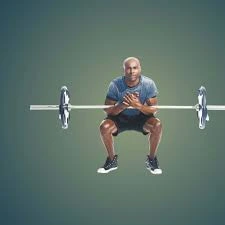
- With your fists clenched toward the heavens, unrack a barbell in the zercher position, which involves placing the barbell between your forearms and biceps and across the underside of your elbows.
- Take a position that is somewhat wider than your elbows.
- Then aim the bar at the floor and roll your spine as much as you can.
- To finish the rep, reverse the movement and roll your spine back up, vertebrae by vertebrae, until you are standing back erect after you have touched the floor or come as close to it as is comfortable.
Cross Over Jefferson Curl:
- Holding a dumbbell or kettlebell in one hand and the other behind your back for support and comfort, stand erect.
- Allow your spine to roll and your body to twist as you reach for the floor and cross over to touch the floor on the opposite side of your opposing foot.
- To finish the rep, slowly reverse the movement by rolling your spine back up and turning your body back into a square position.
- On both sides, repeat in equal measure.
Toe Raised Jefferson Curl:
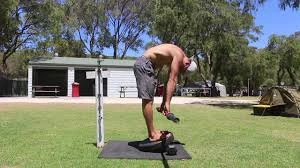
- Holding a dumbbell or kettlebell, stand tall with your toes up on a heel ramp, minimal plates, or even a tiny bumper plate.
- Maintaining the weight near your legs, roll your spine as much as you can till it hits the floor.
- To finish the rep, slowly raise your spine once more while maintaining the weight near your body until you are standing tall.
Safety & Precautions:
- There are a few important safety measures to remember when doing the Jefferson Curl.
- You should always start with extremely modest loads or your own body weight until you have mastered the rhythm of movement.
- Before beginning this exercise, like with any new fitness regimen or movement, make sure to discuss any limits or pre-existing conditions with your doctor. Keep in mind that this is a full-body activity, not simply one for back or core injuries.
- Throughout the workout, your spine should be the sole thing moving. Steer clear of hunching your back or “rounding” your shoulders; instead, keep your knees in line with your ankles.
- Lastly, pay attention to your body! If you have any pain, particularly in your lower back, stop the exercise. Before attempting the Jefferson Curl, get medical advice if you currently have back problems.
FAQs
What is a Jefferson curl good for?
The Jefferson Curl is frequently used in acrobatics and gymnastics training regimens to strengthen and stretch the spine, particularly during spinal flexion.
How do you do Jefferson curls step by step?
Holding a weight against your thighs, straighten your posture. Your feet and legs should be together. Tuck your chin into your chest, beginning at the top of your head. As you move the weight down your legs and toward the floor, round your shoulders and upper back.
Do Jefferson curls build muscle?
The posterior chain, which includes these underdeveloped muscles, will be strengthened by the Jefferson curl. Gaining strength in these areas will result in a more muscular body and improved balance.
How long should you hold a Jefferson curl?
Keep the barbell as near to your body as you can while using it. This makes the exercise safer and more efficient while reducing the strain on your lower back. To obtain the maximum stretch, the descent should be gradual and controlled, taking roughly five seconds.
Are Jefferson curls good or bad?
This movement is poor, or it is far more complicated than this workout. The Jefferson curl isn’t for everyone, even though it works so well. This is who ought to stay away from it. If you have sciatica, which is characterised by nerve-related symptoms that run down one leg, or acute lower back pain.
References:
- Arthur, M. (2025, August 8). Your Step-by-Step Guide to the Jefferson Curl — 919 spine. 919 Spine. https://www.919spine.com/blog/the-jefferson-curl
- Chohan, M. (2023, May 11). The Jefferson Curl – Why you should do this movement every day. Weak Back Builder. https://www.weakbackbuilder.com/blogs/news/jefferson-curl
- Researcher, E. H. B. P. (2023, May 22). Favourite Jefferson Curl variations. Locus Strength. https://www.locusstrengthandconditioning.com/post/favourite-jefferson-curl-variations