Pelvic Floor Strengthening Exercises For Women
Introduction
Pelvic Floor Strengthening Exercises for Women are simple yet effective exercises designed to strengthen the muscles that support the bladder, uterus, and bowel.
The muscles that make up the pelvic floor are essential for supporting the uterus, bowels, bladder, and other organs, as well as for maintaining sexual function. However, we should incorporate these muscles into our regular exercise schedules because they are frequently overlooked or forgotten. Urinary incontinence and pelvic organ prolapse are two problems that can result from weak pelvic floor muscles.
Your pelvic floor muscles can be strengthened with Kegel exercises. The muscles you use to stop the flow of urine are called the pelvic floor muscles. You can avoid accidentally passing gas,r poop, or leaking urine by strengthening these muscles. Both those with a penis and those with a vagina can benefit from it.
What is the pelvic floor?
- Your bladder, uterus (womb), and bowel are supported by a collection of muscles and ligaments called the pelvic floor.
- These muscles form the base of your pelvis by attaching to your tailbone at the back and your pubic bone at the front.
- Your pelvic floor has three openings:
- The urethra, which transports your bladder’s urine.
- Your uterus is connected to the vagina.
- And the anus, which transports your bowels’ waste.
What is a Kegel exercise?
Your pelvic floor muscles can be strengthened with Kegel exercises, also known as pelvic floor exercises. Your bladder, bowel, and vagina are among the organs in your pelvis that are supported by your pelvic floor muscles. Your pelvic floor muscles help you urinate, eliminate waste, and have sex, in addition to holding your organs in place. Kegel exercises strengthen your pelvic floor muscles by tightening and then releasing them.
Kegel exercises can assist with problems like:
- Leaking urine is known as urinary incontinence.
- An immediate need to urinate is known as urge incontinence.
- Poop leakage is known as fecal incontinence.
- Sagging or growing pelvic organs into your vagina is known as pelvic organ prolapse.
- Additionally, Kegel exercises can enhance your orgasms and sexual health. Kegel exercises are beneficial for everyone.
What weakens pelvic floor muscles?
- Your pelvic floor muscles can be weakened by a variety of factors, such as:
- Pregnant
- Childbirth, particularly following a large baby or prolonged pushing
- Being overweight
- Exerting excessive effort to defecate
- Frequent heavy lifting
- Coughing excessively
- Menopause-related hormonal changes
- Getting older.
Pelvic floor strengthening exercises for women
Kegels
One of the best methods for strengthening and targeting the pelvic floor muscles is through Kegel exercises. Here’s how to do Kegel exercises step-by-step:
- Choose a peaceful, cozy spot to lie down or sit.
- Imagine that you are attempting to stop the flow of urine to identify your pelvic floor muscles.
- Once you’ve identified the muscles, contract them by lifting and squeezing. Don’t tighten your thighs, buttocks, or abdomen.
- After about five seconds of holding the contraction, let go and relax for an additional five seconds.
- Aim for three sets per session and repeat this process ten to fifteen times in a row.
Bridge pose

The bridge pose works the gluteal and core muscles while focusing on the pelvic floor. To execute the bridge pose, follow these steps:
- Lying on your back.
- Bend your knees.
- With your palms facing down, put your arms by your sides.
- Breathe in and use your pelvic floor muscles to raise your hips toward the ceiling.
- Hold the pose for ten to fifteen seconds while breathing steadily.
- Repeat ten to fifteen times while slowly lowering your hips back to the floor.
Squats

Squats are a great way to work the pelvic floor and other lower-body muscles. Here’s how to do squats properly:
- Place your feet shoulder-width apart as you stand.
- Maintaining a straight back and chest, lower your body as though you were reclining in a chair.
- As you descend and ascend, contract your pelvic floor muscles.
- As your strength increases, progressively increase the intensity of your three sets of ten to fifteen squats.
Pelvic tilts

Take these actions:
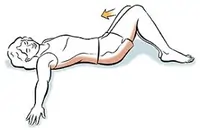
- With your feet flat on the ground and your knees bent, lie on your back.
- Press your lower back into the floor and tighten your abdominal muscles.
- After a few seconds of holding, let go.
- As your muscles get stronger, gradually increase the number of repetitions of this exercise to ten to fifteen.
Bird dog

The pelvic floor is one of the many muscle groups that are worked during the bird-dog exercise. To complete the exercise, follow these steps:
- Place your knees under your hips and your wrists below your shoulders as you begin on your hands and knees. Maintain a straight back.
- Retract your shoulder blades toward your hips while using your core muscles.
- While keeping your body in a neutral position, simultaneously extend and raise your right arm and left leg. For a few seconds, maintain this posture.
- Lower your leg and arm gently to the beginning position.
Who needs to do Kegels?
Your pelvic floor muscles may weaken and become less supportive of your pelvic organs as a result of anything that stresses them. Your pelvic floor muscles may become weak due to certain medical conditions or life events. Among these circumstances and occurrences are:
- Being pregnant.
- Delivery, including an emergency section.
- Overweight
- Pelvic surgery.
- Getting older. As you age, the muscles in your rectum, anus, and pelvic floor all naturally decrease.
- Persistent coughing or excessive straining during bowel movements (constipation).
- Exercises (particularly running, jumping, and heavy lifting).
How can you prevent pelvic floor problems?
Try to avoid the following to maintain the strength of your pelvic floor muscles and avoid pelvic floor symptoms:
- Constipation or straining during bowel movements
- Frequently lifting heavy objects
- Coughing a lot
- Putting on excess weight.
Include pelvic floor exercises in your daily routine by:
Every time you cough, sneeze, or lift something, your pelvic floor muscles tighten.
Maintaining an active lifestyle through regular exercise.
Increasing the difficulty of your exercises by performing them in various positions, such as sitting, standing, or on your hands and knees.
Pregnancy and Kegel exercises
Engaging in Kegel exercises during pregnancy may help make labor and delivery easier. This is due to the possibility that it will provide you with more control over your pelvic muscles during childbirth. Additionally, it can assist with:
- Control of the bladder.
- Supporting the muscles that support the fetus’s weight.
- Leaking urine or incontinence.
- Pushing while giving birth vaginally.
- Healing of the perineum following delivery.
How do I find my pelvic floor muscles?
Try stopping the flow of urine while sitting on the toilet to identify your pelvic floor muscles. Do this only until you get the hang of it; otherwise, stopping and starting could result in infection. You may also picture yourself attempting to prevent yourself from passing gas.
Can men do Kegel exercises?
Yes, Kegel exercises are beneficial for everyone. Men’s Kegel exercises can:
- Depending on the cause, assist in improving incontinence.
- Assist in the management of prostate swelling and pain associated with benign prostatic hyperplasia (BPH) and prostatitis.
- Enhance sexual pleasure by assisting with ejaculation and erections.
When you’re having trouble
Ask your healthcare provider for assistance if you struggle to perform Kegel exercises or if your symptoms don’t improve. Alternatively, you could schedule a consultation with a physical therapist who has taught pelvic floor exercises. You can learn how to exercise the right muscles from your physical therapist or healthcare provider.
Kegel exercises are occasionally combined with other methods. For example, your doctor might advise you to use a vaginal cone. The weighted cone is inserted into your vagina. The cone is then held in place by contracting your pelvic muscles. You stand or walk while doing this for a particular amount of time.
Biofeedback is another method that could be useful in addition to Kegel exercises. Your healthcare provider inserts a pressure sensor into your rectum or vagina during a biofeedback session. A monitor tracks and shows your pelvic floor activity as you contract and relax your pelvic floor muscles.
Alternatively, your medical professional might suggest a method known as electrical stimulation. You squeeze your pelvic muscles like you would during Kegel exercises when a device releases a small amount of electric current.
Benefits of pelvic floor exercises
Numerous pelvic problems can be resolved by strengthening and stretching the pelvic floor muscles. You can target the appropriate muscles and relieve your symptoms with the assistance of a pelvic floor physical therapist. Exercise, relaxation methods, lifestyle changes, biofeedback training, and more are all possible components of pelvic floor physical therapy.
- Physical therapy and pelvic floor muscle exercises can be beneficial.
- Boost bladder control and lessen post-void dribbling and urine incontinence.
- Decrease the frequency and urgency of urination (overactive bladder)
- Reduce bowel incontinence and enhance bowel control.
- Reduce pelvic discomfort.
- Decrease pelvic organ prolapse symptoms.
- Enhance sexual function and response, including arousal, orgasm, and satisfaction, and reduce pain during intercourse.
- Improve your body’s support during routine activities like walking, running, and standing.
FAQs
How can a woman strengthen her pelvic floor fast?
Imagine yourself sitting on a marble to perform Kegel exercises. As you raise the marble toward your head, contract your pelvic muscles. Try it for three seconds at a time. After that, unwind for three counts.
How to strengthen the pelvic floor during pregnancy?
Kegel exercises, which involve squeezing and relaxing muscles as if stopping urine flow, holding for a few seconds, and repeating while making sure you breathe and relax completely in between sets, are a great way to strengthen your pelvic floor during pregnancy. For core and pelvic support, incorporate pelvic tilts/rocks, squats, and cat-cow poses. Pay attention to breathwork and proper form to develop strength for improved bladder control and easier delivery.
Kegel Workouts (The Basis)
Find the muscles: To identify the appropriate muscles (between your legs, from pubic bone to tailbone), picture stopping the flow of urine or holding in gas.
The Squeeze: For three to ten seconds, tighten these muscles and raise them upward.
The Release: Spend the same amount of time relaxed.
Repetition: Do a few sets every day (morning and night), aiming for ten repetitions per set.
What are the signs of a weak pelvic floor?
Symptoms of the Urine
Urinary incontinence: Leaking urine while exercising, laughing, sneezing, or coughing (stress incontinence).
Urinary urgency/frequency: The need to urinate frequently, even right after using the restroom, or a persistent, unexpected urge to do so.
Urinating is difficult if you have to strain or start and stop.
Symptoms of the Bowel
Constipation is characterized by difficulty passing stools, a sense of incomplete emptying, or the need to use hands to assist with elimination.
Gas or stool leakage is known as fecal incontinence.
General and Pelvic Symptoms
Pelvic pressure: The sensation of the pelvis “dropping” or feeling heavy or bulging.
Pain: Persistent pain in the lower back, hips, rectum, genitalia, or pelvic area.
These symptoms are caused by pelvic organ prolapse (POP), which is the descent of organs like the uterus or bladder.
Are Kegels good for a hernia?
Kegel exercises are generally beneficial for strengthening the pelvic floor and core, which can help prevent some types of hernias (such as those related to pelvic floor weakness) by supporting abdominal muscles. However, they won’t treat an existing hernia and shouldn’t be performed with intense abdominal strain if you already have one, as this could exacerbate it; see a doctor for specific advice because certain exercises, such as heavy lifting or deep stretches, can be dangerous.
Builds support: Kegel exercises improve the strength of the pelvic floor muscles, which relieve pressure on the abdominal wall and support your bladder, bowels, and core.
Enhances core stability: A stronger pelvic floor helps to prevent weakness that can result in hernias by contributing to overall core strength.
Can walking tighten the pelvic floor?
Weak muscles can be strengthened and made to function properly again with regular, long-term exercise. Your pelvic floor muscles can also be strengthened with regular, mild exercise like walking.
What happens if I do 100 Kegels a day?
Pelvic floor strength can be improved by performing 100 Kegel exercises daily, but if done excessively or improperly, it can result in hypertonic pelvic floors (muscles that are always tense), which can cause discomfort, bowel and urine problems, and pain during intercourse. It’s important to concentrate on good form (squeeze, lift, release without holding your breath or using your abs or thighs) and balance. Sets of 10–15 repetitions, a few times a day, are often advised, rather than 100 continuous ones.
Advantages of Kegel exercises (when performed correctly):
Better Bladder Control: Lowers stress incontinence (leaking when you cough or sneeze).
Pelvic organs are supported by a stronger pelvic floor.
Easier Delivery/Recovery: May be beneficial both during and after pregnancy.
Can you carry a baby with a weak pelvic floor?
As it should be, many nations provide this as standard following delivery for mothers. Making sure the sling fits mother and child well and distributing the weight widely over the upper body rather than the middle is important.
What is a pelvic floor massage?
A therapeutic method that targets the muscles that support your pelvic organs is called pelvic floor massage. Millions of people suffer from pain and dysfunction, but this therapy is frequently misunderstood.
Is it too late to start pelvic floor exercises?
Your pelvic floor muscles may be affected by life events such as childbirth or aging. However, it’s never too late or too early to begin working these muscles. Age-related pelvic floor problems are not inevitable. Future problems may be avoided by keeping the pelvic floor strong.
How do I tell if my pelvic floor is strong?
Strong pelvic floors can be indicated by:
Very few or nonexistent “accidents.”
not having frequent urges to urinate or defecate. Having a sense of control over your bladder and bowels.
Kegel exercises are simple for you to perform.
References
- Five exercises to strengthen your pelvic floor | UT Health San Antonio MD Anderson Cancer Center. (n.d.). https://cancer.uthscsa.edu/news-and-stories/five-exercises-strengthen-your-pelvic-floor
- Hooklying kegel exercise. (n.d.). [Video]. Hingehealth. https://www.hingehealth.com/gb/en/resources/articles/best-exercises-for-pelvic-floor/
- How to squeeze in kegels all day long. (n.d.). Mayo Clinic. https://www.mayoclinic.org/healthy-lifestyle/womens-health/in-depth/kegel-exercises/art-20045283
- NHS inform. (2023, June 15). Women’s pelvic floor muscles | NHS inform. NHS Inform. https://www.nhsinform.scot/healthy-living/womens-health/middle-years-around-25-to-50-years/pelvic-health/pelvic-floor-muscles/
- Professional, C. C. M. (2025, December 8). Kegel exercises. Cleveland Clinic. https://my.clevelandclinic.org/health/articles/14611-kegel-exercises