
Pistole Squat
Introduction:
Strength, balance, and strong ankle and hip mobility are necessary for performing a pistol squat. In a single-leg squat, maintain your arms raised for balance and your non-working leg kicked out in front as you descend. Build control by using progressions until you can do your first full pistol squat flawlessly.
The pistol squat is a real exercise that requires strength, mobility, and balance. It’s not just a motion that looks like it belongs in a Cirque du Soleil act. On one leg, you lower yourself into a deep squat, maintaining control throughout, and then push yourself back up without falling.
Muscle Work During Pistole Squats:
- Quadriceps Muscle
- Glutes Muscle
- Hamstrings Muscle
- Calves Muscle
- Core Muscle
- Hip flexors Muscle
- Adductors Muscle
How to Perform?
- Take a tall stance. Support your balance by extending your arms in front of you. Then, shift your weight onto one leg and raise the other leg off the ground and toward your arms.
- Squeeze your glutes and contract your core, then send your hips back as you bend your knee and descend into a single-leg squat. Keep the leg that isn’t working raised off the ground.
- With your planted foot flat on the ground and your other leg raised, descend as low as your range of motion permits, ideally into a position where your hamstring and calf are touching.
- Exhale now and push through your rooted foot to push yourself back up standing.
Benefits:
Strength and Performance on One Side:
The pistol squat is a unilateral exercise because it is a single-legged exercise. The advantages of unilateral training have been covered in detail in other articles. However, what sets the pistol squat apart is that, as you might guess, it can put a great deal of pressure and load on the body with no equipment. The requirement for greater strength, stability, control, and mobility can all contribute to improving bilateral movement patterns like jumping, running, and even squatting, as well as unilateral movement integrity.
Muscle Engagement:
Only when pistol squats are performed in a controlled and tempo-like manner can increased muscular activation be expected. Leg muscle activation can be increased via loading, tempo, joint and muscular control, and lengthening the period under strain.
Mobility of the Joint:
A lifter must, ideally, have adequate ankle, knee, and hip mobility and joint control to perform a pistol squat. At the bottom of the pistol squat, the degree of joint flexion in the ankles, knees, and hips is extremely similar to that of the deep squat (bilateral, meaning with both legs), and then some. The secret to maintaining appropriate mobility over time is to improve one’s capacity to exert force and develop a strong sense of control and confidence in one’s movement throughout the entire anthropometric range of motion.
Body Control and Balance:
Because the lifter must hold himself on one foot for the entire range of motion, the pistol squat demands a high level of balance and body control. This is one of the few bodyweight activities that calls for such high levels of mobility, stability, balance, and body control since it is necessary for good joint tracking, body balance, and overall movement safety.
Sports-Specific Ability:
Many of the aforementioned qualities must be displayed by functional fitness athletes at any time during a training session or competition. While runners, fighters, and other locomotive athletes might benefit from executing pistol squats because they can improve body control, awareness, and unilateral leg strength and function, CrossFit athletes need to master this activity for WODs and competitive events.
Variations:
Assisted pistol squat:

As mentioned above, you can use a TRX strap or resistance band to help with balance and reduce weight in your pistol squat, or utilise a box or bench to restrict your range of motion. As you progress toward a full pistol squat, these adjustments help you maintain your strength and confidence in the movement pattern.
Floor rock into pistol squat:
This version makes use of momentum to help in standing back up, which is the most difficult portion of the pistol squat. Lower yourself into a conventional pistol squat to begin. Swing your arms high as you roll onto your back after hitting the bottom. Replant your working foot, toss your arms forward as you rock forward, and utilise the momentum to propel yourself back to standing.
Weighted pistol squat:
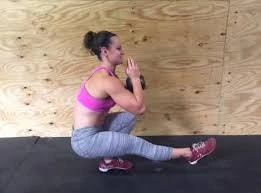
Use the same form as a typical pistol squat, but to enhance core activation, hold a dumbbell or kettlebell to your chest like in a goblet squat, or stretch it out from you. In addition to making strength training more difficult, adding weight can serve as a counterweight and keep you balanced. As your power and control increase, don’t forget to start light and work your way up.
Shrimp squat:
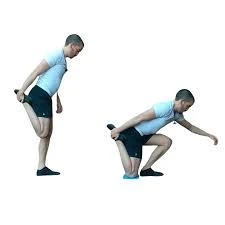
Maintain your weight over your midfoot while balancing on one leg. Reach behind and hold that foot with one hand (or both hands if you’re feeling spicy) while bending your non-working leg back like you’re trying to kick your own butt.
Squat down until your rear knee contacts the floor while bending slightly forward, then push yourself back up to standing. This variation offers a little more stability in the squat than the pistol squat, but people with limited ankle mobility may find it more challenging in the lower range of motion.
Dragon pistol squat:
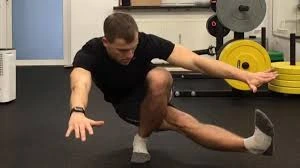
This more complex version focuses on core stability, hip mobility, and balance. To begin, balance on one leg. As you squat down, swing your non-working leg behind and around the outside of your working leg rather than sending it out in front like you would in a typical pistol squat. At the bottom of that deep squat, your arms and non-working leg will be extended in the same direction in front of you, and both knees will be bent.
Pigeon squat:
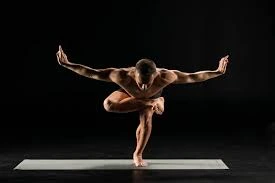
Perform a figure-four stretch by balancing on one leg and crossing your non-working leg over the top. As you progressively lower yourself into a deep single-leg squat, maintain your knee pressed out, lean your chest slightly forward, and stretch your arms in front of you for balance.
Safety & Precautions:
To lower your chance of injury, you should generally ease into pistol squats. As your strength and mobility increase, progressively increase the depth of your range of motion from a tiny starting point. Additionally, grasp onto a support for safety while you focus on strengthening yourself.
It’s okay if pistol squats don’t work for everyone’s training regimen. Pistol squats put more strain on the knee joint, increasing the risk of injury or aggravating pre-existing knee issues. Additionally, they may put more strain on your lower back. Before attempting a pistol squat, speak with your physician or an exercise specialist if you have back or knee pain.
Common Mistakes:
Remind yourself of your core.
To keep your body stable during the exercise, maintain a firm core. You’ll be able to balance and move more effectively and safely as a result.
Keep your standing heel from rising.
Kirra advises keeping the heel of your standing foot on the floor during the entire exercise. If this isn’t possible, place a weight plate or tiny wedge beneath your heel.
Avoid looking around.
To help you balance, identify a focus point and maintain eye contact with it, as you might in yoga balancing postures.
Keep your leg up.
Throughout the entire exercise, keep your non-working leg extended straight out in front of you, parallel to the floor, to preserve good pistol squat form.
FAQs
What are pistol squats good for?
Each leg is isolated to compensate for strength deficiencies.
Whole muscular recruitment range.
Increases the strength of the posterior chain.
Boost overall posterior chain mobility and flexibility.
Increases the ankle joint’s range of motion and flexibility.
Enhances equilibrium.
How many days to learn pistol squat?
Try to work on your pistols for ten to fifteen minutes every day, six days a week, for the next four weeks. Take note of how many reps and sets seem difficult throughout your first week, then work to increase this gradually. Take the chairs away during your last week to measure your pistol squat performance.
Can an average person do a pistol squat?
Yes, but not immediately. Most people haven’t directly developed the mobility, balance, and strength needed for the pistol squat. Your body will adjust before you even reach the halfway point if your hips are uncontrollable or your ankles are too tight.
Do pistol squats strengthen the knees?
Pistol squats can assist in increasing joint stability and lessen the chance of injuries, especially in the lower body, by strengthening the muscles surrounding the knees and hips. To test the strength, balance, and coordination of your lower body, include pistol squats in your training regimen.
Why are pistol squats so difficult?
Strength, flexibility, and balance are the three main factors that determine how tough a pistol squat is. To do a proper one, you need all three. Strength is the most important requirement if you want to be able to raise your body into a standing position with just one leg.
References:
- 5 Benefits of pistol squats – 2025 – Dewar, Dewar/barbend.com/5-benefits-of-pistol-squats/
- The pistol squat is more than just a fitness flex. Here’s why it’s worth your time – April 2, 2024- Mazzo/www.onepeloton.com/blog/pistol-squat
- The ultimate guide for nailing the pistol squat – 2025 – Borchert//repfitness.com/blogs/training/how-to-do-pistol-squats