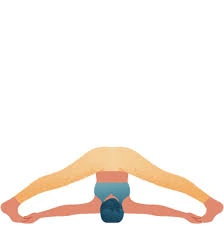
Supta Konasana (Reclining Angle Pose)
What is Supta Konasana?
Supta Konasana (Reclining Angle Pose) is a calming yoga posture that deeply stretches the inner thighs, hips, and groin while promoting relaxation. Practiced in a reclined position, it helps release lower body tension, improves flexibility, and supports the gentle opening of the pelvis. This pose is especially beneficial for reducing stress and encouraging deep, restful breathing.
One of the healing poses you can start your inverted pose practice with is supta konasana. This is the main series of Ashtanga yoga and is an advanced form of halasana (plough pose).
Going back to the original words, “supta” means “reclining” or “sleeping,” “kona” means “angle,” and “asana” means “pose.” It is done while lying on one’s back, as the name makes clear.
Sleeping is linked to resting and replenishing the body’s energy for later. The effects of supta konasana, which strengthens the body from head to toe and rejuvenates the practitioner, are similar.
Muscle work during Supta Konasana:
- Lower Back Muscles
- Core (Abs) Muscles
- Gluteus Muscle
- Hamstrings Muscle
- Hips Muscle
- Neck Muscles
- Pelvic Muscles
- Quadriceps Muscle
How to Perform?
- Stretch your arms and legs straight out on the ground while lying on your back.
- As in halasana, take a breath and swing your legs over your head until your toes contact the ground.
- Lift your arms and grasp the big toes with matching hands that encircle the thumb, index, and middle fingers.
- Holding the toes apart, exhale as widely as you can.
- Breathe deeply while keeping your spine upright and inverted for 20 to 30 seconds.
- Inhale deeply to rock up onto your sit bones while maintaining your grasp on your toes by hovering your legs in the air.
- Breathe out slowly while maintaining your chin on the ground and your legs widely apart.
- Take a breath, raise your chest, and then let go of your toes.
- In dandasana, relax and bring your legs closer together.
Benefits:
Increases the flexibility of the spine: The back muscles are stretched in an inverted position with supta konasana. This permits blood and oxygen to reach the spine. Consequently, the spine is strengthened and given nutrients. As a result, the spine becomes flexible and elastic.
Develop your abdominal muscles: The abdomen contracts as you lie in the supine position and fold your legs past your head. It strengthens the muscles in the abdomen and increases stamina. In the end, this makes the abdominal muscles stronger.
Enhances digestion: In Supta Konasana, the contraction of the abdomen stimulates the internal organs. This helps the digestive organs function more efficiently by encouraging the release of digestive juices and enzymes. Therefore, it helps promote improved digestion.
Tones the legs: Pulling the toes, the legs are widely apart. It strengthens the knee and stretches the hamstring muscles. In the final position, the thighs are engaged while the feet remain flexed, and the quadriceps are clenched. The legs are toned as a result.
Makes the arms stronger: Supta Konasana benefits the arms in addition to the lower body. Additionally, the arms are stretched and held by the toes. Even upon exiting the position, the arms remain extended, and the shoulders are opened as the legs fall to the ground.
Enhances focus: One pose where the head is below the heart is called supta konasana. It gives the brain new blood, which calms the brain. Consequently, it enhances the capacity for concentration.
Preparatory Poses:
- Hand Under Foot Pose (Padahastasana)
- Big-toe Pose (Padangusthasana)
- Wide-Legged Forward Bend (Prasarita Padottanasana)
- Supported Shoulderstand I (Salamba Sarvangasana I)
- Mountain Pose (Tadasana)
- Wide-Angle Seated Forward Bend (Upavistha Konasana)
- Standing Forward Bend (Uttanasana)
Props and Modifications:
- Blanket: When lying on your back, place two or three folded blankets beneath your shoulders. Beyond the blankets are the head and neck. The layered blanket shields the neck from harm when the legs are rolled behind the head.
- Chairs: Take two chairs and position them on either side of your head. Keep them at one hand’s distance away from your head. Land your legs on the chair after rolling them to achieve the posture. If you can’t reach all the way to the floor, it makes the posture possible.
Variations:
Supta Konasana B:
The practitioner lies down on their back in this version. Next, raise the back of the floor by raising the legs and rolling them over the head. Then, rather than grasping the big toes, the arms are extended to grasp the ankles. The subsequent leg-parting steps don’t change.
Supta Konasana Arm Variations:
In this form, the arms remain extended on the floor while the legs are extended behind and reclined on the back. The hands are clasped behind the back and raised off the ground to support the back, while the legs are spread apart.
Precautions:
- Once the legs are behind the head, do not round the back.
- When releasing the position, avoid bending your knees as you return your legs to the floor.
Contraindications:
- If you have neck, back, or leg pain or injuries, avoid doing supta Konasana.
- If you have a slipped disc, stay out of this position.
- This pose must be avoided by women who are menstruating.
- People with severe sciatica should avoid doing supta konasana.
Conclusion:
Break the ice for the inversion poses by engaging in the difficult but beneficial supta konsasana. To land into supta konasana safely, use this practice guide and remember the directions and safety precautions.
FAQs
What are the benefits of supta konasana?
Supta Baddha Konasana, also known as Reclining Bound Angle Pose, is one of its numerous poses that is especially good for stretching the groin and inner thighs. This posture encourages flexibility, relaxation, and general well-being when done in a laid-back, reclined position.
What are the limitations of the Supta konasana?
If you have kidney issues, stay away. If you have inflammatory arthritis, stay away. If you are having trouble breathing, try not to stoop. Avoid if you’ve recently had hip, knee, or spine surgery.
How to Modify the Reclining
Angle Pose?
Support: If your knees or hips don’t reach the floor, place blankets or cushions beneath them.
Knee Bend: If it’s comfortable, gradually straighten your knees after bending them slightly to join your stomach and thighs.
Back Support: To maintain control, use your hands or arms to support your shoulders and lower back.
For Tight Hips: Use folded blankets to support the shin and outer thigh.
How to Perform Reclining Angle Pose?
Place your feet such that their soles touch your pelvis while lying on your back.
As you slowly open your knees to the sides, take a breath, then release it.
With your arms relaxed, place your palms up on your abdomen, chest, or out to the sides.
How long to hold and breathe in supta konasana?
For a restorative practice, hold for up to 20 minutes or five to ten deep breaths.
Breathe rhythmically and deeply, going deeper with every exhale.
References:
- Supta Konasana (Reclining Angle Pose): How to Do, Benefits, Variations – Fitsri Yoga. https://www.fitsri.com/poses/supta-konasana
- Reclining Angle Pose Yoga Pose (Supta Konasana). Tummee. https://www.tummee.com/yoga-poses/Supta Konasana.