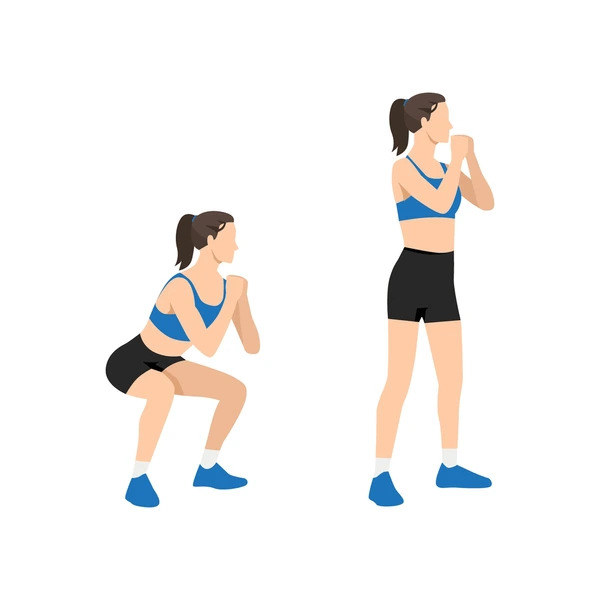
Building Muscular Endurance with Bodyweight Strength Training
Introduction
Building muscular endurance with bodyweight strength training is an effective and accessible way to improve your fitness without the need for equipment.
You can keep in shape at home or on the go with bodyweight exercises, which are full-body resistance training activities. They use your body against gravity to develop lean muscles with little to no equipment.
Similar to an interval workout or circuit training, bodyweight conditioning circuits include aerobic activities like cardio calisthenics that require less strength, so they may be performed for a predetermined amount of time, typically between 30 and 60 seconds.
Depending on your health, fitness level, and strength-training objectives, bodyweight workouts can vary in intensity from low to high.
How to Use Bodyweight Exercises
Walk in place, or step side to side for five to ten minutes as a gentle warm-up. In order to prepare your muscles and joints for higher-intensity exercises, the warm-up aims to increase body temperature, heart rate, and blood circulation.
Depending on your level of conditioning, you can repeat many bodyweight exercises for 30 to 2 minutes. The goal is to smoothly yet swiftly go on to the next exercise, taking a minute or so to relax in between.
You can continue a bodyweight training schedule for as long as you desire, depending on the exercises you do, but try to aim for 20 to 30 minutes each day. Depending on how many exercises you select, that may entail performing a few sets of each exercise.
After you’re done, cool down with basic movement and mild stretching for at least five minutes. Make sure to refresh your body with nutritious calories and stay hydrated.
When performing bodyweight workouts, it’s essential to pay attention to your body. Stop the activity right away and take a break if you experience any pain. Injury can be avoided by paying attention to your body and understanding your limitations.
Bodyweight Strength Exercise
Abdominal crunch

You may get ready for more difficult full-body bodyweight workouts by doing exercises that strengthen your core and target your abdomen. They also assist you in extending the duration of the moves.
Try ab exercises or a 20-minute core workout if your core power is still improving.
Keeping your spine neutral, perform a basic abdominal crunch by lying on your back with your feet flat on the floor and your knees bent. Just behind your ears, place your fingertips on either side of your head. Gently curl until both shoulders are a few inches above the ground.
Keep your head up, avoid pulling on your neck, and avoid tucking your chin toward your chest. For a maximum of two minutes, repeat the crunches.
Reverse crunch

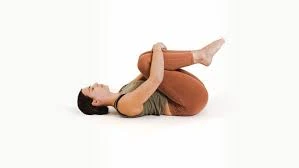
Lie on your back with your hands by your sides for this version of the traditional crunch. While keeping your spine neutral and flexing your hips to a 90-degree angle, raise your legs into the air. Inhale deeply, then as you exhale, raise your hips off the ground and visualize attempting to touch the ceiling with your toes.
To flex your hips past 90 degrees, your knees will gently approach you; however, be careful not to rock. Repeat for up to two minutes after holding for a few seconds. Rest for 1 minute.
Superman

Superman workouts focus on the lower back and abdomen. Stretch your legs out behind you and your arms out in front of you while lying on your stomach. Lift your arms and legs a few inches off the floor, hold them there for a little while, and then drop them.
Keep an eye out for any lower back stiffness or discomfort, as this may be a sign that your limbs are too far off the ground. By raising and lowering the opposing arm and leg, you may even experiment with alternating supermans. Continue for a maximum of two minutes.
Pushup

Pushups are a tried-and-true method of strengthening the upper body and core. If you’re still developing your strength, lower your knees or begin in a plank posture.
With your spine neutral and your abs in, perform four pushups. Lower yourself halfway down and hold the position for four counts on the fifth pushup. Repeat the sequence five or more times for a maximum of two minutes, performing four standard pushups and one halfway down.
Power plank

With your knees parallel and your hands slightly broader than your shoulders, assume the plank posture. To activate your core and keep your spine neutral to prevent dropping your hips or collapsing in your shoulders, pull your abdominals up and in.
To avoid “banana back” when reaching through the top of your head, push into your hands. As you extend through your cervical spine (neck), keep your eyes on the floor or a few feet ahead of you. Try to maintain this posture for as long as you can—ideally, the entire two minutes.
Mountain climber

Running planks, another name for mountain climbers, work the entire body. Put yourself in a sprinter’s start position by starting on your hands and knees.
For up to two minutes, alternately raise each knee to your chest while keeping your hands on the ground and pushing off with the balls of your feet. This is comparable to sprinting in place. Don’t arch your spine; instead, keep it neutral.
Pull-up

A straightforward method for developing significant upper-body strength is the pull-up. Basic equipment, such as a pull-up bar put in a doorway, or some creativity is needed for the pull-up exercise. You might be able to hang out at a bar if there is a playground nearby.
To begin, hang with your arms completely extended overhead. Breathe out as you raise yourself so that your chin is level with the bar. Breathe in as you descend after pausing at the peak. After performing the pull-up five times or more, take a break.
Chair dip

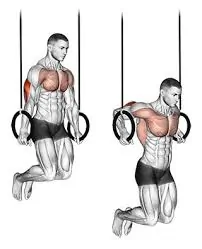
All you need for these triceps dips is a strong chair. With your palms down and your hands holding the chair’s edges, take a seat on its edge. Bend your elbows to a 90-degree angle and slide forward just far enough for your back to clear the chair’s edge.
As you sink your heels into the floor, keep your knees slightly bent. Athletic shoes or bare feet will work best because socks will slip. With your elbows by your sides, contract your triceps and begin sinking. After 30 seconds or up to two minutes of repetition, take a break.
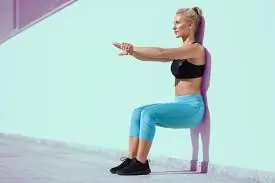
Wall sit

Slide down until your knees are at a 90-degree angle, keeping your feet two feet from the wall and your back against it. For up to two minutes, maintain the posture with your hips parallel to your knees and your spine fixed to the wall.
Wall squat thrust
Wall squat thrusts are an alternative to wall sitting and can be done for up to two minutes. To perform them, turn to face the wall and place your feet a few feet away from it, hip-width apart. For support, extend your arms in front of you and press your hands against the wall.
One knee should be slowly raised a few inches toward your chest before being lowered, followed by the opposing knee. Increase the speed at which you lift your legs and transition your weight onto the ball of your planted foot as you get fitter.
One leg balance/squat/reach
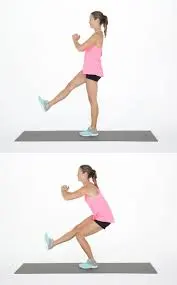
Your balance will be tested,d and your glutes will be stimulated with this dynamic move. Put something on the ground a few feet ahead of you, like a book. After balancing for 20 to 30 seconds while standing on one leg, add a small squat motion.
Reach with one arm and softly touch the object on the floor while squatting even more slowly. Using your core muscles, gradually return to an upright position while keeping your spine as close to neutral as possible. Repeat the exercise on the opposite side after a minute or so.
Jump squat
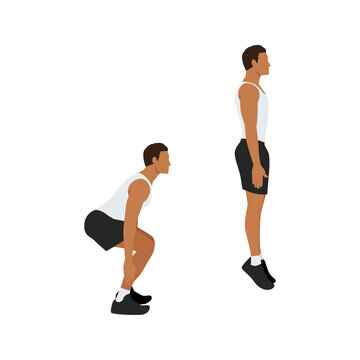
Because of its explosive power that works the lower body and core muscles, the jump squat—also called a squat leap or tuck jump—is a popular bodyweight exercise.
Start with your knees slightly bent and your feet shoulder-width apart. As you contract your quadriceps, glutes, and hamstrings, bend your knees and drop into a squat. To raise your feet off the ground, use your lower body to push off the ground and stretch your legs as you jump a few inches or more.
Control your landing as you descend by dropping to the balls of your feet, then the arches and heels. After that, return to a squat to perform another jump. Keep going for 30 to 2 minutes. Take a minute to relax.
Squat thrust
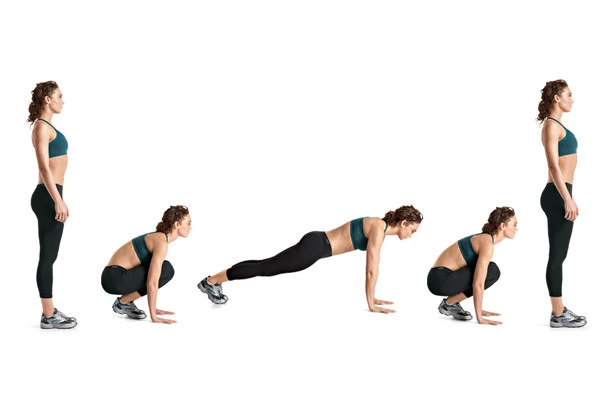
Burpees that train the entire body and raise heart rate are called squat thrusts. As you touch your hands to the floor, lower yourself into a deep squat while keeping your feet slightly wider than hip-width apart.
As soon as you arrive in a pushup position with your body in a straight line after jumping your feet out behind, immediately jump your feet back to where you started. For one to three sets, keep hopping your feet out and back in with rapid yet deliberate motions for up to two minutes.
This explosive action may be made into a burpee version by increasing the intensity by standing up each time you leap, putting your feet back in, and then jumping up.
Jumping jack
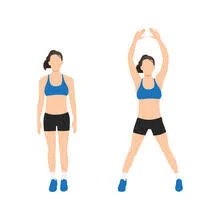
Jumping jacks are an excellent full-body cardio and strength training exercise since they can burn up to 100 calories every minute. You should wear appropriate athletic shoes to maintain your joints because jumping jacks are a high-impact activity.
You might attempt plyo-jacks to up the intensity of your jumping jacks.
Side jump
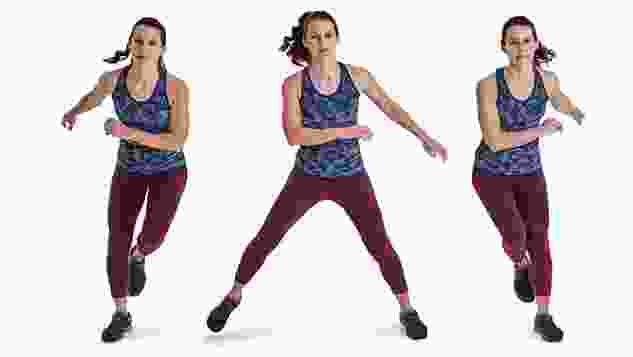
These lateral plyometric kicks boost endurance, power, and agility. Place your feet parallel to one another to begin standing. Leap a few steps to the right, land in a squat, and bend your knees. Draw your feet together and jump back to the left before lowering yourself into another squat.
Keep doing side-to-side leaps. For up to two minutes, use a small object (cone, book, yoga block, etc.) to jump over.
Backward stride

Although it takes some skill, this lower-body bodyweight workout will raise your heart rate. Place your feet together to begin. Raising your arms to shoulder level, take a backward stride while tapping the ball of your foot on the ground with one leg.
Return to your starting position by stepping back and lowering your arms to your sides. Continue with the opposite leg. Increase the speed and continue for up to two minutes.
Jump lunge
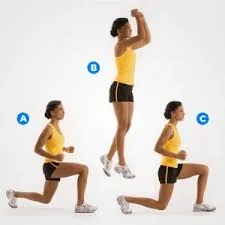
Adding a jump increases heart rate and works the hips, glutes, and thighs. Put one foot forward and one back to begin in the traditional lunge position. To change leg positions, bend your knees more deeply and then fly high.
Make powerful but deliberate motions. For up to two minutes, repeat jump lunges.
Walking lunge

The quadriceps, glutes, hamstrings, calves, and core are all worked during walking lunges. To land in a lunge, start at one end of the room, take a big step forward with your right leg, and bend your knee to a 90-degree angle. Step forward with the second leg to land in another lunge after straightening your knee to stand back up.
Walk lunges should be continued until you cross the room, at which point you should turn around. Continue the bodyweight exercise for a maximum of two minutes by performing walking lunges to the opposite side of the room and then turning around.
Shadow boxing
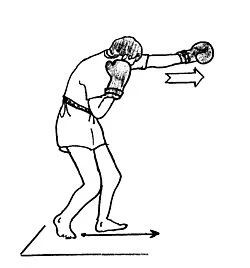
Shadow boxing at home tests balance and coordination while providing cardio and strength training. Keep your knees slightly bent and your feet in place, and concentrate on making controlled movements with air punches while remaining light on the balls of your feet.
Practice all of your favorite boxing moves, including uppercuts and jabs. For additional resistance training, hold light dumbbells or a water bottle in each hand.
Benefits of Bodyweight Exercises
In addition to increasing muscle strength, bodyweight training can enhance endurance, flexibility, speed, accuracy, coordination, stability, and balance. You have complete control over the number of repetitions and the intensity level.
In postmenopausal women at risk for type 2 diabetes, high-intensity interval bodyweight training (HIBWT) has been demonstrated to increase muscle mass, improve insulin resistance, and lower inflammation.
There are also advantages to low-intensity bodyweight exercises. Significant gains in muscular strength and physical function were seen in one study on low-intensity bodyweight training for senior citizens.
Heart-pumping aerobic and strength exercise promotes long-term health and strength. This kind of exercise is beneficial to everyone.3 Bodyweight exercises that don’t require any equipment are a great way to get a strengthening workout whenever you want, whether you’re at home or on the road. Any bodyweight activity, including yoga and Pilates, can be improved with a good exercise mat.
Strength and resistance training are beneficial for everyone, and there is ample evidence that being healthy, fit, and strong helps prevent chronic illness as we age.
FAQs
Can I do strength training with bodyweight?
It’s simple to perform strength training at home. You can utilize ordinary objects like water bottles or weights like dumbbells or resistance bands. Or just utilize the weight of your own body.
What is a bodyweight strength workout?
Exercises that don’t call for weights, such as dumbbells or barbells, are known as bodyweight exercises. Really, this work doesn’t require any equipment. This implies that you can perform these exercises almost anywhere, at any time. Bodyweight training uses your own bodyweight as resistance in place of external resistance.
What are the disadvantages of bodyweight exercises?
Absence of specialist equipment: For some advanced activities, bodyweight exercises could not offer sufficient resistance.
Motivational Difficulties: Some people may struggle to maintain their motivation to work out on a regular basis at home.
How to tell if a muscle is overtrained?
Unusual post-workout muscle discomfort that doesn’t go away with more exercise.
“Heavy” leg muscles, even at reduced activity intensities; incapacity to train or compete at a level previously bearable.
delays in training recuperation.
Performance deteriorates or reaches a plateau.
What is the single best bodyweight exercise?
The ultimate bodyweight exercise is the burpee. Almost all of the body’s muscles—upper, lower, and core—are being exercised. Once you can master this, your cardio will also significantly improve.
Can I build muscle without weights?
Yes, you can definitely build muscle without weights by doing bodyweight exercises, high-intensity training, and progressive overload, which means doing more reps, taking less rest, or improving your leverage. The most important thing is to work out regularly, close to the point of muscular failure (when you can’t do another rep), to encourage growth. For hypertrophy, you should aim for 25–30 reps.
Important Rules for Gaining Muscle Without Lifting Weights
Progressive Overload: Make things harder over time by doing more reps, taking shorter breaks, or doing harder variations.
Time Under Tension: To hurt your muscles more, slow down your movements (for example, have a 3-second lowering phase).
High effort/intensity: Use sets that are close to failure to encourage growth, even if the resistance is light.
Important No-Weight Workouts
Push-ups (decline, diamond, and archer) for your chest and triceps.
Pull-ups, chin-ups, and inverted rows (using a sturdy table or doorway) are exercises for the back and biceps.
Leg exercises include Nordic hamstring curls, Bulgarian split squats, lunges, and pistol squats.
Leg rises, planks, and hanging leg raises make up the core.
What are the benefits of bodyweight training?
Practical. There are advantages to incorporating weight into a workout.
cheap. You truly just need your own body, even though bodyweight exercises can be done in a gym.
Effective.
Adaptable.
unique.
challenge.
Dumbbells and machines can be replaced with bodyweight exercises.
Can weight lifting lower LDL?
According to several studies, resistance training at low to moderate intensities can lower total cholesterol. According to an additional study, weight exercises of all kinds lower total and LDL cholesterol, but HDL cholesterol requires high intensity.
What is the 60-second trick to lower blood pressure?
Deep, controlled breathing exercises are the main part of the “60-second trick” to lower blood pressure. This method helps the parasympathetic nervous system work, which lowers stress and instantly slows the heart rate. Another way is to breathe deeply six times in 30 seconds.
How to Do the 60-Second Breathing Exercise
Sit down comfortably: Find a quiet place, sit up straight, and close your eyes.
Take a deep breath in through your nose and let your diaphragm (belly) expand.
Slowly let out your breath: Breathe out through your mouth slowly.
Routine: Do this for at least 60 seconds or for 5 minutes at a time.
Other “Quick” Ways
The “Thermostat Reset” is a 12-minute routine that is often talked about with this.
Mindfulness and meditation: Relaxing by focusing on your breath.
References
- Davies, D., Hayes, A., & Neudecker, K. (2025, May 7). 32 bodyweight exercises to pack on muscle at home. Men’s Health. https://www.menshealth.com/uk/building-muscle/a756325/10-best-bodyweight-exercises-for-men/
- Davis, N. (2026a, January 3). 30 moves to make the most of your At-Home workout. Healthline. https://www.healthline.com/health/fitness-exercise/at-home-workouts
- Davis, N. (2026b, January 3). 30 moves to make the most of your At-Home workout. Healthline. https://www.healthline.com/health/fitness-exercise/at-home-workouts
- Harvard Health. (2026, January 12). The advantages of body-weight exercise. https://www.health.harvard.edu/exercise-and-fitness/the-advantages-of-body-weight-exercise
- Kamb, S., & Kamb, S. (2026, March 13). Bodyweight workout for beginners (20-minute at-home routine). Nerd Fitness. https://www.nerdfitness.com/blog/beginner-body-weight-workout-burn-fat-build-muscle/
- Lopez, R. (2025, April 30). I’m a Peloton Strength Instructor, and These Are My Favorite Bodyweight Training Moves. https://www.onepeloton.com/blog/bodyweight-exercises
- Physiologist, J. H. C. E. (2026, March 13). Strength exercises. British Heart Foundation. https://www.bhf.org.uk/informationsupport/heart-matters-magazine/activity/strength-exercises
- Simple Body-Weight exercises to build your strength. (n.d.). WebMD. https://www.webmd.com/fitness-exercise/ss/slideshow-bodyweight-exercises
- The Spartan Editors. (n.d.). The 12 best bodyweight exercises for Functional strength. https://www.spartan.com/en/blog/functional-bodyweight-workout