
Proprioceptive Neuromuscular Facilitation (PNF) Technique
Introduction
Proprioceptive neuromuscular facilitation (PNF) is a therapeutic approach that involves stimulating proprioceptors (like the muscle spindle and Golgi Tendon Organs) along with other sensory stimuli (visual, tactile, or verbal) at the start (i.e., during the cognitive phase of motor learning) and progressively reducing them as learning proceeds.
Fundamentals of PNF
Principles are stimuli used in practice and can be either proprioceptive (such as resistance, traction, approximation, and stretching) or exteroceptive (such as tactile, verbal/auditory, or visual). These stimuli are all incorporated into PNF practice, with minor modifications made based on the patient’s condition and treatment objectives.
Visual stimulus: when people can see and track the movement as best they can with their eyes. This encourages feedback, affects head and body movements, and provides some muscles with reflexive support or facilitation.
- Resistance: The therapist applies the ideal amount of resistance based on the patient’s capacity and the treatment goal. Different muscle contractions are produced by varying resistance levels or intensities.
2. Traction is the therapist’s elongation of the trunk or extremities; it is used for all movements except when the pattern may come to an end.
PNF protocols
Irradiation: The spread of stimulus-induced nerve impulses.
Reinforcement: A stronger muscle response will result from more stimuli of higher intensity and greater variety.
The therapist’s shoulders and pelvis should face the direction of motion, while the patient’s position should be determined by their abilities and the goals of their treatment.
Movement patterns are created through coordinated muscle contractions that involve multiple joints in three dimensions, closely resembling natural, everyday functional actions.
PNF Stretching Techniques
- Contract-Relax
Instead of holding the contraction still, the person actively moves the muscle against resistance (an isotonic contraction). For example, during a hamstring stretch, the leg might be pushed downward against a partner’s resistance before being relaxed and stretched further. - Hold-Relax
The person gently contracts the same muscle without moving it (an isometric contraction). This helps activate a reflex that can allow for a greater stretch. After holding the contraction for about 6 to 10 seconds, the muscle is relaxed and then gently stretched again, this time going deeper into the stretch while exhaling.
3. Hold-Relax with Active Movement
In this variation, after the initial isometric contraction, instead of simply relaxing into a deeper stretch, the person actively moves the limb further into the stretch using their muscle effort. For instance, after resisting a stretch, a person might lift their leg higher while a partner helps guide the motion.
These PNF methods can be applied to most muscles and can be performed either alone or with a partner, depending on the setup and goals.
PNF for the following patient populations:
Because of its adaptability, PNF can help a range of patient populations:
1. Orthopaedic Patients: PNF is frequently helpful for people recuperating from joint operations, fractures, and muscular injuries.
2. Athletes: PNF is widely used by athletes to boost muscle strength, enhance flexibility, and support better neuromuscular performance.
3. Pediatric: Cerebral palsy, developmental delays, or neuromuscular disorders.
4. Geriatric: Strength, flexibility, or balance, PNF can support better mobility, increased independence, and overall quality of life.
Extremity patterns
Unilateral patterns come first.
Almost all distal joints move first, and patterns are named based on the proximal joint’s movement. This sequence appears in all patterns and represents typical timing.
For the upper limbs:
The glenohumeral joint’s flexion-adduction-external rotation pattern and extension-abduction-internal rotation pattern make up the first diagonal (D1).

The second diagonal (D2) consists of the glenohumeral joint’s external rotation pattern (flexion-abduction) and internal rotation pattern (extension-adduction).

For the lower limbs:
The (D1):- Hip flexion, adduction, external rotation, and knee flexion or extension, and ankle dorsiflexion.

The D2 diagonal includes movements like extension, internal rotation, flexion, and abduction, while external rotation is paired with adduction.

Scapular and pelvic patterns
The scapula
The D1 scapular pattern involves two main actions, one of which is anterior elevation.
The anterior elevation is typically triggered by a shoulder motion involving flexion, bringing the arm inward and rotating it outward. In contrast, posterior depression is associated with extending the arm outward and rotating it inward.
The D2 scapular pattern includes two distinct movements: anterior depression, where the shoulder blade moves downward and forward, and posterior elevation, where the scapula lifts upward, rotates outward, and pulls back toward the ear.
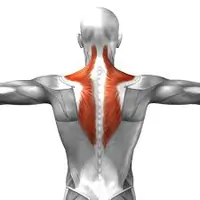
The scapula muscles are connected to the humerus and spine, and they articulate with the thoracic cage and humerus.
The Pelvis
An anterior elevation of the pelvis happens when one side moves forward and upward toward the trunk, while a posterior depression occurs when it shifts backward and downward.
Because their motions rely primarily on trunk muscle actions rather than lower extremity muscles, pelvic patterns do not directly correlate with lower extremity patterns like scapular diagonals do.
To target both the upper and lower limbs, four primary movement combinations can be used.
Symmetrical: We give the person instructions to move both limbs in the same way, such as flexion, adduction, and external rotation for both upper extremities.
Asymmetrical: We ask the student to move one limb through a certain diagonal pattern, like bringing it forward, inward, and rotating it outward, while having the other limb follow a different pattern in the same general direction.
Reciprocal symmetry: We teach the individual to perform a diagonal pattern in one limb and the opposite diagonal pattern in the other limb, such as flexion-adduction both extension-abduction-internal rotation, and internal rotation.
Reciprocal asymmetry occurs when a patient performs a pattern in one limb and then opposes the same pattern in the opposite direction, such as extension-adduction-internal rotation and flexion-adduction-external rotation.
Trunk patterns
To activate spinal rotation, movements involving both sides of the body are performed in asymmetrical ways, as described in the earlier section on bilateral patterns.
- Flexion with rotation to the right,
- Extension with rotation to the left
- Flexion with rotation to the right,
- Extension with rotation to the left,
- Extension with rotation to the right
While the lower trunk moves into flexion when the lower extremities move into flexion, and vice versa, the opposite is also true when both upper extremities move into flexion, which promotes upper trunk extension.
PNF methods
- Agonistic methods:
Initiation of rhythm.
Isotonic combinations.
Replication.
- Adversarial methods:
Reversals.
Stabilisation of rhythm.
- Relaxation methods:
Hold on, calm down.
Contract: Relax.
Objectives for using techniques
- Promoting the initiation of movement
The beginning of the rhythm
Repeated stretches
2. Gaining a motion
Start of the isotonic combination rhythm
Constant contractions
Reproduction
3. Differences in the speed of motion
The start of rhythm reversals
Constant contractions
4. Gaining power
Isotonic combination
Reversals
Stabilisation of rhythm
Constant contractions
5. Increasing steadiness
Isotonic combination
Reversals: Stabilisation of rhythm
6. Boost control and coordination
Isotonic combination
Initiation of rhythm
Reversals
Stabilisation of rhythm
Constant contractions
Replication
7. Boost stamina
Reversals
Stabilisation of rhythm
Constant contractions
8. Expand the ROM
Reversals
Stabilisation of rhythm
Constant contractions
Contract-relax
Hold on, relax.
9. Unwinding
Initiation of rhythm
Stabilisation of rhythm
Hold on, relax.
10. Reduce discomfort
Stabilisation of rhythm
Reversals
Hold on, relax.
Research-Based Evidence
Range of motion for hip flexion: evidence. Both static and PNF stretching are effective methods for improving muscle extensibility and hip flexion range of motion.
PNF therapy is as effective as, or possibly more effective than, other treatments aimed at improving gait speed in individuals with Parkinson’s disease.
Stroke: PNF improves gait parameters and is a successful treatment for stroke patients.
There is little to moderate evidence that PNF helps patients with low back pain (LBP) with their pain and disability, either at the 12-week follow-up or during the short-term (4–8 weeks) intervention.
Conclusion
Both the CR and CRAC techniques of PNF stretching are beneficial in enhancing and preserving range of motion, boosting muscular strength and power, and enhancing athletic performance, particularly following exercise.
Achieving and preserving the benefits of PNF techniques requires regular practice and adherence to the correct approach. There isn’t much empirical evidence to support the four theoretical mechanisms that were put forth as the cause of these benefits. Consistent practice and the correct method are key to effectively using PNF techniques and keeping their benefits over time.
FAQs
What does PNF mean?
Stretching exercises called Proprioceptive Neuromuscular Facilitation (PNF) are used to increase muscle elasticity and have been demonstrated to enhance both active and passive range of motion
What is the principle of PNF?
A core idea behind PNF is that a muscle tends to relax most effectively after a strong contraction. This concept can be used in exercises that target muscles while they’re in a shortened position.
What are the three types of PNF?
Contract-Relax, Hold-Relax, and Contract-Relax-Antagonist-Contract are the three primary forms of PNF stretching. Don’t be intimidated by the names; once you know the methods, using these techniques is very simple.
What are the stages of PNF?
Three steps are included in the PNF stretching techniques: a passive stretch at the beginning, an isometric contraction against resistance, and a final passive stretch. PNF seeks to maximize functional movement patterns by employing this sequence.
What are the benefits of PNF?
improved neuromuscular control, greater muscle strength, range of motion, and flexibility. Additionally, it can enhance general functional ability and help prevent and recover from injuries.
What are the indications for PNF?
It is used to address a range of issues, such as muscle and joint problems, nerve-related disorders, and injuries commonly seen in sports.
References:
- Hindle, K., Whitcomb, T., Briggs, W., & Hong, J. (2012). Proprioceptive Neuromuscular Facilitation (PNF): its mechanisms and effects on range of motion and muscular function. Journal of Human Kinetics, 31(2012), 105–113. https://doi.org/10.2478/v10078-012-0011-y
- PNF Technique, 29 December 2023, https://www.physio-pedia.com/Proprioceptive_Neuromuscular_Facilitation
- Barta K. (2017, July 9). PNF Stretching: A How-To Guide. Healthline. https://www.healthline.com/health/fitness-exercise/pnf-stretching
- Physiotherapy, C. (2024, August 6). Proprioceptive Neuromuscular Facilitation (PNF) | | Blog by CB Physiotherapy, Active Healing for Pain Free Life. cbphysiotherapy. https://cbphysiotherapy.in/blog/proprioceptive-neuromuscular-facilitation-pnf-a-comprehensive-guide-to-techniques-benefits-and-enhancing-mobility-across-patient-populations