
Seal Rows Exercise
Introduction:
Seal Rows Exercise is an effective upper-body strength movement that targets your mid-back, lats, and rear shoulders while minimizing lower-back strain.
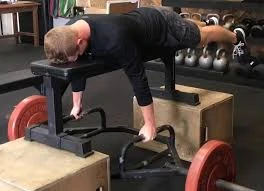
Perhaps you’re wondering why it’s known as the seal row. This is because, like a seal, your legs flap up and down behind you when you go heavy. In the seal row, you lie prone on a weight bench with one leg off the bench and your upper body on the bench. After that, you use your biceps, lats, and upper back to row the barbell.
Muscle Work During Seal Rows:
- Upper Back: The adduction and abduction of the scapula are aided by the rhomboids and trapezius.
- Lats: When you row the barbell in the direction of the weight bench, your lats are firing through shoulder extension.
- Posterior Deltoids: Your shoulders help the lats extend their shoulders.
- Biceps: When you row and lower the barbell, your biceps help your lats and upper back, which also gives you some arm exercise through elbow flexion.
- Glutes: Your glutes must remain isometrically clenched during the exercise to maintain a strong lifting pattern.
How to Perform?
- With your head down one end of a weight bench and your straight legs down the other, assume a prone position.
- To flatten your lower back, squeeze your glutes.
- Your elbows should be stretched out while you hold the barbell in a broad overhand grip.
- Start rowing in the direction of the bench until the barbell contacts the weight bench or your shoulder blades are pressed together.
- After a little pause, gradually lower the plates until they touch the ground. Reset, then do it again.
Benefits:
Improved Form with Your Big 3 Lifts: When squatting and deadlifting, the upper back is essential for maintaining a neutral spine. It keeps it near you while you deadlift and prevents the barbell squat from becoming a nice morning. Additionally, maintaining an engaged upper back during a bench press guarantees a better pressing path for improved form.
Easy on the Low Back: Due to the bench’s support, seal rows primarily relieve lower back strain, allowing you to concentrate on your upper back and lats. If you have trouble with traditional bent-over rows because of your lower back, the Seal row is a great alternative.
Increased Flex Appeal: You are positioned horizontally to work your middle back and lat muscles most effectively. All of the motion needed to isolate the lats and upper back is lost when you lie prone.
Beginner’s Advice:
If you want to vary your rows or if your lower back is giving you trouble, but you still want to make progress, the seal row is a great workout. The Seal row is a simple workout that practically everyone can perform. If you can comfortably lie facedown without receiving compensation, you should try the Seal row.
It’s hard to generate momentum, so reduce the weight until you get the hang of it.
To increase upper back strength for the Big 3 or Olympic lifts, you can use this as your main row variation on days when you’re working on your upper body or as an accessory exercise on days when you’re working on your lower body. Here are some general muscle and strength training sets and repetitions.
- Do three to five sets of eight to fifteen repetitions for hypertrophy.
- Perform three to five sets of four to six repetitions to build strength.
Variations:
Chest-supported Row:
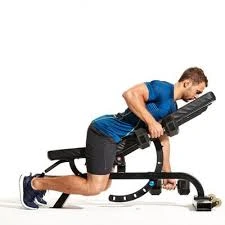
The advantages are the same whether you use a weight machine or a bench and dumbbells. Pulling to minimise momentum keeps your chest fastened to the bench, much like in the seal row. The benefits of the weight bench variant include the opportunity to train the back from multiple perspectives and the flexibility to modify your dumbbell grip for improved muscle growth.
Bat Wing Row:
These are comparable to the Seal row, but you use dumbbells instead of an elevated bench. When performing dumbbell rows, a lot of lifters engage their biceps more than their back, which leaves their upper back wanting more. Both of these issues are resolved by batwing rows.
TRX Inverted Row:

Although the TRX has a few advantages over the barbell variation, any inverted row variation can be used here. If you have any upper-body joint problems, the TRX is a terrific tool since it lets you grasp underhand, overhand, neutral, or anything in between.
Common Mistakes:
Be Aware of Your Setup: The weight bench must be parallel and high enough for you to stretch your elbows completely. Please make sure the bench is securely fastened to any weight plates if you must use them to raise it. Because slipping off the bench is a definite way to end up in a blooper video, make sure there is no side-to-side wobble.
Keep an Eye on Your Elbows: The Seal row does not require a 45-degree angle between your elbow and chest, unlike many other row variations. To concentrate more on the shoulders and upper back and less on the lats, you must have your elbows spread out, parallel to your shoulders.
Don’t Move: Your head and chest have a propensity to move off the bench, which causes your low back to extend. The beauty of the seal row is to remove the lower back from it, so this is a no-no. Making this error causes the upper back muscles to lose attention and gain velocity.
FAQs
What are the benefits of seal rows?
Using a seal row bench on a regular basis helps to strengthen your upper back muscles, which are crucial for better posture. You can lower your risk of back pain and discomfort by strengthening these muscles, particularly if you spend a lot of time using a computer or sitting at a desk.
Are seal rows safe for your back?
Because seal rows eliminate the need to brace the core or maintain a neutral spine, they are particularly beneficial for those with sensitive lower backs or low back problems. They can force their elbows back while lying on the bench and concentrate on bringing their shoulder blades together.
Are seal rows better than bent-over rows?
Your lower back must remain taut for bent-over rows to work. A seal row supported by your chest does not allow your spine to assist in any way. It’s just you against gravity. You will definitely notice a difference in your mid-back.
What muscles do seal rows hit?
Though you recline on a bench parallel to the floor, they resemble barbell rows. By doing this, you may isolate your back muscles and stay away from cheating or exploiting momentum. Although seal rows train a variety of upper body muscles, they primarily target five groups: the lats, traps, biceps, rear delts, and forearms.
What are common seal row mistakes?
Unstable Setup: Ensure that your bench is parallel to the floor and safely raised.
Incorrect Elbow Position: To effectively activate the muscles in your upper back, keep your elbows close to your torso.
References:
- Tomko, J., & McLean, S. (2023, April 19). Why the Seal Row May Be Your Answer for Bigger and Safer Back Gains. Muscle & Fitness. https://www.muscleandfitness.com/workouts/shoulder-exercises/seal-row-exercise-how-to-benefits-variations/
- Tomko, J., & McLean, S. (2023, April 19). Why the Seal Row May Be Your Answer for Bigger and Safer Back Gains. Muscle & Fitness. https://www.muscleandfitness.com/workouts/shoulder-exercises/seal-row-exercise-how-to-benefits-variations/
- Colletta, M. (2025, August 29). How to do seal rows properly (Form & Benefits). Steel Supplements. https://steelsupplements.com/blogs/steel-blog/how-to-do-seal-rows-properly-form-benefits?srsltid=AfmBOorHzER2-nZQZsGtpSYEPWkbExOWfTpN6EW-MC_mt4R25Tna1XxF