
Segmental Breathing Exercise
Introduction
Segmental breathing exercise is a targeted breathing technique that focuses on expanding specific areas of the lungs by applying gentle pressure with the hands, helping improve lung capacity, chest mobility, and respiratory efficiency.
It makes the assumption that a particular lung area may be actively targeted by inspired air.
The method improves the expansion of restricted lung regions by activating the intercostal muscles’ stretch reflex. Frequently used in situations when certain lung segments may be under-ventilated, such as pleural effusion, fibrosis, pneumonia, and post-operative recuperation.
Types of segmental breathing:
Types of segmental breathing:
- Lateral costal expansion
- Posterior basal expansion
- Right middle lobe expansion (lingual expansion)
- Apical expansion
Segmental breathing exercises
Lateral costal expansion
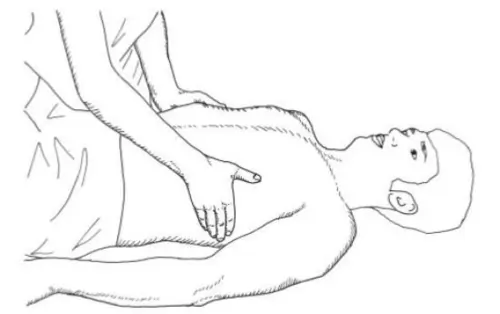
- Position: hook lying position
- To guide the lung’s movement, place your hands along the lateral side of the lower ribs. Breathe out while sitting or lying down, and then feel the rib cage shift inward and downward.
- Exhale, then use your hands for extra pressure. Put your hands in the same position as the therapist’s hands in the image.
Basal expansion

- Position: Sit and lean forward on a pillow
- It highlights the lower lobes’ posterior segments. Bending the hips a little.
- Put little pressure on the ribs. The hand positioning in the picture represents what you should do.

- Position: Sitting position.
- Therapist position: Behind or beside the patient.
- Then apply light pressure to your fingertips while the patient lets out a breath.
- The area should be the collarbone clavicle.
- This technique is used on individuals who have been diagnosed with pneumothorax following surgery.
Right middle lobe expansion (lingual expansion)
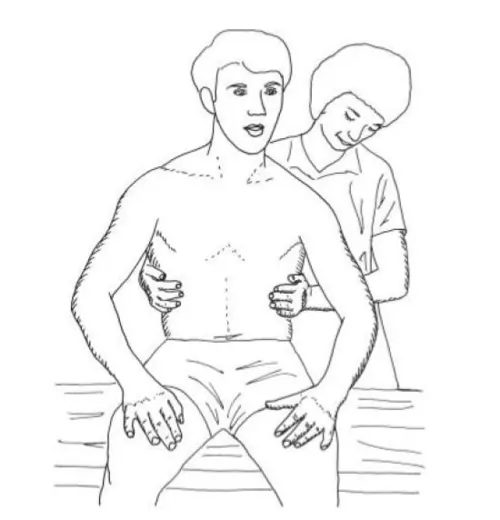
- Position: Sitting position.
- When the patient is seated, the therapist should place their right or left hand below the axilla and urge them to exhale.
- The therapist should then instruct the patient to press their rib cage inward and downward as they decompress.
- This exercise works your external intercostal muscles by stretching your chest in both downward and inward directions. Then, apply normal force to the lower rib cage to stimulate the patient and cause the chest to expand.

- Position: semi-Fowler’s position.
- Hand placement: Upper abdomen
- Therapists give gentle pressure on the stomach.
- Throughout the process, keep the pressure on the diaphragm while you take slow, deep breaths with your nose and release them through your mouth. You can practice these four or five times.
Pursed-lip-breathing

- Position: Sitting position.
- A technique known as “pursed-lip breathing” is gently pressing the lips together while exhaling slowly. In order to cope with periods of dyspnea (difficult breathing), people with COPD frequently adopt this breathing pattern on their own.
- How to do it: (see the video) Take a comfortable position and try to unwind as much as you can. I’ll give you an example of a really simple exercise. You should use your nose for inspiration and then hold and use your lip for expiration.
- You may perform it while seated.
Indications for segmental breathing exercise
- Pneumonia
- Chronic Obstructive Pulmonary Disease (COPD)
- Pulmonary fibrosis
- Atelectasis
- Bronchiectasis
- Post-thoracic or abdominal surgery
- Post-cardiac surgery
- Post-mastectomy
- Prolonged immobility
- ICU-acquired weakness
- Chest wall trauma or scarring
- Pleural effusion or adhesions
- Paradoxical breathing patterns
- Postural dysfunctions affecting breathing mechanics
- Restricted diaphragmatic movement
Contraindications for the segmental breathing exercise
- Severe dyspnea or acute respiratory distress
- unstable state of the heart
- Acute surgical crises or consequences following surgery
- If you have extreme abdominal pain
- Cooperation is impacted by severe cognitive impairment.
- Trauma to the chest wall or rib fractures
- Around the incision or unhealed wound
- The risk of rib injuries during manual procedures due to severe osteoporosis
- Contagious respiratory diseases or active TB
- severe lung tissue or pleural inflammation
Benefits of segmental breathing
- Enhances ventilation in lung segments that are not used.
- Increases lung aeration and expansion, lowering the risk of atelectasis; activates the cough reflex; and facilitates the removal of secretions.
- Increases total pulmonary function and vital capacity.
- Decreases paradoxical breathing and irregular chest movement and improves thoracic mobility, particularly in surgical or scarred regions.
- Strengthens the diaphragmatic and intercostal muscles.
- Promotes mild movement to reduce post-operative discomfort.
- Lessens the oedema and inflammation surrounding the chest,
- Speeds up healing from ailments, including post-mastectomy, fibrosis, and pneumonia.
FAQs
The segmental breathing exercise: what is it?
In fundamental terms, this activity raises your body’s oxygen content. This exercise highlights and promotes movement of the thorax overlaying that lung location, assuming that inspired air can be actively guided to that area.
Which breathing technique is the most effective?
Pranayama is more than just one exercise; it involves several breathing techniques or exercises. The ancient yoga technique of pranayama involves learning to manage your breath. Breathing exercises and relaxation techniques have several advantages, including lowering stress levels and improving focus.
Which exercises increase lung capacity?
Six Breathing Techniques for Excruciating Asthma
Numerous breathing exercises, including deep breathing, sometimes referred to as anulomvilom, are part of our Hindu tradition and are said to enhance lung capacity. Pursed-lip breathing increases breathing efficiency by slowing down airflow, whereas diaphragmatic breathing helps use the entire lung capacity by expanding the diaphragm. Running, swimming, and cycling are examples of aerobic exercises that improve lung capacity and strengthen the respiratory muscles.
Which kind of breathing exercises are the most effective?
Techniques that are intended to rapidly settle your body and mind, such as box breathing, deep belly breathing, and 4-7-eight breathing, might be particularly beneficial when you’re feeling anxious. Equal counts of inhale, hold, exhale, and pause are used in box breathing to provide a constant rhythm that helps calm a racing mind.
What is the breathing exercise for seven seconds?
According to the name of this breathing method, the digits 4-7-8 represent the seconds: inhale, hold, and then exhale. This breathing method lowers your body’s stress level. Practicing breathing exercises daily will help you become a more focused and peaceful person.
Which eight phases of yoga are there?
The Significance of the Eight Limbs of Yoga for Your Practice…
Asana (postures), Pranayama (breath control), Pratyahara (sensory withdrawal), Dharana (concentration), Dhyana (meditation), Yama (restraints), Niyama (observances), and Samadhi (absorption or enlightenment) are the eight steps of yoga, also referred to as Ashtanga (eight limbs) of yoga. These are interrelated components of a holistic practice rather than sequential actions to be followed.
References
- Patel, M. (2022, May 20). Segmental breathing exercise: Procedure, Indication, Contraindication. samrpan. https://samarpanphysioclinic.com/segmental-breathing-exercise/
- Dr.Prof.Satyen. (2020, September 1). Breathing exercises to increase lung capacity. https://www.practo.com/healthfeed/breathing-exercises-to-increase-lung-capacity-42036/post