
Skandasana (Side Lunge Pose)
What is Skandasana?
The Side Lunge Pose, or Skandasana, is a dynamic yoga pose that greatly improves the flexibility, strength, and mobility of the lower body. This position is essential to any hip-opening sequence since it targets the hips, quadriceps, hamstrings, and glutes.
Skandasana is a physically fulfilling and cognitively stimulating pose that challenges balance and stability while offering a deep stretch, whether it is included in a yoga flow or done on its own.
Including Skandasana in your practice enhances general stability and alignment while strengthening your lower body. This dynamic stance enhances body awareness and coordination by encouraging conscious movement. Skandasana improves flexibility and resilience in daily activities by toning and stretching tense muscles as you move your weight from one leg to the other.
Meaning:
“Skanda” in Skandasana refers to a warrior’s position during an attack, and “asana” means “pose.” This pose is devoted to Kartikeya, the deity of war and the oldest son of Lord Shiva. Skandasana’s side lunge pose evokes the idea of a warrior getting ready for battle.
Because of its powerful, assertive stance and connection to martial strength and preparedness, the pose is also referred to as the “pose of the war god.”
Muscle Work During Skandasana:
- Core Muscles
- Gluteus Muscle
- Hamstring Muscle
- Pelvic Muscle
- Quadriceps Muscle
How to Perform?
- Place your feet three to four feet apart and tilt your toes slightly outward.
- With your left leg straight and your toes pointing up, shift your weight onto your right foot and bend your right knee.
- With your left leg extended, make a deep lunge with your right leg while you lower your hips back and down.
- Use yoga blocks or place your hands on the floor in front of you for balance. As an alternative, place your hands at your chest in the Anjali Mudra, a praying pose.
- To keep your torso upright and your shoulders calm, contract your core muscles.
- Keep your breathing calm and concentrate on the stretch in your inner thighs and groin as you hold the pose for a few breaths.
- Repeat the same on the other side after carefully returning to the starting position.
- Return to a standing position with your feet together after practicing on both sides, and pause to observe the pose’s effects.
Benefits:
Increases Flexibility in the Lower Body: The hips, hamstrings, and groin are all extensively stretched during skandasana. Everyday motions like squatting and bending are made easier and more fluid by this enhanced flexibility in these areas, which also serves to improve general mobility.
Enhances Leg Muscle Strength: The quadriceps, glutes, and hamstrings are engaged and strengthened by maintaining the side lunge stance. This enhanced strength lowers the chance of injury by supporting improved posture and stability in a variety of activities.
Enhances Stability and Balance: Your core and stabilising muscles are tested when you balance in Skandasana. Improved stability and balance help improve general body control and are essential for tasks requiring coordination and accuracy.
Increases Hip Mobility: The pose can ease hip tightness and discomfort by opening and stretching the hip joint. Better alignment is supported by increased hip mobility, which also lowers the risk of injuries brought on by limited movement.
Increases Circulation: Skandasana’s dynamic style aids in increasing blood flow to the lower body. Better cardiovascular health and muscular repair are supported by increased circulation.
Boosts Core Strength: Skandasana develops the abdominal muscles by using the core muscles to sustain stability and balance. Better posture, less back pain, and increased functional strength are all supported by a strong core.
Improves Joint Alignment: Skandasana helps to align the knee and ankle joints appropriately when done with the right technique. Particularly for those who have had prior injuries, proper alignment lowers the chance of joint stiffness and discomfort.
Sacral and Root Chakra Balance: Skandasana affects the Sacral and Root Chakra, which are linked to sentiments of pleasure, security, and stability. By practicing the pose physically, you can balance these chakras and improve your sense of well-being and grounding.
Beginners Advice:
- If you have trouble reaching the floor, place yoga blocks beneath your hands for support. This will help with alignment and balance.
- Keep your feet hip-width apart with your toes slightly turned outward, and make sure your bent knee is exactly above your ankle.
- To help stabilise your torso and keep your balance throughout the pose, actively use your core muscles.
Props and Modifications:
- A folded blanket can be placed beneath the heel to support the posture it needs.
- Practitioners might balance the position on the balls of their feet, as if they couldn’t reach there with their soles, to deepen the stretching.
- In order to prevent falls caused by imbalance, practitioners can sometimes lay a block beneath their seats.
Variations:
Bound side lunge stretch pose:
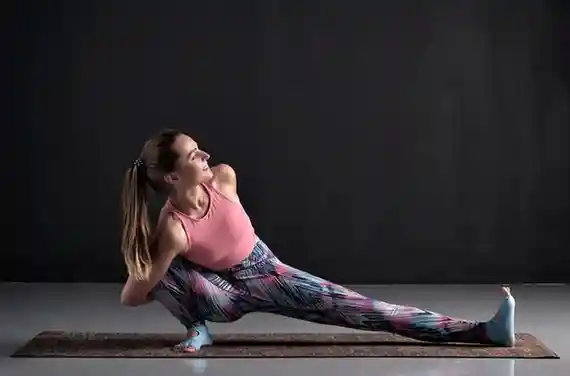
To bound legs and intensify the opposite-leg stretch, this variant of the side lunge stance wraps the arms around the bent leg. To accomplish this:
After completing the above-described side lunge stance, wrap your right hand around the shin bone of your right leg and grasp your left wrist or just your fingers. Keep your eyes on the left and your left foot pointed up.
Standing side lunge with forward bend:
For this variant, straighten your trunk and then bend forward from your waist once you’ve reached the side lunge pose’s final posture. You can place your hands on the floor or on your legs in this position.
Precautions:
- To avoid straining the knee joint, keep your bent knee from extending past your toes.
- To prevent your spine from rounding or compressing, keep your chest raised and your back straight.
- To avoid overtaxing one side and to keep your balance, make sure your weight is spread equally.
- If you are uncomfortable, practice within your range of motion and, if necessary, use props instead of forcing yourself into a deep lunge.
- To preserve alignment and protect the hamstring, keep the foot flexed and the extended leg engaged.
Contraindications:
- Because the deep lunge can strain the knee joint, stay away from the posture if you have recent or ongoing knee conditions.
- If you have hip injuries or conditions that restrict hip flexibility, avoid practicing because it could make your discomfort worse.
- If you have ruptured discs or lower back problems, avoid the pose because it could put too much strain on your lower back.
- The pose can be difficult and may influence your centre of gravity, so avoid it if you are pregnant or have any problems that affect stability and balance.
Common Mistakes:
To get the most out of this stance and prevent strain or damage, steer clear of these mistakes.
Twisting:
Instead of twisting, you should bend forward at the hip joints, keeping them square and in line with the ankles. Don’t twist your knees either.
A bent torso:
Maintain a straight spine and tight abs.
Conclusion:
Side Lunge Pose, also known as Skandasana, is a beneficial addition to any yoga practice, offering substantial advantages for the body and mind. This position improves lower body flexibility, strengthens core muscles, and promotes joint health by focusing on the hips, glutes, hamstrings, and quadriceps. Its dynamic quality enhances stability and balance while encouraging body awareness and mindful movement.
FAQs
Is Skandasana good for beginners?
Lower Back: At the beginner level, performing Skandasana (Half Squat Pose) with yoga blocks for the hips helps to release the lower back by extending the sacrum (lower spine) and gluteus maximus (buttocks).
What are common mistakes in Skandasana?
Do not stoop your back. not using your hamstrings and quadriceps. Don’t twist your hips. Steer clear of balance issues and seek the assistance of your yoga instructors.
Does Skandasana relieve back pain?
It stretches the hips and hamstrings, which can get taut from prolonged sitting or from physical activity like running. Spending a lot of time in chairs causes the hip flexors, a set of muscles, to become tense. Sciatica and back pain can be prevented and relieved by stretching.
What muscles does Skandasana work?
Strengthens Lower Body: Skandasana is an effective practice for strengthening the lower body because it targets the quadriceps, hamstrings, glutes, and inner thighs. Improves Flexibility: This position increases hip and leg flexibility by stretching the hamstrings, adductors, and groin.
What are the precautions for Skandasana?
Similar to Malasana (Garland Pose), there are several contraindications. The practice should be avoided as a precaution against injuries to the knee, ankle, or hip joint. Another contraindication includes damage to the ligaments or tissues of the knees, ankles, or any other portion of the lower body, which should be avoided at all costs.
Is Skandasana good for beginners?
Lower Back: At the beginner level, performing Skandasana (Half Squat Pose) with yoga blocks for the hips helps to release the lower back by extending the sacrum (lower spine) and gluteus maximus (buttocks).
In Skandasana, should the heel be up or down?
To maintain stability and deepen the stretch, the heel of the bent leg is usually kept on the ground during Skandasana. For a more difficult variation, though, you can enhance the stretch by balancing on the ball of your foot or gently lifting your heel.
References:
- Skandasana (Side Lunge Pose): How to Do, Benefits & Precautions – Fitsri Yoga. https://www.fitsri.com/poses/skandasana
- Side Lunge Pose Yoga Pose (Skandasana Pose). Tummee. https://www.tummee.com/yoga-poses/Skandasana
- Ryt, A. P. (2020b, June 16). How to do the side lunge (Skandasana) in yoga. Verywell Fit. https://www.verywellfit.com/side-lunge-skandasana-3567145