
Uttana Shishosana (Extended Puppy Pose)
What is Uttana Shishosana?
Uttana Shishosana, also known as Extended Puppy Pose, is a gentle yoga posture that combines elements of Child’s Pose and Downward-Facing Dog. It deeply stretches the spine, shoulders, and chest while keeping the hips elevated, making it an excellent pose for improving flexibility, relieving upper back tension, and calming the mind.
Stretching the arms and upper back forward while in a four-point position is how it is done. The entire spine is then deeply stretched while simultaneously pressing the glutes back.
This pose’s powerful stretch aims to open the heart and calm the back muscles. In addition to releasing the repressed stress, this enhances blood circulation.
Meaning:
“Shisho” means “puppy,” “uttana” means “intense” or “extended,” and “asana” means “pose” in Sanskrit. The English translation is “Extended Puppy Pose.”
The term comes from the stretched yet relaxed body in this position, which resembles a stretched dog.
The muscles are deeply stretched overall by the forward-extended arms and backward-pushed buttocks. Melting the heart to the ground completes the forward bend. Because “anahata” also means “heart” in Sanskrit, it is also known as the Melting Heart Pose or Anahatasana.
Muscle Work During Uttana Shishosana:
- Arms and Shoulders Muscles
- Lower Back Muscles
- Upper Back Muscles
- Gluteus Muscle
- Knees Muscle
- Neck Muscles
- Pelvic Muscles
How to Perform?
- Start at the top of the table. Make sure your knees are positioned beneath your hips, and your wrist is under your shoulder.
- Take a breath and move your palms forward while maintaining your elbows extended.
- Stretch your lower back by pushing your buttocks behind you.
- Bring your forehead to the floor and lift your upper back as you release the breath.
- Draw your shoulders out while keeping your elbows and armpits raised to open your chest.
- For three to five minutes, maintain the posture while breathing.
- Bring your hips to your heels and move back with your hands to release.
- Take a few deep breaths of relaxation in child posture before rising.
Benefits:
Increases adaptability:
Pulling the upper body forward and pushing the lower back backward is the focus of Uttana Shishosana. This creates a strong stretch by lengthening the entire spine.
In addition to the spine, constant breathing also stretches the muscles in the hands and shoulders. It improves flexibility around the hands and shoulders and relaxes the arms.
Additionally, this pose improves the flexibility of the hamstring and hip muscles. Uttana Shishosana helps improve general posture by simultaneously stretching the upper and lower body.
Activates the muscles of the abdomen:
Stretching the lower back also activates the core muscles. The abdominal muscles are massaged and activated as a result of the abdomen being pushed in.
Enhances blood flow:
Because Uttana Shishosana stretches the shoulders and back while expanding the chest, it is regarded as a heart-opener. The heart rises during intake and falls to the ground during exhale.
This gently works the heart, improving blood flow to the chest and shoulders. Overall, blood circulation is enhanced by this.
Increases the capacity of the lungs:
In this pose, the upper body is stretched and bent as the chest is opened. This improves breathing capacity by enlarging the lungs. Eventually, the respiratory system gets better.
Reduces tension:
In this stance, the upper body is inverted. This improves the brain’s oxygen and blood flow. Additionally, this promotes calmness and mental relaxation. This promotes better sleep patterns and reduces mental stress.
Beginner’s Advice:
Try to maintain the stance for at least three minutes, then progressively extend the duration. While maintaining the posture, try to keep the body motionless. This aids in maximising the pose’s benefits.
Preparatory Pose:
- With your knees below your hips and your wrists exactly below your shoulders, place your hands and knees on the mat.
- Press evenly through your palms while spreading your fingers wide.
- Maintain a neutral spine, neither rounding nor arching, and slightly contract your core.
- Hold while keeping your weight evenly distributed between your hands and knees for a few breaths.
Cat–Cow Pose (Marjaryasana–Bitilasana):
- Start on your hands and knees in the tabletop position, placing your knees beneath your hips and your wrists beneath your shoulders.
- Breathe in while you raise your chest, lower your belly, and look slightly up (Cow Pose).
- Tuck your chin into Cat Pose, draw your navel into your spine, and exhale as you round your spine.
- For five to eight rounds, keep moving while breathing.
Plank Pose (Phalakasana):
- Step back one foot at a time from the tabletop until your body is in a straight line from head to heels.
- Keeping your shoulders over your wrists, forcefully press your palms into the mat while using your core.
- To prevent your chest from collapsing, draw your shoulder blades slightly down your back.
- Hold while breathing steadily for 20 to 30 seconds.
Props and Modifications:
Blanket: While performing Uttana Shishosana, place a folded blanket beneath your knees. This will enable the practitioner to maintain the stretch for a longer period of time without putting undue strain on the knees.
Block: A block can be positioned beneath your head. You can rest your head over the block while you stoop to extend the stretch. Another option is to put a block beneath each elbow. Next, place your hands behind your head, combine the palms, and bend the elbows.
Chair: Maintain a chair in front of you. Once you are in the tabletop position, extend your hand and rest your head and elbows on the chair. Stretch and bend your elbows such that your palms are behind your head.
Variation:
Supported Puppy Pose (Restorative Variation):
In the middle of your mat, place a bolster or two lengthwise, folded blankets.
Place your torso and chest on the bolster as you enter Puppy Pose.
For comfort, place one cheek or your forehead to the side.
Let your arms rest on the ground or next to the bolster.
Extended Puppy Pose (Deep Shoulder Opener):
Walk your hands farther forward from the tabletop until your arms are completely straight.
To keep your upper arms active, raise your elbows.
To make the chest opening more intense, lightly place your chin on the mat rather than your forehead.
Forearms-on-Blocks Puppy Pose:
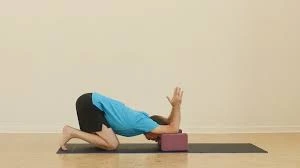
At a medium height, place yoga blocks beneath your forearms.
Keep your palms facing each other and your elbows shoulder-width apart.
Without using any force, softly lower the chest towards the mat.
Thread-the-Needle Puppy Pose:
Put your right arm, palm up, under your left arm in the typical puppy pose.
Place your right ear and shoulder on the mat.
To make the twist deeper, lightly press into your left palm.
On the opposite side, repeat.
Wall-Supported Puppy Pose:

Place yourself two feet away from a wall.
Walk backward while hinging at the hips after placing your palms shoulder-high on the wall.
Allow your torso to descend towards the floor while maintaining your hips stacked over your feet.
Precautions:
- Start by warming up with easy exercises like seated shoulder rolls or Cat-Cow. Warm muscles are less likely to be strained.
- Feel free to use props: This position can be transformed into a healing stretch by placing blocks, bolsters, or cushions beneath the head, forearms, or chest.
- Move slowly and mindfully: Never lower your chest too rapidly; instead of pushing flexibility, concentrate on breath-led extensions.
- Continue breathing: Tension in the upper body results from holding your breath. To safely deepen, take long, relaxing breaths.
- First, avoid extended holds: Start with three to five deep breaths, then progressively increase as comfort increases.
Contraindications:
- Shoulder Pain or Injuries: The deep shoulder stretch may make impingement or rotator cuff tears worse.
- Neck Sensitivity: Use a folded blanket to support the head if lowering the chin or forehead causes the neck to feel squeezed.
- Recent Surgery or Knee Pain: It could be uncomfortable to bear the weight on bent knees.
- Severe Lower Back Pain: In this position, using your core is essential. Before practice, speak with a teacher if you have trouble maintaining neutral spine support.
- Hip Replacements or Tightness: To avoid putting too much strain on the joints, keep the hips up and avoid overextending.
- Blood pressure balances or vertigo: Some people may feel lightheaded from the slight inversion; always put comfort first and rise carefully.
FAQs
Is Puppy Pose good for beginners?
Indeed! One of the best yoga poses for beginners is the puppy pose. Without demanding extreme flexibility, it provides a mild stretch for the chest, shoulders, and spine. For added comfort, beginners can always use props like a folded blanket or bolster beneath the chest.
What are the main benefits of Puppy Pose?
Puppy Pose relieves stiffness in the upper back, enhances posture, and calms the mind. It is particularly beneficial if you spend a lot of time at a desk because it expands your shoulders and chest. It is also grounding for many practitioners in terms of lowering stress and anxiety.
Is Puppy Pose safe for your back?
Yes, as long as it is done mindfully. To preserve your lower back, contract your core and avoid lowering your ribs to the floor. Practicing under a qualified yoga instructor guarantees correct alignment and safety if you already have back discomfort.
How long should you hold Puppy Pose?
As your body permits, progressively increase the number of slow breaths from the initial three to five. Maintaining a steady, relaxed breath and avoiding any effort is more important than duration. For a more profound effect, you can gradually hold for up to a minute.
What makes Child’s Pose different from Puppy Pose?
Although they are both gradually forward bends, their objectives are different:
Puppy Pose stretches the shoulders and upper back by keeping the hips above the knees.
Child’s Pose eases tension in the lower back by placing the hips on the heels.
They work well together in a harmonious practice.
When should you avoid doing Puppy Pose?
Stay away from or alter if you have:
Shoulder injuries
Pain in the knees
Severe back discomfort
Problems with vertigo or hypertension
Always pay attention to your body and seek advice from a yoga instructor when in question, particularly if you’re new or recovering from discomfort.
References:
- Uttana Shishosana (Extended Puppy Pose): Meaning, Steps, & Benefits – Fitsri Yoga. https://www.fitsri.com/poses/uttana-shishosana
- Allen, W. (2025, October 27). Uttana Shishosana. https://myyogateacher.com/yoga-asana/uttana-shishosana
- Extended Puppy Pose Yoga Pose (Uttana Shishosana ). Tummee. https://www.tummee.com/yoga-poses/Uttana Shishosana.