How to Do the Butterfly Stretch?
Introduction
Butterfly Stretch (also known as Baddha Konasana) is a simple and effective stretching exercise that targets the inner thighs, hips, and groin muscles. It helps improve hip mobility, reduces stiffness, and promotes relaxation, making it ideal for warm-ups, cool-downs, and daily flexibility routines.
- Also called: seated butterfly stretch, seated groin and inner thigh stretch.
- Targets: lower back, hips, groin, and inner thighs
- Level: Beginner
Stretching the inner thigh and groin while seated is called the butterfly stretch. It is an excellent stretch for runners, athletes participating in field or court sports, and anyone with a history of groin injuries or tight hips. Additionally, it functions as a warm-up stretch to help you become flexible enough to perform splits. After a lower-body workout or an exercise like running, you can perform this stretch.
What muscles does a butterfly stretch work?
Your inner thighs and hips are the main muscles worked by the butterfly stretch. Additionally, it’s an excellent exercise for decreasing pelvic muscle tension. You may experience less back pain and find it easier to perform tasks like climbing stairs and getting in and out of a car as you stretch and stabilize these areas.
How to Do the Butterfly Stretch?

Step 1: Starting Position: Take a seat and fold your legs in front of you. Place your hands on the tops of your feet while sitting upright (trunk vertical) with your head in line with your spine.
Step 2
Then, slowly bend forward from your hips while lowering your elbows to rest against the inside of your thighs and pushing them downward. Try to keep your head in line with your spine, avoid rounding your back toward the ceiling (that is, start from your hips rather than your lower back), and keep your back flat. Your inner thighs should stretch as a result.
Step 3
Keep pushing down until the stretch becomes tight, but avoid bouncing or pushing until it hurts. After holding this position for 15 to 30 seconds, relax by going back to your starting position and repeating the exercise two to four times. To maintain this position, you can choose to hold onto your ankles.
Step 4 Exercise Variation: To make this stretch more dynamic, move carefully and gradually for one set of five to ten repetitions, holding the stretched position for one to two seconds.
Stretching only to the point of tension, avoiding bounding, and controlling movement at other body segments are often crucial to maximizing the benefits of a stretch and lowering the risk of injury.
Tips for tight hips
You’ll find it easier to do the butterfly stretch if you follow these tips:
- It’s essential to gradually loosen your hips, particularly if they’re extremely tight. Be kind and progressively increase your flexibility.
- Don’t bounce or push yourself past your comfort zone; instead, move slowly and gently.
- Make sure your hips, pelvis, and sitting bones are all equally balanced. Adjust your body if you notice that you are shifting to one side.
- You can put blocks or cushions under your knees or thighs if they are quite high off the ground. Don’t push or force your knees down; instead, let them drop naturally as your thighs relax.
- If you have a knee or abdominal injury, proceed with caution. As mentioned above, use support between your knees and outer thighs.
- In particular, if you have tightness, sit with support. To make a seat, combine blocks, cushions, and folded blankets. To deepen the stretch, place your pelvis forward and place your sitting bones on the edge of this seat.
- Make an effort to breathe in and out slowly, deeply, and for a long time. You’ll be able to go deeper into the stretch as a result.
Modifications and Variations
You can perform this stretch in a variety of ways based on your needs.
Put your back to the wall.
Sitting with your back against a wall will help you maintain a straight spine.
Twist to the left
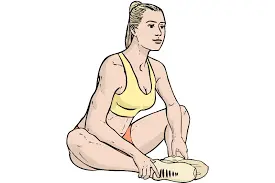
Put your left hand behind your back and your right hand’s back against the outside of your left thigh to add a twist. Alternatively, turn in the opposite direction.
Hinge at the hips
Fold forward by hinging at your hips to perform a forward bend. Place your hands on a block or the ground. Another option is to press your elbows into your inner thighs or calves while placing your arms on your legs and your hands on the outside of your feet.
Invert your seat
As if you were “sitting” on the wall, perform the stretch with your legs pressed against the wall.
Add shoulder stretches
Simple exercises like shoulder rolls, shoulder shrugs, cross-arm stretches, and cow face pose can help reduce shoulder tightness. Additionally, you can perform Reverse Prayer Pose with your palms together behind your back or cross one arm over the other while reaching for opposing shoulders.
Lie back
A helpful variation is the reclined butterfly pose. To expand your chest, place a block or pillow beneath your upper back.
Need a Modification?
- Make sure you are not rounding your lower back if you have lower back problems. Lean forward from your hips instead.
- Put your feet farther away from your body to reduce the strain on your knees. Another option is to support the outer thighs with a blanket.
- Another option is to begin with a half butterfly stretch. For the stretch, extend one leg and move one foot at a time toward your abdomen.
Up for a Challenge?
Moving the feet closer to the belly is the first thing you can do to get more of a stretch from the butterfly.
Leaning forward at the waist will allow you to stretch your hips and back more deeply as your flexibility increases. Breathe out and bend forward, keeping your back flat and letting your chest drop as near to the ground as you can.
For a more difficult stretch, raise your feet with a yoga block or a few books, then perform the forward bend while leaning from your waist.
Common Mistakes
If you don’t take certain precautions, you can injure yourself while stretching, just as you can when participating in sports and other activities.
Bouncing
Instead of lengthening the muscle, bouncing during a stretch can pull on tendons and muscle insertion points. The stretch’s goal of lengthening and relaxing the muscles to increase the adductors’ flexibility is defeated by bouncing. When stretching, move slowly and smoothly.
Pressing Down Forcefully
Avoid applying a lot of pressure. Similar to bouncing, this can put undue strain on the tendons, ligaments, and insertion points, increasing your risk of injury or overstretching.
Holding Your Breath
When stretching, avoid holding your breath. The breath can help you pull more as a yoga instructor. Breathe in while relaxing and exhale when you start working.
Benefits
The inner thigh adductor muscles become more flexible with the butterfly stretch. Your legs are drawn together by these muscles. They support your ability to stay balanced and stable. The hips, which can get tense from prolonged sitting, are also opened by the butterfly stretch. Pregnant women should do this stretch.
It may prevent your hips from overuse injuries from walking, running, or cycling, and is an excellent choice for people who spend a lot of time sitting or standing.
The butterfly stretch works your inner thighs, knees, abdomen, and hips. Your posture can be improved by strengthening your back muscles and loosening up these body parts.
It might be time to get on the floor and begin gradually releasing contracted muscles to allow for relaxation and release if you experience tightness in your hips or hamstrings.
Additionally, this stretch has been used to improve menstrual discomfort, increase circulation, stimulate digestive organs to improve digestion, and treat erectile dysfunction.
The pose helps to improve range of motion, promote flexibility, and lessen pain by focusing on the muscles of the thighs, hips, and lower back.
All things considered, Butterfly Pose has a calming, relaxing effect on the body and mind and may help increase your energy level. Additionally, it might assist in releasing emotions that have been stored in your hips and surrounding tissues.
While in the pose, concentrate on deep breathing or engage in a breathing exercise to intensify these stress-relieving benefits.
There is a lot of research on yoga routines that incorporate the Butterfly Pose, but not much on individual yoga poses. Keep scrolling to learn about some recent studies on the advantages of incorporating Butterfly Pose into your yoga practice.
- Enhances pelvic health
A therapeutic yoga program for women with continuing pelvic pain was developed in a small study. 12 yoga poses, including Butterfly Pose, were taught in the twice-weekly yoga classes that the women attended. The women were instructed to do one hour of yoga at home each week. - The women’s pelvic pain and its effects on everyday activities, emotional health, and sexual function decreased after six weeks.
- Improves mindfulness
Butterfly Pose can help you increase inner awareness and get your body ready for prolonged sitting during meditation. You can practice sitting with onset sensations, such as discomfort and restlessness, by maintaining the posture for extended periods of time. - Another small study found that participants in a 6-week program that included a 60-minute aerobic yoga class and a 30-minute guided meditation session significantly improved their mindfulness skills and reduced their levels of stress and anxiety.
- Eases stress
Butterfly Pose can help you feel better overall by releasing tension in your inner thighs, hips, and lower back. Additionally, it may have a calming, relaxing effect that aids in stress management and release. - A recent review of studies found that most forms of yoga help people in good health reduce stress.
- Reduces depression
As part of a yoga practice, Butterfly Pose may help elevate mood and lessen depression. - According to a small study, yoga may help people with mild to moderate major depression feel less depressed. Individuals who attended 90-minute Hatha yoga sessions twice a week for eight weeks had considerably less severe depression.
- Improves Hip Mobility and Flexibility
Work the inner thigh adductor muscles and improve hip range of motion. - Some degree of hip flexibility is necessary for everyone. Some people may need to focus more on their hips than others, including some athletes and fitness enthusiasts. For example, hip flexibility is essential for everything from yoga to cycling and running. Therefore, you may improve your performance in these modalities by regularly performing the butterfly stretch.
- Butterfly pose is beneficial for any athlete who frequently contracts their inner thighs and hip flexors. Consider runners, rowers, walkers, and cyclists. Ironically, the exercise can also help those who are confined to a desk and have little mobility during the day.
- Relieves Tension from Sitting
Tight hips and inner thighs can cause stiffness and discomfort in desk workers and/or people who spend a lot of time sitting down. Fortunately, the butterfly stretch is an excellent remedy for stiff, shortened muscles that need to become more flexible. - “The butterfly stretch gently opens the hips and improves circulation to counteract tightness from prolonged sitting.”
- Eases Lower Back Pain
“I enjoy that the butterfly pose is a lower back-supporting and restorative pose.” - Lower back strain and tight hips frequently overlap. But by lengthening the inner thighs, improving pelvic positioning, and loosening the hips, this pose relieves mild low back pain and lumbar spine tension.
- Calms Your Nervous System
- Forward folds are a great way to relax both your body and your mind. Bending forward [in a butterfly stretch] helps lower the heart rate and reduce stress,”
- Reduces Menstrual Pain
- Some people may be surprised by this benefit of the butterfly stretch. “If you are having menstrual cramps, this is a great posture to practice because it gently compresses your internal organs.”
Note: Exercise during your period may help you feel happier, have a lighter flow, and experience fewer cramps. However, if your menstrual symptoms cause pain or discomfort, you should listen to your body and reduce the intensity—or just choose to rest.
- Strengthens the Pelvic Floor
Additionally, the butterfly stretch may help your pelvic floor muscles become stronger. Engaging your root lock (Mula bandha), or contracting your pelvic floor muscles, during this pose may help you achieve the best results. - According to a 2021 study of 50 women that was published in the Journal of Ayurveda and Integrative Medicine, pelvic floor strength was effectively reinforced by 12 weeks of yoga therapy using Mula bandha work. The authors concluded that pelvic floor dysfunction could be avoided with this kind of yoga therapy.
- Facilitates Injury Recovery
The butterfly stretch may be part of your rehabilitation regimen if you are healing from hip or groin injuries. When done correctly, the pose aids in reducing stiffness and restoring mobility. - If you are recovering from an injury such as an abdominal strain or hip bursitis, consult a physical therapist to ensure that this stretch is suitable for your treatment plan.
Aids Cooldown
- “The butterfly is a great low-impact stretch for post-workout cooldowns, helping muscles recover after intense activity like cycling or weight training.” Remember that adding a forward fold to your butterfly stretch will lower your heart rate and allow you to safely end your workout.
Benefits of practicing the Butterfly Pose during pregnancy
- Throughout your pregnancy, you can safely incorporate Butterfly Pose into your prenatal yoga practice. It improves flexibility and encourages relaxation by releasing tension and tightness in your inner thighs, hips, and lower back.
- Additionally, the posture strengthens and improves circulation in your pelvic floor muscles. These advantages could facilitate a smooth delivery and help you physically get ready for childbirth.
- Prenatal yoga may also improve immunity and emotional health while lowering stress, anxiety, and depression, as well as the pain response.
Safety and Precautions
Your muscles will stretch, but you shouldn’t experience any pain—discomfort is normal and acceptable, but not pain. Let go of the stretch if you experience any pain. Consult your physician or physical therapist about whether you should perform this stretch if you have suffered a knee or groin injury.
FAQs
What is the butterfly stretch good for?
Enhances Flexibility and Mobility: Improves hip range of motion by deeply stretching the pelvic floor, hip flexors, inner thighs, and groin.
Reduces Back Pain: Loosens tense hips that may be causing tension in the lower back.
Reduces Stress and Encourages Calm: Promotes relaxation, calms the nervous system, and calms a racing mind.
Enhances Circulation: Boosts blood flow to the abdominal organs and pelvic region.
Helps with digestion by stimulating the organs in the abdomen, which may help with constipation.
Supports Women’s Health: It helps prepare for childbirth during pregnancy and can ease menstrual discomfort and menopausal symptoms.
Improves Posture: Encourages a straight spine, which can help with standing and sitting posture.
Beneficial for Active Lives: Prevents overuse injuries by relaxing the muscles used in exercise, cycling, and running.
What happens if you do the butterfly stretch every day?
Regularly performing the butterfly stretch can increase your hip’s range of motion, which is beneficial for a variety of physical activities, including daily movements and sports.
Does butterfly exercise reduce belly fat?
How it reduces belly fat:
Boosts Metabolism: Your body can burn calories more effectively if it raises your metabolic rate.
Reduces Stress: It reduces cortisol, a stress hormone associated with the storage of belly fat, by calming the nervous system.
Enhances Digestion: By gently stimulating the organs in the abdomen, digestion is improved, and weight management is supported.
Improves Circulation: Increased blood flow to the core and pelvis promotes general health.
To reduce fat as much as possible:
Incorporate Cardio: Include exercises like jumping jacks, swimming, and running.
To strengthen your core, combine it with exercises that work your abdominal muscles directly, such as planks or seated crunches.
Keep Your Diet Healthy: For fat loss, a calorie deficit is essential.
Maintain Consistency: Regular practice, even with mild motions, has an impact.
Who should not do the butterfly pose?
If you have any kind of knee injury, such as a torn ligament, worn-down joints (where the lubrication between the joints has worn out), or rheumatoid arthritis. Additionally, this pose should be avoided by students who have had hip, ankle, or knee surgery.
What emotions are trapped in the hips?
Emotions associated with fear, anxiety, sadness, and trauma are frequently stored in the hips. Yoga provides a potent means of releasing these repressed feelings because of its emphasis on hip opening and mindfulness.
How long should I hold a butterfly stretch?
30 to 60 seconds
To sit up straight, grip your ankles or feet. Aim to get your feet as close to your glutes as you can. Hinge at the hips to gently lean forward while maintaining a straight back. Hold for 30 to 60 seconds.
Which yoga is best to reduce thigh fat?
Strength and Toning Poses: Chair Pose (Utkatasana): This pose works the thighs, hamstrings, and glutes by having the hips back like a chair.
Virabhadrasana I and II, or Warrior Poses, strengthen and tone the legs, hips, and glutes; Warrior II focuses on the inner thighs.
Dancer Pose (Natarajasana): Stretches and strengthens the thigh muscles of the standing leg while balancing on one leg.
Bridge Pose (Setu Bandhasana): Strengthens the lower back and tones the thighs and buttocks.
Boat Pose (Naukasana): Works the hip flexors, thighs, and core.
Triangle Pose (Trikonasana): Provides a leaner appearance by strengthening and stretching the thighs, hamstrings, and groin.
Hip and Flexibility Poses: Pigeon Pose (Eka Pada Rajakapotasana): This pose deeply stretches the hip flexors, glutes, and inner thighs.
Garland Pose (Malasana): Opens the hips and strengthens the thighs and ankles.
Baddha Konasana, or Butterfly Pose, opens the groin and inner thighs.
What is the number one exercise for aging?
Walking, swimming, and indoor cycling are examples of lower-impact activities that are beneficial for senior citizens. Apart from the advantages for heart health, “As we age, walking is a great weight-bearing exercise to build bone density.”
Can butterfly stretch relieve back pain?
It has been demonstrated that static stretches, such as the butterfly exercise, that relax the muscles surrounding your hips can relieve tightness and lessen lower back and hip pain.
Is the butterfly stretch good for seniors?
Stretch like a butterfly. A traditional method for increasing flexibility and relaxing the hip joints is the butterfly stretch.
References
- Butterfly Stretch. (n.d.). [Video]. Hingehealth. https://www.hingehealth.com/gb/en/resources/articles/butterfly-stretch/
- Cronkleton, E. (2020, January 17). How to do a better butterfly Stretch. Healthline. https://www.healthline.com/health/butterfly-stretch#steps
- Human Kinetics. (n.d.). Butterfly stretch. https://us.humankinetics.com/blogs/excerpt/butterfly-stretch?srsltid=AfmBOorVRE-Ew8F81TzEB-nlQ68Jymadbfzj_7Ut6awS7X2lLvwPvn2M
- Ms E. Q. (2019, July 9). How to do the butterfly stretch. Verywell Fit. https://www.verywellfit.com/seated-groin-and-inner-thigh-stretch-3120294
- Pohlman, D. (2024, August 7). Butterfly Stretch for beginners and men | A Step-by-Step tutorial. Man Flow Yoga. https://manflowyoga.com/blog/butterfly-stretch-for-beginners-and-men/
- Ross, M. (1970, January 1). Tight hips? Try the butterfly stretch to relax your lower body. https://www.onepeloton.com/blog/butterfly-stretch
- Upper leg Exercises | Seated Butterfly stretch. (n.d.). https://www.acefitness.org/resources/everyone/exercise-library/216/seated-butterfly-stretch/?srsltid=AfmBOopBYJeWohL1zM8UhHSqxKYjV3WUl2mLcmTGtllllJgz5i7CdNqX