
Best Exercises For Posterior Pelvic Tilt
Introduction
If someone has a posterior pelvic tilt, their pelvis tilts backward. As a result, the lower spine’s natural bend is diminished, and the front of the pelvis is raised. Furthermore, a pelvis that is inclined posteriorly rotates upward.
A person’s body shape or structure might cause a posterior pelvic tilt. To put it another way, some people’s pelvic bones naturally lean backward from birth. Muscle length is also important. The combination of tight hip extensors and long hip flexors can bring about a posterior pelvic tilt.
Posterior pelvic tilt exercise video
Exercise to Correct Posterior Pelvic Tilt
These exercises can help fix your posterior pelvic tilt:
Leg Lunges

- Get into an upright position, spreading your feet to shoulder-width, and put your arm on pelvis.
- Tighten your core, put your hands on your hips, and take a step forward with one foot.
- Bend your knees into an L-shape.
- Your front leg do most of the work, and just use your back leg to steady yourself.
- Perform three sets of lunges.
- Repeat the movement on other side.
- Do 10 to 15 repetitions.
Static Hamstring Stretch

- Take a seat on a stable chair and extend one of your legs forward.
- Allow yourself to lean forward from your hips, keeping your back nice and flat.
- Your limit of bending ends when you feel the stretch in your upper leg.
- Hold for ten to thirty seconds.
- Other leg, same move.
Superman Exercise

Superman Exercise Steps:
- Adopt a prone position.
- While keeping the knee fully extended, extend the upper limbs anteriorly.
- Maintain cervical alignment while simultaneously elevating all four extremities.
- Only go as high as you need to feel your lower back muscles working.
- Activate your glutes, tighten your core, and lift through your upper back—contract it all together.
- Gradually pull your navel up away from the floor to contract your core muscles.
- Maintain the position for 2–3 seconds while continuing to breathe smoothly.
- Lower yourself onto the mat.
Cobra Stretch
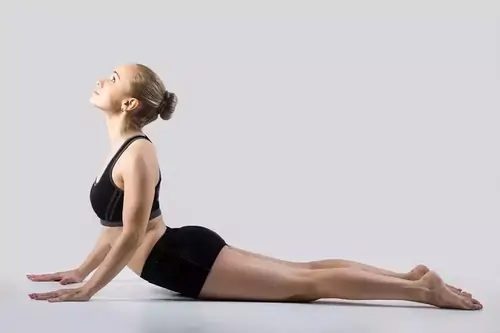
- In the Prone Position, keep your legs outstretched and your feet pointed and toes touching the floor.
- Extend your toes, align your legs with your hip joints, and inhale deeply for the next step.
- Gently push yourself upward, bend your elbow slightly.
- Arch your back for a light stretch.
- Hold yourself up with your hands and wrists for 15 to 30 seconds, remembering to avoid locking your elbows.
- Breathe slowly and deeply, continuously, during the pose.
Foam Rolling For Calves

- To initiate this exercise, assume a seated position, after that put the roller directly below your calf muscle.
- Move the foam roller slowly over your calf, focus on any regions that appears very stiff or tight.
- Keep rolling this spot for around half a minute.
- Change your legs and repeat the motion.
- Engage your thigh muscles with this same effective stretching motion,promoting their flexibility.
- Apply pressure by rolling the foam roller under the gluteal muscles, continuing down the posterior thigh.
- Roll, then stop and press on any tender spots.
- Change legs and repeat.
Glute Bridge

- Assume a supine posture. Flex the knees, ensuring the plantar surfaces of the feet are in complete contact with the mat.
- Open your toes to a 45° angle and don’t let them fall inward or outward.
- Use your feet for lift your hips. You should feel a significant tension or fatigue in your outer thighs while performing this exercise.
- During this exercise, make sure your knees never go past your toes.
- Lower your hips slowly and steadily toward the floor, ensuring controlled movement to avoid strain. This concludes one repetition.
- Complete 3 rounds, either by holding for 30 seconds each or performing 15 repetitions per set.
Slouch and Straighten

- sit erect in a hard chair.
- To ensure maximum stability, your feet must be parallel, flat on the ground, and positioned at hip-width.
- Bend your knees at 90 degrees and rest your hands either on your thighs or clasped together.
- Maintain the slouched position for an approximate duration of 2-3 seconds.
- Make sure your head remains in line with your shoulders as you sit upright.
- Gently activate your core and glutes to help maintain an upright posture.
- Repeat the cycle 10 to 12 times.
Straight Leg Raise

Straight Leg Raise Steps
- Lie down on your back.
- Extend one leg completely and bend the other knee in an L-shape.
- Stabilize your knee first, then raise your leg straight up slowly and with control.
- Try to hold it there for five to ten seconds once you reach the top, and then slowly lower your leg.
- Do this 8 to 10 times.
Toe Touch

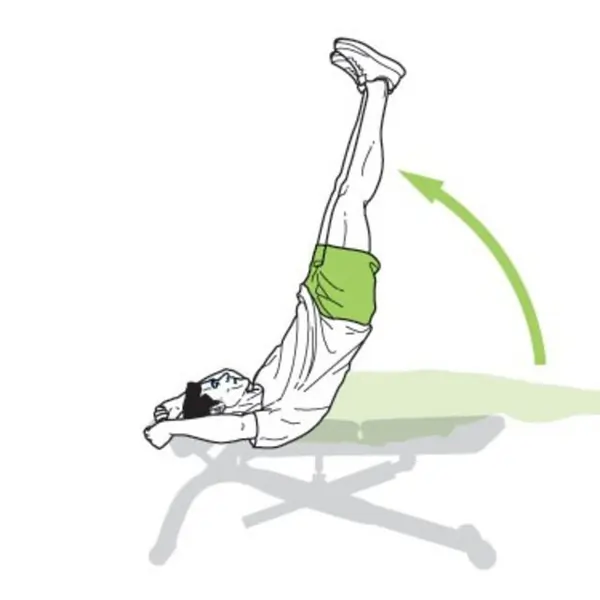
- Start by lying on your back.
- Elevate both legs vertically until they are aligned, stable, and fully extended.
- Stretch both arms forward.
- Maintain their straight alignment and adjust them to be parallel with your elevated legs.
- Engage your core, crunch forward, and stretch those arms toward your toes.
- Lift your upper body as you extend your hands toward your toes.
- Just get your head, shoulders, and upper back nice and flat against whatever you’re on.
- Repeat steps 2 and perform 8–12 repetitions, completing 3 sets in total.
Dead Bug
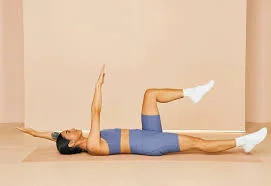
Dead Bug Exercise Steps
- To start, simply place yourself on your back on a comfortable exercise mat.
- Gently bring your legs up until they’re shaped like the letter “L.”
- For optimal support, press your lower back into the floor by engaging your core and tilting your pelvis up as you breathe out.
- Tighten your stomach and squeeze your glutes.
- Initiate the exercise with your left leg extended, at the same time, bring your right arm back, keeping it a few inches from the ground.
- 20 reps, alternating sides.
Posterior Pelvic Tilt Exercises With Precaution
Muscle imbalances:
Please be mindful that poor technique might increase existing muscle imbalances, which could in turn worsen a posterior pelvic tilt and contribute to discomfort in your back.
Compensatory movements:
When the targeted muscles aren’t properly activated, other muscles may step in, which can create less efficient ways of moving.
Increased risk of injury:
Performing movements improperly can heighten your weakness to issues like strains, sprains, and other forms of injury.
Important Considerations
Consult a professional:
If you’re feeling unsure about doing these exercises correctly, please know that reaching out to a physical therapist or qualified fitness professional is the best step. They can offer personalized guidance.
Focus on proper form over intensity:
Prioritize correct technique to ensure you’re engaging the right muscles and avoiding injury.
Listen to your body:
Should you experience any discomfort or pain, please discontinue the exercise at once.
FAQs
Do squats help posterior pelvic tilt?
While it’s true that stretching tight muscles and strengthening weak ones can help with an anterior pelvic tilt, remember that your overall squat form and good motor control are also crucial. Keep all these elements in mind when addressing posterior pelvic tilt in your squats.
How to tighten pelvic floor muscles quickly?
To rapidly strengthen your pelvic floor, focus on quick Kegel contractions. Also, incorporate exercises like the bird dog and bridge pose to build core and pelvic floor strength. Always visualize lifting or squeezing the muscles around your anus to ensure correct engagement.
Can walking tighten the pelvic floor?
Consistently exercising weak muscles over time can strengthen them and restore their effectiveness. Gentle, regular activities like walking can also help strengthen your pelvic floor muscles.
Can yoga help pelvic tilt?
You’ve got a great grasp on the core strategies for addressing an anterior pelvic tilt (APT)! Regularly stretching and strengthening exercises like Pilates or yoga are excellent ways to target the necessary muscles and improve your posture.
References:
- Purdie, J. (2022, June 22). 5 exercises to fix your posterior pelvic tilt. Healthline. https://www.healthline.com/health/posterior-pelvic-tilt
- 9 Best exercises for correcting posterior pelvic tilt | ISSA. (n.d.). https://www.issaonline.com/blog/post/9-best-exercises-for-correcting-posterior-pelvic-tilt
- Straight leg raises. (n.d.). [Video]. Hingehealth. https://en-gb.hingehealth.com/resources/articles/straight-leg-raise/
- McQuilkie, S., DC. (2023, February 7). How to fix posterior pelvic tilt – Best stretches & exercises. Back Intelligence. https://backintelligence.com/fix-posterior-pelvic-tilt/
- Horton, C. (2025, April 8). Horton Barbell. https://hortonbarbell.com/toe-touches/
- Seated hamstring stretch. (n.d.). [Video]. Hingehealth. https://en-gb.hingehealth.com/resources/articles/seated-hamstring-stretch/
- Foam roller calves. (2024, July 25). BLACKROLL. https://blackroll.com/exercises/exercises-by-body-area/foam-roller-calves