7 Best Palmar Interossei Muscle Exercise
Palmar Interossei Muscle Exercises help strengthen the small muscles located between the metacarpal bones of the hand. These muscles are crucial for finger adduction (bringing fingers together) and contribute to fine motor control and grip strength.
Strengthening these muscles can enhance grip strength and hand coordination, particularly after injury or in conditions such as arthritis.
Introduction:
The palm contains a collection of muscles called the palmar interossei. They are responsible for several finger-related movements and actions and play a significant role in hand function. Hand coordination, finger dexterity, and grip strength can all be enhanced by strengthening these muscles.
Origin
Shaft of metacarpals.
Insertion
Bases of proximal phalanges.
Extensor expansions.
Function
Adduction of fingers.
Flexion of the MCP Joint.
Extension of interphalangeal joints.
Nerve supply
Deep branch of the ulnar nerve.
Blood supply
The deep palmar arch’s palmar metacarpal artery.
Advantages of the palmar interossei workout:
Here are some potential benefits of finishing this exercise:
- It minimizes painful sensations in fingers and hands.
- It improves wrist support by strengthening the wrist muscles.
- It reduces stress and fatigue in the hands and fingers.
Palmar interossei Exercises:
Hand grippers

- Start by selecting a hand gripper that is difficult to use.
- Take the gripper in your hand and hold it there for 10 seconds, then let go.
- Perform 15 reps.
- Squeeze and keep the gripper together for as long as possible to make the workout more difficult.
The Hang

- Spread your arms wide first.
- If possible, utilize the pull-up bar to suspend for two minutes at a time.
- Perform 5 times.
- Try hanging with only your fingertips if it’s not difficult enough.
The fingertip push-up
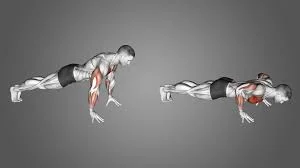
- Start with a prone lying position.
- Maintain your legs and toes straight.
- Then, with your hands, elevate your upper body off the ground.
- Maintaining your starting position requires pushing yourself up as you lower your body toward the floor.
- Do three sets of twelve repetitions.
Isometric finger adduction (palmar interossei)

- Start by sitting in a chair.
- The damaged arm should be positioned flat on a table with the fingers flat and the palm facing down.
- Position a finger from the unaffected hand on the side nearest the middle finger.
- Slide the damaged finger in the direction of the middle finger, trying to resist with the other hand.
- Perform 10-15 times.
Finger curl

- Start by sitting in a chair with your elbow resting on a table.
- Following that, they must follow the actions outlined below.
- Start with the palm facing the body.
- Make a loose fist.
- The thumb and fingers should be carefully uncurled until completely straight.
- Hold for five seconds.
- The thumb and fingers should be curled and uncurled 20 times.
Bent finger

- Make sure the thumb reaches the tip of the first finger by flexing it inward into the palm.
- Hold for 20 seconds.
- Perform the same motions for your middle, ring, and tiny fingers.
- Five to seven repetitions of the workout should be made each day.
Ball squeezes
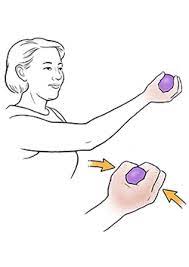
- The movement is performed by holding a little ball in your palm and applying light pressure with your fingertips.
- By exerting additional power, a person can sustain the thumb muscle for a longer period.
- The exercise should be done five to seven times a day.
FAQs
How may the palmar interossei be strengthened?
The first step is to select a hand gripper that is difficult. The gripper should be held in your hand, squeezed, held for some time, and then released. For each hand, complete five sets of ten repetitions. Press the gripper together and hold it for as long as you can to increase the difficulty of the exercise.
What distinguishes the dorsal interossei from the middle palmar interossei?
The oblique head of the adductor pollicis anteriorly and the first palmar interosseous course in the center of the first dorsal interosseous posteriorly.
How is a dorsal interossei hand injury treated?
Injury can be assessed by compressing the hands progressively or by limiting the digits’ adduction and abduction. Massage or friction therapy is a form of treatment.
The palmar interossei are absent from which finger?
The first finger’s muscle, which is sometimes called the elementary, is one of four muscles that attach to the first, second, fourth, and fifth digits to form PI. Palmar interosseous musculature is absent from the third finger.
What is causing the palmar interossei to atrophy?
The MCP joints’ reverse angulation indicates interosseous atrophy. Motor and sensory loss are primarily caused by damage to the neural supply, especially the ulnar nerve.
References
- Physiotherapy exercise. (n.d.). [Video]. https://www.physitrack.com/exercise-library/how-to-perform-the-palmar-interossei-exercise
- Vastralphysiotherapyclinic. (2023, December 31). Palmar interossei muscle. Mobility Physiotherapy Clinic. https://mobilephysiotherapyclinic.net/palmar-interossei-muscle/