

10 Best Exercises For Kyphosis
Introduction
Kyphosis refers to an abnormal forward curvature of the thoracic spine, often leading to the appearance of a rounded upper back or a visible hump.
Between 20% and 40% of older adults are affected by kyphosis. Upper back curve changes are most common in women aged 50 to 70.
To help avoid this condition, focus on good posture and include exercises that strengthen your back and neck.
Exercises To Correct Kyphosis
These exercises can help fix your Kyphosis:
Head Retraction
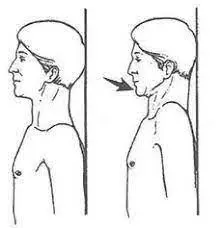
- Assume a neutral posture by sitting or standing with the spine in an erect vertical alignment and shoulders in a relaxed position to support musculoskeletal balance.
- With a neutral posture, make sure your head is balanced correctly over your shoulders and not moving forward.
- Perform a gentle retraction of your head, ensuring no upward or downward tilt.
- You should experience a mild stretching sensation along the posterior cervical region.
- Maintain the retracted posture for a duration of 5–10 seconds, with normal respiration.
- Complete 10–15 repetitions in a controlled manner.
Superman

Superman Steps:
- Adopt a prone position.
- Ensure the knee remains extended while the arms are directed forward in alignment with the shoulders.
- Maintain proper neck alignment while lifting both your arms and legs together.
- Raise your body only until you feel your lower back muscles working—avoid overextending.
- Squeeze your glutes, contract your core
- Then gradually lift with your upper back.
- Activate the transversus abdominis by drawing the navel upward and inward to initiate deep core muscle engagement.
- Maintain this posture for 2–3 seconds, ensuring continuous, rhythmic breathing.
- Lower yourself onto the mat.
Thoracic Spine Foam Rolling

Thoracic Spine Foam Rolling
- Sit on the floor or mat. Bend your knees. Feet flat on the ground.
- Place the foam roller firmly on your mid-to-upper back, then lean back to maximize pressure on tight muscles.
- Keep your chin tucked throughout the movement.
- Cross arms and place on opposite shoulders.
- Use your core. Your pelvis should be a little tucked in, and your ribs should be down.
- Lift your hips. This allows for the proper transfer of your body weight onto the foam roller.
- While keeping your alignment, carefully roll up and down, covering only the middle of your back to your shoulder blades.
- Roll your thoracic spine slowly with the foam roller until you find the stiffest spot.
- After locating the stiffest area, keep it there and stretch for 30 to 90 seconds while letting go till the pain subsides.
Shoulder Blade Squeeze
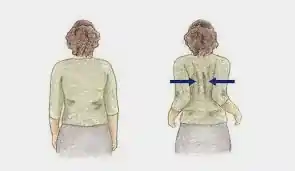
- Sit or stand. Keep your back straight. Relax your shoulders.
- Either bend your elbows to 90 degrees, palms forward, or stretch your arms straight in front.
- Gently squeeze your shoulder blades together and slightly downward to activate the muscles between them.
- You should experience a muscle contraction between your scapulae.
- For a few seconds, hold the squeeze. After that, gradually relax the contraction.
- Do the exercise eight to twelve times.
Child’s Pose
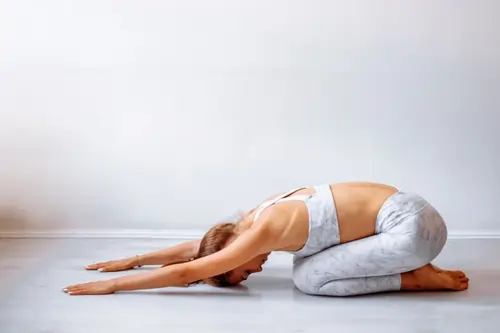
- Lower yourself slowly into a quadrupod position.
- Allow your knees to gently open wider than your hips, stabilizing the pelvis and relieving pressure in the lower spine.
- Turn your toes in and bend your knees.
- Once you feel stable and comfortable, gently extend your arms forward and lower your head, allowing your muscles to relax.
- Hold for 15 to 20 seconds.
- Return to the starting position gradually.
- Try to complete three repetitions.
Knee To Chest
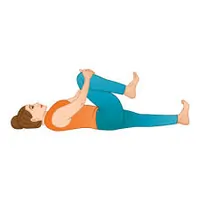
- Come to lie on your back.
- Maintain knee up at a 90-degree angle and the soles of the feet in complete contact with the support surface.
- Before moving, tighten your abdominal muscles slightly to support your lower back and prevent strain.
- Gently bring your right knee toward your chest by using your hands.
- With the knee flexed, place your hands behind the joint to stabilize and support the lower leg during the movement.
- Once your knee is close to your chest, hold it for 20–30 seconds while breathing deeply.
- Straighten your knee gently and return to where you started.
- Do the movement five times per leg.
Scapular Wall Slides
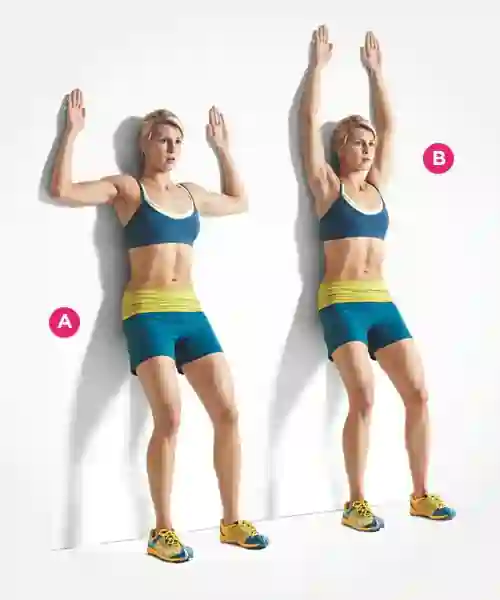
- To start, stand against a wall with your feet a little forward.
- For postural stability and to reduce strain, maintain steady contact with the wall at your hips, shoulder blades, and upper spine throughout the movement.
- Abduct the elbows laterally and flex them at approximately 90 degrees, resembling a ‘W’ shape.
- Palms up. Place the backs of your hands, elbows, and wrists lightly on the wall.
- Gently move your arms up the wall, stretch them out nice and straight, and try to keep them touching the wall the whole time.
- During exhalation, gradually return both upper limbs to the initial resting position.
- Perform 10 to 15 repetitions of this movement multiple times daily.
Prone Cobra
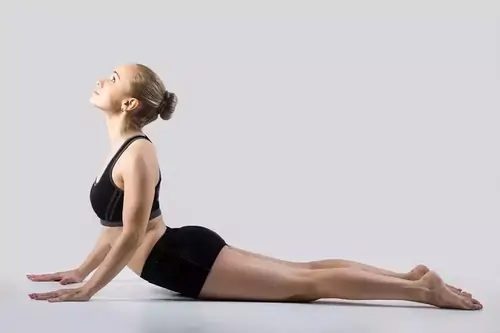
- Assume a prone posture with legs extended, feet plantarflexed, and toes in contact with the floor surface.
- Extend your toes, ensure your legs are aligned with your hip joints, and inhale deeply before proceeding.
- Gently elevate your body while slightly bending your elbows.
- Arch your back for a light stretch.
- Maintain support with your hands and wrists for 15 to 30 seconds, avoiding full elbow extension.
- Keep breathing slowly and deeply the whole time you’re exercising.
Pelvic Tilting

- The patient is in the supine position.
- Maintain knee flexion with feet firmly grounded to optimize postural stability.
- Engage your abdominal muscles gently to flatten your lower back toward the floor, maintaining control and avoiding strain.
- Allow your body to relax and reset.
- Perform 10 repetitions per set, completing 2 sets total, depending on individual tolerance.
Back Extension
Back Extension
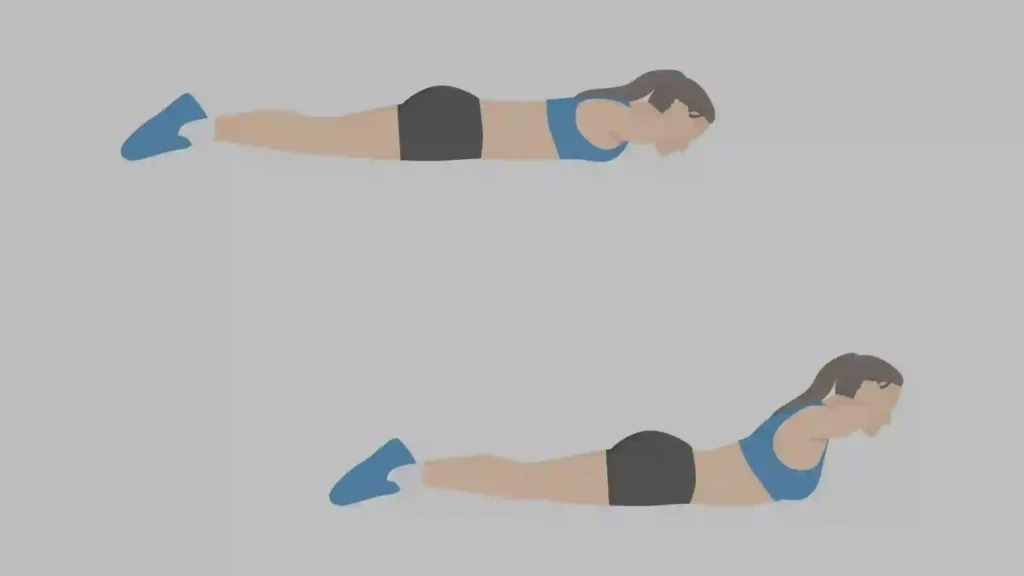
- Starts by lying in the prone position on a soft exercise mat.
- Put your hands wherever feels good—on your head, across your chest, or just at your sides.
- Keep your neck, spine, and hips aligned. Avoid excessive arching of your back.
- Before beginning the movement, tighten your abdominal muscles to support your lower back and protect your spine.
- Initiate chest elevation by activating back muscles in the lumbar region and engaging the gluteal muscles for pelvic stabilization and support.
- Lift your chest, hold for a couple of seconds, then move back to where you started.
- Perform 2–3 sets of 10–12 reps.
Precautions for Kyphosis Exercises:
Avoid Exercises that Flex the Spine:
Kyphosis occurs when the thoracic spine curves forward beyond the normal range, leading to a rounded posture in the upper back. Exercises like crunches, roll-downs, and Pilates 100s that require flexing (rounding forward) the spine should be avoided because they can make the issue worse.
Focus on Extension and Strengthening:
Back extensions, cobra pose, and bridge pose are exercises that strengthen the back muscles and address the kyphotic posture because they encourage spinal extension.
Strengthen Core Muscles:
Spinal stability and proper postural alignment depend on the activation and strengthening of core musculature, encompassing both the abdominal and back muscles.
Maintain Good Posture:
As you sit, stand, or stroll during the day, maintain proper posture. Relax your shoulders and keep your head aligned with them consistently throughout the motion.
Proper Form:
Be sure to follow the right form and technique when doing any workout. Consult a licensed healthcare provider or physical therapist for advice if you are unclear about appropriate form.
Listen to Your Body:
If you feel pain or discomfort during the exercise, stop right away and seek medical guidance.
Consult with a Professional:
Before beginning any fitness program, it is imperative that you speak with a healthcare provider if you have severe kyphosis or if you are exhibiting signs such as neurological issues or trouble breathing.
Consider Physiotherapy:
Kyphosis can be managed, and posture can be improved with regular exercise and treatment.
FAQs
Is kyphosis fully reversible?
If the poor movement and posture patterns that led to the development of postural kyphosis are corrected, the condition is not only very curable but also totally reversible.
How to sit with kyphosis?
Typically, we advise incorporating tilt-in-space into chairs for those with kyphosis. Adjusting the seat in this way permits backward tilting while maintaining consistent hip and knee angles. You can then relax and relieve some of the strain on your spine by doing this. Improved posture facilitates greater visual range while minimizing cervical strain.
What pillow is best for kyphosis?
Using the right pillow helps support your neck and upper back, which is especially important if you have kyphosis. Remember these points: Material of Pillow: Because they conform to your head and neck, memory foam pillows are very popular. You get personalized support as a result.
Which muscle is weak in kyphosis?
Weakened back muscles and trouble performing activities like walking and getting out of seats are linked to kyphosis. Furthermore, the curvature of the spine might make it difficult to drive or look up, and it can hurt when you’re lying down.
How to permanently fix posture?
Maintaining good posture at all times, focusing on strengthening and stretching particular muscle groups, and implementing ergonomic principles into your daily routine are the best ways to permanently correct your posture. For noticeable, long-lasting results, consistency is essential, and it may take several months.
References:
- Freutel, N. (2023, May 26). Kyphosis exercises to treat a rounded upper back. Healthline. https://www.healthline.com/health/exercise-fitness/kyphosis-exercises
- WebMD Editorial Contributor. (2023, September 25). Exercises to reduce Kyphosis. WebMD. https://www.webmd.com/back-pain/exercises-reduce-kyphosis
- Kandola, A. (2023, February 13). What is kyphosis? https://www.medicalnewstoday.com/articles/324071#prevention
- 10 best home exercises you can do to overcome Kyphosis – Chiropractor Wyoming MN. (n.d.). Chiropractor Wyoming MN. https://dayspringfamilywellness.com/10-best-home-exercises-you-can-do-to-overcome-kyphosis/
- Rehab Science. (2022, March 10). Thoracic spine Kyphosis exercises [Video]. YouTube. https://www.youtube.com/watch?v=BioAye0-q5Y
- Martin, M. (2023, November 27). Kyphosis exercises to avoid. MelioGuide. https://melioguide.com/osteoporosis-prevention/kyphosis-exercises-to-avoid/



Great exercises