Functional Exercise
What is Functional exercise?
Functional exercise is a subset of exercise that focuses on preparing the body for tasks, sports, or everyday activities. Training in these movements is intended to maintain muscles in their natural state.
Typically, complicated movements—which require bending at several joints and using numerous muscle groups to accomplish—are used in functional training.
Before becoming well-known as a successful cross-training technique, functional training was initially used as a form of physical therapy to aid injured athletes in their recovery. Functional fitness is now the benchmark for both sportsmen and the military.
Benefits of Functional Exercise
- Increased Core Strength and Stability
- Better Balance and Coordination
- Injury Prevention
- Glute and Hip Activation
- Flexibility and Mobility
- Greater Calorie Burn
- improved real-life movement
- Weight management
- Mimics daily activities
- Rehabilitation and pain reduction
- Greater overall health
Examples of Functional Exercise
1. Squats

- Place your feet hip-width apart and bend your knees slightly.
- As if you were sitting in an invisible chair, contract your core and slowly descend. Check to see if your knees are caving in or remaining in alignment.
- Slowly return to the beginning position after holding for three to five seconds.
- Make it more difficult by using your core to push through your feet into a jump while maintaining a squat position. After a gentle landing on the balls of the feet, immediately perform another squat. Five normal squats and five squat jumps should be your goal for 10 repetitions.
2. Reverse Lunges

- Start with your hands on your hips and your feet shoulder-width apart.
- Take a big stride back with your left foot, keeping your knee as close to the ground as possible by engaging your core. Your right foot and the floor should form a 90-degree angle.
- Return to the starting position by pressing your right foot into the ground.
- Perform 10–20 reps, 5–10 on each side, alternating between the left and right reverse lunges.
3. Push-up

- Place your hands beneath your shoulders and your feet shoulder-width apart to perform.
- As far as you can, steadily lower your chest till it touches the mat, keeping your elbows close to your body.
- As you progressively ascend to your initial high plank posture, keep your elbows turned in towards the mat rather than pointing them out. With proper form, aim for 5–10 repetitions.
- Start this technique on your knees and work your way up for beginners.
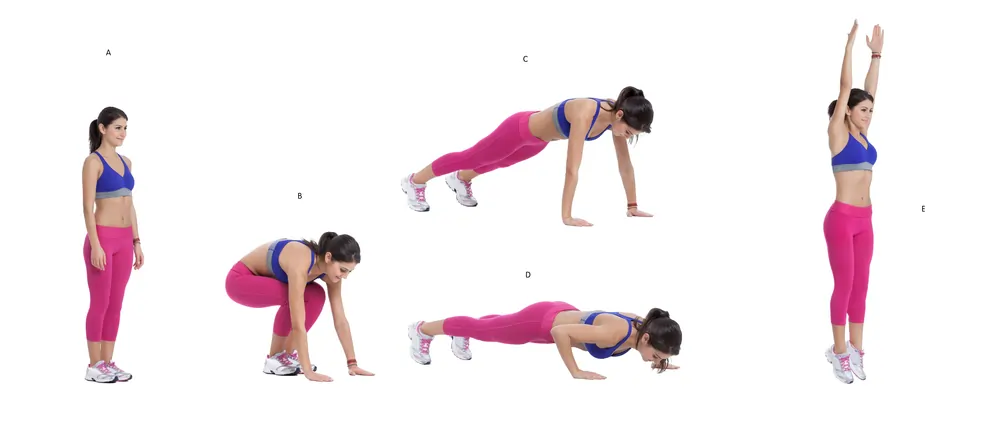
4. Burpees

Burpee Steps:
- Lower your hands to the floor outside of your feet by beginning in a squat.
- To perform a push-up or high plank, leap or step back.
- Get one push-up done. The frog’s feet protrude beyond its hands.
- Get back to your beginning squat position after one squat jump. Without stopping, aim for 5–10 repetitions.
5. Plank

Plank steps:
- Assume a tabletop position, with your neck in line with your spine and your shoulders stacked over your wrists.
- A full plank position is achieved by tucking your toes and then extending your feet behind you.
- Try holding your body steady while using your pelvic floor muscles.
6. Jump Lunge
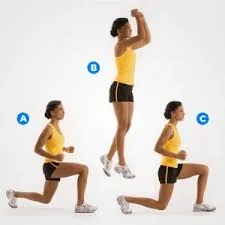
- Put your knee on the floor, put your right foot forward, then put your left foot back to perform a right lunge. You should have your left arm back and your right arm in front of your chest.
- Push off your right heel and the ball of your left foot as you leap up quickly. Land in a left lunge stance, swinging your arms so that your left arm is back and your right arm is up in front.
- Push off your left heel and the ball of your right foot as you leap up forcefully once more, landing in a right lunge position.
7. Lateral Lunge

Lateral Lunge steps:
- Stand with your feet shoulder-width apart and clasp your arms in front of your chest.
- Bend your left knee and take a step with your right leg out to the side, keeping your foot pointed ahead.
- Hold your hands together and lower your body such that your left arm rests lightly on your left knee.
- Return to your starting location slowly.
8. Prone Swimmer

- You should lie on the floor with your heels pointing upwards and your forehead and toes pressed against the ground. Putting a rolled-up towel under your forehead might be a good idea.
- Behind your head, clasp your hands.
- Unclasp your hands, then extend them forward over your head.
- Maintaining a straight posture, slowly sweep your arms out to your sides.
- Put your hands behind the small of your back, rotate them upward, and then pull them down even more.
9. Mountain Climber
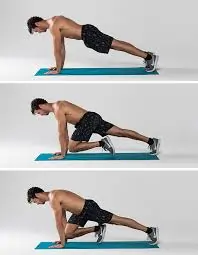
- With your palms shoulder-width apart, assume a push-up position.
- After raising your right knee between your arms, put your right leg back in its starting position.
- After raising your left knee between your arms, put your left leg back in its starting position.
- Quickly do steps two and three, as though you were running or climbing quickly.
10. Plank Bird Dog
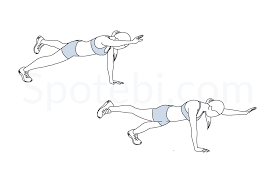
- With your palms shoulder-width apart, assume a push-up position.
- To counterbalance each other, raise your left arm and right leg into the air. Hold the pose for a second, then lower them back to their starting position.
- Apply the same technique to your right arm and left leg.
11. Elbow Side Plank

Side plank steps:
- With your feet placed on top of one another, lie on your right.
- On the floor, place your right forearm perpendicular to your body.
- Raise your body off the ground until only your right forearm and right foot are in contact with the ground and your torso is perfectly straight.
- As long as you can, raise your left arm straight into the air and hold it there.
FAQs
What is Functional exercise?
Functional exercise is a subset of exercise that focuses on preparing the body for tasks, sports, or everyday activities. Training in these movements is intended to maintain muscles in their natural state.
Typically, complicated movements—which require bending at several joints and using numerous muscle groups to accomplish—are used in functional training.
Before becoming well-known as a successful cross-training technique, functional training was initially used as a form of physical therapy to aid injured athletes in their recovery. Functional fitness is now the benchmark for both sportsmen and the military.
What are the benefits of functional exercise?
Increased Core Strength and Stability
Better Balance and Coordination
Injury Prevention
Glute and Hip Activation
Flexibility and Mobility
Greater Calorie Burn
improved real-life movement
weight management
Mimics daily activities
Rehabilitation and pain reduction
Greater overall health
How to perform the reverse lunge?
Start with your hands on your hips and your feet shoulder-width apart.
Take a big stride back with your left foot, keeping your knee as close to the ground as possible by engaging your core. Your right foot and the floor should form a 90-degree angle.
Return to the starting position by pressing your right foot into the ground.
Perform 10–20 reps, 5–10 on each side, alternating between the left and right reverse lunges.
How to perform the prone swimmer exercise?
You should lie on the floor with your heels pointing upwards and your forehead and toes pressed against the ground. Putting a rolled-up towel under your forehead might be a good idea.
Behind your head, clasp your hands.
Unclasp your hands, then extend them forward over your head.
Maintaining a straight posture, slowly sweep your arms out to your sides.
Put your hands behind the small of your back, rotate them upward, and then pull them down even more.
How to perform the elbow side plank?
With your feet placed on top of one another, lie on your right.
On the floor, place your right forearm perpendicular to your body.
Raise your body off the ground until only your right forearm and right foot are in contact with the ground and your torso is perfectly straight.
As long as you can, raise your left arm straight into the air and hold it there.
How to perform the plank bird dog exercise?
With your palms shoulder-width apart, assume a push-up position.
To counterbalance each other, raise your left arm and right leg into the air. Hold the pose for a second, then lower them back to their starting position.
Apply the same technique to your right arm and left leg.
References:
- Fawkes, J. (n.d.). The 30 Best Exercises for Functional Strength and Mobility. https://www.spartan.com/en/blog/best-exercises-for-functional-strength
- Davis, N. (2020, May 26). How to maintain your functional strength while sheltering in place. Healthline. https://www.healthline.com/health/fitness-exercise/functional-strength-training#functional-vs-nonfunctional
- Cave, K. (n.d.). Functional training: compound workouts for fitness. https://blog.nasm.org/functional-training-compound-workouts