
17 Best Exercises for Prolapsed Intervertebral Disc
Prolapsed Intervertebral Disc (PID), also known as a slipped or herniated disc, can cause back pain, numbness, or weakness. Specific exercises help relieve pressure on the affected disc, improve flexibility, and strengthen back and core muscles for better spinal support.
What is a Prolapsed Intervertebral Disc?
When a nucleus pulposus is moved out of the intervertebral space, the result is a herniated disc in the spine. Back discomfort is frequently caused by it. Herniated disc pain patients frequently recall a triggering event that resulted in their discomfort. Herniated disc pain is frequently sharp or stinging, and it can spread to the lower extremities, in contrast to mechanical back pain. Additionally, in more severe cases, alterations in feeling or weakness may be related.
Herniated Discs:
- May cause extreme pain.
- Most painful disc herniation situations resolve in a matter of weeks.
- Many patients do not experience any pain as a result of their disc herniation.
- The preferred imaging modality for asymptomatic patients is magnetic resonance imaging (MRI), which frequently shows herniated discs.
- Conservative treatment should be the first line of treatment unless the patient has a serious neurological condition.
- Since surgery does not always have predictable results, it is typically reserved for extreme cases. Neurological deficiencies and chronic discomfort are common in patients, and they frequently get worse after surgery.
- For most patients, physical treatment is the key. Although the results vary depending on a number of circumstances, people who regularly exercise and keep their weight in check do better than those who are inactive.
Causes
- Age-related degeneration: he most common cause is the gradual wear and tear of the discs over time.
- Injury and trauma: Inappropriate lifting techniques or unexpected traumas might cause a disc to rupture.
- Other factors: Additionally, previous spinal problems and family history may play a role.
Symptoms
- Pain: can include anything from a sudden, shooting pain down a leg (sciatica) to chronic pain in the neck or back.
- Numbness or tingling: The affected area feels “pins and needles.”
- Weakness: gripping, lifting, or generalized weakening of the affected limb’s muscles.
- Severe symptoms: Loss of control over the bladder or bowels may occur in rare, severe cases, requiring urgent medical intervention (Cauda Equina Syndrome).
Treatment
Conservative care (often sufficient):
- Rest and activity modification: avoiding activities that worsen discomfort.
- Pain relievers: prescription or over-the-counter anti-inflammatory and pain medications.
- Physical therapy: exercises to increase flexibility, reduce pressure, and strengthen the back.
- Injections: Injections of epidural steroids can be used to lessen pain and inflammation.
Surgery: If conservative treatment fails to relieve severe symptoms, this option might be taken into consideration.
Exercises for a prolapsed intervertebral disc
Lumbar Exercises
Standing Lumbar Extension
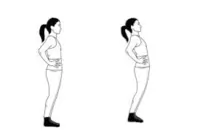
It helps relieve pressure on your back’s discs.
Steps:
- Take a proud stance.
- Your hands should be on your hips.
- To lengthen your lower back, gently lift your hips forward.
- Hold for two to three seconds.
- Ten repetitions in total should be performed.
Prone on Elbows

It helps disc alignment.
Steps:
- Place yourself on your stomach.
- Put your hands close to your shoulders on the ground.
- Maintaining your forearms on the floor, push yourself up, lifting your shoulders and back.
- For 30 seconds, maintain this posture.
- Five to ten times, repeat.
Cobra Pose
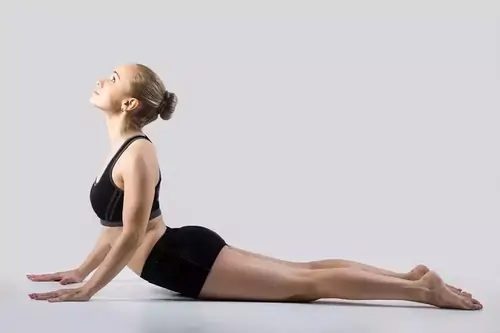
Prone on Elbows is a good starting point for the well-liked yoga pose, Cobra.
Note: The advanced form of the prone on elbows is called the cobra pose. Don’t move on to this exercise if you can’t do prone on elbows.
Steps:
- While lying on your stomach, place both hands on the floor close to your chest. Slowly raise both arms until your shoulders, head, and chest are off the ground.
- Wait ten seconds.
- Drop your shoulders, head, and chest.
- Do this five to ten times.
Back flexion stretch

The back muscles and spine are stretched using back flexion exercises. After a back injury, see a physician before beginning these workouts. Try the following to do a back flexion stretch:
Steps:
- With both knees held close to the chest, lie on your back.
- Simultaneously, push the head forward until the mid and lower back are comfortably stretched.
- Give the stretch a 15–30 second hold.
- Repeat a few times.
Knee to chest stretch
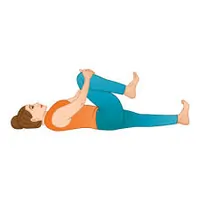
For a softer stretch, try the knee-to-chest exercise, which works the muscles on either side of the body independently. Attempt the following:
Steps:
- Bend your knees and place both of your heels on the floor while lying on your back.
- With both hands behind one knee, draw it in the direction of the chest.
- Give the stretch a 15–20 second hold.
- Repeat several times while switching legs.
Piriformis muscle stretch
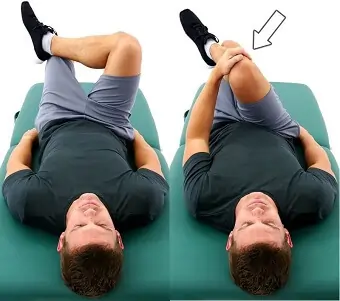
Deep within the buttocks is a little muscle called the piriformis. To make this muscle more flexible:
Steps:
- With both heels on the floor and your legs bent, lie on your back.
- Place the ankle on the bent knee and cross one leg over the other.
- Pull the crossed knee gently toward the chest until the buttocks are stretched.
- For 15 to 30 seconds, hold the stretch.
- Continue on both sides.
Bridging

The gluteus maximus muscle, which supports your lower (lumbar) spine, is the focus of the bridge exercise, which is described below:
- Place your feet on the floor and bend your knees while lying on your back.
- As high as you can without experiencing any pain, raise your buttocks off the ground by contracting your abdominal muscles.
- After ten seconds of holding this position, drop to the ground.
- Try doing 10 repetitions in 1 or 2 sets.
Superman Exercise

Erector spinae, glutes, hamstrings, upper back, shoulders, and arms were the muscles used.
- Arms outstretched, lie face down on the ground.
- Lift your upper and lower body as high off the ground as you can without straining by using your glutes and core. At the peak, take a one-second pause. Take a deliberate step back to the starting position.
- Perform 8–12 repetitions in 1–3 sets.
Hip Extension in Prone

- Lie face down on the ground.
- Lift your one leg and after put it down. Do on another leg.
- Perform 10 to 15 repetitions in 1-3 sets.
- You can hold your leg in the air for progression.
Cervical Exercises
Cervical Retraction
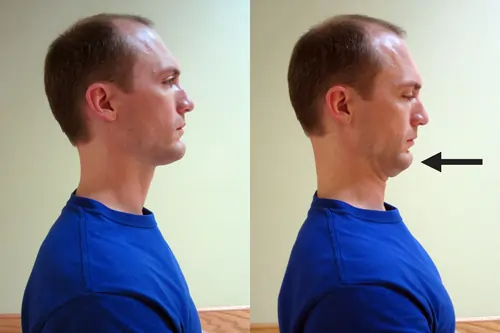
The cervical (neck) part of the spine has a disc herniation, and this exercise helps relieve its symptoms. This is how cervical retraction is done:
- With your arms by your sides, take a seat in a chair and stare straight ahead.
- As if you were giving yourself a double chin, tuck your chin gently backward without nodding your head or shrugging your shoulders.
- Hold this posture for one to two seconds, then let your neck relax. Make ten retractions.
Lateral Neck Flexion

The symptoms of a cervical spine disc herniation have been demonstrated to be reduced by this method. The process of lateral neck flexion is as follows:
- Slowly bend the ear on the impacted side of your neck toward the shoulder while maintaining a straight line of sight. As you do this, avoid shrugging your shoulders.
- After moving as far as you can without experiencing more pain, hold your neck in this position for a brief moment before going back to the beginning.
- Do two or three sets of ten reps.
Neck Extension

- Begin on an exercise ball or on your hands and knees.
- As much as is pain-free and comfortable, arch your neck upward.
- Return to the starting position, which is a straight neck, after holding this position for three seconds.
- Perform ten repetitions ten times a day.
Trapezius stretch (lateral stretch)
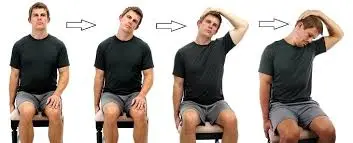
- Whether you are sitting or standing, carefully tilt your head such that your ear is near your shoulder.
- For ten to twenty seconds, hold lightly.
- Hold for ten to twenty seconds after switching to the other side.
- You can gently move your head to the side with your hand if it doesn’t feel like much of a stretch.
- Perform two sets (one set for each side) two to three times a day.
Isometric cervical flexion
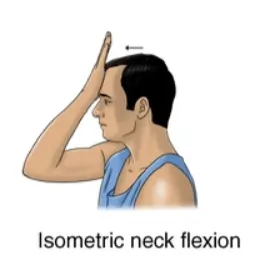
- Put your hand on your forehead.
- While using your hand to prevent the movement, gently press your head forward into it. Keep your head still.
- Repeat five times after holding for five to ten seconds.
Isometric cervical extension

- Put your hands behind your head.
- Using your hands to resist, gently push your head back into them.
- Repeat five times after holding for five to ten seconds.
Isometric cervical side flexion

- On the right side of your head, place your palm.
- Try gently tilting your head to the right while using your hand to resist.
- Five times, hold for five to ten seconds. Next, flip sides and do it again on the left.
Exercises to avoid
Repetitive demanding activities, quick pressure on the back, and heavy lifting can all cause a herniated disk. During their recovery, people with a herniated disk should refrain from performing demanding activities.
Any exercise that hurts or makes them feel as though their discomfort is getting worse should be avoided.
People may want to stay away from high-impact sports like martial arts or jogging. These can give you the chill.
The safest method of symptom reduction is to start with mild exercise and gradually increase the intensity. An individual’s results can also be improved by beginning stretches and exercises early.
The ideal fitness program for a person’s needs should be discussed with their physician.
FAQs
What is a Prolapsed Intervertebral Disc?
When a nucleus pulposus is moved out of the intervertebral space, the result is a herniated disc in the spine. Back discomfort is frequently caused by it. Herniated disc pain patients frequently recall a triggering event that resulted in their discomfort. Herniated disc pain is frequently sharp or stinging, and it can spread to the lower extremities, in contrast to mechanical back pain. Additionally, in more severe cases, alterations in feeling or weakness may be related.
Herniated Discs:
May cause extreme pain.
Most painful disc herniation situations resolve in a matter of weeks.
Many patients do not experience any pain as a result of their disc herniation.
The preferred imaging modality for asymptomatic patients is magnetic resonance imaging (MRI), which frequently shows herniated discs.
Conservative treatment should be the first line of treatment unless the patient has a serious neurological condition.
Since surgery does not always have predictable results, it is typically reserved for extreme cases. Neurological deficiencies and chronic discomfort are common in patients, and they frequently get worse after surgery.
For most patients, physical treatment is the key. Although the results vary depending on a number of circumstances, people who regularly exercise and keep their weight in check do better than those who are inactive.
What are the causes of a prolapsed intervertebral disc?
Age-related degeneration: he most common cause is the gradual wear and tear of the discs over time.
Injury and trauma: Inappropriate lifting techniques or unexpected traumas might cause a disc to rupture.
Other factors: Additionally, previous spinal problems and family history may play a role.
How to perform the cobra pose?
Prone on Elbows is a good starting point for the well-liked yoga pose, Cobra.
Note: The advanced form of the prone on elbows is called the cobra pose. Don’t move on to this exercise if you can’t do prone on elbows.
Steps:
While lying on your stomach, place both hands on the floor close to your chest. Slowly raise both arms until your shoulders, head, and chest are off the ground.
Wait ten seconds.
Drop your shoulders, head, and chest.
Do this five to ten times.
How to perform the lateral neck flexion exercise?
The symptoms of a cervical spine disc herniation have been demonstrated to be reduced by this method. The process of lateral neck flexion is as follows:
Slowly bend the ear on the impacted side of your neck toward the shoulder while maintaining a straight line of sight. As you do this, avoid shrugging your shoulders.
After moving as far as you can without experiencing more pain, hold your neck in this position for a brief moment before going back to the beginning.
Do two or three sets of ten reps.
How to perform the cervical retraction exercise?
The cervical (neck) part of the spine has a disc herniation, and this exercise helps relieve its symptoms. This is how cervical retraction is done:
With your arms by your sides, take a seat in a chair and stare straight ahead.
As if you were giving yourself a double chin, tuck your chin gently backward without nodding your head or shrugging your shoulders.
Hold this posture for one to two seconds, then let your neck relax. Make ten retractions.
References:
- Herniated disc pain? 5 key exercises to help. (n.d.). https://www.goodpath.com/learn/exercises-herniated-disc
- Barrell, A. (2024, October 1). Safe exercises for a herniated disk. https://www.medicalnewstoday.com/articles/324311#exercises-for-low-back-pain
- Ocs, T. P. D. (2025, September 7). 16 Exercises for herniated disc (Back or neck) pain. Verywell Health. https://www.verywellhealth.com/exercises-for-herniated-disc-7642792
- Davis, N. (2024, April 10). No more backaches: 18 exercises for a stronger back. Healthline. https://www.healthline.com/health/fitness/back-strengthening-muscles-posture#superman
- Lindberg, S. (2020, January 27). 5 Recommended exercises for healing a bulging disc in your neck. Healthline. https://www.healthline.com/health/bulging-disc-exercises#other-remedies