Pawanmuktasana (Wind Relieving Pose)
What is Pawanmuktasana?
All levels of yogis can perform the reclining yoga pose known as Pawanmuktasana. Its wind-removal properties help with digestion and excretion while gently massaging the abdominal organs. It relieves tension in the lower back, hips, and stomach.
Three words make up the Sanskrit term Pawanmuktasana: pawan, which means wind, mukta, which means relieving, and asana, which means posture. The idea that this stance helps release gas and relieves bloating and stomach pain gives it its name.
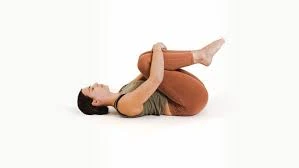
Pawanmuktasana involves lying supine, bending both legs, and drawing them towards the chest while encircling the shins with your arms. At the same time, the chin tucks into the chest.
Muscle Work During Pawanmuktasana:
- Biceps and Triceps Muscles
- Upper Back Muscles
- Middle Back Muscles
- Lower Back Muscles
- Hip Muscles
How to Perform?
- Stretch your legs straight out while lying on your back.
- Put your arms around your shins after gently bending your knees and bringing them closer to your chest.
- You can grip your opposing elbows, forearms, or wrists, depending on how close your knees are to your chest.
- Bend your neck and move your chin closer to your knees as you slowly raise your head and chest off the ground. The gaze should be straight up, and the forehead should be looking upward.
- Keep your breathing regular while maintaining this posture.
- For five to seven breaths, maintain this stance.
Benefits:
- Pawanmuktasana aids in reducing excess abdominal fat.
- Constipation, flatulence, acidity, irritable bowel syndrome, and other stomach issues are all alleviated by it.
- It reduces lower back strain and enhances blood flow in the hip joints.
- Pawanmuktasana improves diaphragm flexibility, heart and lung function, and the muscles in the chest and rear of the lungs.
- Hip stability, lower-back strengthening, and lower-body conditioning all work together to enhance posture.
- Additionally, it can help strengthen the lumbar spine, which can help with sciatica, lower back discomfort, and the early stages of lumbar spondylitis.
- This invigorating stance increases metabolism and clears the body of impurities.
- Any stored stress in the lower back and hips is also eliminated by increasing their flexibility.
- The intestines are massaged along with the other organs in the abdomen. This helps the digestive system.
- By exerting pressure on the abdomen, any imbalance in the reproductive system is corrected, and blood flow to the organs that support reproduction is assured.
- Menstrual cramps, PCOS, infertility, and impotence can all be lessened by boosting the flow of new blood to the lower organs.
- The nervous system is calmed by spinal toning, which lessens headaches, stress, anxiety, and other symptoms.
Beginner’s Advice:
- To improve your hip and hamstring flexibility, you can do pawanmuktasana with one leg at a time.
- For additional cushioning, place a folded blanket beneath your buttocks.
- Keep your neck muscles flat on the ground rather than raising them to your knees if you have stiff neck muscles.
- Avoid forcing your legs to fully fold and come into contact with your body. As far as your body permits, go.
- The head can be supported by placing a folded blanket or a tiny rolled towel beneath the neck.
- Bring your knees slightly to the side and use a strap to hold them in place if a big tummy or chest prevents you from holding your shins.
- Continue vigorously pressing the abdomen to the thighs on inhalations after reaching the ultimate pose.
- Place a folded blanket over the stomach to prevent discomfort and pressure on the abdomen.
Preparatory Pose:
- Bridge Pose (Setu Bandha Sarvangasana)
- Supine Spinal Twist Pose(Supta Matsyendrasana)
- Half Wind Release Pose (Ardha Pawanamuktasana)
- Reclining Bound Angle Pose (Supta Baddha Konasana)
Modifications:
Cow Face Legs: Leg modifications can improve the range of motion in the external hip joints and stretch the muscles in the outer thighs. For this variant, raise your legs so they are perpendicular to the floor. With your hands on the backs of your thighs, place your right leg behind your left leg to form an almost X. Bend both knees while bringing them closer to your chest.
Continue modifying the leg position as you get closer until the right leg is entirely outside the left thigh and vice versa. Hold your legs at the ankles or shins while bending them as much as you can. This leg alignment is a little challenging, and it should only be done once the hips are sufficiently flexible.
Variations:
Sitting Wind Relieving Pose:

One simple way to start, if lying down in pawanmuktasana causes breathing or neck pain, is to sit, fold your knees, and bring them to your chest to balance your body. The feet should be in the air rather than on the ground. Even this position facilitates the release of gas and wind.
One-Legged Wind Relieving Pose:

You can begin performing with just one leg, as previously mentioned. All you have to do is keep the other leg straight while bending the knee of one leg towards the chest. The placement of your hands and head remains unchanged from the conventional wind-relieving pose. If your hips, groin, or thighs are not flexible, you can maintain a slight bend at the knee on the straight leg.
Wind Relieving Pose on the Side:
You can do the same stance while lying sideways as opposed to on your back. Here, you will stack your shoulders, hips, and legs on top of one another. Additionally, you can maintain your legs tucked into your chest by holding your knees rather than your shins.
Precautions and Contraindications:
- If you are recovering from a hernia, piles, or abdominal surgery, avoid doing pawanmuktasana. Additionally, you should avoid this pose if you have sciatica or a spinal injury.
- Because Pawanmuktasana puts a lot of strain on the abdomen, it is not advised for women who are pregnant or who have had a C-section.
Conclusion:
Low back tension and stomach ache can both be relieved by pavanamuktasana. Try a few rounds of this stance first thing in the morning while you’re still in bed. By slowly awakening your body in this way, you could find it easier to move throughout the day.
FAQs
Is Pavanamuktasana good for beginners?
Pavanamuktasana, also known as Wind-Relieving Pose (pah-van-ah-mook-TAHS-uh-nuh), is a reclining yoga pose that is appropriate for all skill levels. The pose releases stress in the lower back and belly area while gently massaging the abdominal organs.
Who should avoid pavanamuktasana?
There is a lot of strain on the abdomen; thus, it must be avoided if there has been recent abdominal surgery. This pose should be avoided by anyone with piles or a hernia. This asana is not recommended for pregnant ladies.
What is the best time to do Pawanmuktasana?
As the name implies, Pawanmuktasana helps people who have gas or bloating by encouraging the passage of gas and releasing abdominal pressure. It is best done first thing in the morning, before doing any other asanas.
What are the common mistakes in Pawanmuktasana?
Breathing incorrectly: As you hold the pose, make sure you breathe deeply and deliberately.
Poor posture: To prevent back and neck strain, keep your alignment correct.
Rushing: For better results, execute the position consciously and slowly.
Is Pawanmuktasana good for back pain?
This article delves further into one that is especially calming: a supported variation of pavana muktasana. It is a reliable “go-to” pose for many practitioners that can ease lower back pain and discomfort.
What precautions should I take with Pawanmuktasana?
This pose should be avoided by anyone with piles or a hernia. This asana is not recommended for pregnant ladies. The head should stay on the ground if there is any pain, stiffness, or damage.
Is Pawanmuktasana good for sciatica pain?
Wind-Relieving/Knees-to-Chest Pose (Pawanmuktasana). This position is great for releasing tension in your glutes, hips, and lower back. One leg at a time will let you experience the position less strongly.
References:
- How to Do Pawanmuktasana (Wind Relieving Pose) and Its Benefits – Fitsri Yoga. https://www.fitsri.com/poses/pawanmuktasana
- Pawanmuktasana Pose Yoga Pose (Wind Relieving Pose). Tummee. https://www.tummee.com/yoga-poses/Pawanmuktasana