
Best Exercises for Thoracic Outlet Syndrome
Introduction
Thoracic Outlet Syndrome is a condition that occurs when nerves or blood vessels between the neck and shoulder become compressed, leading to symptoms such as shoulder pain, neck discomfort, arm numbness, tingling, and weakness.
Your hands and arms may experience pain, tingling, or numbness. Strong arm motions, particularly in sports, traumatic traumas, and innate anatomical variances are common reasons.
What is thoracic outlet syndrome?
A collection of conditions known as thoracic outlet syndrome (TOS) is caused by compression of blood vessels or nerves in the upper chest and lower neck. The gap between your neck and chest is referred to as the “thoracic outlet”.
Numerous significant structures flow through this artery, which is also known as your thoracic inlet or superior thoracic aperture. These include the subclavian vein, subclavian artery, and brachial plexus, which are the nerves that go from your neck to your armpit.
Normally, these blood arteries and nerves can immediately flow through your thoracic outlet. However, this pathway can be disrupted and made excessively narrow by specific anatomical changes and traumas. When that occurs, the nerves or blood arteries in this area are compressed by other tissues in your chest, such as muscles or bones.
Your upper body may experience discomfort, unusual sensations (paresthesia), and other symptoms as a result of this compression. Diagnosis might be difficult and delayed due to the vast range of symptoms, which may indicate numerous potential issues.
Types of thoracic outlet syndrome
Neurogenic thoracic outlet syndrome
This is nerve compression. Pressure on your brachial plexus, or the network of interconnected nerves that traverse your upper chest, can cause neurogenic TOS. This is the most prevalent kind by far.
It accounts for roughly 95% of thoracic outlet syndrome patients. The majority of people are diagnosed in their 30s. The most frequent causes are acute neck trauma and repetitive stress injuries, which are frequently caused by sports.
Venous thoracic outlet syndrome
Your subclavian vein is being compressed. The dominant arm is typically where a person experiences symptoms.
Arterial thoracic outlet syndrome
Your subclavian artery is being compressed. At around 1% of all instances, it is the rarest kind of TOS. However, the most frequent cause of acute blood clots in the arm in those under 40 is arterial TOS. Arterial TOS is typically caused by anatomical variations (such as a cervical rib) that you are born with. Women are more likely to have this kind of TOS. This could be because women have up to 70% of cervical ribs.
Symptoms and Causes
The symptoms of thoracic outlet syndrome usually affect one side of your upper body, including your neck, upper chest, shoulder, arm, or hand. You might have:
- Pain that could get worse if you raise your arms.
- “Pins and needles” or tingling
- Numbness.
- Weakness.
- Heaviness or swelling.
- Changes in skin tone (pale or blue skin).
- Skin that is cool to the touch.
- Finger sores that take a long time to heal.
Depending on the type of TOS you have, you may experience different symptoms. This is due to the fact that some structures (such as blood vessels or nerves) are compressed and create symptoms. These structures are unable to perform their regular functions because of this compression. This is a summary:
Your arm and hand can move and feel thanks to your brachial plexus. When your brachial plexus is under pressure, you may experience pain, tingling, or numbness.
Blood is drained from your arm and returned to your heart via your subclavian vein. Therefore, strain on this vein stops blood from exiting your arm, causing it to bulge and feel heavy.
Your arm receives oxygen-rich blood from your subclavian artery. Your arm, hand, and fingers receive less blood when this artery is compressed. In addition to feeling cool to the touch, this poor circulation might result in numbness, tingling, or pain.
What does thoracic outlet pain feel like?
Your neck, upper chest, shoulder, and arm may hurt if you have thoracic outlet syndrome. This could be a mild aching that gets worse when you move your arms.
Angina and thoracic outlet syndrome pain are sometimes confused. When your heart muscle doesn’t get enough oxygen, you get angina, or chest pain. However, there are a few significant distinctions:
Angina usually worsens with walking, while TOS pain does not. Other related symptoms of angina include dizziness, palpitations, and shortness of breath.
Raising the affected arm frequently makes TOS discomfort worse. Angina does not cause this.
What causes thoracic outlet syndrome?
- Congenital: These are anatomical differences that are present from birth. For instance, you can have a cervical rib from birth. This is an additional rib that is located close to, or occasionally fused to, your first rib. Alternatively, you may have anomalies in your neck muscles, ribs, or surrounding ligaments. Your thoracic outlet’s blood vessels or nerves may be compressed by these variations.
- Traumatic: These are unexpected injuries that impact your upper chest and neck. Whiplash and other injuries sustained in auto accidents are common examples.
- Functional: These are repetitive behaviors that cause irritation or damage to the structures in your thoracic outlet. Among athletes, particularly baseball players and swimmers, vigorous arm motions are frequently the problem.
What are the risk factors?
Thoracic outlet syndrome may be more likely to occur if you:
- Engage in sports that require you to move your arms or shoulders repeatedly. Baseball, swimming, golf, and volleyball are a few examples.
- Take up weightlifting.
- Frequently lift objects over your head or carry large shoulder burdens.
- Have a back or neck injury, such as whiplash.
- Have big lymph nodes or tumors in your armpit or upper chest.
- Have bad posture.
Is thoracic outlet syndrome serious?
Thoracic outlet syndrome can have major side effects if left untreated, such as:
- Thrombosis of the axillo-subclavian vein.
- Chronic pain and swelling in the arms, particularly in those with venous TOS.
- Gangrene.
- Ischemic ulcers are open sores on fingers caused by decreased blood flow.
- Irreversible nerve injury.
- Embolism in the lungs.
Thoracic Outlet Syndrome Exercise
Scalene stretch

- Step 1: Start with a neutral sitting or standing position.
- Step 2
Tilt your head gently toward your right shoulder to start stretching your left scalene. Proceed as far as is comfortable for you. Some of your neck muscles will begin to stretch with just this action. - Step 3
After you’ve reached the end of your side tilt, slowly and gently turn your head to the left so that you’re looking just over your left shoulder. Hold this posture for a short while. - Step 4
The next step is to extend or gently tilt your chin up until you experience a pulling feeling in your anterior scalenes, which are located beneath the front of the left side of your neck. - Step 5
Maintain this posture for around thirty seconds. - Step 6
After that, go back to neutral very slowly and gently. Then, repeat the process on the other side. - Step 7
It can be challenging for some people to align their necks correctly. This stretch should not be forced. Please stop if it starts to hurt. - Step 8
Repeat the stretch two to three times on each side, ideally once or twice a day, after holding it for 20 to 30 seconds.
Pectoralis stretch

- You may extend each side of your chest independently with this exercise.
- At the end of a wall or in a doorway, adopt a split stance with your right leg in front and your left leg in the rear.
- Raise the left arm to shoulder height and place the inside of the arm and palm against the wall or doorway. You should bend your elbow to a 90-degree angle.
- To feel the stretch, gently press your chest through the open area.
- You can extend different parts of your chest by raising or lowering your arm.
- On the opposite side, repeat.
Scapular retractions

- Setup: Keep your shoulders stacked over your hips and stand with your feet hip-width apart.
- Position Arms: For greater control, bend your elbows or keep your arms at your sides.
- Squeeze your shoulder blades together and move them slightly down toward your back pockets to start the movement. Consider attempting to squeeze a pencil between them.
- Hold: Squeeze for five to ten seconds.
- Release: To return to the initial position, gradually release the tension.
- Repetitions: Perform two to three sets of ten to twelve repetitions.
Chin Tucks
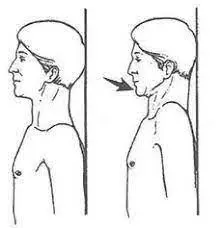
- How to perform a chin tuck:
Take a relaxed stance. - Bring your chin closer to your chest by giving a little nod.
- Retract or glide your chin back, keeping your jaw muscles relaxed as you do so.
- To return to the initial position, let your neck muscles relax.
Wall angles
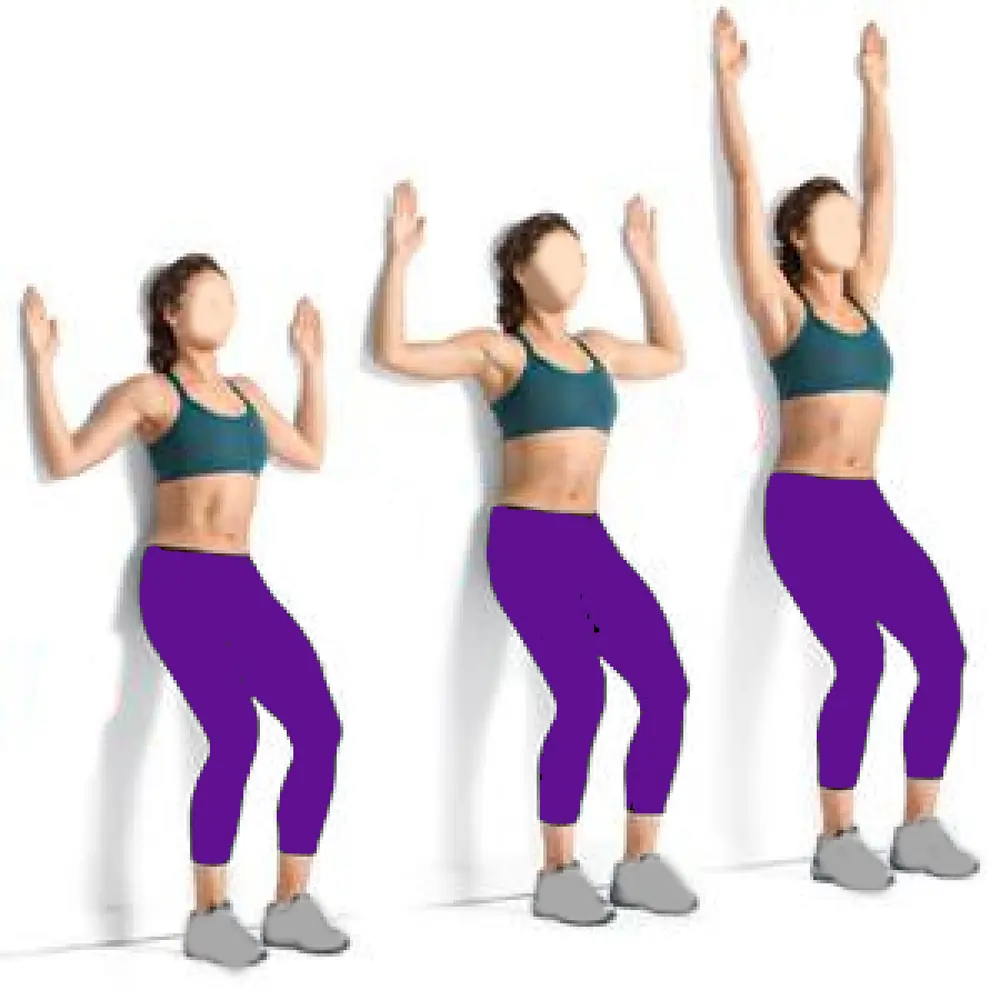
- How to perform wall angles
- Place your feet 6 to 8 inches (15 to 20 cm) away from the wall. Place your head, shoulders, butt, and back against the wall.
- Draw your belly button in the direction of your spine to try to start with a neutral spine. While keeping your lower back slightly away from the wall, draw your ribs in and down until you feel the back of your ribcage connect to the wall.
- Try putting a little pillow behind your head if you’re having trouble getting your head on the wall.
- Next, extend your arms straight up and place them on the wall above you, making a “V” shape with the backs of your hands touching the wall. If you are having trouble with any aspect of this alignment, try stepping your feet farther away from the wall to see if that helps.
- Next, slide your hands down the wall until they are slightly over your shoulders while bending your elbows. Keep your butt, head, and trunk up against the wall in the meantime.
- It’s acceptable to feel a stretch, but just lower as much as you can without experiencing any pain and with proper posture. Hold for five counts at the lowest point, then, while keeping alignment, return to the “V” starting position.
- If your muscles can no longer maintain the postural alignment without experiencing pain, end after 5–10 repetitions.
Nerve glides

- Set up: Place your feet flat on the ground, relax your shoulders, and sit upright in a chair with back support.
- Arm Position: While maintaining a straight elbow, extend the affected arm to the side. As if you were carrying a heavy bag behind you, turn your palm to face backward (pronate the forearm) and curl your fingers or wrist forward.
- Movement: Tension: Curling the wrist in, bring your head toward the shoulder of the outstretched arm.
- Glide: Release the wrist slightly and tilt your head away from the outstretched arm.
- As an alternative, “floss” the nerve by moving the head back and forth while keeping the wrist bent.
- Repetitions: Do five to ten gentle, slow repetitions. This is a movement exercise, not a static stretch, so don’t hold it for too long.
FAQs
How to relieve thoracic outlet syndrome?
Home cures and lifestyle
Keep your posture correct.
At work, take regular pauses to stretch and move.
Keep your weight in check.
Make a workspace that doesn’t worsen problems and lets you maintain proper posture.
Give your thoracic outlet and shoulders a gentle massage.
Cover the area with a heating pad.
Can you fully recover from thoracic outlet syndrome?
Therefore, healing differs according to the thoracic outlet syndrome treatment. People typically recover in a matter of weeks to months if the treatment is less intrusive and involves injections or medicines.
Is heat or ice better for TOS?
People with neurogenic thoracic outlet syndrome may have less pain and discomfort if they apply heat to their neck and shoulder to enhance blood circulation.
How to sleep with TOS?
TOS’s Ideal Sleeping Positions
Sleeping on one’s back is frequently the greatest option. It lessens strain on your shoulders and neck while maintaining the alignment of your spine. If you would rather sleep on your side, be careful not to sleep on the side that is impacted.
Is TOS a permanent condition?
Untreated TOS can result in major complications like blood clots or irreversible nerve damage. Seeking care is important if you are at risk or exhibit any of the signs. We treat thoracic outlet syndrome using a multidisciplinary approach.
What to avoid with thoracic outlet syndrome?
Thoracic outlet syndrome needs careful lifestyle and occupational modifications. Stress, heavy lifting, bad posture, and repetitive overhead motions can all help stop additional compression of the blood vessels and nerves.
What type of doctor treats thoracic outlet syndrome?
Our vascular surgeons are in charge of your treatment if you have arterial thoracic outlet syndrome. Some patients require our interventional radiologists to perform a minimally invasive procedure. However, in order to relieve pressure on the damaged arteries, the majority of patients need surgery.
Is massage good for TOS?
A non-invasive and successful treatment option for TOS symptoms is massage therapy. Massage therapy can assist in increasing mobility and encourage healing in the afflicted area by soothing pain, increasing circulation, relaxing tense muscles, and lowering stress.
How does physiotherapy treat thoracic outlet syndrome?
Treatment of Thoracic Outlet Syndrome with Physiotherapy
Typical treatments consist of: workouts for Posture Correction: By enhancing posture and expanding the thoracic outlet space, these workouts lessen the strain on the structures. Stretching the muscles in the chest and retracting the shoulder blades are two possible methods.
Can TOS affect the brain?
Diffuse craniological comorbidities (CCM), including occipital headaches, migraines, vestibular dysfunction, tinnitus, and exhaustion, have been linked to thoracic outlet syndrome (TOS). These issues have traditionally been thought to be a sign of positional vertebrobasilar insufficiency.
Why do people get thoracic outlet syndrome?
Pregnancy, repetitive injuries from work or sport, and trauma from an automobile accident are common causes of thoracic outlet syndrome. Anatomical variations, such as an additional or uneven rib, might also result in TOS.
Why is TOS so hard to diagnose?
In all medical communities, diagnoses of the two vascular types of TOS are widely accepted. However, because there is no standard objective test to validate clinical impressions, neurogenic TOS, particularly “disputed” neurogenic TOS, is more challenging to diagnose.
What happens if TOS is left untreated?
Untreated thoracic outlet syndrome can result in life-threatening consequences, including blood clots or pulmonary embolism, which occurs when a blood clot goes to your lungs and suddenly stops blood flow. Permanent nerve injury might also result from thoracic outlet syndrome.
Can TOS lead to stroke?
A rare illness known as arterial thoracic outlet syndrome is characterized by compression of the subclavian artery, frequently accompanied by the development of post-stenotic plaques. There have been reports of artery-to-artery embolic strokes associated with thoracic outlet syndrome in both the ipsilateral anterior and posterior circulations.
How painful is thoracic outlet syndrome?
Your neck, upper chest, shoulder, and arm may hurt if you have thoracic outlet syndrome. This could be a mild aching that gets worse when you move your arms. Angina and thoracic outlet syndrome pain are sometimes confused. When your heart muscle doesn’t get enough oxygen, you get angina, or chest pain.
References
- 5 chest stretch variations. (2023, October 27). https://www.acefitness.org/resources/everyone/blog/5657/5-chest-stretch-variations/?srsltid=AfmBOoosG07__ayxA2wPZZYi-42g6dxukuNh6u05zrveOEbwFxcD9G80
- Chin Tucks ET. (n.d.). [Video]. Hingehealth. https://www.hingehealth.com/gb/en/resources/articles/chin-tucks/
- CMSadmin. (2025, December 5). Scalene Muscle Stretch | Transform Chiropractic. Transform Chiropractic. https://transformchiropractic.com/scalene-muscle-stretch/
- Mpt, T. E. P. (2021, May 26). Wall Angels: Benefits, Muscles Worked, and How-To. Healthline. https://www.healthline.com/health/fitness/wall-angels#how-to
- Thoracic Outlet Syndrome. (n.d.). Cleveland Clinic. https://my.clevelandclinic.org/health/diseases/17553-thoracic-outlet-syndrome-tos