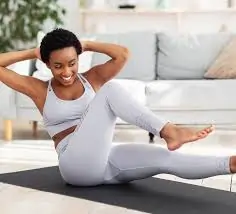
7 Best Core Exercises at Home for Beginners
Introduction
Exercises that work the different core muscles include planks, crunches, and bridges. Mobility, stability of the spine and trunk, and support for daily activities can all be enhanced by exercising these muscles.
The muscles of the core are strengthened by core-strength workouts. The back, stomach, and pelvic muscles are examples of core muscles.
Core-strengthening exercises can be performed on a mat or carpeted floor.
Try to perform 12 to 15 repetitions of each exercise in one set. Before performing these core-strength exercises, see your healthcare provider if you have osteoporosis, back issues, or other health issues.
Many daily tasks require the use of your core, such as pulling a grocery cart or putting on shoes. Additionally, it impacts your stability, posture, and balance.
Despite what many people think, your core is more than simply your abdominal muscles. It also includes the muscles surrounding your pelvis and in your back.
Your trunk, or core, consists of your:
- Three back muscles that extend up your trunk make up the erector spinae. It facilitates sideways bending, head rotation, and standing up straight after bending over.
- Rectus abdominis: The rectus abdominis is an abdominal muscle used when bending forward. It is sometimes referred to as the “six-pack” muscle.
- Obliques: You can rotate or bend your trunk with the aid of your internal and external obliques.
- Transverse abdominis: The transverse abdominis stabilizes your pelvis by surrounding the front and side of your trunk.
- Multifidus: Your spine is supported by the multifidus in your back.
Your core also consists of the following muscles:
- Pelvic floor
- Diaphragm
- Glutes
- Muscles that attach to the pelvis (hamstrings, hip flexors, and hip adductors)
Continue reading for the top core-strengthening exercises for all levels of fitness.
What Is Your Core?
The intricate network of muscles that make up your core extends far beyond your abdomen. Your upper and lower bodies are strengthened and stabilized by these connective muscles, which extend from the pelvis and diaphragm to the back and hips. These consist of the obliques, erector spinae muscles, transverse abdominals, and pelvic floor muscles.
This routine’s seven core workout activities are suitable for both beginning and experienced athletes. The exercise is excellent as a warm-up as well. Continue reading for more instructions on core exercises.
What are Basic Core Exercises?
Basic core exercises target a range of core muscles that are different from what we usually think of as “abs,” going beyond abdominal workouts. Numerous unique muscle groups make up the core muscles.
Instead of focusing solely on six-pack abs, which are primarily visual and do not support the spine, core exercises help balance various muscle groups to develop a strong core overall.
Why Should Beginners Do Core Exercises?
We could go on and on about the advantages of having a strong core for athletes of all skill levels, both fitness-related and not, but to start, it helps prevent injuries and enhances your general mobility, whether you’re pushing yourself or carrying heavy grocery bags up a flight of stairs. Additionally, strength training yes, strengthening your core counts can improve your mental well-being and reduce stress by increasing endorphin levels.
Additionally, ignoring your core can result in several problems, including bad posture, stability, and balance. Additionally, you can suffer a restricted range of motion in your spine and feel tired more quickly when engaging in physical activities. After all, your body may overcompensate for a weak core by applying excessive pressure to other parts of your body, usually your back, which can cause pain or discomfort. Remember that your upper and lower bodies are connected via your core. Therefore, you probably won’t be able to transfer force to your upper body effectively if your lower body is powerful, but your core is weak.
Core Exercises
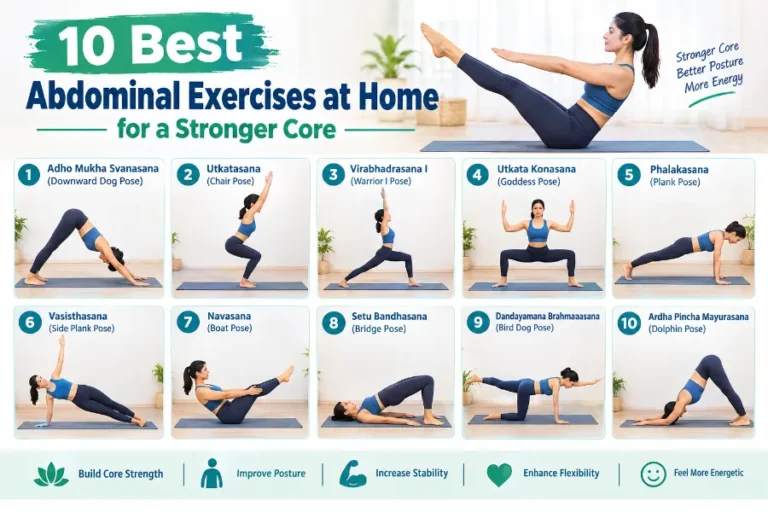
Plank

The plank, which actively works all of the main core muscles, is the first exercise in the fundamental core workout.
Place your bottom body on your toes and your upper body on your forearms to begin the posture. Maintain firm abdominal muscles and stiff knees. Keep your upper back from dropping between your shoulder blades and your hips from dropping.
Your body should be as straight and tight as a plank, according to the exercise’s name. Breathe in and out slowly while maintaining the position for 15 to 60 seconds. Avoid holding your breath or inhaling.
To enhance the intensity, extend one arm in front of you for ten seconds, then switch to the other side. As you extend your arms or legs, pay attention to using your lower back, hips, abdominals, and diaphragm muscles.
Side plank

A core exercise that works the lateral stabilizers from the ankle to the shoulder is the side plank. The exercise keeps the obliques firm and improves the strength and stability of the lateral hips.
Start in the plank position before entering the pose. To balance your body while you shift your weight to one arm, place your higher foot below your lower foot. You can put your feet together once you’ve stabilized. Keep your hips from drooping.
To test yourself, stretch your upper arm toward the ceiling and hold it there for 15 to 60 seconds while keeping total control over your core. On the other side, repeat.
To enhance the intensity, raise the higher leg a few inches and hold it there for ten seconds. On the opposite side, repeat.
V-sit pose

The V-sit is a powerful abdominal exercise that engages the hip flexors and works the rectus abdominis, external obliques, and internal obliques.
Sit on the floor to perform the V-sit. Lift your legs to a 45-degree angle and contract your core muscles as you take a slow breath. If you feel unstable, put your hands by your sides or reach forward to steady yourself.
For 15 to 60 seconds, maintain the posture. After 15 to 20 seconds of relaxation, repeat two more times. Extend the pose’s duration as you gain strength.
Bicycle crunch

A traditional core exercise, the bicycle crunch targets almost all of your core muscles at once, particularly the rectus abdominus and obliques.
Lay down on the floor with your lower back pressed against the floor to complete the exercise. Without pulling on your neck, place your hands behind your head. One knee should be raised to a 45-degree angle while the other must stay straight.
Next, you will alternate between extending one knee and elevating the other as you move your legs back and forth,h as you are pedaling a bike. Touch your right elbow to your left knee and your left elbow to your right knee as you go. Perform 10 to 25 repetitions of your left elbow to your right knee and your right elbow to your left knee while maintaining a steady, deliberate gait. Relax and finish two more sets.
Increase the number of repetitions in each set as you gain strength.
Bridge

The gluteus (buttocks), hamstrings, and lower back are all isolated during the bridge exercise. Additionally, it is a crucial rehabilitation exercise to enhance spine stability and core strength.
To begin the pose, lie flat on your back with your feet flat, knees bent, and arms by your sides. Make a straight line between your knees and shoulders by rising your hips and tightening your gluteus and abdominal muscles while you inhale gently. Without lowering your buttocks or lower back, maintain the stance for 15 to 60 seconds.
Lift one leg as high as you can and hold it there for ten seconds to increase the intensity. On the opposite side, repeat. Extend the pose’s duration as your strength increases.
Push-up lat row
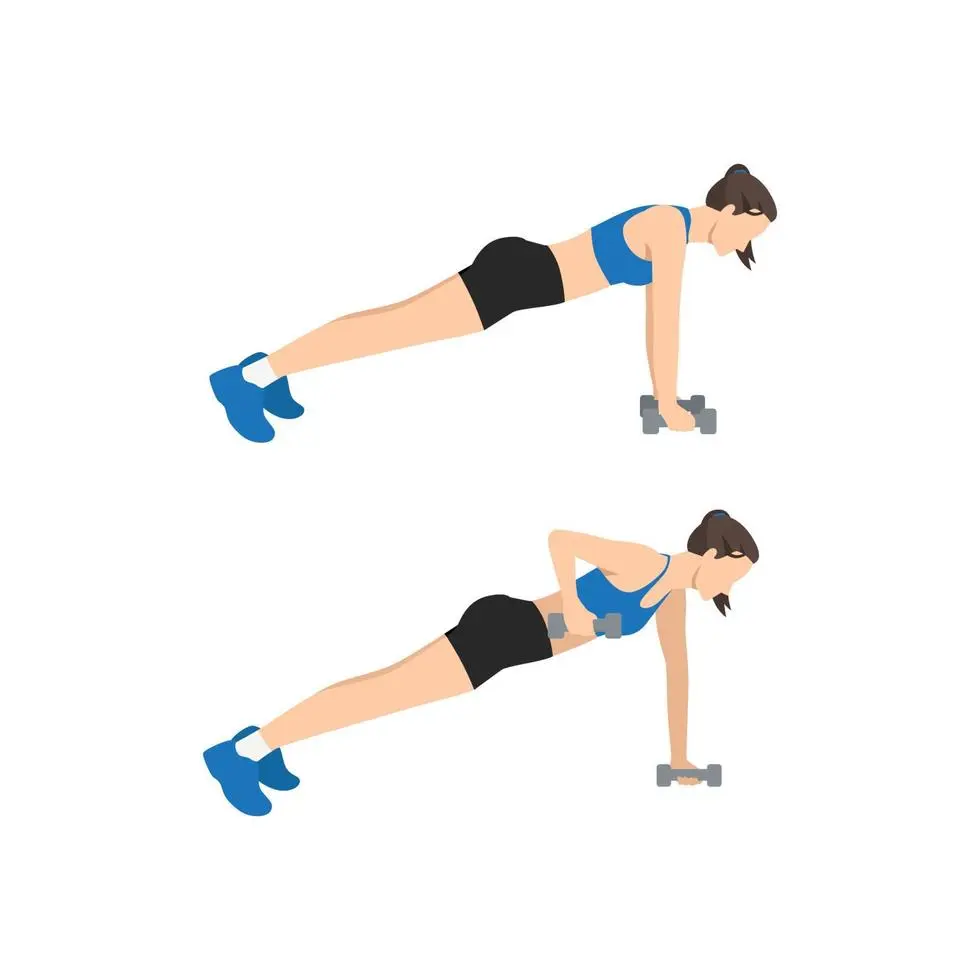
A push-up and a dumbbell row are combined in the push-up lat row, an advanced core workout. The additional weight not only enhances the upper body exercise, but it also engages the middle back’s latissimus dorsi muscles and core stabilizers.
Place each hand on a dumbbell and begin in a push-up stance. As you inhale, raise the weight with one hand and release it with the other. Switch to a lighter weight that you can manage from the beginning to the last rep if you are dropping the weight.
Maintain a straight lower back and firm abdominals throughout the exercise. Perform ten reps on each side without letting your hips dip or swing. Take a break and finish two more sets. You can raise the dumbbell weight as you gain strength.
Skip with a twist
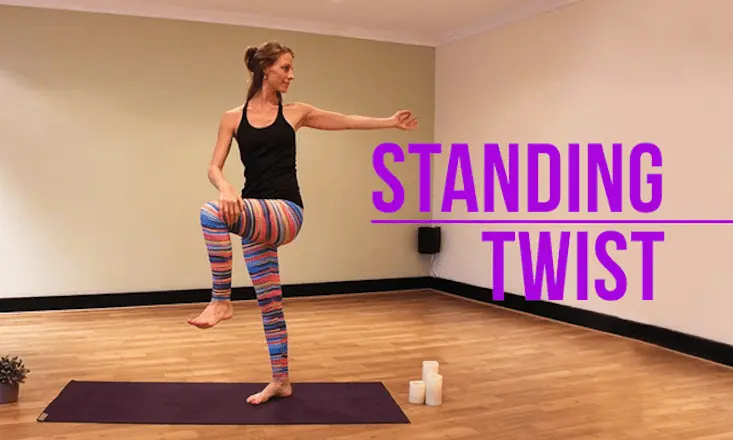
A core exercise that targets the muscles that rotate the hips, torso, and spine is the skip with a twist.
Locate a level spot with sufficient space for ten complete leaping strides. Swing your arms freely from side to side as you begin by skipping ahead 10 paces, five on each side. As you move, your upper body will rotate to the right when your right knee rises and to the left when your left knee rises.
Make sure your core muscles are tight but not stiff. Continue until your joints feel fluid and relaxed and your body has warmed up completely.
How to add Ab Workouts into Your Routine
A fundamental routine is not created overnight. Every fitness journey that is long-lasting and successful starts slowly.
Start by adding core exercises to your current schedule, being careful not to overwork the same muscle group on consecutive days. As a result, you can progressively increase your core strength without tension. Two or three times a week, incorporate some of the previous ab workouts into your routine to build a well-rounded schedule that incorporates both strength and cardio exercises.
It takes time to develop core strength, so patience is essential. Ab exercises should seem like a logical addition to your exercise routine, adding to a comprehensive and successful fitness plan.
The Benefits of Basic Core Workouts
Some of our favorite benefits of learning fundamental core exercises are that they
- Enhance posture and balance.
- Strengthen stability
- Contribute to overall physical fitness.
- Reduce back pain
- Improve spinal health
As was already noted, core exercises cover a large range of muscle groups, which contributes to their extensive effects.
Safety for Ab Workouts
It’s important to reevaluate your routine or method if, after a few months of gradual routine development, your core exercises aren’t providing the desired results.
Pay attention to your body’s signals and stay in alignment with it. Reevaluate the way you exercise and speak with a trainer or physician to determine how to modify it if you encounter any problems, such as soreness or discomfort.
Tips for Doing Beginner Core Exercises
To prevent injuries, it’s important to ease into a schedule, whether you’re new to core workouts or strength training in general. As you begin, keep these pointers in mind.
Before switching to dynamic activities, begin with static exercises. Planks and other static core workouts help you engage muscles while standing still. These exercises are less demanding and more beginner-friendly than dynamic core workouts like plank rotations and mountain climbers, even though they still increase your stability and endurance. You can gradually advance to these more difficult motions.
For every exercise, concentrate on using the appropriate muscles. Maintaining perfect form and gaining more strength are made possible by firing up the appropriate muscles. Performance, fitness, and injury prevention all depend on the strength and activation of these muscles that regulate the spine.
Keep your spine in a neutral position. We learn to stabilize the spine in a neutral position, which puts the least amount of strain on your back.
Include activities that test various planes of motion. A well-balanced core is promoted by moving in all three planes of motion: sagittal, frontal, and rotational. This is essential since imbalances can result in overcompensation and injuries. The spine stretches and flexes in the sagittal plane. The rectus abdominis is used to produce or resist this action in traditional exercises like planks and sit-ups. The obliques regulate the spine’s side bending in the frontal plane. These muscles can be developed with exercises like side bends. Exercises like bicycle crunches and anti-rotation cable presses are effective for rotation and anti-rotation.
Remember to perform lower back strengthening exercises. The muscles in the lower back are usually weak because people frequently forget that it is a part of their core. Because they support your entire spine and can help with posture, you must do exercises that strengthen them.
FAQs
Can core exercises help with gastroparesis?
Low-impact aerobic exercises (walking, swimming, cycling), mild resistance training, yoga, and Pilates are the best forms of exercise for gastroparesis. These exercises help food pass through the digestive system more quickly without putting too much strain on the stomach.
What are the only 5 exercises you’ll ever need?
Five fundamental motions that comprise almost all of our daily motions are the result of human evolution. This means that you just need five movements for your workout: push (pushing away from you), pull (pulling toward you), hip-hinge (bending from the middle), squat (flexing at the knee), and plank.
What is the best core exercise at home?
If you’re looking for effective core workouts you can do at home, then you don’t need any equipment. Core workouts are all about stability and engaging your muscles through exercises like planks, bird-dogs, dead bugs, and Russian twists. The best way to build strength and stability is a 7-10 minute routine (daily) that works all areas (upper/lower abs, obliques, lower back).
Core Exercises With No Equipment Required
Planks (All levels) – Body is in a straight line on elbows/toes. Works the whole abdominal wall.
Bird Dog (Beginner) Start on hands and knees. Extend opposite arm and leg for more stability.
Dead Bug (Beginner): Lie on your back, lower opposite arm/leg to work deep abdominals without back strain.
Side Planks (Intermediate): Lie on your side, lift your hips to work your obliques and lateral stability.
Russian Twists (Intermediate) Sit down and twist the torso to work the obliques and abs.
Reverse Crunches (Intermediate): Lie on your back and raise your hips off the ground to target your lower abs.
Superman Hold (Posterior) Lie on your stomach, lift your arms and legs to strengthen your lower back.
7-Minute Core Workout at Home Sample
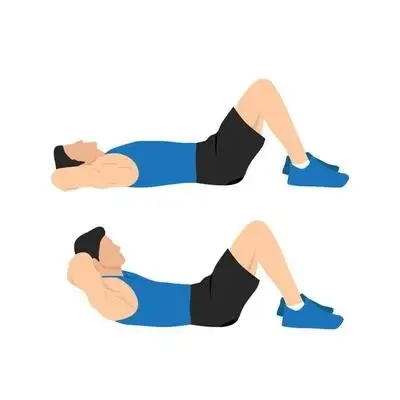
Crunches (reach for heels): 1 min
Bicycle Crunches: 1 min
Reverse Crunches: 1 minute
Scissor Kicks (Alternate) 1 min
Oblique Crunches (Left) 1 Min
Forearm plank: 1 min
Oblique Crunches (L): 1 minute
Success Tips
Frequency: 3-4 times per week
Form. Slow, controlled movement beats speed every time for maximum engagement.
Breath: Breathe out on the hardest part of the movement (i.e, when you are crunching up).
What are the signs of a weak core?
Weak core symptoms include chronic lower back pain, bad posture (slouching), difficulty standing for long periods of time, poor balance, and needing the support of the arms to stand up from a chair. A weak foundation leads to other muscles compensating, ng leading to pain in the hips, neck, and knees, and general fatigue.
Key Signals of a Weak Core
Lower Back Pain: Pain or tightness, often when sitting or standing for long periods, as the spine is not supported by muscles.
Bad Posture: inclination to slouch or slump; inability to sit up straight comfortably.
Balance: Difficulty staying balanced when standing on one leg or walking on uneven ground.
Difficulty Moving: Trouble with daily activities such as putting on shoes, getting out of a low chair, or getting out of bed.
Physical Compensation: Overactive hip flexors, tight shoulders, knee, and neck pain.
Common Causes and Their Effects
Sedentary lifestyles (long periods of sitting), poor training, ng or lack of exercise often result in a weak core. This instability can lead to a feeling of disconnect between the upper and lower body.
Core Testing Technique
Plank Test: Try a plank for 30–60 seconds. Have you got a sagging or sore lower back? This is a sign of a weak core.
Single-Leg Stand: Try to balance on one leg for 30 seconds; if you can’t, it indicates weak core stabilizers.
Sit to Stand: Stand up from a chair without using your hands.
How to Build Core Strength
Activate the Core: Throughout the day, when sitting or standing, work on tightening your abdominal muscles.
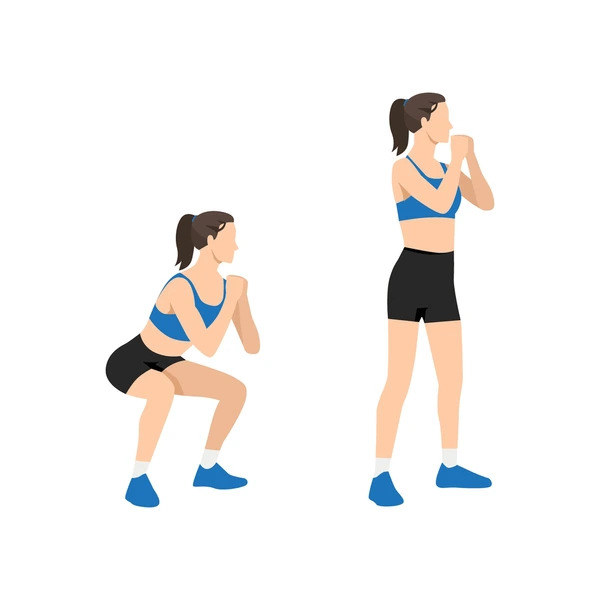
Targeted Exercises: Incorporate exercises like planks, bird-dogs, and squats into a routine, done 2-3 times per week.
Within four to eight weeks, core strength can be increased with consistent training.
What is the hardest core exercise?
The most difficult core exercises for advanced strength and stability are the Dragon Flag, Standing Barbell Rollout, Human Flag, Manna, and Hanging Dragonflies. These are movements that need great tension, compression of the abdomen,n and control of rotation.
Some of the best challenging core exercises.s The breakdown:
1. Static Stability & Suspension (Anti-Extension)
Dragon Flag: This was made famous by Bruce Lee. Lie on your shoulders, lift your whole body, keep a straight line, and slowly lower yourself.
Standing Barbell Rollout: Stand with the barbell (with plates) and roll it from your feet to the floor without letting your lower back sag.
Human Flag: Your body is held parallel to the ground in relation to a vertical pole. This requires superior lateral core strength.h
Ring Layout: Controlled rollouts on gymnastic rings from either a kneeling or standing position, working the lats and full core.
2. Crunch & Lower Abdominals
Manna: A sitting position with the legs extended behind the user parallel to the floor, supporting the body on the hands alone.
Seated Leg Lifts – Sitting on the floor with hands near the knees, lift the legs straight up while maintaining an upright posture. This typically causes severe cramping.
90-Degree Toes to Bar: Hang dead, raise legs to a horizontal L-sit, then touch the bar without swinging.
3. Obliques & rotation
TRX Rotational Jackknife: In a plank position in the TRX straps, rotate your knees towards your elbow in a controlled, resistant motion.
Single Arm Farmer’s Walk: Walking while holding a heavy dumbbell in one hand, forcing the obliques to prevent side-bending.
4. Dynamic & Weighted
Renegade Row with Heavy Kettlebells: Row one weight up while keeping the hips from twisting while in a push-up position with kettlebells.
Cable Push-Pull: To teach anti-rotation, stand in a split stance between cable machines and simultaneously push and pull.
Can I do core exercises every day?
Yes, you can train your core every day,y but it is best to focus on low-intensity high-frequency training or rotating exercises to avoid overtraining. The core is resilient, but the combination of high-intensity weighted exercises daily can create fatigue or injury. Best is a mix of daily light training (e.g., bird dogs, planks) and compound movements.
Here’s what you should know about daily core training:
Daily Best Practice: Don’t focus on daily crunches. Focus on endurance and stabilization. Good choices for daily workouts are planks, bird dogs, dead bugs, and core-tightening, low-impact movements.
Don’t Overload: When doing high-intensity exercises like weighted sit-ups or leg raises, treat your abs like any other muscles and give them a rest day.
Avoid imbalances by focusing on the entire core, not just the “six-pack” (rectus abdominis), including the obliques and lower back.
Leverage Compound Movements: You don’t need to perform separate direct ab work every day because movements like squats, deadlifts, and overhead presses activate your core.
How do I know if my core is strong enough?
Your spine may not be receiving enough support from your core if you frequently have lower back pain. Weak abdominal muscles force the lower back to compensate, leading to discomfort and strain. A weak core may be the cause of any lower back pain you experience.
What is killer core?
Killer Core is a 30-minute class that tests your core strength and stability using a variety of props, including foam rollers, free weights, and your own body weight.
What is the best time to do core workouts?
Your workout’s objective will determine this. If building a strong core is your main goal, work it first while you’re feeling your best. Perform your core exercises near the conclusion of your workout if you have another objective, such as lifting large weights or performing athletic drills.
What are common core exercise mistakes?
Overworking the Abs.
Arching the Back While Doing Core Workouts.
Not Engaging your Pelvic Muscles.
Holding Your Breath.
Ignoring Injuries.
Are these 3 exercises for the core enough?
It’s advised to work on your abs two to three times a week, using two to three exercises every session. Without running the risk of overtraining, this frequency is adequate for the best possible development.
What is a core exercise for beginners?
For beginners, core exercises that build stability, strength, and proper form are key. They require no equipment and include planks, dead bugs, bird dogs, and glute bridges.
Work the Core: When you work out, focus on pulling your belly button toward your spine.Breathe.e Don’t hold your breath, exhale during the hardest part of the move.
Consistency: 3 sets of 10-15 reps or hold planks for 30+ seconds as you get stronger.
References
- 8 of the best core-building exercises for men – 11 minutes. (n.d.). Trainwell. https://www.trainwell.net/blog/best-core-exercises-for-men
- A 5-minute ab workout you can do anywhere. (2025, November 14). [Video]. TODAY.com. https://www.today.com/health/diet-fitness/home-ab-workouts-rcna206868
- Barwick, E. M. (2022, June 13). My top 12 killer core crunch free moves for hard abs. Bite Size Vegan. https://bitesizevegan.org/my-top-12-killer-core-crunch-free-moves-for-hard-abs/?gad_source=1&gad_campaignid=21020317854&gbraid=0AAAAAo5qibgitjH7VY6csyJHQfJcp0aFY&gclid=CjwKCAjwn4vQBhBsEiwAq3hhN2Q-yieL8bXtgh7DnO3qqWn37NPI6BaCaAeem9DIXbKiH22L57wOQhoCPu8QAvD_BwE
- Frazier, R. S. (1970, January 1). 7 Beginner-Friendly Exercises to Target Your Core from All Angles. https://www.onepeloton.com/blog/beginner-core-exercises
- Nunez, K. (2026, April 30). The best core exercises for all fitness levels. Healthline. https://www.healthline.com/health/best-core-exercises
- Team, G. (2024, October 25). 21 bodyweight core exercises you might want to try at home. Greatist. https://greatist.com/move/best-bodyweight-exercises-abs