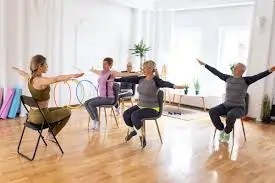
Best Chair Exercises for Seniors
Introduction:
A healthy lifestyle is essential for seniors, yet many of them aren’t getting the activity they require. Just 15% of people in the 65–74 age range say they regularly exercise. Regular exercise can be beneficial if preserving your independence as you age is your primary aim. Maintaining an active lifestyle can be beneficial if you suffer from long-term diseases like diabetes or heart disease. Exercise can also improve your mood.
It might be challenging for older folks to regain their level of fitness. Older persons’ blood sugar and muscle health can be negatively impacted by just two weeks of inactivity, and the losses are not reversed by two weeks of regular exercise.
However, as you become older, you might not be able to perform the same workouts that you could do with ease in your 20s, 50s, or even 60s. Chair exercises can help with that, particularly if you have balance or mobility issues (at any age). Additionally, they help relieve pressure on sore knees or unsteady ankles and offer a solid foundation for exercising.
Benefits:
- Exercise of any kind, even seated exercise, can help older persons maintain their independence, happiness, and health.
- Exercises for aerobics, strength training, stretching, and balance should ideally be combined because each provides a number of benefits.
- For instance, strength-training exercises help develop and maintain muscle strength to power daily activities, cardio workouts promote heart health, and stretching or flexibility exercises make it easier to move your body. You could avoid a catastrophic fall by improving your balance.
- Exercises that begin in a seated position can also provide similar advantages. Additionally, folks of different fitness or wellbeing levels could find chair workouts more approachable.
- A chair workout might be safer or more pleasant if you have problems getting off the ground for exercises performed while lying down, or if you have pain or difficulty balancing during standing activities.
Exercise:
Head Turn:
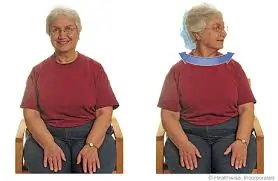
- With your shoulders relaxed and your feet hip-width apart, take a seat in a chair.
- Gently return to the center after moving your head to look over one shoulder.
- Return to the center after glancing over the opposite shoulder.
- In each direction, repeat eight to twelve times.
Shoulder Rolls:
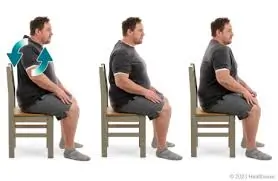
- Sit in a chair with your feet hip-width apart and your arms by your sides.
- Raise your shoulders to your ears.
- Roll them backward in a circle ten or twelve times.
Wrist Circles in Chair:
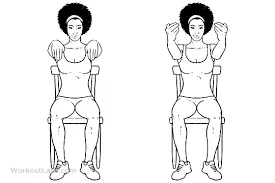
- Place your feet hip-width apart while seated in a chair.
- Make fists with your hands.
- Eight to twelve times, rotate both wrists in the same direction.
- Oppositely repeat eight to twelve times.
Chest Openers:
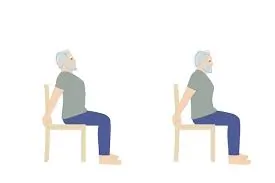
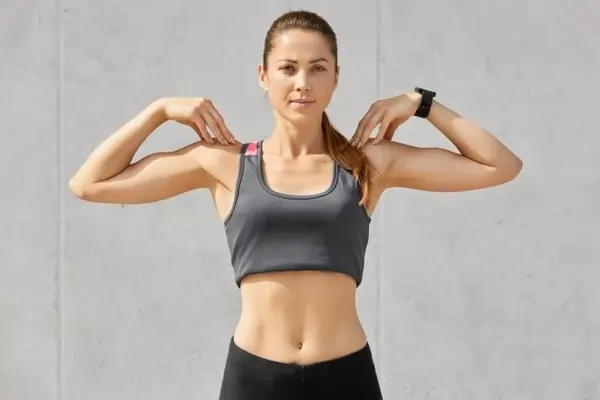
- With your hands on your temples, your back straight, and your feet hip-width apart, take a seat.
- Breathe in and open your chest by moving your shoulder blades together and your elbows slightly back.
- Make sure your head doesn’t go backward while you maintain the pose for two to three seconds.
- Return to your starting location with ease.
- Do this eight or ten times.
Spine Twist:
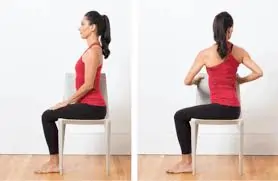
- With your arms folded across your chest and your feet hip-width apart, take a seat in a chair.
- Keeping your hips pointing forward, twist your entire upper body to the side from the waist as far as it feels comfortable.
- Turn back slowly to the opposite side.
- Six to eight times, repeat the complete exercise.
Forward Bend:
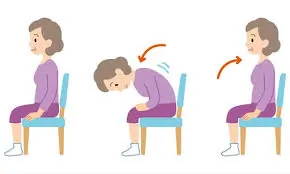
- With your arms by your sides, your back straight, and your feet hip-width apart, take a seat in a chair.
- Roll down as far as you can while bringing your chin to your chest.
- Return to a seated position slowly.
- Four to six times, repeat.
Side Bend:
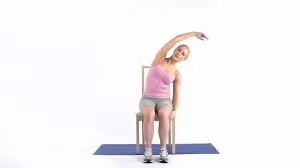
- With your hands by your sides and your feet hip-width apart, take a seat in a chair.
- Without shifting your hips or bending forward or backward, slowly tilt to one side.
- Repeat on the opposite side after returning to the center.
- On each side, repeat six to eight times.
Hip Marching:
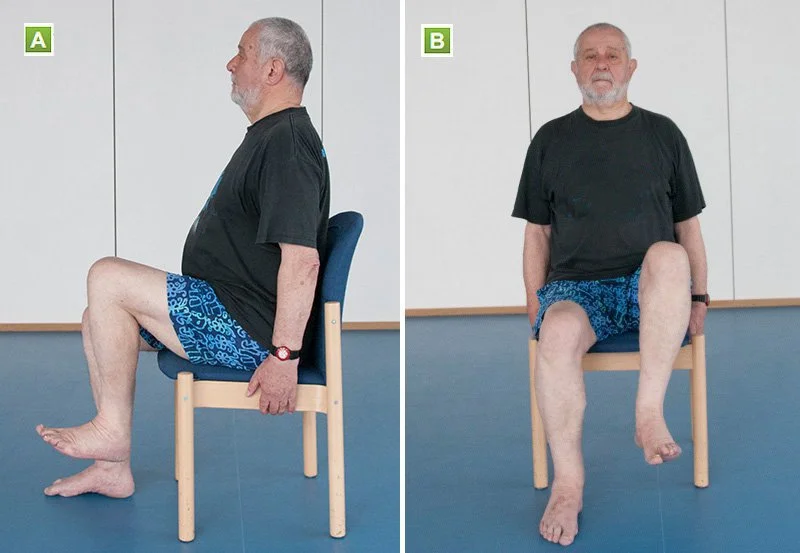
- Hold one leg beneath your thigh while sitting on a chair with your feet hip-width apart.
- Maintaining a straight back, slowly draw your knee as close to you as feels comfortable.
- Lower your leg gradually until your foot is back on the ground.
- On each leg, repeat eight to ten times.
Hip Circles:
- Lift one leg as high as it feels comfortable while seated on a chair with your feet hip-width apart.
- Move your leg up and around in a tiny circle ten or twelve times while keeping it bent.
- On the other leg, repeat.
Ankle Points:
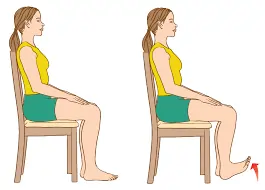
- Lift one leg slightly off the ground while seated in a chair with your feet hip-width apart.
- Point your foot forward without shifting your leg.
- Next, raise your toes to the heavens.
- On each foot, repeat eight to twelve times.
Rowing:
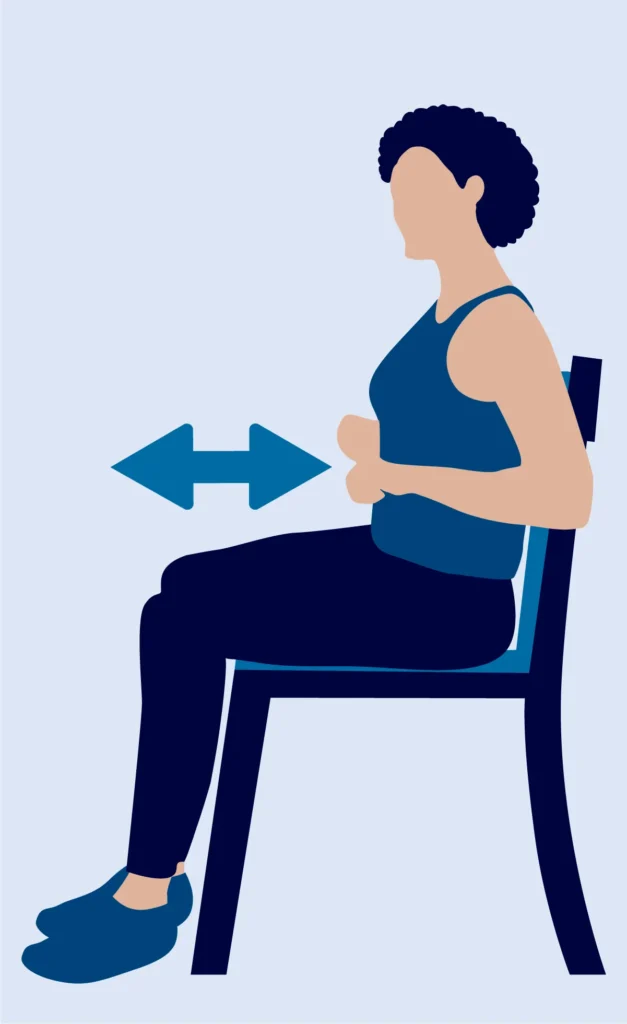
- Sit as upright as you can.
- Stretch your arm out in front of your chest.
- Bring your elbow close to your side by pulling your arm back in.
- Use the opposing arm to repeat the steps.
- Perform ten repetitions for each arm, followed by ten with both arms at once.
Safety Advice:
Selecting a firm chair is the most crucial piece of advice for safely exercising while seated. Your preferred seat shouldn’t wobble or move suddenly, nor should it be prone to toppling over. (Never use a wheeled desk chair!)
Choosing a chair without arms will also provide you with more space to move around and prevent you from bumping or injuring yourself.
Before you start, go over these exercises with your doctor if you have any worries about doing them safely or if you’ve been told to restrict your activity.
FAQs
Do chair workouts actually work for seniors?
Chair exercises do indeed aid in muscular growth. Increased strength is one of the main advantages of chair exercises for seniors. Chair exercises have been shown to improve upper and lower body strength. Chair exercises promote safe and comfortable posture, which can aid with balance.
Does the 7-minute chair workout really work?
The 7-Minute Workout is difficult but effective. You can rely on it to perform as intended because it is grounded in science. It’s not for everyone, though. To get the most out of it, you have to exert a lot of effort, which may be difficult if you have back or joint issues.
What should seniors eat to gain muscle?
You may promote muscle growth over 60 by focusing on a diet high in high-quality protein from sources like lean meats, fish, eggs, dairy, and plant-based substitutes like beans and soy, as well as a balanced intake of healthy carbs and fats.
What is the easiest exercise for seniors?
Easy choices include swimming, cycling, dancing, water aerobics, or walking (8,000–10,000 steps per day). Strengthening, flexibility, and balance exercises, including abdominal contractions, wall pushups, daily stretches, and single-leg balance holds, are all part of a comprehensive senior exercise program.
What is a good exercise routine for seniors?
Muscle strength training for seniors can include bodyweight exercises and functional fitness routines like wall push-ups, calf raises, shoulder blade squeezes, and smaller repeated movements that can be completed without additional equipment, since the majority of older adults aren’t eager to enter the weight room.
References:
- Chair exercises for seniors: Boosting strength, flexibility, and stamina – 2025 – Klein/www.health.harvard.edu/exercise-and-fitness/chair-exercises-for-seniors-boosting-strength-flexibility-and-stamina
- Chair-based exercises – 2026 – Markos/www.bhf.org.uk/informationsupport/heart-matters-magazine/activity/chair-based-exercises
- 14 Seated & chair Exercises for Seniors (Images & printable PDF) – 2025/www.lifeline.ca/en/resources/chair-exercises-for-seniors/