Boat Pose (Navasana)
What is Boat Pose (Navasana)?
Navasana, also known as the Boat posture (derived from the Sanskrit words nava, meaning “boat,” and asana, meaning “pose”), is a foundational yoga practice that improves attention, balance, and core strength. This pose is often employed in yoga sequences to increase general endurance, spinal stability, and abdominal strength.
This stance for the boat can help to clear up many physical misconceptions. Naukasana strengthens the lungs, liver, and pancreas. It regulates blood sugar levels and improves circulation. It increases blood circulation and oxygen levels in the belly while also significantly speeding up the process of lowering the back at a time. Naukasana is useful for anyone looking to tone their abs and decrease belly fat.
Muscle Work During Boat Pose:
- Rectus abdominis
- Transverse abdominis
- Erector spinae
- Quadriceps
- Hip flexors
- Hamstrings
- Upper back and neck muscles
- Biceps
- Triceps Brachii
Video of Boat Pose
How to Perform Boat Pose?
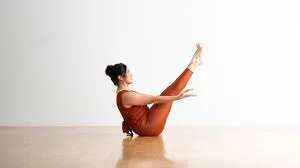
- You can start in the boat posture by sitting on the floor or lying down. Starting in the supine posture is more challenging.
- If you start in a sitting position, keep your legs straight and knees slightly bent.
- In order to balance on your tailbone, take a deep breath, tense your back muscles, lean back a little, and raise your legs to a 45-degree angle with the ground.
- To straighten your legs, bring your toes closer to your forehead while keeping your back straight. If you find this too difficult, maintain your shins parallel to the ground.
- Maintain a relaxed chest, arms parallel to the floor, palms facing inward.
- The duration of this posture is 10-20 seconds.
Health Benefits of Boat Pose:
- Helps with digestion: The boat position raises the diaphragm, allowing more air to flow through the belly and energising the internal organs. This airflow can help with digestion since it reduces the burden on the stomach and liver.
- Makes the torso stronger: The boat position stimulates your hip flexors and adductor muscles, improving hip extension, as well as elevating your chest and strengthening your core muscles.
- The hamstrings are stretched: Boat posture can help relieve hamstring tension, which can limit range of motion or be dangerous.
- Tone and Energise Abdominal Organs: When you exit Naukasana, your abdominal organs align, stretch, and relax, helping to eliminate belly fat. When the gastrointestinal organs recover, it feels better to digest, absorb, and transfer. Naukasana’s healthy digestion aids in the reduction of acidity and constipation while also maintaining a vigorous metabolism.
- Iliopsoas Muscle Redevelopment: According to Psoas and Iliacus, the Iliopsoas muscle is the most powerful hip flexor. This muscle regulates the actions of standing, running, and walking.
Tips of Boat Pose for Beginners
- Think about pulling your lower abdomen upward and inward by squeezing the button on a tight pair of trousers.
- Instead of moving your arms parallel, you might keep your hands behind your knees.
- Place a block between your inner thighs to promote muscular growth.
- To complete the Boat Pose, put a strap across the soles of your feet. This capability also allows for long-term stance maintenance.
Follow-up Poses:
- Utkatasana
- Adho mukha svanasana
- Halasana
- Sirsasana
- Shalabhasana
- Bhujangasana
- Dhanurasana
- Baddha Konasana
Types of Boat Pose:
Three varieties of Naukasana occur.
- Ardh Naukasana (half boat pose)
- Paripurna Naukasana (full boat pose)
- Eka pada Naukasana (One leg boat pose)
Half-Boat Pose (Ardh Naukasana)
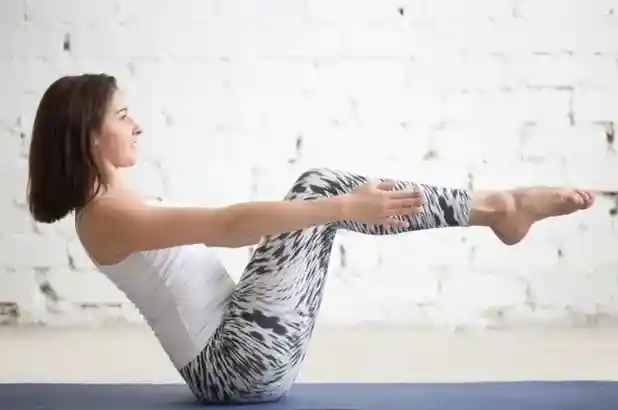
What is Half-Boat Pose (Ardh Naukasana)?
Ardha Asana is performed in the supine posture. It focuses on the abdominal muscles, adductor muscles, and hip flexors. It also strengthens the quadriceps, hamstrings, and spine. It improves the facilitator’s physical and emotional wellness while also increasing strength and flexibility.
How to Perform?
- Using your sitting bones, attempt to establish equilibrium. Raise your arms and release your hands, fingers pointing forward, while keeping the collateral parallel to your lower legs.
- Hold the posture for 30-60 seconds. Continue breathing normally. Encourage yourself by relaxing your upper body.
- Instead of reaching towards the knee, mixed-finger hands curl back and return to the back of the head.
- The legs are then progressively and firmly stretched forward at a 30-35-degree angle.
- The remaining phases in leaving the position follow the same method.
Full Boat Pose (Paripurna Naukasana)

What is a Full Boat Pose (Paripurna Naukasana)?
Identifying strength in this posture will allow you to position and move your body, mind, and emotions despite the exertion and multiple chores necessary. Sit on the ground with your legs crossed, feet flat, knees bent.
Position your hands slightly below your hips, elbows bent away from you, fingers lifted towards your feet. Lean back slightly, lifting your heels one or two inches off the ground. The English word “full boat stance” came up since “marijuana” means entire, full, or complete in Sanskrit, “nava” denotes a boat, and “asana” refers to a posture.
How to Perform?
- Instead, raise up from the sternum and bend back, being careful not to twist your back. Your sitting and tailbone bones stabilise and sustain your body weight. Maintain a bent knee position while lifting your thighs 45 degrees above the ground. If possible, gently raise your knees till the tips of your toes are slightly higher than your eyeballs.
- If you can’t do it, keep your knees bent and your ascending collateral on the ground. Maintain a long spine and an open heart by drawing your shoulders back and stretching your arms forward alongside your knees, palms facing in and collaterals touching the floor.
One Leg Boat Pose (Eka pada Naukasana)
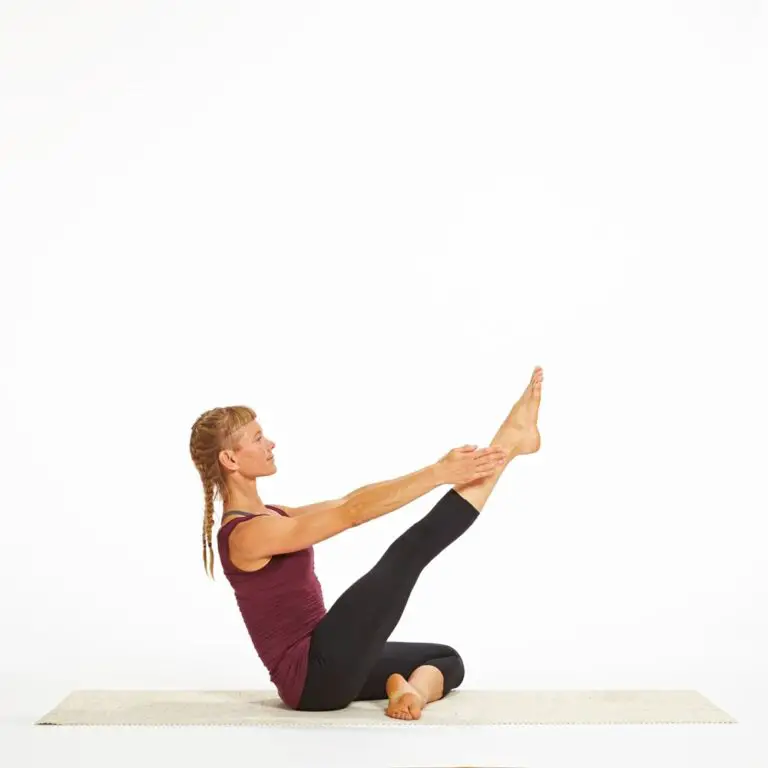
What is the One Leg Boat Pose?
Eka pada savasana, a pre-savasana position and simpler version of savasana, is distinguished by a “V”-shaped body structure that balances on the buttocks with arms straight and legs high. The eka pada stance is a one-footed reminder on the ground with the knee bent. In one additional leg form, the bent knee is dropped to one side. To get a deeper stretch, raise the grounded leg straight, just like in the hook position.
Navasana is an important part of Ashtanga yoga’s basic sequence and, because of its mental and physical advantages, is also considered vital in other yoga traditions. In addition to strengthening the core, the Eka Pada form is proven to improve attention and concentration. In addition to strengthening the core, the Eka Pada form has been shown to promote attention and focus.
Because of its emphasis on the body’s centre, the asana is generally thought to be a technique of activating the Manipura (solar plexus) chakra. A healthy Manipura chakra increases yogis’ self-awareness and stimulation.
How to Perform?
- Place one leg down, turn your hips outward, and assume a half-butterfly position. If necessary, balance on your tailbone, softly squeeze your stomach, elevate one leg, and hold the ankle with your right arm and leg strength.
- The One-Legged Half Boat Position has several variants in the under-signal and yoga sequences that yoga instructors have devised, depending on where you are in the sequence and your students’ ability level. Begin with Dandasana, or Staff Position.
- Place your left foot around your right thigh while sitting with your right leg extended forward. Raise your arms over the straight leg as if they were on the ground, palms facing outward.
- Raise your right leg until the gap reaches your big toe, then lean back and push out over the heel.
- Pull your arms over the middle of your body to expand and elevate your chest, then let your shoulders relax away from your ears.
- When you’ve held your breath for two to six breaths, lift your chest with the same effort as your legs.
- To release, slowly descend both arms and legs to the ground.
- On the opposite side, repeat.
Modifications or Variations in Boat Pose
You may also change the final posture by bending your knees and keeping your shins parallel to the ground.
To modify this position and alleviate tension, use a yoga ball or a yoga strap. A firm cushion or ballast behind your back can help you maintain balance and ease back pain, but a strap can also help you keep your legs in position.
Practicing with these versions can help you grasp the fundamentals of the form. It will be more difficult and put your skills to the test if you progressively delete the adjustments.
Contraindications for a Boat Pose
- Back pain or injury
- Neck pain or injury
- High blood pressure
- Pregnancy
- Menstruation
- Hernia
- Asthma
- Recent abdominal surgery
- Headache or migraine
Summary
Navasana, commonly known as the Boat position, is a powerful yoga position that strengthens the core while improving stability, balance, and attention. It strengthens the hip flexors, exercises the abdominal muscles, and improves spinal health. Regular Navasana practice strengthens the body, develops stamina, and boosts mental power.
To get the most out of it, practise in the proper position, with controlled breathing and incremental progressions. Navasana is an important yoga position for developing core strength and overall body awareness, whether performed statically or as part of a dynamic flow.
FAQs
What makes Boat Pose so difficult?
Boat pose (Navasana) is a demanding position that works the hip flexors, core, and legs. Even though the configuration appears easy, supporting your legs and spine against gravity’s downward pull requires a great deal of effort and movement.
Who should stay away from Navasana?
If you have low blood pressure, a terrible headache or migraine, or have recently had any spinal anomalies or chronic diseases, do not attempt this yoga posture. Patients with asthma or heart difficulties should avoid this posture.
Is abdominal fat reduced by the Boat Pose?
The boat position strengthens the spine, hip flexors, and abdomen, which enhances balance and coordination. Raising your legs and torso while maintaining proper posture strengthens your core, improves digestion, and aids in weight loss.
References:
- EkhartYoga. (2021a, March 4). How to do Boat Pose or Navasana – Ekhart Yoga. Ekhart Yoga. https://www.ekhartyoga.com/resources/yoga-poses/boat-pose
- Navasana Yoga (Boat Pose) | Yoga Sequences, Benefits, Variations, and Sanskrit Pronunciation | Tummee.com. (2018, February 12). Tummee.com. https://www.tummee.com/yoga-poses/boat-poseCopy
- Smith, L. (2024, August 16). Yoga How-To: The Boat Pose. WebMD. https://www.webmd.com/fitness-exercise/yoga-how-to-the-boat-pose
- Sorathiya, D. (2024b, October 10). Naukasana: Health Benefits, How to do?- Variations. Mobile Physiotherapy Clinic. https://mobilephysiotherapyclinic.in/naukasana-yoga-pose/
- Kakadiya, B. (2025, March 20). Boat Pose (Navasana). Samarpan Physiotherapy clinic. https://samarpanphysioclinic.com/boat-pose-navasana/